[Image] What to Do When Pour-Over Coffee is Too Bitter? Why Do Coffee Beans Have a Bitter and Astringent Taste?
Why Your Pour-Over Coffee Tastes Bitter and How to Fix It

Readers often write to FrontStreet Coffee about the same problem: their pour-over coffee keeps coming out bitter at home. So let us break down the real reasons coffee turns bitter, and what you can do about each one.
Reason 1: The beans themselves have a bitter flavor profile

Coffee has many flavor profiles. Some beans are fruity and acidic, some are sweet with honey and brown sugar notes, and some are bitter with nutty cocoa character. If you brew Mandheling or Blue Mountain, those beans inherently carry nutty dark chocolate flavors, so the brewed cup will naturally show that kind of bitterness (note: this is not the same as burnt bitterness or astringency). To a drinker who dislikes bitter coffee, though, the nutty dark chocolate bitterness and a burnt, astringent bitterness can feel much the same.
Solution: When buying beans, read the flavor description carefully. The wording may sound impressionistic, but it tells you which flavor category the coffee belongs to, so you can pick beans that match your taste.
Reason 2: Beans stored too long have lost their flavor

The window in which roasted coffee tastes its best is fairly short. That is one reason roasters package beans in 100-227 gram sizes: it balances consumption speed against that window. At 15 grams a day, a 227-gram bag lasts exactly half a month, which lines up well with the optimal tasting period.
Generally, pour-over beans taste best from 4 to 30 days after the roast date. The longer they sit, the more aromatic compounds dissipate. You can confirm this by comparing fresh beans with old ones: fresh beans smell intensely aromatic - what we usually call coffee aroma - while old beans develop woody, greasy notes. Beans that have lost those compounds will naturally brew up woody and bitter.
Solution: The best fix is simply to drink the coffee faster and not keep expired beans. More importantly, learn to judge the optimal period yourself. Roast date plus 30 days is one rule of thumb, but 30 days is only a general guide, not a fixed number - some beans hold up longer, others fade sooner, and proper storage extends the window compared with careless storage. A practical test is the bloom: if the bed expands and releases gas when you add water, the beans are still good; if there is no reaction at all, they are likely past their prime.

Reason 3: Coffee ground too fine, or too many fine particles
Grinding too fine and producing excessive fine particles are two different problems, but both cause burnt bitterness. They also behave differently during brewing. If the grind is too fine, the coffee bed descends very slowly from start to finish, and the total extraction time exceeds 2 minutes and 30 seconds. If there is too much fine powder, the bed often descends normally at first and then slows progressively toward the end, sometimes even clogging.
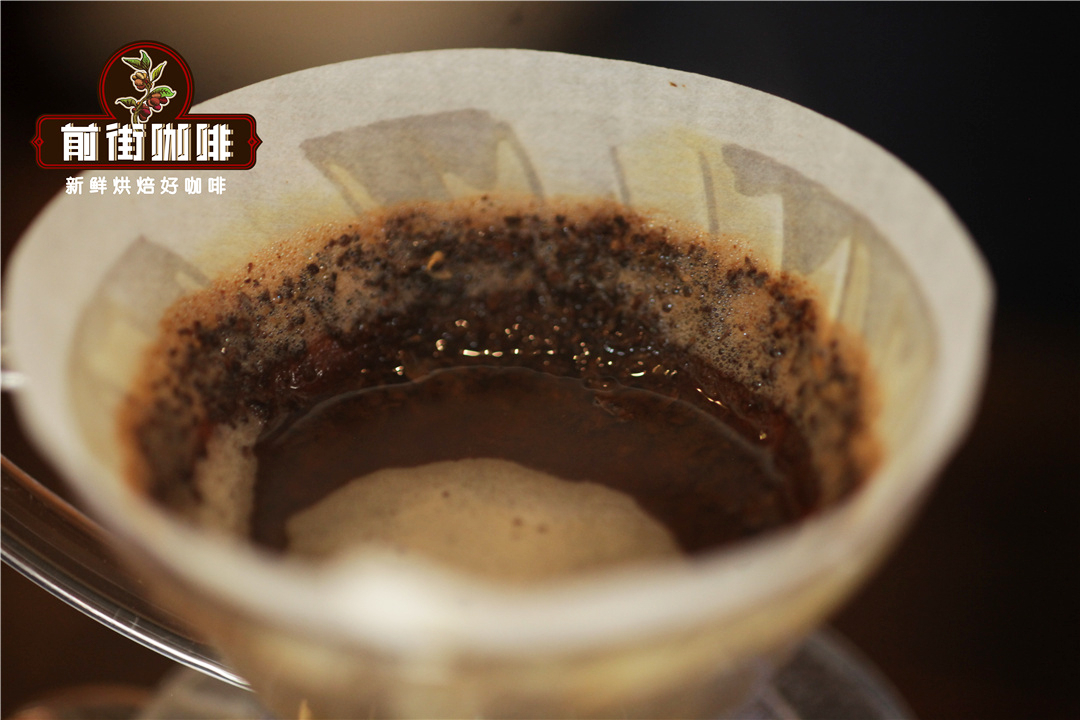
Solution: For a grind that is too fine, the fix is simple - dial it coarser. As a pour-over reference: 80% pass-through rate on a #20 sieve for light roast, and 70% pass-through on a #20 sieve for dark roast.
Excessive fine powder means uneven grinding, which comes down to grinder quality. There are three solutions. First, upgrade to a better grinder. Second, use a fine-powder sieve to remove the fines. Third, during brewing, cut off the flow in the final stage if the bed clogs, then add the corresponding amount of water to bring the concentration back to where it should be.

Reason 4: Water temperature too high
Water that is too hot also produces burnt bitterness. Everyone knows the principle, but people are often misled by their own habits. If you brew a particular bean at 93°C and get good results, that number becomes a habit. When you move to a bean with a seemingly similar roast level, you may still use 93°C and end up too hot without realizing it.
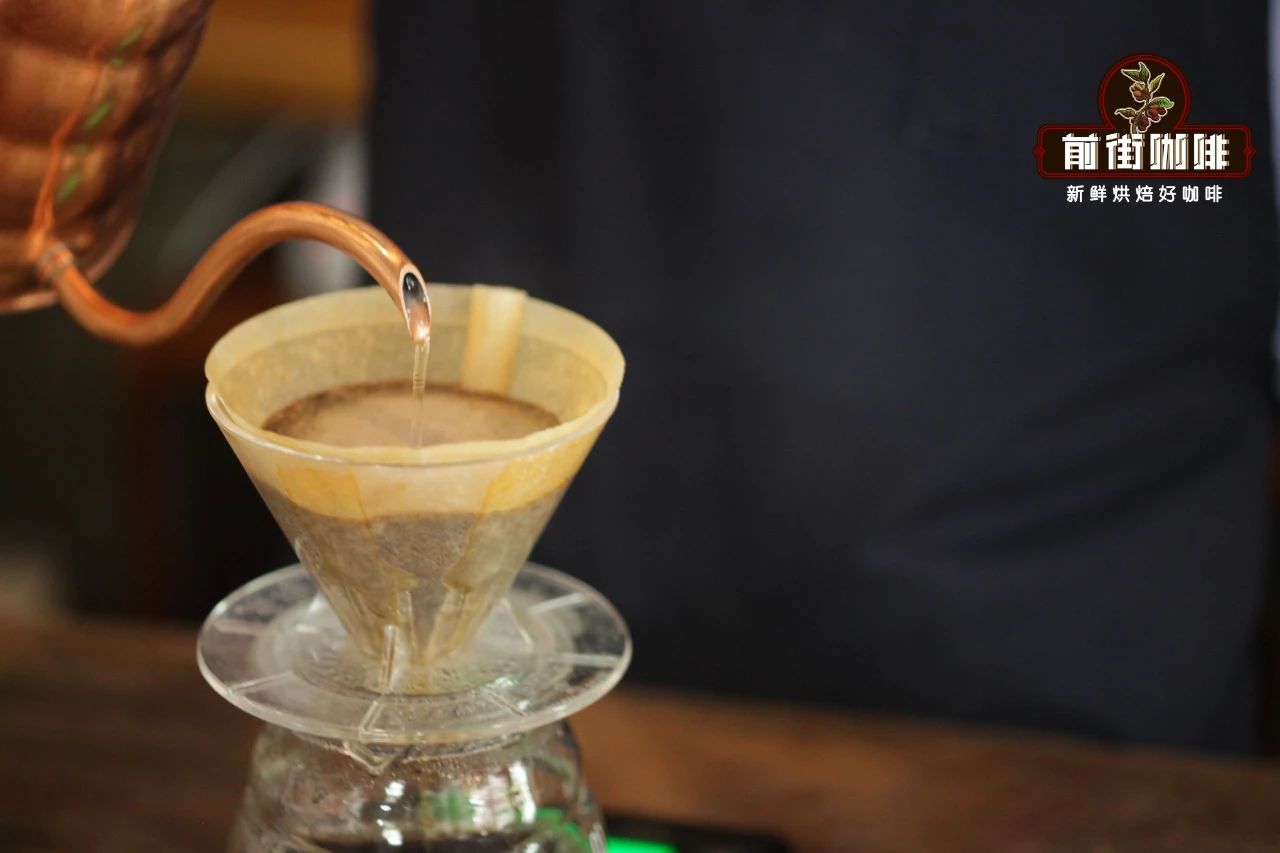
Take Blue Mountain beans as an example. With every other parameter fixed, 88°C expresses the balance of the bean beautifully, while 89°C makes it overly bitter and unbalanced. Yes - a single degree can do it.
Generally, two checks tell you whether the temperature is too high. First, are you working within a sensible range? That means 90-93°C for light to medium roasts, and 86-89°C for medium to dark roasts. Second, if you are inside those ranges and have already ruled out problems with the beans, the roast date and the grind size, then look at the temperature itself.
FrontStreet Coffee Recommendation
If bitterness is your complaint, start by choosing a bean whose flavor profile actually suits you, then brew it cool and coarse. FrontStreet Coffee's PWN Golden Mandheling is a good test case. It is produced by PWN in Indonesia under strict standards: only beans of 18 mesh and above are selected, the defect count must stay under 3 beans per 300-gram green sample to meet the top G1 grade, and each lot is hand-sorted three times, which is what gives the cup its unusually clean, intense sweetness.
For pour-over, FrontStreet Coffee suggests 87-88°C water, 15 grams of coffee, a 1:15 ratio, and a grind about the size of coarse sugar. Use a three-pour method: bloom with 30 ml, then pour 100 ml, then finish with a gentle 95 ml pour down the center. That last stage is what lifts the sweetness and rounds out the body.
Expect a low-acid, full cup with caramel sweetness, chocolate and nut notes, and the wild herbal and spicy character that Sumatra's wet-hulled process is known for. If you prefer a gentler everyday option, FrontStreet Coffee's Lintong Mandheling is roasted medium-dark for much the same profile at a lower intensity.
Important Notice :
FrontStreet Coffee is a long-established specialty coffee roaster in Guangzhou China, selling freshly roasted beans from its own farm in Yunnan as well as dozens of carefully selected single-origin beans from around the world for both pour-over and espresso. The products deliver consistently excellent quality and great value, with shipping within 24 hours. Guangzhou's FrontStreet Coffee shop is recommended by many coffee lovers, and the beans are now available online at the Tmall 。
FrontStreet Coffee has moved to a new address:
FrontStreet Coffee Address: 315,Donghua East Road,GuangZhou
Tel:020 38364473
 Scan and follow the En Gafei WeChat official account. Please indicate that the reprint comes from "En Gafei".