Are Colombian coffee beans acidic? Why do Colombian coffees have fruity acidity?

In Colombia, coffee is hailed as "green gold." Locals have a rich coffee-drinking culture, with cafés of all sizes dotting the streets, filled from morning to evening—proof of how genuinely Colombians love coffee.
What Makes Colombian Coffee Special
Colombian coffee is often described as having a smooth mouthfeel, rich fruity acidity, and balanced flavours. Those strengths can be traced to Colombia's natural geography.

Southern Colombia straddles the equator across a vast geographical span. Coffee cultivation is concentrated along the western Andes, with three high mountain ranges running south to north. The country holds diverse ecosystems, with different forests, grasslands, rivers, and lakes below each range forming varied climates. Volcanic ash soil evolved over millions of years has created many ideal locations for coffee.
Coffee trees are mostly planted on sloping highlands. Clouds and the low temperatures at altitude let coffee cherries retain more sugar, producing coffee with rich flavour and natural sweetness.

Colombian National Coffee Growers Federation (FNC)
Colombia has over 500,000 coffee farmers. Local growers work in small family operations, with every stage of production done by hand, so the overall quality of the beans is higher than mass-produced coffee such as Brazil's.

Given the flourishing development of Colombian coffee, growers dedicated to export formed a coffee producer organisation, but it failed to regulate the industry effectively. Later, at the call of farmers nationwide, the government established the Colombian National Coffee Federation (FNC) in 1927. Its purpose was to guarantee local coffee quality, protect the rights and welfare of every producer, provide reasonable and stable income guarantees for farmers, and promote positive development across the industry.
In recent years, thanks to the FNC's efforts, local farmers have developed ways to cope with leaf rust and climate change while continuously exploring the balance between high-quality flavour and higher yields.

What Grade Is Colombian Supremo Coffee?
Colombia's green bean grading system is based primarily on bean size. The highest grade is Supremo screen 18+. Colombian Supremo beans are samples in which 95% of a 500g lot sits above 18 mesh, meaning the beans are full and uniform in size.
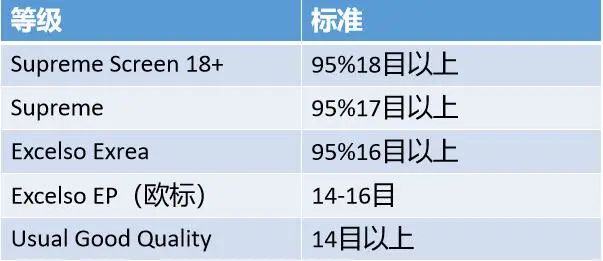
Packaged green beans are typically sorted on fixed-size screens, with different specifications corresponding to different hole sizes. If the screen is 17 size, for example, beans larger than that cannot pass through. The larger the screen number, the larger the beans that remain on it.
After sorting by size, beans are inspected for defects and foreign matter, then evaluated by defect rate and cupping tests. In defect-rate grading, Colombia has specific standards divided into two categories: Type I and Type II defects.

Type I defects (those affecting cupping characteristics) include black, mouldy, or sour/rotten aromas, with a maximum allowable defect value of 12. Type II defects (those affecting appearance) include discoloured beans (old, faded, yellowed, mottled), damaged, broken, cracked, cut, insect-damaged, deformed, immature, and grey or soft beans, with a maximum allowable defect value of 60. Points are deducted by defect count, and final scores fall into three grades: AA, A, and G.
Each farmer reports their number and records green bean information, which supports traceability. Exported Colombian green bean names typically follow the format country + production area + grade + other information. FrontStreet Coffee's Huila daily bean's green beans, for example, are designated Colombia Huila Supremo SC17/18 FNC.

Huila Production Area Coffee Beans
Colombia's coffee-growing regions are extremely vast, with flavours varying by cultivation location. Specialty coffee is mainly produced in the southern regions of Huila, Cauca, and Nariño.
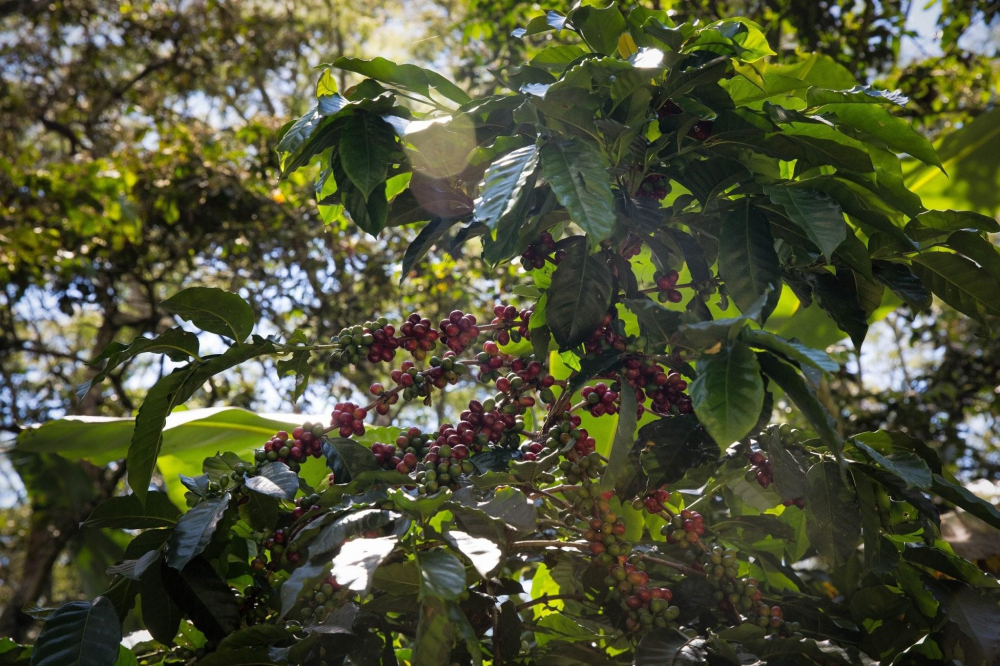
Huila Province is surrounded by mountains, with an average altitude of over 1,500 meters. Many of Colombia's main rivers flow through the area. Abundant water and humid air, combined with cool valley breezes that keep temperatures from climbing too high while blocking cold winds, and the fertile soil brought by Huila's volcanoes, let Arabica coffee absorb sufficient nutrients. The result is many batches of beans with complex aroma and fruit flavour.
Through cupping, FrontStreet Coffee found that Huila coffee has rich nut and chocolate aromas with full caramel sweetness. It is smooth and clean on the palate, truly characteristic of Colombian coffee, which is why FrontStreet Coffee also includes it in its exceptionally cost-effective daily bean series.

On FrontStreet Coffee's bean menu, each classic producing country has its own section, and Colombia is no exception. Among the many Colombian coffees on the menu, two stand out for their unique flavours: the Sidra and Big Navel coffees from the dividing-line estate, which make many connoisseurs marvel and also impress newcomers to specialty coffee, who discover that coffee can carry such wonderful aromas.
The name "Sidra" is a transliteration of the Spanish word for "apple juice, apple cider." Sidra plants have relatively thick trunks and grow up to four meters tall. The leaves are slender, the flowers have five petals, and the yield is excellent. The fruit, like the plant, is somewhat larger than most Arabica varieties and suits cultivation at 1600-1800 meters.

Because it belongs to the Arabica species, its disease resistance is naturally weak. Its insect resistance, notably, is quite good, so in the absence of disasters its yield is considerable. Today, most Sidra on the market comes from Colombia, which leads many people to assume Sidra originated there. But as with Geisha, its place of development is not its place of origin—Sidra's birthplace is actually Ecuador.

For this bean, FrontStreet Coffee uses a medium roast to present its richly layered fruit character and chocolate sweetness. Since launch, FrontStreet Coffee has tested it through cupping, pour-over, ice drip, French press, siphon, and cold brew—Sidra consistently shows bright, full grape and passion fruit acidity, with a honey-sweet finish and a hint of elegant jasmine fragrance.
FrontStreet Coffee Recommendation
Colombia's bright, balanced acidity is best understood by drinking it, and FrontStreet Coffee's Colombian lineup makes that easy. For a rich, everyday cup, the washed Huila is medium-dark roasted, which highlights dark chocolate and nut aromas with moderate oil and a full, pleasantly bitter body; it works for pour-over and French press as well as moka pot and espresso machine, so Americano and latte come together easily.
For something more unusual, FrontStreet Coffee's Finca Diviso Sidra uses an anaerobic natural process, in which the oxygen-free fermentation develops more tropical fruit aroma. Medium-light roasted, it shows complex notes of passion fruit, grape, apricot, and dried fruit, and suits pour-over, cold brew, drip bag, or moka pot.
If you keep an espresso machine or moka pot at home, FrontStreet Coffee's Premium Espresso Blend is a strong option: blended for café use, it brings together Brazil's creamy nut aroma and Colombia's dark chocolate bittersweetness, pulls with a fine golden crema, and pairs beautifully with milk for a rich, smooth latte. Whatever you brew, keep it clean so the acidity reads as fruit rather than sourness—a medium grind, a steady pour, and a moderate water temperature will keep the cup balanced.
Important Notice :
FrontStreet Coffee is a long-established specialty coffee roaster in Guangzhou China, selling freshly roasted beans from its own farm in Yunnan as well as dozens of carefully selected single-origin beans from around the world for both pour-over and espresso. The products deliver consistently excellent quality and great value, with shipping within 24 hours. Guangzhou's FrontStreet Coffee shop is recommended by many coffee lovers, and the beans are now available online at the Tmall 。
FrontStreet Coffee has moved to a new address:
FrontStreet Coffee Address: 315,Donghua East Road,GuangZhou
Tel:020 38364473
 Scan and follow the En Gafei WeChat official account. Please indicate that the reprint comes from "En Gafei".