Introduction to Costa Rica Dota Goddess Estate, Dota Geisha Coffee Beans Story and Flavor Characteristics
Coopedota Costa Rica: A Legacy of Excellence
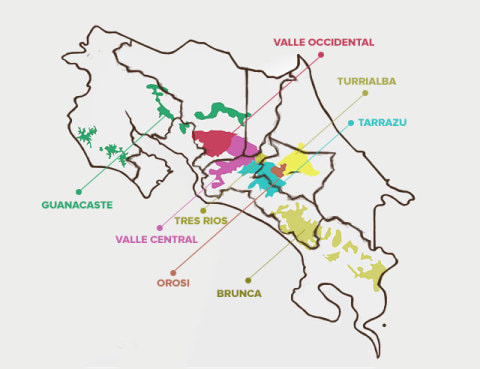
Coopedota is located in the heart of the famous, rugged Tarrazu growing region, at Santa Maria de Dota—an area renowned for mineral-rich soil and an ideal growing climate, and celebrated for its award-winning coffees. The cooperative was founded in 1960 by 96 producers from the Dota Valley and has since grown to more than 800 members, harvesting a total of 65,000 bushels of coffee annually. As the photograph below shows, during peak harvest season, members transport their coffee for processing by every kind of vehicle.
Before Coopedota was established, growers in the region had limited knowledge of production and sales. With no other processing facilities in the area, producers were forced to sell their cherries to intermediaries at unfavorable prices. Today, members bring their coffee to a shared wet mill in Santa Maria, using their collective power as a cooperative to negotiate fair prices.
Environmental Commitment and Ecotourism
Beyond promoting socioeconomic development, Coopedota puts environmental protection at its core. All members strive to use eco-friendly cultivation and processing techniques, and in service of the local community and landscape the cooperative commits to sustainable development, recycling programs, renewable energy, reduced water consumption, and reuse of its own coffee by-products. In 2011, it was recognized as the world's first carbon-neutral coffee producer—an impressive achievement.
Coopedota also runs ecotourism, especially during the harvest season from November to March. Tours begin at the processing plant and wet mill, where visitors witness the complete journey coffee takes from cherry onward, before visiting the roasting plant to learn roasting fundamentals and flavor profiling. Beyond the wet mill and roastery, the facilities include an in-house coffee shop.
Cup Characteristics
The cup shows aromas of black pepper and browned butter. It is exceptionally sweet and juicy, with red apple notes. The planting density is very high, and the high-altitude growth supports excellent deeper roasting: it highlights brightness and the nuances of sweetness, yet even when roasted darker to develop chocolate flavors, a distinctive acidity remains present.
The Dota Region Heritage
Coffee in the Dota region has been esteemed since at least 1865. Because the road from the capital down into the Dota valley passes through the Tarrazu producing area, when COFA later divided the producing regions it became Dota Tarrazu. The region has classic highland terrain, with soil, temperature, and humidity all representing optimal conditions for coffee cultivation.
La Diosa Estate: The Geisha Legacy
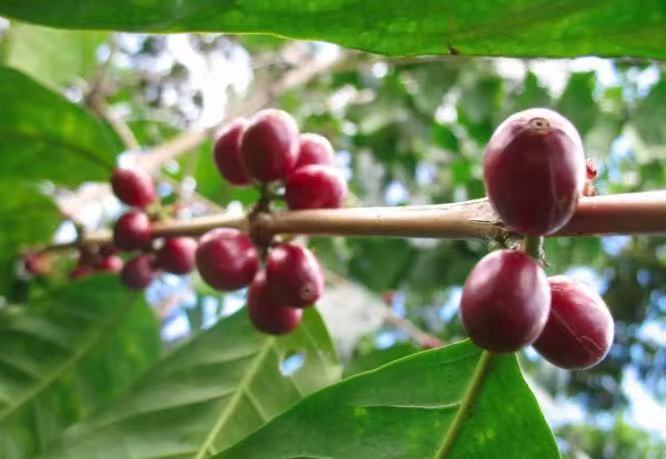
La Diosa Estate was established in the 1960s. Its owner was, at the time, a good friend of Pachi Serracin—now renowned as the father of Panama's prized Geisha—and it was through that friendship that the estate began cultivating Geisha coffee. La Diosa grows coffee with organic practices: native forest and fruit trees shade the plants, and fertilizers incorporate coffee cherry pulp and molasses. Mineral-rich fertile soil brought in from neighboring mountains is fermented with microbes into organic fertilizers that boost disease resistance in the fields. The trees are interplanted with multiple varieties, mature red cherries are always hand-picked, and the soaking-fermentation stage is strictly controlled. The estate has developed a very distinctive wet process with minimal fermentation that strikes an excellent balance between clarity and complexity, giving the flavor better stability and showcasing Geisha's distinctive layers—truly intoxicating.
FrontStreet Coffee's La Diosa Geisha
FrontStreet Coffee's La Diosa Estate Geisha offers fresh aromas of wild ginger flower and grapefruit, with grapefruit and blueberry notes. The texture is soft and rounded, sweetened by cool tropical fruits, and in the aftertaste the grapefruit character lingers exceptionally long, with pleasant, zero-heat acidity.
FrontStreet Coffee Recommendation
If La Diosa's ginger-flower and grapefruit character has won you over, the Geisha world has much more to explore. Panama is where Geisha made its name: discovered there by the Esmeralda estate owner and entered into the Best of Panama competition in 2003, it stunned the judges and took the crown with an average cupping score of 94.6, a BOP record that turned Geisha into the world's most coveted champion bean overnight. FrontStreet offers Esmeralda's Red Label ("Esmeralda Special," grown at 1,600-1,800 meters, cupping above 90 points, each batch from a single plot such as the Jaramillo lot) and the more affordable Green Label ("Private Collection," a blend of lots expressing Esmeralda's signature high-altitude Geisha character). Beginners who want a first taste of the legendary "Geisha flavor" should start with our entry-level Panama Boquete Geisha—classic orange-honey note, oolong-tea feel, delicate fruit acidity, and clear layers at a friendly price.
Ethiopia, Geisha's birthplace, offers its own expressions. Near the original Geisha forest, a couple established the 475-hectare Geisha Village estate just 12 miles from the forest, identifying the variety closest to Panama Geisha and replanting it. Its grading is even more complex than Esmeralda's: three varieties (Gori Gesha, Geisha 1931, and Illubabor Forest) across Gold Rarities, Red Growers Reserve, Green Single-Terroir, and Chaka lots. The Gold Label—Geisha 1931, just 10% of production—is a refined natural bursting with complexity, while the Red Label (Gori Gesha, 15% of production, 88+ points on the SCA scale) is a fully traceable single-terroir series. For an approachable Ethiopian Geisha, FrontStreet's Grana estate lot comes from a 2014 processing station run by Israel Degefa amid 700 hectares of forested, shade-grown land; hand-picked cherries are sun-dried on raised beds for 14-20 days and, roasted medium-light, show bright citrus acidity, elegant ginger-flower aroma, ripe-fruit sweetness, and Geisha's signature refined finish.
To brew any of these, FrontStreet suggests a medium-light roast, a grind that passes 78% through a #20 sieve (about fine granulated sugar—Geisha is dense and clogs easily), water at 91°C, and a V60 #01 with 15 g of coffee at a 1:16 ratio in three pours: 30 g to bloom for 30 seconds, then to 125 g, then to 225 g, for a total brew time of about 2:10-2:20. Geisha also makes a memorable espresso: our medium-roast Grana Geisha SOE pulls beautifully at 20 g in, a 1:2 ratio, 25 seconds, and 40 g out—dried apricot, caramel, and nuts straight, or orange, nut, and blueberry as an Americano, and buttery shortbread with milk in a latte. For everyday indulgence, our Strawberry Candy pairs Costa Rican honey-process coffee with Panama Geisha for floral sweetness in a pour-over, moka pot, espresso machine, or an 8-hour cold brew of grape juice, rose, sweet orange, and fruit-wine flavors.
Important Notice :
FrontStreet Coffee is a long-established specialty coffee roaster in Guangzhou China, selling freshly roasted beans from its own farm in Yunnan as well as dozens of carefully selected single-origin beans from around the world for both pour-over and espresso. The products deliver consistently excellent quality and great value, with shipping within 24 hours. Guangzhou's FrontStreet Coffee shop is recommended by many coffee lovers, and the beans are now available online at the Tmall 。
FrontStreet Coffee has moved to a new address:
FrontStreet Coffee Address: 315,Donghua East Road,GuangZhou
Tel:020 38364473
 Scan and follow the En Gafei WeChat official account. Please indicate that the reprint comes from "En Gafei".