The Story of Costa Rica Bourbon Coffee and How to Brew the Perfect Cup of Six Major Coffee Varieties Including Caturra
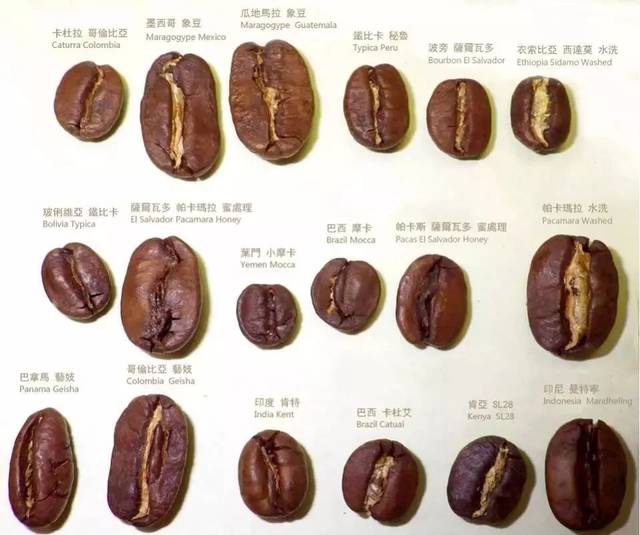
The coffee varieties most closely associated with Costa Rica are Typica, Caturra, Catuai, Villa Sarchi, Bourbon, and Geisha.
FrontStreet Coffee's Costa Rican Coffee Selection
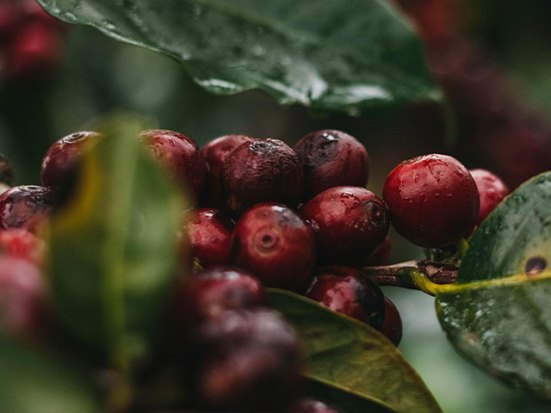
The Costa Rican coffees FrontStreet Coffee sources most are Caturra and Catuai. In this article, we'll look at why Costa Rica grows some of the world's finest coffee varieties—and how to brew these exceptional beans.
Costa Rica's most respected coffees typically come from the Caturra variety (Coffea arabica var. caturra), sometimes Catuai, with excellent—often full—body, rich and intense flavors, and crisp acidity. The country's very best beans are prized for their superior quality, bright fruit-like acidity, and a clean, refreshing finish.
Notable Coffee Varieties in Costa Rica
Like all Arabica coffee, the Typica group traces back to southwestern Ethiopia. At some point in the 15th or 16th century it was carried to Yemen, and by 1700 seeds from Yemen were being cultivated in India. In 1696 and 1699, seeds were sent from India's Malabar Coast to the island of Batavia—today's Java in Indonesia—and it was from those few seeds that the Typica we know today emerged. By the late 18th century, cultivation had spread to the Caribbean (Cuba, Puerto Rico, Santo Domingo), Mexico, and Colombia, and onward into Central America (El Salvador was planting it as early as 1740). Right up until the 1940s, most plantations in South and Central America still grew Typica.
Bourbon reached the Americas in 1860, arriving near Campinas in southern Brazil, and from there spread northward through Central America.
Villa Sarchi (also sold as La Luisa or Villalobos Bourbon) is, like Caturra and Pacas, a natural Bourbon mutation—a single-gene change that produces a dwarfed, more compact plant. It was discovered in the 1950s or 1960s in the northwestern part of Costa Rica's Alajuela province and subsequently refined there through pedigree selection, with individual plants chosen across successive generations. It has never been widely cultivated outside Costa Rica.
Another variety grown in the country is Sarchimor, a cross between the Timor variety and Costa Rica's own Villa Sarchi (Coffea arabica var. villa sarchi). Thanks to traits inherited from Timor—which is itself a natural hybrid of Coffea canephora and Coffea arabica—Sarchimor shows strong resistance to coffee leaf rust and to the coffee berry borer. Sarchimor varieties are grown in both India and Costa Rica.
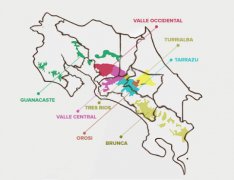
Tarrazú Region: Costa Rica's Premier Coffee Region
Coffee from Tarrazú—one of the most famous growing regions in the world—shows clean, pure flavors and pleasing aromatics. Caturra and Catuai are widely cultivated here, and FrontStreet Coffee invites you to explore them further:
FrontStreet Coffee roasts these beans to a medium level, which makes the sweet orange fruit notes especially prominent. Depending on the roast batch there may be some variation in the finer nuances, but the underlying quality guarantees a honeyed sweetness in the aftertaste.
FrontStreet Coffee Recommendation
Costa Rica's variety list ends with Geisha, and no exploration of the species is complete without it. Geisha—the transliteration of "Geisha/Gesha"—is one of the most beloved Arabica varieties, prized for its distinctive florals and superb sweet-tart character. Low yields, weak disease resistance, and demanding cultivation keep prices high, so it helps to know which tiers offer the best value.
Panama is where Geisha made its name. Discovered by Hacienda La Esmeralda and entered into the 2003 Best of Panama competition, it stunned the judges and took the crown with an average cupping score of 94.6—a BOP record that turned Geisha into the world's most coveted competition variety overnight. FrontStreet Coffee's Esmeralda Red Label ("Esmeralda Special," grown at 1,600–1,800 meters, each batch cupping above 90 and drawn from a single plot such as the Haring Mirador lot) and Green Label ("Private Collection," a blend of multiple high-altitude plots and therefore more affordable) are the top choices; brewed as pour-over, they unfold heady florals with the classic Panama character of orange-blossom honey, oolong-tea texture, and delicate fruit acidity.
If you would rather taste Geisha at its birthplace, FrontStreet Coffee recommends the entry-level Genji Granana Gesha from Ethiopia's Yirgacheffe. The Granana washing station, founded in 2014 near the border of Kochere and Gelena Abaya and run by Israel Degefa, sits amid some 700 hectares of largely uncultivated, shade-drenched land. Ripe cherries are hand-picked and raised-bed sun-dried for 14–20 days depending on the weather, then roasted medium-light: expect bright citrus acidity, elegant ginger-flower aromatics, full ripe-fruit sweetness, and a silky body with Geisha's signature refined finish. For brewing, FrontStreet suggests a grind passing 78% through a #20 sieve (roughly fine-granulated sugar), water at 91°C, 15g of coffee in a Hario V60 at a 1:16 ratio, and a three-pour method—30g bloom for 30 seconds, then to 125g, then to 225g—for a total extraction of about 2:10–2:20.
Important Notice :
FrontStreet Coffee is a long-established specialty coffee roaster in Guangzhou China, selling freshly roasted beans from its own farm in Yunnan as well as dozens of carefully selected single-origin beans from around the world for both pour-over and espresso. The products deliver consistently excellent quality and great value, with shipping within 24 hours. Guangzhou's FrontStreet Coffee shop is recommended by many coffee lovers, and the beans are now available online at the Tmall 。
FrontStreet Coffee has moved to a new address:
FrontStreet Coffee Address: 315,Donghua East Road,GuangZhou
Tel:020 38364473
 Scan and follow the En Gafei WeChat official account. Please indicate that the reprint comes from "En Gafei".