Costa Rican Coffee Facts: Flavor Description of Canet Estate Musician Series Beethoven Coffee Beans
Coffee is Costa Rica's main economic crop.
Coffee production has played a key role in Costa Rica's history and remains important to the country's economy. In 2006, coffee was Costa Rica's third largest export product, and it has been the number one economic crop export for decades.
Costa Rica: The First Central American Country with a Coffee Industry
All coffee originates from Ethiopia, the birthplace of Arabica. Through trade in the 1700s, coffee began to reach Europe and then other parts of the world. As for Costa Rican coffee, in 1723 a naval officer obtained seedlings from the coffee trees of French King Louis XIV. Astonishingly, this single seedling sailed to the Americas and became the breeding stock for every coffee tree in Central America.
Coffee Production in Costa Rica
Costa Rica has over 80,000 small farmers producing coffee.
The country produces about 56.438 ounces of coffee per hectare, the highest yield in the world.
The coffee grading system includes the following classifications: SHG, GHB and MHB.
In Costa Rica, green beans are graded primarily by altitude, which affects the hardness of the bean. Higher-altitude regions produce harder beans, which are considered more desirable. The Costa Rican grading system uses the following classifications: Strictly High Grown (SHG), Good Hard Bean (GHB) and Medium Hard Bean (MHB). Strictly High Grown beans grow above 1,200 meters. Good Hard Bean grows between 1,000 and 1,200 meters. Medium Hard Bean grows between 500 and 900 meters. 95% of the harvest from the Tarrazu region is classified as Strictly Hard Bean, the highest quality grade.
The coffee is certified bird-friendly. There are trees and bird nests on the farms.
Costa Rican Coffee Beans Lead the Way
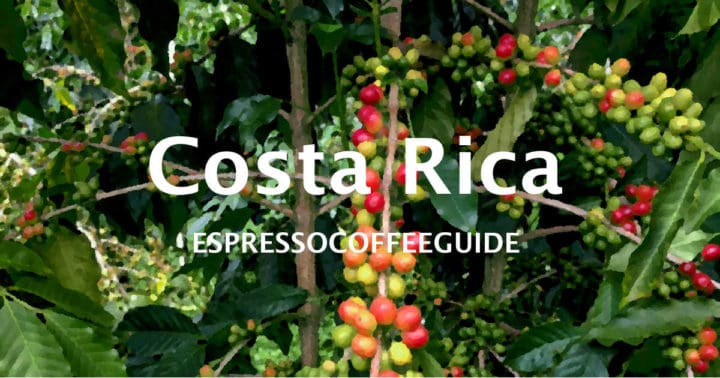
Throughout Central America, Costa Rican coffee has some of the best flavors thanks to its relatively high altitude. An important reason Costa Rican beans maintain such high quality standards is that it is illegal to produce Robusta here. The reason is that Costa Rica's soil conditions are excellent, rich volcanic soil with abundant minerals. The Costa Rican Coffee Association refuses to grow Robusta beans, which do not restore soil minerals through crop rotation, in order to protect the soil.
In such an excellent environment, Costa Rica's outstanding coffees are endless. Today FrontStreet Coffee introduces a popular product from the Musician series: Beethoven.

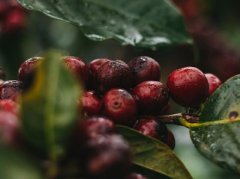
This coffee comes from the Canet Estate in the Tarrazu region of Costa Rica. The estate owner names the beans after the most classic classical composers. Beethoven is the Yellow Catuai variety, a single-gene variant of Bourbon discovered in Brazil in 1937. It has better productivity and disease resistance than Bourbon, and the plants are shorter, making them easier to harvest. In this intensive area the estate owner focuses on passion fruit cultivation, while the coffee receives more intelligent care. The beans are well cultivated and attended to, with only mature red cherry clusters picked. On harvest day, the strawberry-hued coffee cherries are floated and dried on African beds for at least three days, then, once the optimal moment is found, the cherry skin is removed while the mucilage is preserved and the cherries are taken to dry.
This drying must be slow enough to ensure that every surface of the cherry ferments, but not so slow that the coffee over-ferments. During drying, the cherries must be turned quickly to ensure even fermentation.
The brewed coffee is rich overall in sweetness and acidity, with flavors ranging from berries to citrus, and full-bodied yet clean. This unique processing on the farm is named after famous musicians such as Mozart, Bach and Beethoven.
Coffee beans processed this way have distinct floral notes. The refined washed method complements white fragrance with fresh bergamot and caramel sweetness.
Sweet, colorful fruits display diverse flavors of strawberry, apple, cranberry and lemon, with an unforgettable honey toffee taste.
FrontStreet Coffee suggests that when brewing this coffee, first use the standard three-stage pour-over method.
FrontStreet Coffee Recommendation
This Beethoven lot shows how much fruit a well-grown, carefully processed coffee can carry, and FrontStreet Coffee's African lineup takes that style even further. FrontStreet Coffee's washed Yirgacheffe is the classic entry point, with jasmine, lemon-citrus acidity and a tea-like body, while FrontStreet Coffee's Guodingding cooperative sharpens the same profile with more perfume. For a natural, fruit-drenched counterpart to Beethoven's strawberry and honey notes, FrontStreet Coffee's sun-dried Red Cherry Plan and its Flower Queen from Guji deliver ripe berry and tropical sweetness.
Important Notice :
FrontStreet Coffee is a long-established specialty coffee roaster in Guangzhou China, selling freshly roasted beans from its own farm in Yunnan as well as dozens of carefully selected single-origin beans from around the world for both pour-over and espresso. The products deliver consistently excellent quality and great value, with shipping within 24 hours. Guangzhou's FrontStreet Coffee shop is recommended by many coffee lovers, and the beans are now available online at the Tmall 。
FrontStreet Coffee has moved to a new address:
FrontStreet Coffee Address: 315,Donghua East Road,GuangZhou
Tel:020 38364473
 Scan and follow the En Gafei WeChat official account. Please indicate that the reprint comes from "En Gafei".