Costa Rica Brunca Region Coffee Growing Story Boulder Estate Anaerobic Honey Processing Flavor Profile
The Finca Piedra Alta Experience
The Costa Rican Finca Piedra Alta blueberry lot has long been one of my favorite coffees. Unfortunately, this particular variety is currently out of stock. Its unique profile - blueberry candy wrapped in fermented wine notes with a hint of minty freshness - makes it, in my view, an essential summer coffee. To understand where it comes from: where exactly is Finca Piedra Alta in Costa Rica, and why does it taste so distinctive? Let's explore this together with FrontStreet Coffee!
The Brunca Region: Coffee's Southern Haven
Brunca is a region in southern Costa Rica made up of the cantons of Coto Brus, Buenos Aires, and Pérez Zeledón. Coffee cultivation here began in the late 19th century in Pérez Zeledón, when the first settlers arrived from the coffee-growing areas of the Central Valley, bringing a deeply rooted Costa Rican coffee culture with them.
Coffee in Pérez Zeledón has developed across a variety of microclimates at altitudes from 800 to 1,700 meters above sea level, with an average temperature of 22°C. These conditions produce coffees of diverse character, capable of satisfying the most demanding palates. The cultivated area is estimated at 12,000 hectares, spread across 4,200 farms, which helps distribute the generated income among a large share of the population.
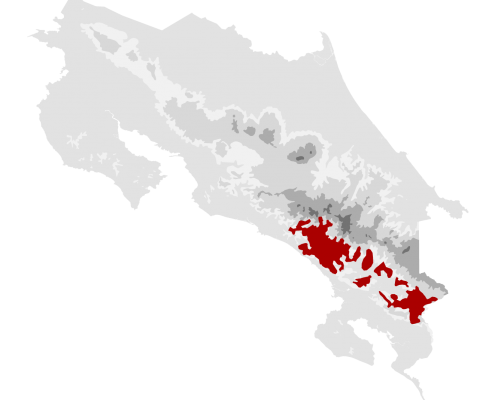
The Coto Brus Valley sits on the slopes of the Talamanca mountain range, which divides Costa Rica into a Pacific and an Atlantic slope. Coto Brus's economy depends almost entirely on coffee: records count 2,600 coffee producers whose harvests span 75 communities. On average, the Coto Brus region sits at higher altitudes and is more humid, with temperatures ranging between 18°C and 26°C.
Anaerobic Honey Processing Excellence
This coffee - processed by the anaerobic honey method - comes from Finca Piedra Alta in Costa Rica, situated at 1,700-1,800 meters in the Chirripó region.
Finca Piedra Alta is a 4-hectare farm owned and operated by the Araya Acuña family, near the village of La Piedra de Rivas in the Chirripó microregion. This Red Catuai microlot grows at 1,850 meters above sea level. The Araya Acuña family has farmed for generations - vegetables, blackberries, and cattle - but their land is steep and some crops yielded poorly, so the family transformed Piedra Alta into a coffee farm to make the most of its excellent altitude and growing conditions. The success of that transformation owes everything to the experience and passion of Mario and Rosita, the parents, and the matching enthusiasm and entrepreneurial drive of their sons and daughters. The coffee is processed at the Café Rivense del Chirripó micro-mill.
Café Rivense del Chirripó is a family micro-mill founded in 2005 by Régulo Ureña and Isabel Rojas. In their early years the family faced many challenges: low international prices, scarce information about coffee processing, and difficulty financing coffee projects. Starting such a venture in a region then unknown for specialty coffee, their neighbors predicted failure. Through perseverance, confidence in their project, and sheer hard work, however, the Ureña Rojas family pressed on down a long road toward recognition as specialty coffee producers.
Achievements and Regional Recognition
Their dedication has clearly paid off. In 2019, one of their microlots ranked fifth in the Cup of Excellence - the first coffee from the Brunca region ever to reach the COE top ten.
The Chirripó microregion keeps rising in the specialty coffee world, with fertile soil and a pristine environment. It lies between two very high mountains: Cerro de la Muerte (3,491m) and Cerro Chirripó (3,820m, Costa Rica's highest peak). The valley between them creates unique microclimates perfectly suited to coffee. In recent years the specialty potential of Chirripó has developed dramatically, and the land under coffee cultivation is expected to keep growing in the years ahead.
FrontStreet Coffee Recommendation
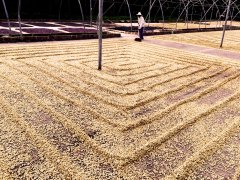
Honey processing evolved from Brazil's semi-dried (pulped natural) method - which FrontStreet Coffee's Cerrado lot showcases with its cream, peanut, nut, and chocolate notes - and was refined in Costa Rica by varying how much mucilage is kept and how long the beans dry, giving rise to black, red, yellow, and white honey grades.
For black honey, FrontStreet Coffee's Costa Rica Blackberry is a benchmark: almost no mucilage is removed, and drying lasts at least two weeks under shade cover to prevent over-rapid drying, with regular turning to avoid uneven fermentation and over-fermentation. Roasted medium-light, it exudes fresh florals and brews into grape, berry, and ripe blackberry flavors. For raisin honey - where whole cherries are pre-dried on raised beds for at least three days before pulping, with 100% of the mucilage retained - try the FrontStreet Costa Rica Mozart, with osmanthus, pineapple, and raisin aromas in pour-over, cold brew, or moka pot, or the FrontStreet Strawberry Sugar Geisha blend, which pairs Panama Geisha's floral tea-like character with raisin-honey Costa Rican coffee for grape, dried blueberry, gentle fruit acidity, an almond finish, and obvious sweetness.
Brew these honey lots on a V60 at around 90°C, 1:15, with a staged pour - bloom 30g of water for 30 seconds, build to 125g, then finish at 225g - to keep the fermented fruit sweetness clean, layered, and bright.
Important Notice :
FrontStreet Coffee is a long-established specialty coffee roaster in Guangzhou China, selling freshly roasted beans from its own farm in Yunnan as well as dozens of carefully selected single-origin beans from around the world for both pour-over and espresso. The products deliver consistently excellent quality and great value, with shipping within 24 hours. Guangzhou's FrontStreet Coffee shop is recommended by many coffee lovers, and the beans are now available online at the Tmall 。
FrontStreet Coffee has moved to a new address:
FrontStreet Coffee Address: 315,Donghua East Road,GuangZhou
Tel:020 38364473
 Scan and follow the En Gafei WeChat official account. Please indicate that the reprint comes from "En Gafei".