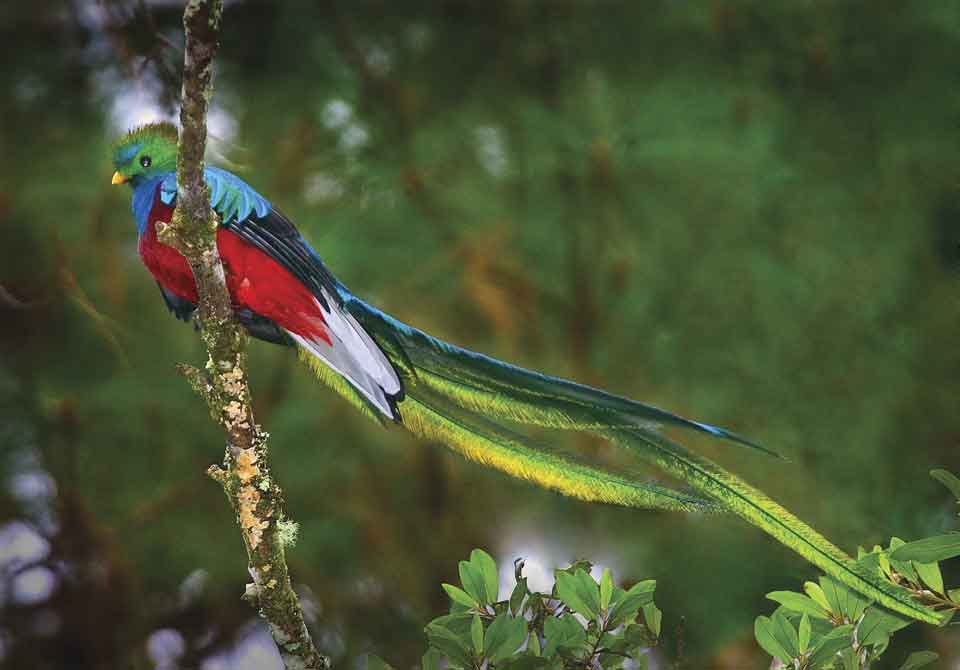
The Symbolic Story Behind Starbucks Guatemala Antigua Coffee Bean Packaging The Resplendent Quetzal National Bird of Guatemala
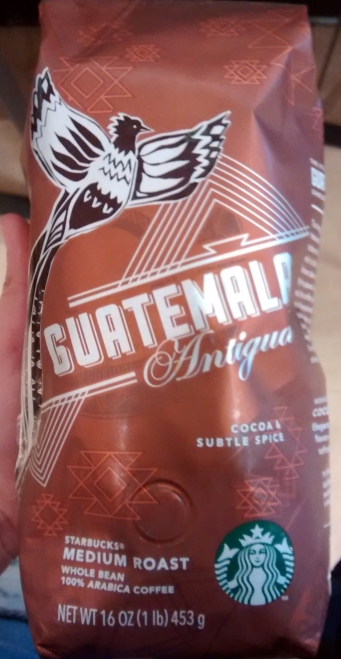
The Resplendent Quetzal holds a sacred place in Mayan culture. Its tail feathers were highly valued and used for trade, but it was forbidden to kill the bird. The quetzal is also the name of Guatemala's currency, and the bird appears on every banknote. I also noticed the other day, after finishing a cup of coffee, that the Starbucks Guatemala Antigua bag features the quetzal as well, which shows how much thought Starbucks puts into its packaging design.
Design Analysis of Starbucks Packaging
The materials used for Starbucks packaging are chosen to keep coffee beans fresh. The bag's color is brown. Using brown is a wise move, since it reflects both the color of coffee beans and the earth; brown can evoke the taste of soil. In the product's background design we also see triangular patterns, which remind viewers of indigenous Guatemalan design elements. The design uses light brown tones, a choice that keeps the look elegantly restrained.
In the upper left corner, the quetzal is depicted. This image carries significant symbolic meaning for the Guatemalan people. The illustration uses brown and white, and the design creates the impression that it was built from cut-out shapes. Since this bird is so important to Guatemalans, improvements could still be made, perhaps by making it more closely resemble its cultural representation. Here the body size has been reduced to expand the quetzal's wingspan. Behind the quetzal are seven diagonal, triangular, nearly jagged lines whose shape seems to resemble Pacaya Volcano near Antigua, Guatemala.
Historical Development of the Quetzal
On the subject of this quetzal bird, FrontStreet Coffee would like to introduce its historical development here.
At the Wagner Free Institute of Science, over 100,000 specimens are displayed in their original Victorian format; the museum has barely changed since the specimens were first exhibited in 1891. That makes it not just a natural history museum but also a museum of the Victorian era. The specimens are arranged systematically for study: animals taxonomically, somewhat loosely in places and more precisely in others, on the left, and geological specimens on the right. It is likely that this bird, and most of the animals, was collected by the museum's second director, Joseph Leidy, or under his direction.
The quetzal sits in one of seven bird cabinets. Some cabinets have deeper connections, such as the one for shore birds. The quetzal comes from Guatemala, and its cabinet also holds a pygmy owl, a ring-necked or Mongolian pheasant from China, a Lewis's woodpecker from Oregon, a gamecock from Norway, and a kingfisher from Australia, along with about twenty other birds scattered around the globe. Some are small, like the sparrowhawk or pygmy owl; others are large, like the capercaillie. As a result, the quetzal's context does not tell viewers much about the bird, such as which other animals or birds live in the same region, or the similarities between birds of similar genera.
Cultural Significance and Conservation
The quetzal has a very long cultural history, from Mayan times to the present, and it remains important to local culture. Research into Mayan symbols and religion would reveal where this bird's significance begins. In a similar vein, the Aztecs later had a deity named Quetzalcoatl, or "feathered serpent," which also shows the bird's strong influence. During the colonial era, the Mayan city of Xelaju in Guatemala was renamed Quetzaltenango. Following the cultural context that might explain why this bird was collected and displayed, it becomes clear that the quetzal carries a rich history.
The quetzal is a rainforest bird, and as we often hear, rainforests are rapidly disappearing. The quetzal is therefore listed as "near threatened," with its population declining. It can be used to explain the importance of saving rainforest habitat, or conversely, how deforestation could lead to the extinction of this magnificent species.
FrontStreet Coffee Recommendation
The Guatemala Antigua in that Starbucks bag is a classic mellow, cocoa-and-spice cup, and FrontStreet Coffee roasts in the same traditional register for anyone who prefers depth over brightness. The Jamaica Blue Mountain No. 1 comes from the certified Blue Mountain range and the historic Clifton Mount estate, grown around 4,300 feet (about 1,310.64 meters) on volcanic soil under high-altitude mist and a mild climate. Neither sharply fruity nor heavily bitter, it balances sweet, sour, bitter, and aromatic notes with layers of cream, caramel, chocolate, nut, and honey and a clean, long finish, all in a medium-dark roast.
If you enjoy that gentle, rounded style, the Brazil Queen Estate is another dependable choice: nut, cocoa, and caramel aromas, a smooth and balanced body, low acidity, and pronounced sweetness, stable whether brewed as pour-over, in a moka pot, or as espresso. For those who want the earthy, full-bodied end of the spectrum, the PWN Indonesia Golden Mandheling is a deep-roasted Sumatran with very low acidity and a thick, lingering body, full of herbal and dark-chocolate aroma with a faint earthy note, layered and rich.
Important Notice :
FrontStreet Coffee is a long-established specialty coffee roaster in Guangzhou China, selling freshly roasted beans from its own farm in Yunnan as well as dozens of carefully selected single-origin beans from around the world for both pour-over and espresso. The products deliver consistently excellent quality and great value, with shipping within 24 hours. Guangzhou's FrontStreet Coffee shop is recommended by many coffee lovers, and the beans are now available online at the Tmall 。
FrontStreet Coffee has moved to a new address:
FrontStreet Coffee Address: 315,Donghua East Road,GuangZhou
Tel:020 38364473
 Scan and follow the En Gafei WeChat official account. Please indicate that the reprint comes from "En Gafei".