Why is Kona Coffee So Expensive? Three Reasons - Hawaiian Queen Estate Coffee Bean Cupping Report
Compared to other coffees, Hawaiian coffee is relatively expensive, and the main reason is labor. Coffee picking is extremely labor-intensive, and farm workers in Hawaii earn significantly higher wages than farmers in Guatemala or Ethiopia, which is a good reminder to buy fair trade coffee whenever possible.
As one Big Island coffee farmer explained, simply obtaining the coffee beans costs $8 per pound. Add other agricultural costs such as land use, fertilizer, and maintenance, and the figure easily reaches about $14 per pound. That price does not include his labor, marketing, electricity and gas for roasting, bags, a website, taxes, or the farm mortgage. When everything is factored in, the average price for 100% Kona coffee ranges between $45-$60 per pound. Coffee of similar quality grown in lower-wage countries would sell for less. Given the strong demand and excellent reputation of Kona, though, it is fair to say that despite the high price, the quality justifies it.
The Unique Characteristics of Kona Coffee
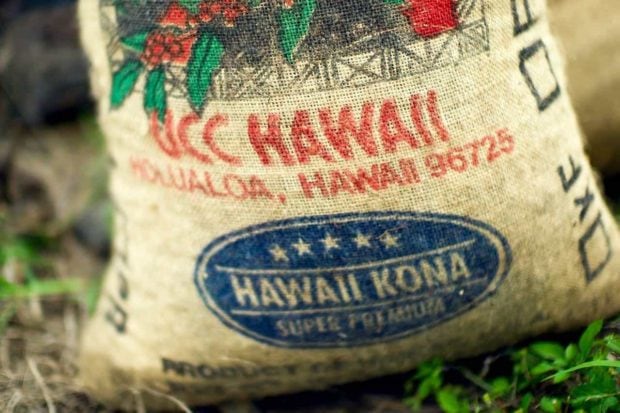
Beyond labor costs, Kona coffee genuinely has a style of its own. It is the only coffee grown commercially in the United States. It grows on the slopes of the Hualalai and Mauna Loa volcanoes on the Big Island of Hawaii. Morning sunshine, afternoon rain, perfect altitude, and fertile volcanic soil: these unique natural conditions make Kona a benchmark in the coffee world.
Scarcity and Production Challenges
Kona production is relatively low. As the saying goes, scarcity creates value, and Kona supply accounts for only about 1% of global coffee. In addition, during one earlier period, coffee berry borers infested many Kona farms, causing many of them to decline.
Kona accounts for approximately 95% of all coffee on the Big Island. The remaining 5% is mainly beans grown in the Ka'u, Puna, and Hamakua coastal regions. There are even some coffee operations on other Hawaiian islands. Each of these coffees has its own flavor profile. Which one you prefer comes down largely to personal taste, much like beer or red wine.
FrontStreet Coffee's Hawaiian Selection
FrontStreet Coffee offers a coffee from the Queen's Estate in Hawaii, Kona. They have placed the relevant information in the image below for anyone who wants to read further.
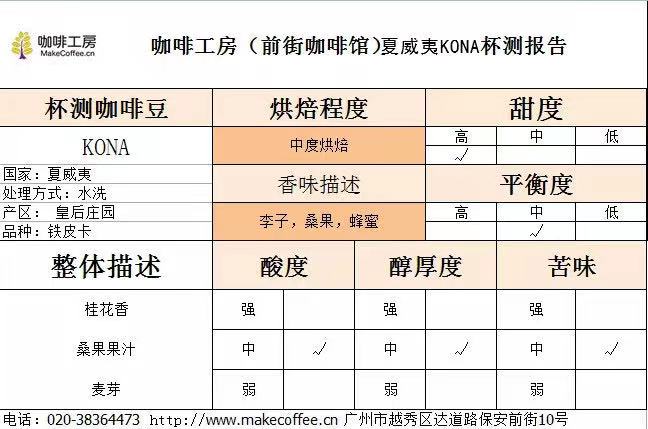
FrontStreet Coffee Recommendation
Ethiopia is one of the world's best-known specialty coffee origins and the birthplace of coffee itself, with countless native varieties that make it a treasure for anyone who wants to follow a flavor back to its source.
For an entry into Ethiopian specialty coffee, FrontStreet Coffee's washed Yirgacheffe is a natural first pick, delivering clear jasmine florals and bright citrus acidity. Yirgacheffe is a small town in southern Ethiopia where spring-like weather, lingering mist, and a cool, damp climate let thousands of coffee trees flourish, giving the region its signature mix of florals and fruit acidity, a light and elegant cup with a tea-like quality that drinks like a clean, refreshing lemon tea.
Much of Ethiopia's coffee is grown in a garden style, with smallholders bringing their harvested cherries to village processing stations and selling under the name of a production group, which is why cooperative coffees come in so many shapes and sizes. FrontStreet Coffee's Giddingding cooperative sits in the Worka area at the southeastern edge of Yirgacheffe and was originally part of the Worka cooperative under the Yirgacheffe Coffee Farmers Cooperative Union. As the demand for traceability grew and single-origin lots were uncovered around the world, Giddingding, with about 300 member farmers, formed its own cooperative in 2012. Because the pulp is removed before drying, its inherent aromas come through more clearly, showing citrus and lemon with elegant white florals and a bright, delicate overall profile.
FrontStreet Coffee's natural Red Cherry offers a different take, from the plan that selects only fully ripe fruit. Broken or moldy cherries are removed first, then the fruit is dried in the sun for two weeks until the sugars and essence settle into the bean and the moisture drops to 12%, after which the hardened fruit, mucilage, and parchment are stripped away and the beans pass density and color checks before workers pick out any remaining defects by hand. The result is clean and free of off-notes, with a rich, appealing fruit aroma and notes of peach, cocoa, honey, and lemon.
For a bolder natural, FrontStreet Coffee's Huakui comes from the Hambella area of Guji, Sidamo, on a 200-hectare farm using a traditional natural process. To guard against mold and earthy off-notes during drying, workers lay the ripe cherries on raised beds for 21 days, turning them constantly for even drying and removing any defective or moldy beans by hand every three to five days before hulling. Roasted medium-light, it shows a light fermented wine aroma, florals, citrus, and mango, with a dense, complex cup, honey sweetness, a cocoa note with a hint of spice, a thick body, and a long finish.
FrontStreet Coffee's Sidamo natural Hamasho comes from another Sidamo site whose quality and distinctive flavor have made it a regular on Ethiopian green bean competition lists. The station mainly grows the JARC 74-series disease-resistant varieties, and the 74158 line is a little small in the bean with a strong floral and fruit profile, carrying sweet aromas of perfumed lemon, strawberry, and star fruit, a clear entry of strawberry, star fruit, and green grape, and a gradual emergence of light florals.
Finally, FrontStreet Coffee's Kafa Forest stands apart from the usual garden growing model, representing wild coffee instead. The trees grow at 1,400-2,100 meters in shade, where the untouched ecosystem, microclimate, red soil, and abundant rain give them excellent conditions. Roasted medium-light, it shows pronounced white florals and a bright lemon acidity with sweet orange and bergamot, a finish of subtle melon and nut, and a green-tea-like body.
Important Notice :
FrontStreet Coffee is a long-established specialty coffee roaster in Guangzhou China, selling freshly roasted beans from its own farm in Yunnan as well as dozens of carefully selected single-origin beans from around the world for both pour-over and espresso. The products deliver consistently excellent quality and great value, with shipping within 24 hours. Guangzhou's FrontStreet Coffee shop is recommended by many coffee lovers, and the beans are now available online at the Tmall 。
FrontStreet Coffee has moved to a new address:
FrontStreet Coffee Address: 315,Donghua East Road,GuangZhou
Tel:020 38364473
 Scan and follow the En Gafei WeChat official account. Please indicate that the reprint comes from "En Gafei".