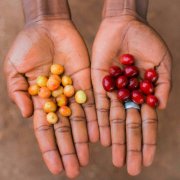
Introduction to Gakuyuini Processing Station in Kenya and Coffee Bean Processing: Thirikwa Farmers Cooperative
Kenya Gakuyuini Processing Station
Kenya's coffee industry is famous for its cooperative system that integrates growing, processing, and marketing, with roughly 70% of Kenyan coffee produced by smallholders. Here FrontStreet Coffee takes a close look at one of the most respected washing stations: Gakuyuini.
Coffee Details
Coffee Grade: AB, Fully Washed
Farm/Cooperative/Station: Gakuyuini Coffee Washing Station
Varieties: SL28, SL34
Process: Fully Washed
Altitude: 1,500–1,900 meters (member farms); 1,600–1,700 meters (washing station)
Owner: Member farmers deliver cherries to Gakuyuini
Sub-region/Town: Kerugoya and Kianyaga, Kirinyaga
Region: Central Kenya
Farm Size: Averaging about 250 trees per farmer
Bag Size: 30kg
Harvest: May–July (early crop) | October–December (late crop)
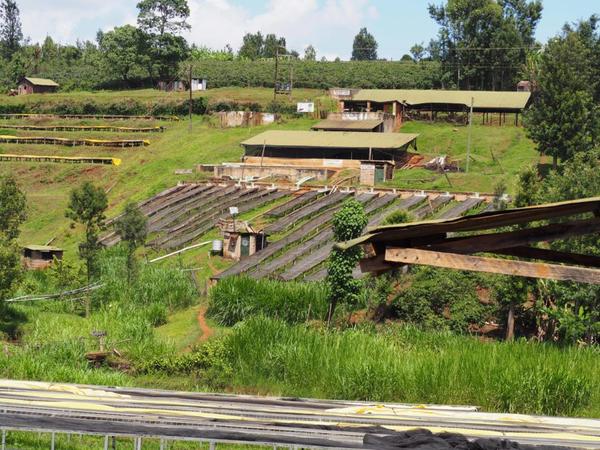
Today more than 600,000 smallholders—each farming under 5 acres—make up 99% of Kenya's coffee growers. Their farms cover over 75% of the country's total coffee area and produce nearly 70% of its coffee. These farmers are organized into hundreds of Farmers' Cooperative Societies (FCS), each operating at least one factory, while the remainder of annual production comes from small, medium, and large estates, most of which run their own washing stations.
More than 1,500 active members deliver cherries to Gakuyuini, and over a quarter of them—more than 670—are women. Together they harvest roughly 250 tons of cherries a year.
The station is owned and managed by the Thirikwa Farmers Cooperative Society, led by 5 democratically elected board members. Member farmers typically hold less than 1 hectare each, growing both subsistence and cash crops year-round to support their families, with an average of about 250 coffee trees often intercropped with other plants. Modest yields might mean slimmer profits, but many farmers see specialty coffee as a way to raise the value of every cherry picked. Since farm labor comes almost entirely from family members, professional cultivation and picking practices are easier to maintain, and many also grow tea, corn, and beans for food or extra cash income.
Harvest and Post-Harvest
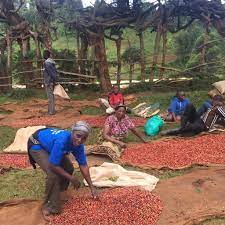
Farmers hand-pick only ripe cherries and deliver them to the Gakuyuini factory the same day. Cherries are sorted at the entrance—unripe and overripe fruit and foreign matter removed—before moving to the hopper for pulping. The factory processes with clean river water, which is recirculated before being discharged into seepage pits.
After pulping, the coffee ferments for 12 to 16 hours, then is washed in clean water to remove any remaining mucilage. The wet parchment is sorted again on the raised beds to catch damaged beans, turned regularly for even drying, and covered during the hottest hours and at night to prevent cracking and condensation. Drying typically takes about two weeks, depending on the weather, before the lots travel to the dry mill for secondary processing.
FrontStreet Coffee Recommendation
Washed processing is a water-based method in which cherries are floated, pulped, fermented and washed free of mucilage, dried, and hulled. The long soak drives chemical changes inside the bean, consuming simple sugars while building organic acids—so washed coffees tend to showcase the bean's own character with bright fruit acidity, cleanliness, and freshness.
Kenya is a master of the style, often taking it further with a double wash. The FrontStreet Kenya "Cherry Tomato" lot is a prime example: repeated rinsing and soaking push a juicy, fruit-punch quality to the extreme—cherry tomato, dried plum, snow pear, black plum, and golden sugar notes, sweet-tart and mouthwatering. If you love washed coffee's clarity, this is a must-try.
Important Notice :
FrontStreet Coffee is a long-established specialty coffee roaster in Guangzhou China, selling freshly roasted beans from its own farm in Yunnan as well as dozens of carefully selected single-origin beans from around the world for both pour-over and espresso. The products deliver consistently excellent quality and great value, with shipping within 24 hours. Guangzhou's FrontStreet Coffee shop is recommended by many coffee lovers, and the beans are now available online at the Tmall 。
FrontStreet Coffee has moved to a new address:
FrontStreet Coffee Address: 315,Donghua East Road,GuangZhou
Tel:020 38364473
 Scan and follow the En Gafei WeChat official account. Please indicate that the reprint comes from "En Gafei".