The Historical Development Story of Bourbon Coffee Beans - Nicaragua Finca Divina Red Bourbon Coffee Bean Flavor
Bourbon is one of the world's most culturally and genetically significant coffee varieties, renowned for its exceptional cup quality at the highest altitudes. Bourbon plants are relatively tall with green leaf tips and produce beans of uniform size, showing high potential for quality at high elevations.
However, Bourbon is susceptible to coffee leaf rust and nematode diseases, and it yields extremely low production.
French missionaries introduced Bourbon from Yemen to Bourbon Island (now Réunion Island) in the early 1700s, naming it after the island's current name. Bourbon did not leave the island until the mid-19th century. But from the mid-1800s onward, as missionaries began establishing footholds in Africa and the Americas, this variety spread to new parts of the world.
Bourbon was introduced to Brazil around 1860 and from there rapidly spread northward to other regions of South and Central America, where it is still cultivated today. There it mixed with other Bourbon-related varieties introduced from local Indian and Ethiopian stocks. Today many Bourbon-like varieties are found in East Africa, but none perfectly match the unique Bourbon varieties of Latin America.
In Latin America today, Bourbon itself has largely been replaced by its descendant varieties, particularly Caturra, Catuai, and Mundo Novo, although Bourbon is still cultivated in El Salvador, Guatemala, Honduras, and Peru.
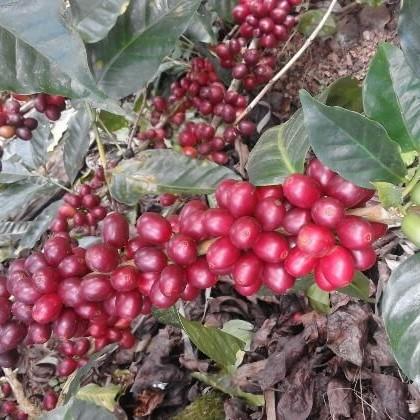
Compared with other coffee trees, Bourbon has large, wide leaves with wavy edges and tends to produce more secondary branches. The berries are quite small and very thick, and depending on the sub-variety they can be red, yellow, or pink. Red, yellow, and pink (sometimes called orange) Bourbon are varieties that resulted from natural mutations of recessive genes.
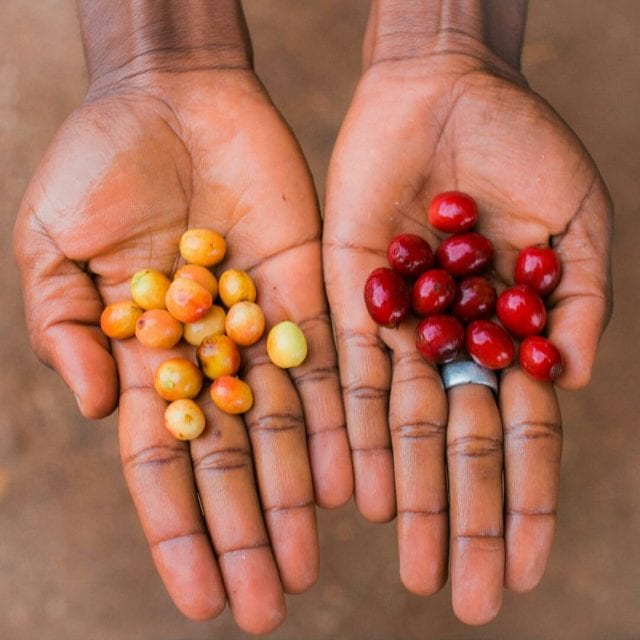
Bourbon is prized for its complex acidity and wonderful balance. It typically has sweet caramel qualities and crisp acidity, but can present distinctly different flavors depending on where it is grown. Salvadoran Bourbon tends to show buttery, toffee, and fresh pastry notes, while Rwandan types often have stronger fruit characteristics.
Red Bourbon Coffee:
Nicaragua Mierisch Finca Las Placeres
Flavor Description:
Dry texture with aromas of wine, strawberry, and grape. On entry, rich flavors of wine, blackberry, blackcurrant, mango, and grape emerge. The mid-section reveals notes of dry red berries and berries, while the finish offers flavors of sultanas and cocoa.
- Country: Nicaragua
- Origin Region: Matagalpa
- Altitude: 850-1150 meters
- Processing Method: Natural
- Grade: SHG
- Variety: Red Bourbon
FrontStreet Coffee also carries a natural sun-dried Red Bourbon from Nicaragua's Finca El Diviso Estate "Professor" coffee, from the Finca El Diviso Estate in Nueva Segovia. You are welcome to taste it.
Yellow Bourbon
Considered a "natural" mutation of Red Bourbon, first discovered in Brazil in the 1930s.
Pink Bourbon
Another "natural" mutation of Red Bourbon, first discovered and developed in El Salvador. The cherries of this plant are typically peachy-pink in color, which is why it is sometimes called "Pink" Bourbon.
FrontStreet Coffee Recommendation
To taste how Bourbon genetics play out in the cup, FrontStreet Coffee's Queen's Estate Yellow Bourbon is a natural place to start. Yellow Bourbon is a rare mutation of Red Bourbon with a cleaner fruit character, and this lot from Mogiana in Brazil shows a sugarcane-like sweetness alongside fruit and chocolate over a rich, clean base. It suits pour-over, moka pot, and home espresso machines alike.
If you prefer a classic, everyday Brazilian profile, FrontStreet Coffee's Cerrado Red Bourbon is a half-washed (pulped natural) single origin from the well-known Cerrado region, roasted medium. It offers creamy peanut, toast, caramel, and hazelnut aromas with a round, smooth body, little acidity, and a light bitter note.
Important Notice :
FrontStreet Coffee is a long-established specialty coffee roaster in Guangzhou China, selling freshly roasted beans from its own farm in Yunnan as well as dozens of carefully selected single-origin beans from around the world for both pour-over and espresso. The products deliver consistently excellent quality and great value, with shipping within 24 hours. Guangzhou's FrontStreet Coffee shop is recommended by many coffee lovers, and the beans are now available online at the Tmall 。
FrontStreet Coffee has moved to a new address:
FrontStreet Coffee Address: 315,Donghua East Road,GuangZhou
Tel:020 38364473
 Scan and follow the En Gafei WeChat official account. Please indicate that the reprint comes from "En Gafei".