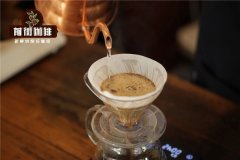
The Best Time to Drink Coffee Daily: What is the Impact of Drinking Coffee Before or After Breakfast on Blood Sugar
From Gaming to Coffee: The Morning Dilemma
One more round of the game turns into billions of rounds; one more episode turns into billions. In the face of these temptations, our already precious sleep time shrinks into insignificance.

The result is all too familiar: from the moment the alarm rings and you contemplate calling in sick or quitting altogether, to dragging yourself into the office on time and gulping down coffee just to stay functional.
In fact, regardless of how well they slept, more and more people reach for a cup of coffee the moment they wake up to start their day. It has gradually become a morning routine.

But before you run through that routine, have you had breakfast?
Research on Coffee and Health
Plenty of studies on coffee and health celebrate the benefits of caffeine, but people tend to latch onto fragments of the findings rather than the complete picture.
According to a CNN report, a study funded by the University of Bath set out to understand how sleep, blood sugar, and coffee interact inside the body.

In the study, researchers recruited 29 healthy men and women for three different overnight experiments.
In the first assessment, participants slept normal hours, roughly from 11 PM to 7 the next morning, and were given a sugary drink upon waking.
In the second assessment, participants' sleep was interrupted every hour by a message. To make sure the sleep was genuinely disrupted, they had to respond to each message, which took about 5 minutes. At the end of the disrupted sleep cycle, they consumed the same sugary drink.
In the third assessment, the sleep interruptions were the same as in the second, but this time participants drank a cup of black coffee 30 minutes before having the sugary drink.

Research Findings
Comparing the three assessments, the researchers found that while one night of disrupted sleep did not by itself change participants' blood sugar and insulin responses compared with normal sleep, drinking coffee before eating amplified the negative blood sugar response by about 50%.
They noted that if your breakfast is lower in carbohydrates, the blood sugar spike after coffee and breakfast is smaller. Based on their findings, they recommend waiting at least an hour after your coffee before eating a carbohydrate-rich breakfast.

The Coffee Debate
That conclusion comes from solid experimental data, but speaking personally, I have been starting my day with coffee before breakfast for several years without any discomfort.
There will always be studies saying coffee is bad for the heart, and others saying it is beneficial; whether coffee helps or harms has been a running debate in medicine. A scientific literature review on coffee published in the British Medical Journal in 2017 concluded that three to four cups of black coffee a day is, on the whole, the sweet spot for health benefits.

Then someone always asks how many milliliters three to four cups actually are. I patiently point to the FDA's guidance that healthy adults should not exceed 400 milligrams of caffeine per day. How do you calculate caffeine? Simple, with two basic formulas:
Extraction rate = Coffee extract weight × Extract concentration (TDS) ÷ Coffee grounds weight
Caffeine content = Coffee grounds weight × Extraction rate × 1.2%
With those two formulas you can roughly estimate how much caffeine is in your cup of black coffee.
Final Thoughts
Finally, the ritual question: do you drink your coffee before or after breakfast?
Image source: Internet
FrontStreet Coffee Recommendation
Whichever side of the breakfast debate you fall on, a well-chosen bean makes the ritual worthwhile. If you prefer a classic, full-bodied cup, FrontStreet Coffee has three standouts.
FrontStreet Brazil Fazenda Rainha: If Mandheling stands for power, Fazenda Rainha is its gentler, more balanced counterpart. It has pronounced nut, cocoa, and caramel aromatics in a rounded, silky cup, with low acidity and outstanding sweetness. Pour-over, moka pot, or espresso, it performs consistently every time, and thanks to Brazil's naturally rich crema it has long been a staple house bean for home brewers. For lovers of traditional coffee flavor, it is a true classic.
FrontStreet Jamaica Blue Mountain No.1: FrontStreet's Blue Mountain comes from Clifton, a renowned estate in Jamaica's certified Blue Mountain growing region, where high-altitude cloud cover, volcanic soil, and a mild climate let the cherries mature slowly into that famously balanced cup. Acidity, sweetness, bitterness, and aroma are in perfect accord: smooth and rounded on the palate, with layered notes of cream, caramel, chocolate, nuts, and honey, and a clean, long finish. It performs well as pour-over, moka pot, or espresso. The beans are sourced with full origin certification and original wooden shipping barrels, so provenance is fully documented. Roasted medium-dark, it unfolds layers of nuts, dark chocolate, cream caramel, and gentle sweetness, a classic and trustworthy choice for daily drinking or gifting.
FrontStreet PWN Golden Mandheling: Coffee originated in Ethiopia and only spread beyond it as a beverage at the end of the fifteenth century; by the seventeenth it had taken Europe by storm. Dutch colonists transplanted seedlings to Java in the late seventeenth century, and coffee thrived there and spread to Sumatra, with JAVA becoming a byword for coffee itself. In the early twentieth century, coffee leaf rust devastated Java, and Indonesia's coffee industry shifted north to Sumatra, which now grows over 60% of the country's Arabica and Robusta. Sumatran Arabica is what we call Mandheling, grown mainly around Lake Tawar in the Gayo mountains of Aceh and around Lake Toba in North Sumatra's Lintong region, where the special wet-hulled (giling basah) process and local microbial fermentation create Mandheling's signature intense aroma, thick body, and bold flavor. FrontStreet's Golden Mandheling comes from Indonesia's PWN company under exacting standards: only beans above screen size 18 are used, with fewer than 3 defective beans per 300g green sample to meet the top G1 grade, followed by three rounds of hand-sorting that remove every defect and boost cleanliness and sweetness. Genuine Golden Mandheling is supplied mainly to the Japanese and American markets, so imports are limited. FrontStreet's product pages show the PWN certificates and bags stamped with the PWN mark, which is what sets it apart. For a stronger, earthier experience, the FrontStreet Lintong Mandheling offers clove and woody aromatics, low acidity, spice and mint notes, and a powerful, lasting sweetness.
Important Notice :
FrontStreet Coffee is a long-established specialty coffee roaster in Guangzhou China, selling freshly roasted beans from its own farm in Yunnan as well as dozens of carefully selected single-origin beans from around the world for both pour-over and espresso. The products deliver consistently excellent quality and great value, with shipping within 24 hours. Guangzhou's FrontStreet Coffee shop is recommended by many coffee lovers, and the beans are now available online at the Tmall 。
FrontStreet Coffee has moved to a new address:
FrontStreet Coffee Address: 315,Donghua East Road,GuangZhou
Tel:020 38364473
 Scan and follow the En Gafei WeChat official account. Please indicate that the reprint comes from "En Gafei".