Honduran Coffee Growing Regions Estate Brand History Stories Introduction Honduran Coffee Beans Flavor Characteristics
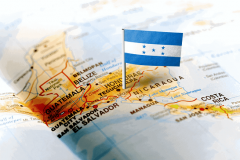
The origin story of Honduran coffee can be traced back to the late 18th century, when Spanish merchants introduced coffee plants to the country. It was not until the early 19th century, when Honduras gained independence from Spain, that the Honduran coffee industry truly took off.
Even after independence, Honduras's coffee industry remained far behind banana production for several reasons.
In the 19th and early 20th centuries, small coffee farmers emerged throughout Honduras, but they had no way to export their products. In the mid-20th century, infrastructure across the country improved significantly, making it easier for these small farmers to transport their goods, which in turn attracted more farmers to join the industry.
Unfortunately, tragedy struck the coffee farmers in 1998 when Hurricane Mitch destroyed 80% of the country's coffee production. Since then, the government has been providing incentives for coffee growers to return, with a focus on high-quality coffee beans.
The recovery from Hurricane Mitch has been a remarkable blessing for the Honduran coffee industry. Honduras has become one of the world's five largest coffee producers, producing over 475,000 metric tons of coffee annually. That falls short of Brazilian coffee bean production or Vietnamese coffee brand production, but it is an incredible comeback just decades after a national tragedy.
Honduras has not let its rapid growth compromise quality. It now exports more premium Arabica coffee beans than almost any other country in the world, and it continues to increase both the quantity and quality of those beans.
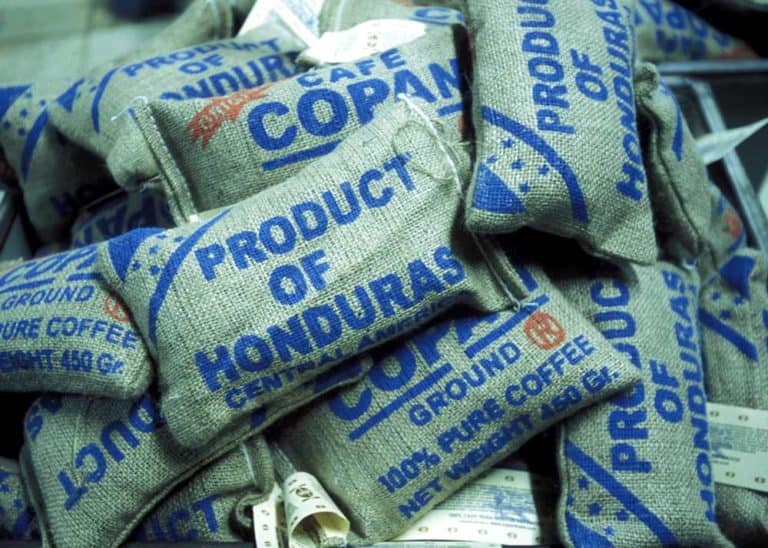
Today, FrontStreet Coffee introduces five Honduran coffee brands.
Best Honduran Coffee Beans: Fresh Roasted Coffee Organic Honduran Marcala
Fresh Roasted Coffee Honduras Marcala Organic Coffee
Cupping Notes: Walnut, milk chocolate, lemon
In 2000, 62 Honduran coffee farmers joined together with the common goal of transforming their farms from conventional to organic production, forming COMSA (Cafe Organico Marcala, S.A). In 2001, COMSA, with the support of a foundation called Funder, obtained organic certification from Bio Latina.
Location: La Paz, Marcala, Honduras.
Altitude: 4,250 - 5,575 feet (1,295 - 1,699 meters)
Process: Washed
Harvest: December - April
Export: February - June
Fresh Roasted Coffee
The Fresh Roasted Coffee process starts at the source. The coffee is carefully selected and built with great care and higher standards, always with consideration for origin, taste and quality. All these elements help deliver consistent, high-quality coffee that is truly desirable.
Coffee Storage
Coffee has four ancient enemies: heat, light, air and moisture. Storing coffee is crucial for maintaining freshness and enjoying it anytime. Storing coffee in conditions exposed to these elements causes it to lose its flavor quickly. Coffee should be stored in airtight containers; glass, metal or ceramic versions are recommended. Contrary to popular belief, coffee should not be stored in the refrigerator, as this causes moisture to leach out the coffee's flavor. Coffee beans are porous and will absorb unwanted flavors from the refrigerator.
Best Premium Honduran Coffee: Spirit Animal Coffee Tropical Fruit
BOURBON coffee variety, a premium single-origin micro-lot coffee. All the organic and sustainable coffee comes from high-altitude, shade-grown micro-lot farms: low acidity, mold-free, pesticide-free, hand-washed and re-washed, non-GMO.
Exciting Flavor - Bourbon beans are known for their rich creamy chocolate flavor, their sweetness (jasmine and tropical fruit cocktail) and very light fruit tones.
Single-origin, Organic and Fair Trade – This coffee comes from micro-lots in Honduras, priced above fair trade prices and organic.
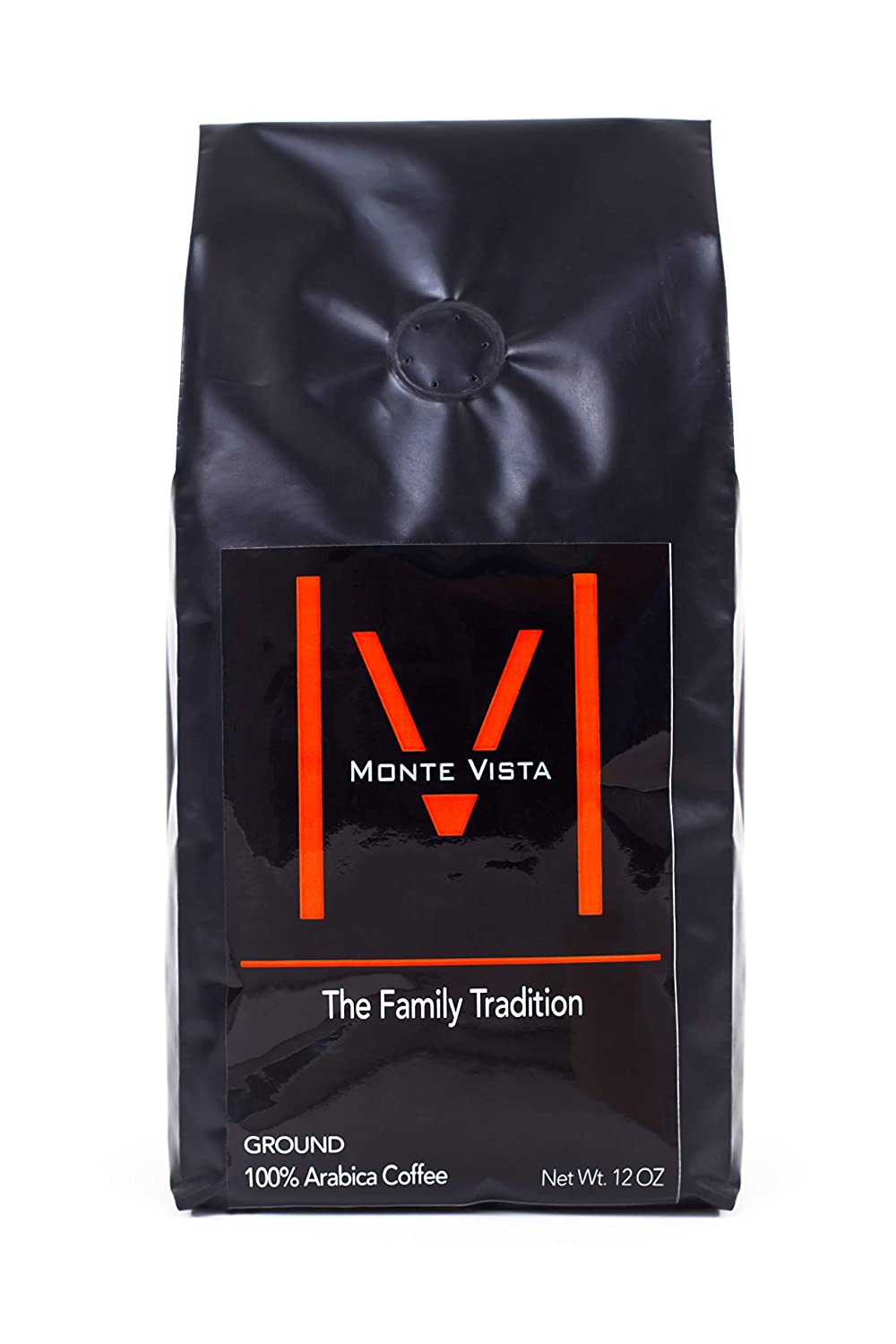
Best Honduran Coffee Brand: Monte Vista craft Honduran coffee
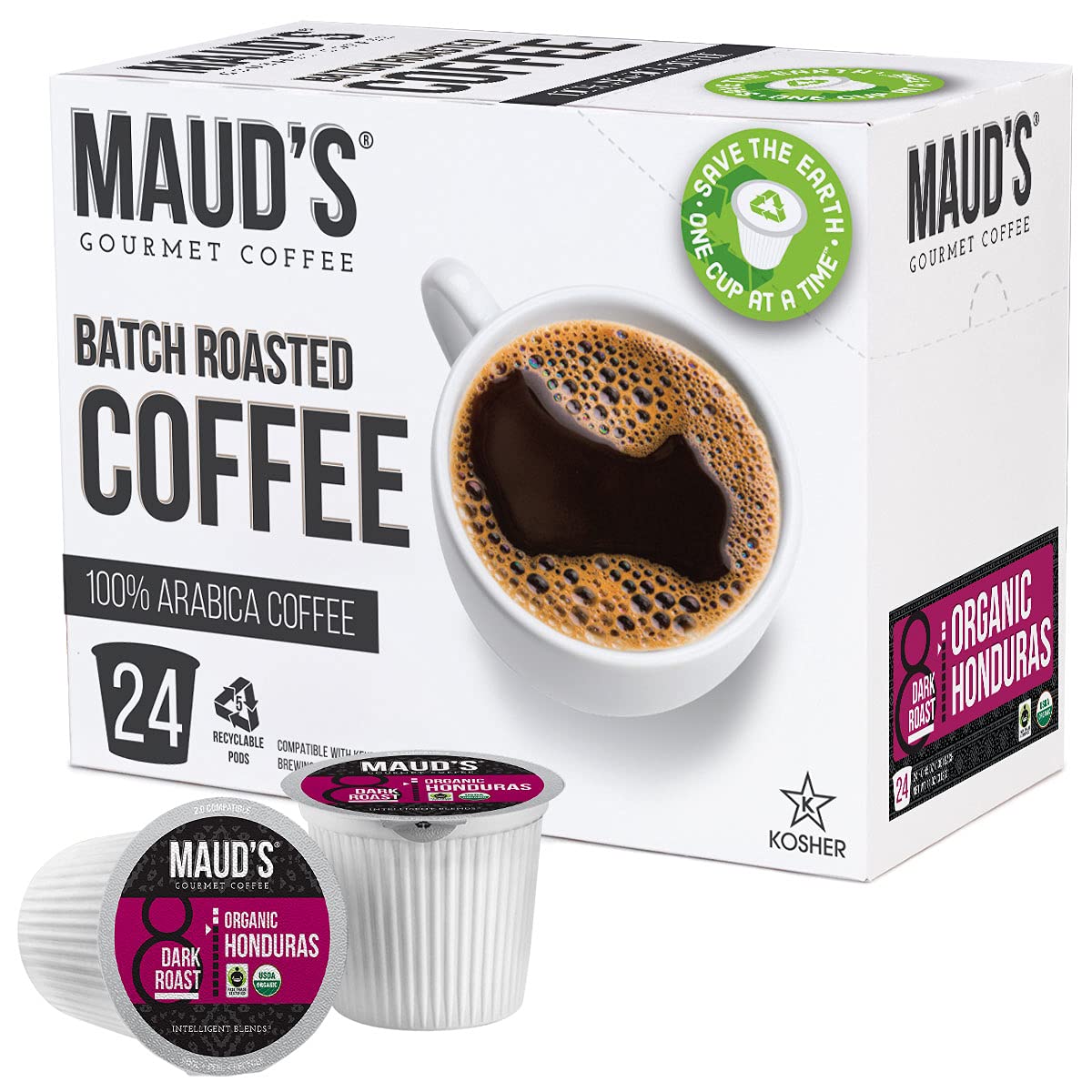
Best Honduran Coffee K-Cups: Maud's organic Honduran coffee k-cups
Maud's Organic Honduran Coffee offers a low-acidity, rich, deep roast, yet this coffee still carries smooth walnut and cocoa notes. Maud's Organic Honduran Coffee is 100% organic, single-origin, fair-trade-certified coffee. Organic Honduras offers low acidity and a high, dark body. Honduras's humid, tropical microclimate and mountainous terrain cause coffee beans to grow slowly, increasing mineral and nutrient intake and producing fuller, more powerful flavors. This rich, bold dark roast is not too heavy, carrying the smooth flavors of walnut and cocoa.
Best Honduran Copan Coffee: Volcanica Coffee Organic Honduran coffee
Honduran natural process coffee is grown in the Copan region of Honduras. Finca La Unica is a 35-hectare family property situated at high altitude, surrounded by vineyards and olive trees.
The natural process and raised-bed drying produce a rich, smooth body, medium acidity and juicy flavors.
Volcanica Coffee is a specialty importer and retailer of exotic gourmet coffee beans, dedicated to providing premium coffee from volcanic regions around the world with exotic and extraordinary flavors, backed by a 100% customer satisfaction guarantee.
FrontStreet Coffee Recommendation
Honduras earns its place among the world's leading Arabica exporters by balancing volume with quality, and that Latin American balance is echoed in the coffees FrontStreet Coffee keeps on the shelf. FrontStreet Coffee's Brazil Cerrado Red Bourbon is a classic Brazilian single origin from the well-known Cerrado region, known for high-quality beans. As a red Bourbon, it is medium roasted to bring out creamy peanut, toasted bread, caramel and hazelnut aromas, with a round, non-acidic body and a light bittersweet edge. It works for pour-over, moka pot, espresso SOE, siphon and French press alike.
For a step up in sweetness, FrontStreet Coffee's Brazil Queen Estate comes from Mogiana, close to South Minas, where fertile red volcanic soil feeds the cherries. The variety is the rare yellow Bourbon, a natural mutation of red Bourbon whose fruit character is cleaner, and it shows the fresh sugarcane sweetness that is hard to find in other regions along with fruit and chocolate notes. It is versatile enough for pour-over, moka pot and home espresso machine.
Brazil's low acidity, balanced body and approachable price also make it the first choice in many espresso recipes, so it appears throughout FrontStreet Coffee's blend line: FrontStreet Coffee's Classic Blend with its rich crema, FrontStreet Coffee's Specialty Blend with its strong nutty character, FrontStreet Coffee's Black Cocoa Blend with its balanced profile, and the shop-focused FrontStreet Coffee Commercial Blend all include Brazilian beans. Their contribution is chocolate and creamy aroma, a soft sweet-bitter balance and a stability that makes extraction more consistent.
Important Notice :
FrontStreet Coffee is a long-established specialty coffee roaster in Guangzhou China, selling freshly roasted beans from its own farm in Yunnan as well as dozens of carefully selected single-origin beans from around the world for both pour-over and espresso. The products deliver consistently excellent quality and great value, with shipping within 24 hours. Guangzhou's FrontStreet Coffee shop is recommended by many coffee lovers, and the beans are now available online at the Tmall 。
FrontStreet Coffee has moved to a new address:
FrontStreet Coffee Address: 315,Donghua East Road,GuangZhou
Tel:020 38364473
 Scan and follow the En Gafei WeChat official account. Please indicate that the reprint comes from "En Gafei".