How to Brew Indian Monsoon Malabar Coffee? Historical Stories and Flavor Differences of Coffee Beans from Various Indian Regions
Coffee from the Malabar region of southern India is processed using the monsooned natural method, which FrontStreet Coffee will introduce in upcoming knowledge sharing sessions. This coffee has low acidity and a very distinctive taste. Next, we will go through how to brew this type of coffee.
Recommended Brewing Method: Pour-over
Dripper: KONO Dripper
Water Temperature: 87-88°C
Dose: 15 grams
Ratio: 1:15
Grind Size: Medium grind (78% retention rate on No. 20 standard sieve)
Brewing Technique: Poured extraction
Use 30g of water for the bloom, with a bloom time of approximately 30 seconds. Using a small water flow, pour in a circular motion in the center with 95g of water, splitting at 125g. When the water level drops and is about to expose the coffee bed, continue pouring until reaching 225g to finish. When the water level drops and is about to expose the coffee bed again, remove the dripper. Timing starts from the beginning of the bloom, and extraction time is 2'00".
Tamil Nadu
The wildlife sanctuaries in this region are habitats for spotted leopards, while the plantations are home to high-quality, high-grown Arabica coffee, including the exotic Kent.
Altitude: 1000-1400 meters MSL
Rainfall: 2500-3000 mm
Main Coffee Type: Arabica Coffee
Total Area: 2,500 hectares
Average Yield: 1,500 metric tons
Main Varieties: S.795, Cauvery, Sln.9
Main Intercrops: Pepper, oranges, bananas
Araku Valley (Andhra Pradesh)
Home to colorful parrots, this picturesque valley often shows flocks of chattering red and green birds darting through the trees.
Altitude: 900-1100 meters MSL
Rainfall: 1000-1200 mm
Main Coffee Type: Arabica Coffee
Total Area: 20,000 hectares
Average Yield: 3,100 tons
Main Varieties: S.795, Sln.4, Sln.5, Cauvery
Main Intercrops: Pepper, mango, jackfruit, vegetables
Bababudangiris (Karnataka)
Bababudan brought seven "magical" beans from Yemen and planted them on the high mountains of this region. Deer are often found here, grazing near plantations of rich Arabica coffee.
Altitude: 1500-2000 meters MSL
Rainfall: 1100-1200 mm
Main Coffee Type: Arabica Coffee
Total Area: 800 hectares
Average Yield: 700-800 metric tons
Main Varieties: S.795, Sln.9, Cauvery
Main Intercrops: Oranges, bananas, pepper
Biligiris (Karnataka/Tamil Nadu)
Besides rich Arabica coffee, this region is also famous for the sambar deer, the largest Indian deer, with huge antlers.
Altitude: 1500-2000 meters MSL
Rainfall: 1100-1200 mm
Main Coffee Type: Arabica Coffee
Total Area: 800 hectares
Average Yield: 700-800 metric tons
Main Varieties: S.795, Sln.9, Cauvery
Main Intercrops: Oranges, bananas, pepper
Brahmaputra
The mighty Brahmaputra River flowing through the northeastern states is the lifeline of the region and the home of the one-horned rhinoceros. These sturdy animals are found in large numbers in Kaziranga National Park in eastern Assam.
Altitude: 800-1200 meters MSL
Rainfall: 1500-2000 mm
Main Coffee Type: Arabica Coffee
Total Area: 5,000 hectares
Average Yield: 300 metric tons
Main Varieties: S.795, Cauvery
Main Intercrops: Pineapples, pepper, jackfruit, vegetables
Chikmagalur
The forests and wildlife sanctuaries of Chikmagalur are rich in India's national bird, the beautiful peacock. Peacocks love to display their colorful feathers, especially in elaborate courtship dances.
Altitude: 700-1200 meters MSL
Rainfall: 1000-4500 mm
Main Coffee Types: Arabica, Robusta
Total Coffee Area: Arabica - 37,000 hectares, Robusta - 23,000 hectares
Average Yield: Arabica - 29,000 tons, Robusta - 30,000 tons
Main Arabica Varieties: S.795, Sln.5B, Sln.9, Cauvery
Robusta Varieties: Peridenia, S.274, CxR
Main Intercrops: Pepper, cardamom, areca nuts, oranges, vanilla
Coorg (Karnataka)
Lush coffee plantations here are filled with bees that produce delicious Coorg honey, collected by agile tribal communities.
Altitude: 750-1100 meters MSL
Rainfall: 1000-2500 mm
Main Coffee Types: Arabica, Robusta
Total Coffee Area: Arabica - 26,000 hectares, Robusta - 56,000 hectares
Average Yield: Arabica - 24,000 tons, Robusta - 69,000 tons
Main Arabica Varieties: S.795, Sln.6, Sln.9, Cauvery
Robusta Varieties: S.274, CxR
Main Intercrops: Pepper, cardamom, oranges, bananas, areca nuts
Manjarabad (Karnataka)
Gentle slopes, small streams and coffee trees provide natural habitat for jungle fowl. This yellow-headed bird with a red comb and multicolored feathers usually appears in pairs near coffee plantations.
Altitude: 900-1100 meters MSL
Rainfall: 1000-2500 mm
Main Coffee Types: Arabica, Robusta
Total Coffee Area: Arabica - 31,700 hectares, Robusta - 9,400 hectares
Average Yield: Arabica - 21,000 tons, Robusta - 9,400 tons
Arabica Coffee Varieties: S.795, Sln.6, Sln.9, Cauvery
Robusta Varieties: S.274, CxR
Main Intercrops: Pepper, cardamom, oranges, areca nuts, bananas
Nilgiris (Tamil Nadu)
Wildlife sanctuaries here shelter spotted leopards, while the plantations grow high-quality, high-grown Arabica coffee, including the exotic Kent.
Altitude: 900-1400 meters MSL
Rainfall: 1600-2600 mm
Main Coffee Types: Arabica, Robusta
Total Coffee Area: Arabica - 3,600 hectares, Robusta - 4,000 hectares
Average Yield: Arabica - 1,400 tons, Robusta - 2,800 tons
Main Varieties: Arabica - S.795, Kents, Cauvery; Robusta - Peridenia, S.274, CxR
Main Intercrops: Pepper, oranges, bananas, ginger, vegetables
Pulneys (Tamil Nadu)
A famous feature of this region is the bright hyacinth-like Kurinji flowers that appear once every 12 years. High-grown Arabica coffee, however, dominates year after year.
Altitude: 600-2000 meters MSL
Rainfall: 1000-1600 mm
Main Coffee Type: Arabica Coffee
Total Area: 14,000 hectares
Average Yield: 7,500 metric tons
Main Varieties: S.795, Sln.5B, Sln.9, Sln.10, Cauvery
Main Intercrops: Oranges, bananas, pepper, cardamom, vegetables
Sheveroys (Tamil Nadu)
The magnificent gaur, or Indian bison, embodies vitality and strength, much like the bold Arabica coffee that grows here. This massive animal, with its huge head and strong limbs, grazes in the lower mountain regions of this picturesque area.
Altitude: 900-1500 meters MSL
Rainfall: 800-1500 mm
Main Coffee Type: Arabica Coffee
Total Area: 5,000 hectares
Average Yield: 3,000 metric tons
Main Varieties: S.795, Cauvery, Sln.9
Main Intercrops: Oranges, bananas, pepper
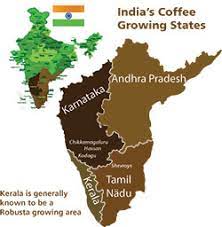
Travancore (Kerala)
India's national flower, the lotus, symbolizes purity and beauty. These bright, fragrant flowers with floating leaves and long stems grow in the shallow waters of this region, which is known for both Arabica and Robusta coffee.
Altitude: 400-1600 meters MSL
Rainfall: 2000-4000 mm
Main Coffee Type: Robusta Coffee
Total Area: 13,000 hectares
Average Yield: 9,000 metric tons
Main Varieties: S.274, CxR
Main Intercrops: Pepper, bananas, ginger, medicinal plants
Wayanad (Kerala)
Wayanad is home to India's national treasure, the Indian tiger, a symbol of bravery and courage.
Altitude: 600-900 meters MSL
Rainfall: 1100-1200 mm
Main Coffee Type: Robusta Coffee
Total Area: 67,000 hectares
Average Yield: 54,000 metric tons
Main Varieties: Peridenia, S.274, CxR
Main Intercrops: Pepper, bananas, ginger
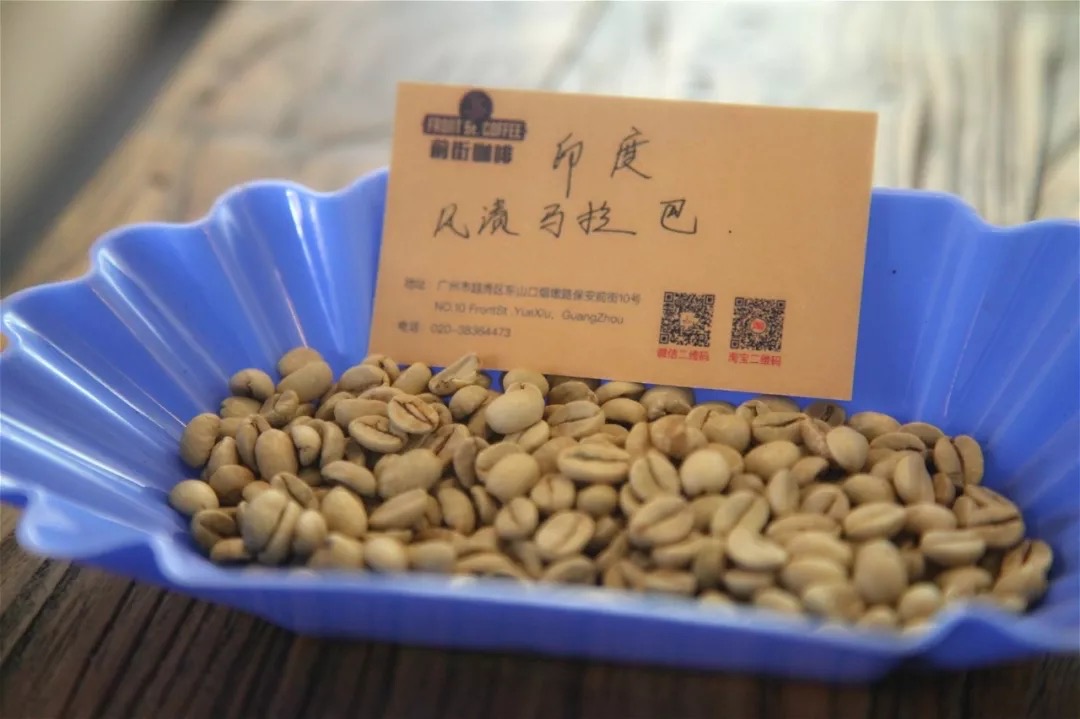
These wonderful and exotic coffees are made from washed Arabica grown in the Chikmagalur, Coorg, Biligiris, Bababudangiris and Shevaroys regions. The beans are very large, uniformly blue-green, with a clean and polished appearance. In the cup, the coffee presents a rich aroma, medium to good body, good acidity and excellent flavor, with a hint of spice. This is a rare premium coffee that truly represents India's finest.
FrontStreet Coffee Recommendation
Monsooned Malabar is prized for low acidity and a heavy, earthy body, and FrontStreet PWN Golden Mandheling sits in the same corner of the flavor map. A deep-roasted Sumatran wet-hulled coffee, it shows herbal notes, spice and black chocolate with a faint earthy depth and very little acidity, and it suits a moka pot, an SOE, a pour-over, a drip bag or an Americano. If you would rather have that weight without the earthy edge, FrontStreet Jamaica Blue Mountain No.1 brings cream, caramel, chocolate, nuts and honey in a perfectly balanced, low-acid cup. Brew it as this article suggests: a KONO dripper, 15g at 1:15, 87-88°C water, medium grind at 78% on a No. 20 sieve, a 30g bloom for 30 seconds, then to 225g in 2:00.
Important Notice :
FrontStreet Coffee is a long-established specialty coffee roaster in Guangzhou China, selling freshly roasted beans from its own farm in Yunnan as well as dozens of carefully selected single-origin beans from around the world for both pour-over and espresso. The products deliver consistently excellent quality and great value, with shipping within 24 hours. Guangzhou's FrontStreet Coffee shop is recommended by many coffee lovers, and the beans are now available online at the Tmall 。
FrontStreet Coffee has moved to a new address:
FrontStreet Coffee Address: 315,Donghua East Road,GuangZhou
Tel:020 38364473
 Scan and follow the En Gafei WeChat official account. Please indicate that the reprint comes from "En Gafei".