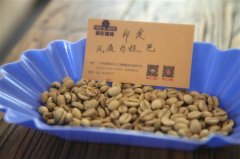
Kenya Washed Coffee Cultivation and Processing Flavor Characteristics Introduction to Gikirima Coffee Washing Station
Africa once dominated the global coffee market, with African countries holding four of the world's top ten coffee-producing spots during peak production periods. Today, African coffee continues to shine in a competitive world market, and Kenya stands as one of the continent's largest specialty coffee exporters. FrontStreet Coffee invites you to explore how Kenyan coffee is cultivated and processed.
The GIKIRIMA Factory
The GIKIRIMA Factory sits on the slopes of Mount Kenya, in a region with ideal conditions for coffee. The area experiences two rainy seasons, which produce two harvests. The main crop is picked from October to December, and the fly crop from April to June: 80% of the coffee is harvested during the main crop and 20% during the fly crop. Smallholders from the surrounding area pick only ripe cherries and deliver them to Gikirima, where the coffee is depulped and fermented overnight in tanks. It is then washed and moved to raised drying beds, where it stays for an average of 7-15 days depending on the weather. The coffee is turned and sorted frequently throughout drying.
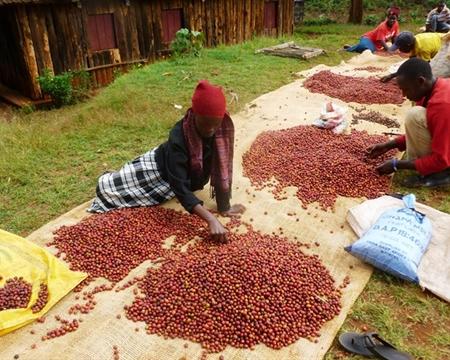
GIKIRIMA is the name of the washing station owned and operated by the 1,050 members of the Kibugu Co-Op Society. The coffee is grown on the southeastern slopes of Mount Kenya, and farmers deliver it to Gikirima for weighing, processing and washing. It is washed on the day of delivery and then dried slowly with constant sorting to remove defects. The cooperative grows a mix of SL28 and SL34 varieties alongside other crops, including tea, bananas and corn. The cooperative also works to raise farmer wages so that families can cover their children's education.
The Gikirima Factory is located in the Manyata division of Embu County, near Gicherori town, 14 kilometers from Embu's city center. It operates under the Kibugu Farmers Cooperative Society together with the Kathakwa, Ndunduri, Ngerwe and Gicherori factories. Gikirima Factory currently has 1,050 active members, and each member owns an average of approximately 1 hectare of land for coffee, while also growing tea, macadamia nuts, beans, bananas and corn. The region sits at an altitude of 1,800 meters, with deep, well-drained, fertile red volcanic soil and 1,900 millimeters of annual rainfall. Smallholder members have access to training and technical assistance, as well as advances for agricultural inputs and school fees.
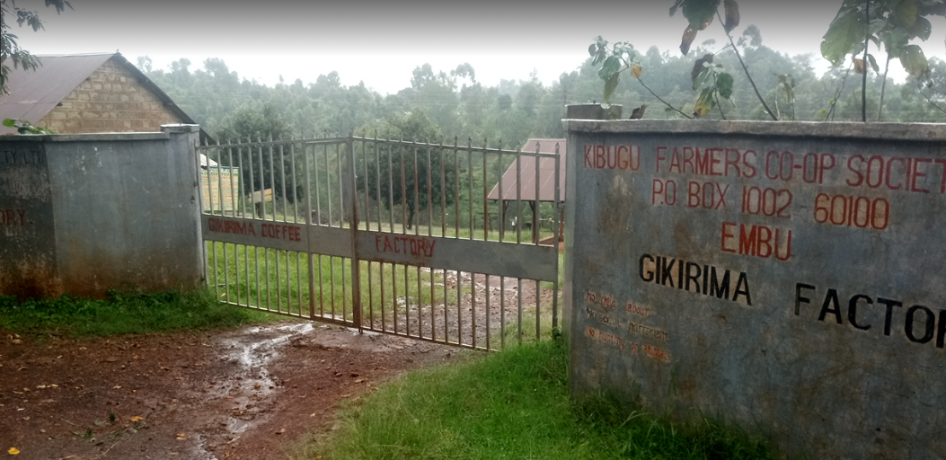
Coffee is carefully selected by the smallholder members and then delivered to Gikirima for pulping.
Gikirima has a long-term goal of increasing coffee production and building transparent, trust-based relationships with its smallholders through farmer training, agricultural practice workshops, and updated printed reference materials on sustainable agriculture. Take, for example, this coffee bean, numbered 11837:
Coffee Profile #11837
- Origin: Kenya
- Region: Embu
- Farm: Various smallholder members of Kibugu Farmers Cooperative Society
- Varieties: SL-28, SL-34
- Altitude: 1800 masl
- Processing Method: Washed
- Harvest Schedule: October to December (main crop); April to June (fly crop)
FrontStreet Coffee Recommendation
If you want to taste what a well-executed Kenyan washed coffee offers, FrontStreet Coffee's Kenya Cherry Tomato is one of the best-known examples. Kenya is unusually skilled at the double-washed process, which runs the beans through a second washing step: flotation, washing the mucilage off the surface, soaking, then drying and hulling. All that repeated rinsing and soaking pushes the juice-like quality of the coffee to the extreme.
Expect a juicy, bright cup with cherry tomato, smoked plum, snow pear, black plum and yellow sugar notes. Because the process leaves the bean's own character intact, the acidity stays vivid rather than heavy, which is exactly the profile Kenyan washed coffee is prized for.
For a gentler, more floral take on the washed style, FrontStreet Coffee's washed Gutiti Cooperative from Yirgacheffe shows jasmine and a bright citrus acidity, and its medium-light roast brings out green tea and honey notes. It is a forgiving choice for pour-over, cold brew or espresso, and a good comparison against the Kenyan lot if you want to understand how much origin and variety shape a washed coffee.
Important Notice :
FrontStreet Coffee is a long-established specialty coffee roaster in Guangzhou China, selling freshly roasted beans from its own farm in Yunnan as well as dozens of carefully selected single-origin beans from around the world for both pour-over and espresso. The products deliver consistently excellent quality and great value, with shipping within 24 hours. Guangzhou's FrontStreet Coffee shop is recommended by many coffee lovers, and the beans are now available online at the Tmall 。
FrontStreet Coffee has moved to a new address:
FrontStreet Coffee Address: 315,Donghua East Road,GuangZhou
Tel:020 38364473
 Scan and follow the En Gafei WeChat official account. Please indicate that the reprint comes from "En Gafei".