Kenya Coffee Bean Flavor Profile Characteristics Introduction Kenya Coffee's Historical Origin Story
What foods pair well with Kenyan coffee?
First and foremost, fruit, and most of all berries such as strawberries and raspberries. People sometimes drink coffee for a healthy lifestyle, and having only sweet treats isn't ideal. FrontStreet Coffee is here today to share some fruits that pair well with Kenyan coffee beans. The basic rule for most berries is to pair them with coffee from Kenya, Ethiopia, or Uganda; in this pairing, the coffee's fruity notes highlight the berry flavors.
For some people, coffee is the fuel for life, and so is breakfast, so why not pair them together? Breakfast may be the most common time of day for coffee, but depending on your breakfast choice, why not pair it with a coffee you love?
Have you noticed that coffee shops always offer various sweet baked goods? That's because they pair wonderfully with coffee: the sweetness of the baked goods balances the bitterness of the coffee. So when you want to indulge or enjoy a delicious cake, pair your coffee with dessert.
FrontStreet Coffee's Kenyan Selection
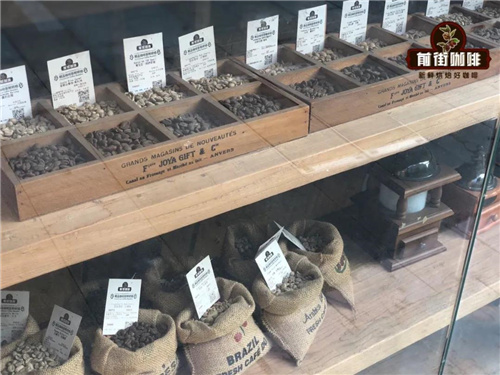
FrontStreet Coffee offers an Arabica lot from Thika, Kenya, a Bourbon-lineage blend of the SL28 and SL34 varieties. FrontStreet Coffee uses a medium-light roast, and cupping reveals intense lemon and plum aromas in the dry fragrance. Light roasted, it shows stunning floral and lemon notes while sipping, with green apple, berries, caramel, and coffee berry sweetness, bright juiciness, a crisp sweetness, and a caramel finish.
Brewing Recommendations
FrontStreet Coffee suggests using the standard three-stage brewing method when you first brew this coffee.
- Recommended brewing method: Pour-over
- Dripper: V60 dripper
- Water temperature: 90-92°C
- Dose: 15g
- Ratio: 1:15
- Grind size: Medium-fine (80% pass-through rate on a Chinese standard #20 sieve)
- Brewing method: Segment extraction
Start with 30g of water for blooming, for about 30 seconds. Using a small stream, pour in a circular motion in the center, in segments, up to 125g of water. When the water level drops and is about to expose the coffee bed, continue pouring to 225g total. Remove the dripper when the water level drops and is about to expose the coffee bed (timing starts from the bloom). Total extraction time is 2'00".
The History of Coffee
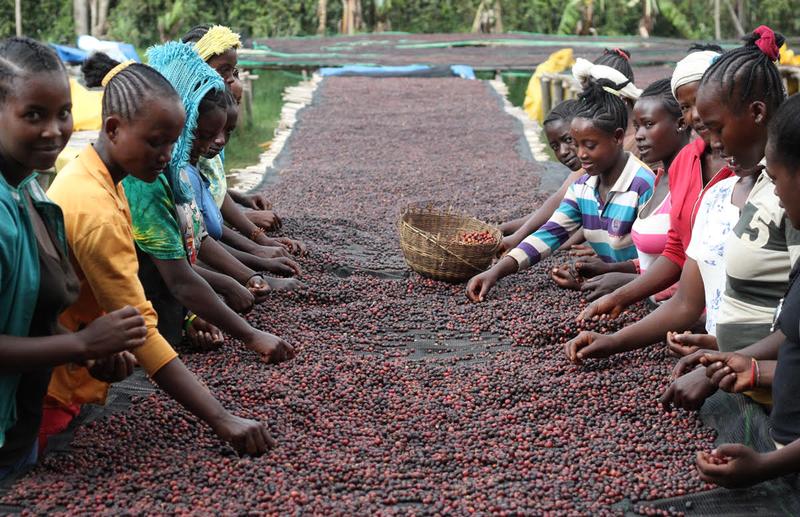
Despite sharing an over 865-kilometer border with coffee's birthplace, Ethiopia, coffee had to travel around the world to take root in Kenya. While the earliest credible reports place coffee in Ethiopia around 850 AD, coffee was not first planted in Kenya until 1893, when French missionaries planted trees at Bura in the Taita Hills.
Under British Empire rule, export-oriented coffee production expanded. Large privately owned coffee plantations were established, and most of the harvest was transported in parchment to Britain, where it was sold to roasters before milling. Roasters often blended Kenya's bright flavors with more chocolatey South American coffees.
Although the area and value of the large estates grew, indigenous Kenyans did not benefit. In fact, European settlers took direct action to exclude indigenous people from growing their own coffee.
To reduce competition, keep labor readily available and inexpensive, and keep raising demand for quality coffee, the Coffee Board was established to regulate coffee production and marketing. The Nairobi Coffee Exchange (NCE), which continues to this day, was set up in Nairobi to retain more of the value of origin green coffee.
The Coffee Board strictly controlled licensing for coffee cultivation and processing. Although the laws as implemented did not explicitly prohibit indigenous people from growing coffee, it was not until the 1950s that large estate owners functionally made coffee cultivation licenses inaccessible to indigenous farmers.
These laws protected the interests of the large landowners: more cultivation would not only lower the price of Kenyan coffee, but the large farm owners also feared that if smallholders and indigenous farmers had their own coffee farms, they would not work for wages on settler farms.
FrontStreet Coffee Recommendation
Kenyan coffee's calling card is a vivid, juicy acidity, and if that is what you enjoy, Ethiopia is the closest neighbor in style. The FrontStreet Washed Yirgacheffe shows the clear jasmine florals and bright citrus acidity that coffee people describe as the signature of Yirgacheffe, a small town in southern Ethiopia where spring-like weather, drifting mist, and cool damp air have let thousands of coffee trees thrive. The cup is light and elegant, weaving floral and fruity acidity into a tea-like body, and it drinks like a clean, refreshing glass of lemon tea, an easy and affordable first step into specialty coffee.
For a slightly more structured washed Ethiopian, try the FrontStreet Gudina Cooperative coffee. Gudina sits on the southeastern edge of Yirgacheffe in the Worka area and began as part of the Worka Cooperative under the Yirgacheffe Coffee Farmers' Cooperative Union (YCFCU); as demand for traceability grew, it became an independent single-origin in its own right. Because the pulp is stripped before drying, the coffee's inherent aromatics come through more clearly, showing citrus and lemon notes alongside elegant white florals, with a bright, delicate overall profile.
And if you want to compare how two African origins handle the same bright fruit, the FrontStreet Kaffa Forest is worth brewing. Unlike the backyard garden model, Kaffa Forest represents wild coffee, with trees growing under shade at 1,400-2,100 meters where a pristine environment, microclimates, red soil, and abundant rainfall give them excellent conditions. Medium-light roasted, its ground aroma shows distinct white florals, the entry brings bright lemon acidity with sweet orange and bergamot, and the finish carries a faint melon and nuttiness against a green-tea-like body.
Important Notice :
FrontStreet Coffee is a long-established specialty coffee roaster in Guangzhou China, selling freshly roasted beans from its own farm in Yunnan as well as dozens of carefully selected single-origin beans from around the world for both pour-over and espresso. The products deliver consistently excellent quality and great value, with shipping within 24 hours. Guangzhou's FrontStreet Coffee shop is recommended by many coffee lovers, and the beans are now available online at the Tmall 。
FrontStreet Coffee has moved to a new address:
FrontStreet Coffee Address: 315,Donghua East Road,GuangZhou
Tel:020 38364473
 Scan and follow the En Gafei WeChat official account. Please indicate that the reprint comes from "En Gafei".