Kenya Muranga Nyeri and Other Coffee Growing Regions, Thika Assamia Starbucks Kenya Coffee Bean Flavor
Kenya Coffee Overview
Kenya entered the coffee world relatively late, yet the industry has built - and kept - an impressive reputation. Since its first harvests, Kenyan coffee has been prized for its high quality, meticulous preparation, and refined cup character.
Key Facts
Position in World Production: #18
Average Annual Production: 800,000 (60kg bags)
Common Arabica Varieties: SL28, SL34, K7, Ruiru 11, Batian
Key Regions
Central Kenya: Nyeri, Muranga, Kirinyaga, Kiambu
Eastern Kenya: Meru, Tharaka Nithi, Embu, Machakos | Coast: Taita Taveta
Western Kenya: Bungoma, Kakamega | Rift Valley: Nakuru, Kericho, Trans Nzoia, Uasin Gishu, Baringo | Nyanza Region: Kisii, Nyamira
Harvest Months
Central Kenya: May-July (early crop) | October-December (late crop)
Regional Information from James Hoffmann's World Coffee Map
Population: 44,354,000 | 2013 Production (60kg bags): 850,000 bags. Central Kenya grows the largest volume of coffee in the country, and the highest quality comes from this region as well. Coffee from western areas such as Kisii, Trans-Nzoia, Keiyo, and Marakwet has also started drawing attention.
NYERI
Sitting in central Kenya at the foot of the dormant volcano Mount Kenya, Nyeri grows the country's finest coffee in its red soil. Agriculture dominates the local economy, and coffee is the leading crop. Cooperatives of smallholder farmers are far more common here than large estates. The region enjoys two harvest seasons, though coffee from the main season is generally of higher quality.
Altitude: 1,200-2,300 meters
Harvest Period: October-December (main season), June-August (secondary season)
Varieties: SL-28, SL-34, Ruiru 11, Batian
MURANG'A
Part of Central Province, this region counts roughly 100,000 coffee farmers. Early missionaries settled this inland area because the Portuguese barred them from living on the coast. Like its neighbors, it benefits from volcanic soil, and smallholder farmers outnumber estates.
Altitude: 1,350-1,950 meters
Harvest Period: October-December (main season), June-August (secondary season)
Varieties: SL-28, SL-34, Ruiru 11, Batian
KIRINYAGA
Bordering Nyeri to the east, this region also enjoys volcanic soils. Coffee is typically grown by smallholder farmers, and its wet mills turn out many exceptionally high-quality lots that are well worth seeking out.
Altitude: 1,300-1,900 meters
Harvest Period: October-December (main season), June-August (secondary season)
Varieties: SL-28, SL-34, Ruiru 11, Batian
EMBU
This region near Mount Kenya takes its name from Embu town. Roughly 70% of the local population farms on a small scale, with tea and coffee the most popular cash crops. Nearly all coffee here comes from small farmers, and the region's production is comparatively small.
Altitude: 1,300-1,900 meters
Harvest Period: October-December (main season), June-August (secondary season)
Varieties: SL-28, SL-34, Ruiru 11, Batian, K7
MERU
Most coffee here is grown by smallholder farmers on the slopes of Mount Kenya and the Nyambene Hills. The name refers both to the growing region and to the Meru people who live there. In the 1930s they were among the first Kenyans to produce coffee, thanks to the Devonshire White Paper of 1923, which affirmed the importance of protecting the rights of Africans in Kenya.
Altitude: 1,300-1,950 meters
Harvest Period: October-December (main season), June-August (secondary season)
Varieties: SL-28, SL-34, Ruiru 11, Batian, K7
KIAMBU
This central Kenyan region is dominated by large coffee estates, but urbanization is shrinking their number as landowners find selling to developers more profitable than farming. Coffee from the area is often named after its origin town - Thika, Ruiru, and Limuru among them. Many estates belong to multinational corporations, so harvesting is largely mechanical and quantity takes priority over quality. That said, plenty of smallholder farmers work here too.
Altitude: 1,500-2,200 meters
Harvest Period: October-December (main season), June-August (secondary season)
Varieties: SL-28, SL-34, Ruiru 11, Batian
MACHAKOS
A relatively small county in central Kenya, named after Machakos town. Coffee is grown here under both estate and smallholder production models.
Altitude: 1,400-1,850 meters
Harvest Period: October-December (main season), June-August (secondary season)
Varieties: SL-28, SL-34
NAKURU
This central Kenyan region contains the highest-altitude coffee growing areas in the district, though some trees at high elevation suffer from dieback disease, which halts their growth. The area takes its name from Nakuru town. Both estates and smallholder farmers grow coffee here, but production is relatively small.
Altitude: 1,850-2,200 meters
Harvest Period: October-December (main season), June-August (secondary season)
Varieties: SL-28, SL-34, Ruiru 11, Batian
KISII
Located in southwestern Kenya not far from Lake Victoria, this is a relatively small production area where most coffee comes from cooperatives of small producers.
Altitude: 1,450-1,800 meters
Harvest Period: October-December (main season), June-August (secondary season)
Varieties: SL-28, SL-34, Blue Mountain, K7
TRANS-NZOIA, KEIYO & MARAKWET
This small production area in western Kenya has been developing in recent years. Mount Elgon provides substantial altitude, and most coffee comes from estates. Growing coffee here is typically a way for farms that once depended entirely on corn or dairy to diversify.
Altitude: 1,500-1,900 meters
Harvest Period: October-December (main season), June-August (secondary season)
Varieties: Ruiru 11, Batian, SL-28, SL-34
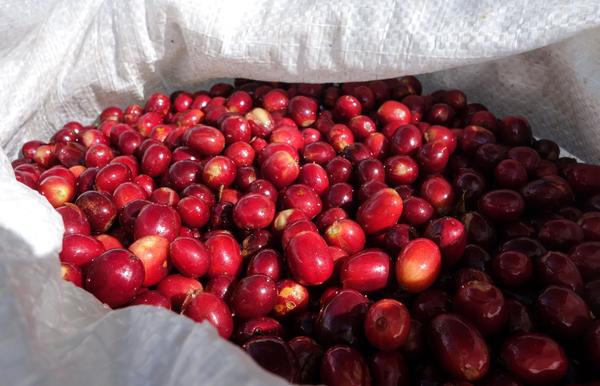
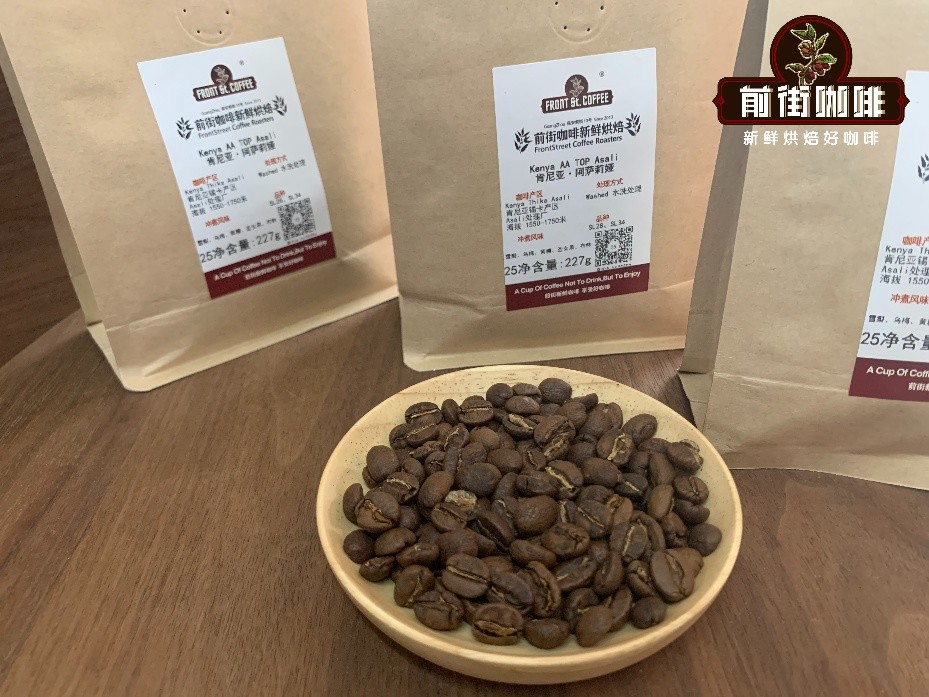
FrontStreet Coffee offers a Bourbon-variety mix of SL28 and SL34 from Thika, Kenya, processed as Asselia coffee beans.
FrontStreet Coffee roasts these beans to a medium-light degree. The dry aroma is intensely lemony with plum. When light-roasted, slurping the cup reveals a cascade of surprises: florals, lemon, green apple, berries, caramel, and coffee-cherry sweetness - bright, juicy, crisply sweet, with caramel notes lingering in the finish.
FrontStreet Coffee recommends starting with the standard three-stage pouring method for this coffee.
Recommended Brewing Method: Pour-over
Filter: V60 filter
Water Temperature: 90-92°C
Dose: 15 grams
Ratio: 1:15
Grind: Medium-fine (80% pass-through on a #20 sieve)
Brewing Method: Segmented Extraction
Start with a 30g bloom for about 30 seconds. Continue with a small water stream in circles around the center up to 125g. When the water level drops and the coffee bed is about to be exposed, pour again to 225g to finish. Remove the filter once the water level drops and the bed is about to show through (timing starts from the bloom). Total extraction time is 2'00".
Thanks to its excellent quality, this coffee was selected as a Starbucks Reserve Coffee. Starbucks roasts its Kenyan coffee to a medium roast, yielding multi-layered flavors with juice-like acidity and distinct, rich notes of grapefruit and wine.
FrontStreet Coffee Recommendation
If you love washed Arabica, try FrontStreet Coffee's Yirgacheffe Guodingding Cooperative beans. Yirgacheffe is a flagship of clean, luminous specialty Arabica, and its town is surrounded by small villages, each with its own washing station - the station at Guodingding village is the Guodingding Cooperative. These beans carry Ethiopia's highest grade, G1, and use classic washed processing, showing elegant white florals with citrus, orange, and green tea.
For a naturally processed alternative, FrontStreet Coffee's Huakui (Guji) features Ethiopia's most common local heirloom varieties. Because it blends coffee from many undifferentiated trees, the bean sizes vary, and the cup carries delicate florals with striking fruit aromatics - cream strawberry, mango, jackfruit, citrus, and blueberry, with the ripe tropical-fruit character typical of FrontStreet's natural Sidamo beans.
Important Notice :
FrontStreet Coffee is a long-established specialty coffee roaster in Guangzhou China, selling freshly roasted beans from its own farm in Yunnan as well as dozens of carefully selected single-origin beans from around the world for both pour-over and espresso. The products deliver consistently excellent quality and great value, with shipping within 24 hours. Guangzhou's FrontStreet Coffee shop is recommended by many coffee lovers, and the beans are now available online at the Tmall 。
FrontStreet Coffee has moved to a new address:
FrontStreet Coffee Address: 315,Donghua East Road,GuangZhou
Tel:020 38364473
 Scan and follow the En Gafei WeChat official account. Please indicate that the reprint comes from "En Gafei".