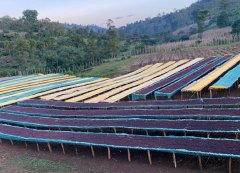
Panama Washed Geisha Coffee Bean Flavor - Hartman Estate's Growing Advantages in Baru Volcanic Region
Hartmann Estate is located in the Baru Volcano region, where nutrient-rich volcanic soil and towering pristine forests create the perfect shade-growing environment. Shade-grown coffee develops more slowly, allowing it to build higher sweetness and brighter acidity. The Chiriqui Volcanic highland microclimate also gives Hartmann coffee an excellent foundation. The estate grows a diverse range of beans: Typica, Caturra, Catuaí, Bourbón, Paché, Pacamara, Maragogipe, and, in recent years, more and more Geisha.
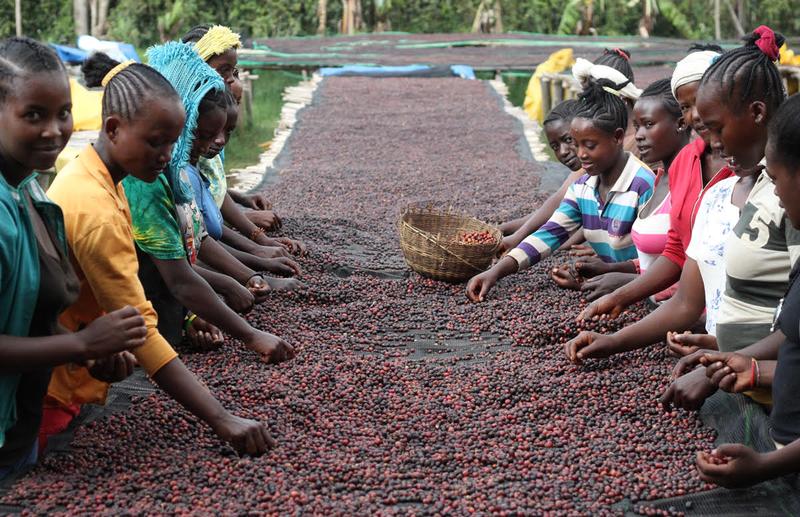
Panama Hartmann Geisha Washed
Origin: Panama
Region: Chiriquí
Sub-region: Santa Clara, Renacimiento, Candelaria
Altitude: 1500 meters above sea level
Farm: Hartmann Estate
Owner: Hartmann Family
Variety: Geisha
Process: Washed
Harvest: December to March
Cupping Notes: Floral and lavender aromas, with clean and complex flavors. Lavender, black tea, bergamot.
For comparison, here are Geisha coffee beans from the Ojo de Agua & Palo Verde regions of Hartmann Estate:
Region: Ojo de Agua & Palo Verde
Variety: Geisha
Soil Type: Volcanic soil
Grade: SHB
Process: Washed process
Harvest: Hand-picked
Certification: Bird Friendly certification
With a medium-light roast, it features aromas of black currant, butter, and toasted almonds. The flavor profile is dominated by citrus and lemon notes, followed by sweet sensations of apple and caramel.
Next, FrontStreet Coffee will introduce the story of the Hartmann family.
The Hartmann Family Story
The Hartmann family is considered one of the pioneers of specialty coffee production in Panama. Their story began with Alois Strasil Hartmann, born in 1891 in the Moravia region, then part of the Austro-Hungarian Empire. He laid the foundation for Finca Hartmann, which was formally established by his son Ratibor Hartmann in 1940. Alois came to Panama in 1912 seeking adventure, which led him to follow the telegraph lines to Volcán rather than staying in Panama City. He was the first resident of Volcán, where he settled, married Susana Troetsch (daughter of German immigrants), and cared for 2,000 cattle and 1,000 donkeys for Mr. Landberg. He started a coffee farm and later moved to Santa Clara, where he opened another coffee farm, but his true interest lay in archaeology.
For the coffee farm, he purchased 500 hectares of land from the Panamanian government and gave 100 hectares of it, containing pristine forest, to one of his sons, Ratibor Hartmann, who was then working with the U.S. military in Panama City. Ratibor transformed this land into the Finca Hartmann coffee farm. In 1966, Ratibor married Dinorah Sandí from Costa Rica. Together they raised five children: Ratibor Jr., Allan, Alexander, Aliss, and Kelly.
Today, Finca Hartmann is a family enterprise—each family member participates passionately in management and plays a different role in the farm's cultivation, production, and tourism. Coffee is their way of life, their culture, their family—lots of work and lots of love. Their employees and buyers return year after year because they appreciate the family's vision: working with nature, farming the land without destroying it. The finca consists of 2 farms—Santa Clara Finca Hartmann and Ojo de Agua—located between 1,300 and 2,000 meters above sea level, with nearly 100 hectares of forest reserve adjacent to Parque Nacional de La Amistad. Coffee grows under the shade of native tropical rainforest trees that have stood for many years. The Hartmann family tries not to cut trees.
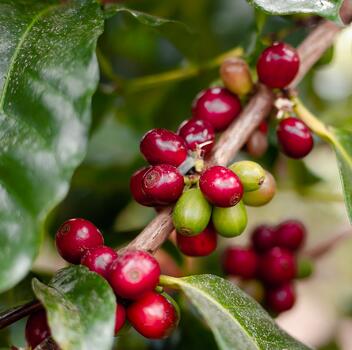
Panama's Coffee Industry
Although coffee production is small, Panama is a powerful player in coffee quality. Panama is especially famous for producing the Geisha variety, which has sold for over $800 per pound. Today, Panama is known for producing rare and sought-after varieties, making it a contender for a new type of "coffee tourism" that has the potential to change how we produce, purchase, consume, and talk about specialty coffee globally.
The high value of Geisha has brought both the best and worst sides of the industry. For established producers who sell Geisha and other lots at high prices, the proceeds are often reinvested in their communities and used to transform their farms to be as environmentally sustainable as possible. Unfortunately, the lure of Geisha's high value has led some to bypass traditional land purchase agreements and illegally clear forest areas of national parks to obtain prime locations for new (and illegal) Geisha farms.
Although the number of producers selling Geisha at high prices remains relatively small, Panama's thriving coffee industry has shown potential to increase income for a broader range of producers and coffee workers.
FrontStreet Coffee Recommendation
Hartmann Estate's washed Geisha is a textbook example of the lavender, black tea, and bergamot profile that Panama is known for, and FrontStreet Coffee offers several ways to explore that same terroir. FrontStreet Coffee's Boquete Washed Geisha is an estate-level introduction, grown at 1,600 meters on volcanic ash soil and showing jasmine florals, green tea, honey, and citrus.
To go deeper into Panama's graded Geisha, FrontStreet Coffee's Emerald Estate Green Label Geisha blends multiple estate lots into a high-altitude expression of the classic profile, while the Emerald Estate Red Label Geisha comes from a single plot above 1,700 meters and typically scores above 90 points, with a refined orange-blossom and honey character.
Important Notice :
FrontStreet Coffee is a long-established specialty coffee roaster in Guangzhou China, selling freshly roasted beans from its own farm in Yunnan as well as dozens of carefully selected single-origin beans from around the world for both pour-over and espresso. The products deliver consistently excellent quality and great value, with shipping within 24 hours. Guangzhou's FrontStreet Coffee shop is recommended by many coffee lovers, and the beans are now available online at the Tmall 。
FrontStreet Coffee has moved to a new address:
FrontStreet Coffee Address: 315,Donghua East Road,GuangZhou
Tel:020 38364473
 Scan and follow the En Gafei WeChat official account. Please indicate that the reprint comes from "En Gafei".