Espresso Extraction Parameters Guide: How Much Coffee, Time, and Temperature for Perfect Espresso
Introduction
As with pour-over, extraction parameters shape how espresso tastes. Small deviations in dose, time, or pressure can push certain flavors forward and leave you with a sharply acidic or bitter shot. That is why it pays to understand the key espresso extraction parameters and how each one behaves.
Coffee Grounds Quantity
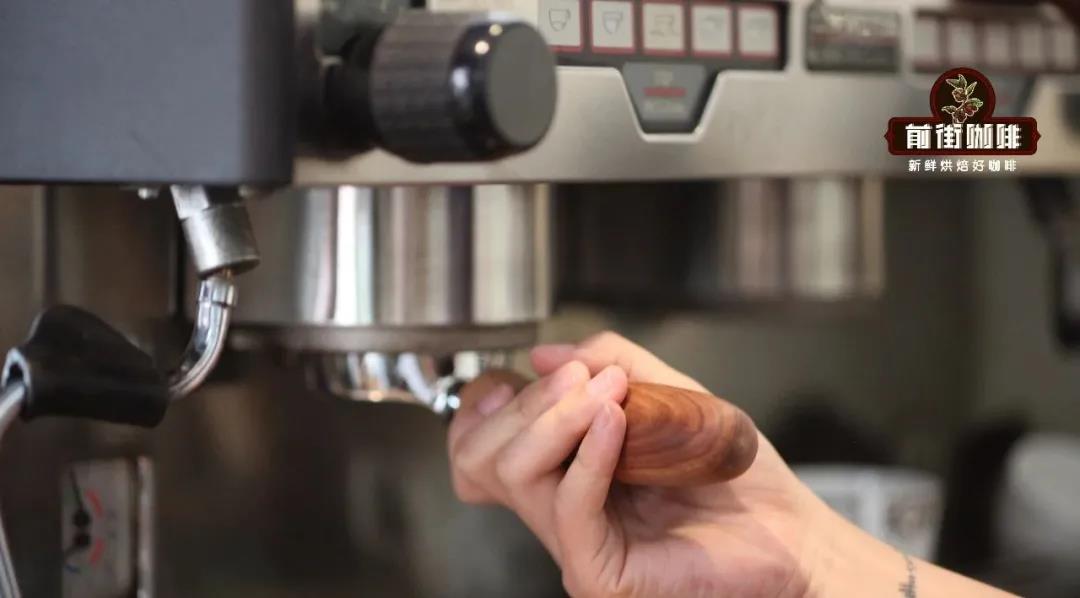
The dose for an espresso shot is set by the capacity of the portafilter basket. Common basket sizes today are 7g and 9g for a single shot and 16g, 18g, 20g, and 22g for a double. The basket's rated capacity is the recommended dose, with roughly ±1g of room at either end. FrontStreet Coffee, for example, uses a 20g basket with a minimum load of 19g and a maximum of 21g.
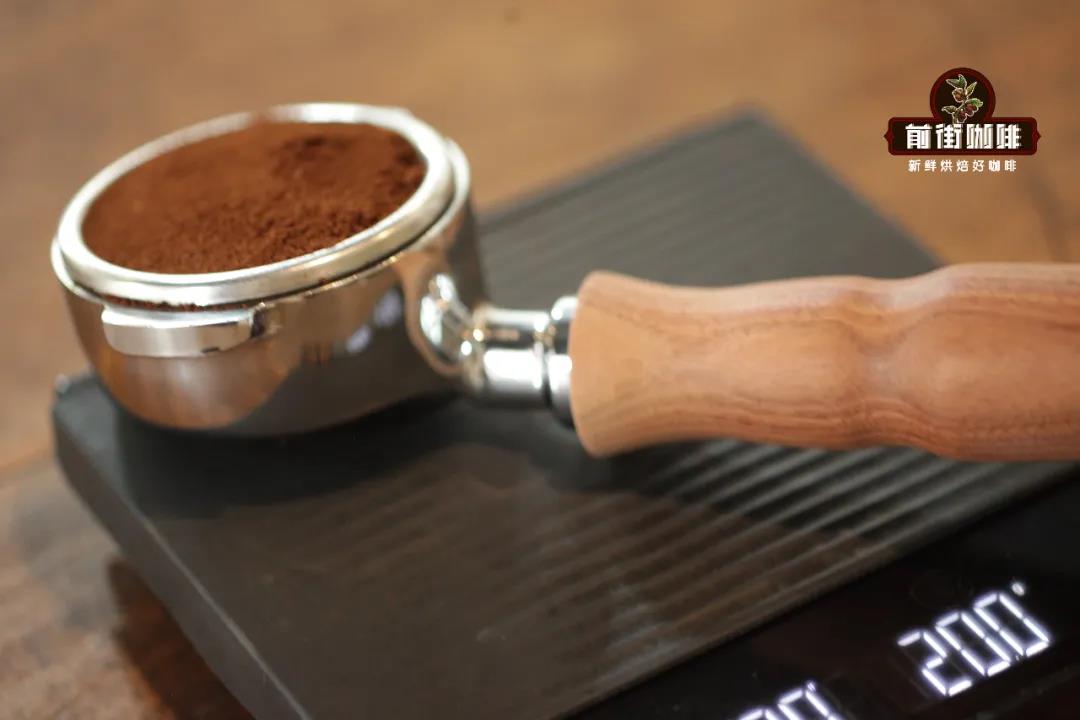
Why the ±1g tolerance? Because the dose changes the density of the puck. With the same tamping pressure, too little coffee leaves the puck less dense, so water rushes through and the shot under-extracts; too much coffee packs the puck more densely, slowing the flow and pushing the shot toward over-extraction.
Grounds-to-Liquid Ratio
Pour-over brewing uses a grounds-to-water ratio because the water is measured in advance. In espresso you cannot know exactly how much water the shot will use, so the practical figure is the grounds-to-liquid ratio: the weight of dry coffee against the weight of the liquid in the cup. Two things influence it—how much coffee you dose and how much water the machine pushes through. A low ratio produces a thick, heavy shot that readily turns bitter from over-extraction, while a high ratio gives a flat, hollow shot with sharp acidity from under-extraction.
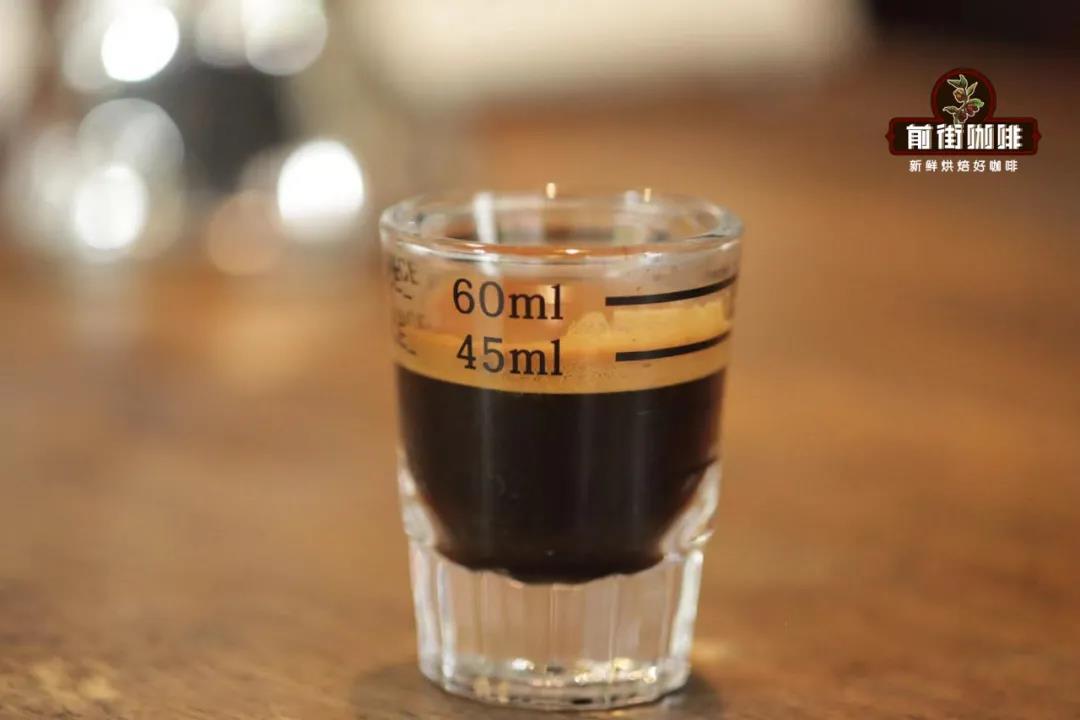
When the importance of the ratio first became clear, brewers wrote it as X grams of grounds to X ml of liquid, mixing a unit of weight with a unit of volume. Because the densities differ, those two units are not equivalent. In espresso there is also a layer of crema that varies with bean freshness and roast level, and measuring by volume tends to include it, so the numbers come out inconsistent from shot to shot.
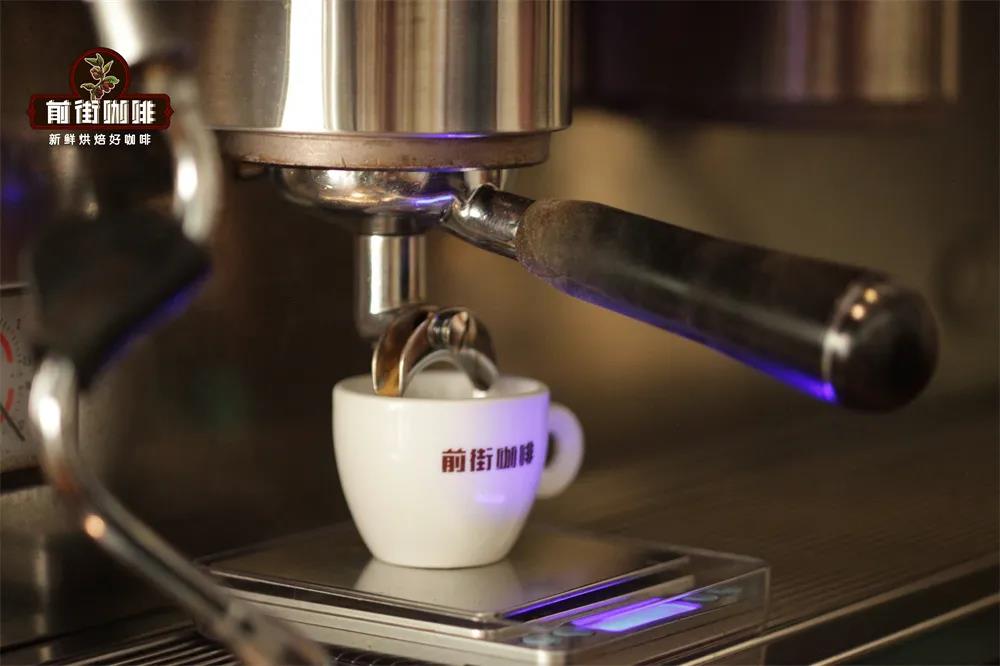
For consistency, the grounds-to-liquid weight ratio took over: X grams of grounds to X grams of liquid, with the yield weighed on a scale. The recommended range is roughly 1:1.5 to 1:2.5, and 1:2 is the common default. FrontStreet Coffee's daily production, for instance, doses 20g of coffee and extracts 40g of liquid.
Extraction Pressure
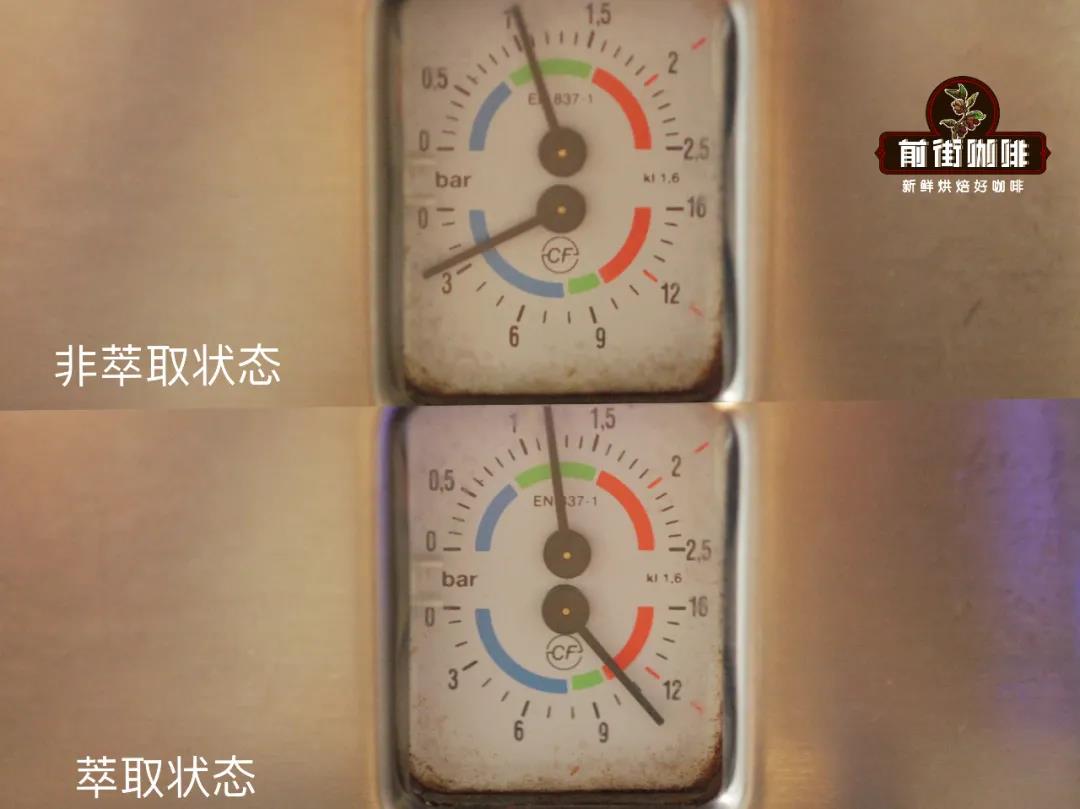
Semi-automatic espresso machines generally run at around 9 bar, a value the machine sets on its own. If the extraction pressure starts behaving abnormally, it needs to be checked by a professional. As interest in coffee has grown, however, a fixed 9 bar no longer satisfies everyone. Some machines now offer variable pressure profiling, letting you raise or lower the pressure to suit a particular bean and change how efficiently it extracts.
Extraction Temperature
Espresso is generally extracted between 90°C and 94°C, again a range the machine sets by default, though some models allow you to adjust it. Water that is too hot over-extracts and turns the shot bitter; water that is too cool under-extracts and leaves sharp acidity. If the actual brewing temperature drifts above or below the set value, have the machine inspected by a professional.
Extraction Time
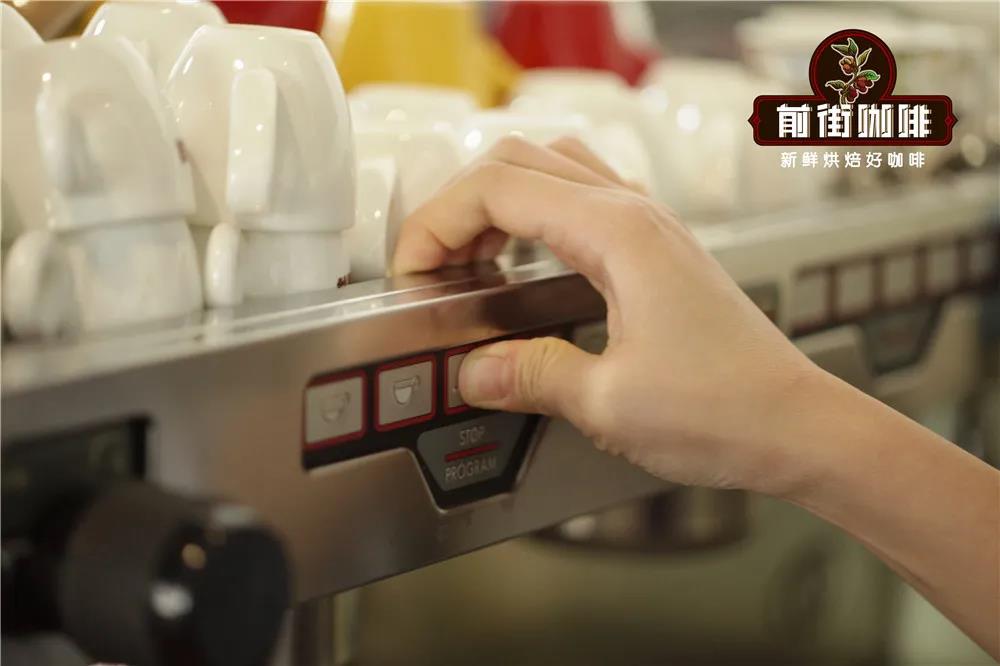
Extraction time covers the whole span from locking in the portafilter and pressing the button to the end of the shot. FrontStreet Coffee suggests about 18–23 seconds for a single shot and 25–30 seconds for a double. When the time looks wrong, the first two things to check are the dose and the grind size.

Too much coffee lowers puck density and stretches the flow time; too little raises it and shortens the flow. A grind that is too coarse opens wider channels between particles and speeds the water up, while a grind that is too fine narrows them and slows it down.
Extraction Flow Rate
Flow rate is simply how fast the liquid comes out. Normally the first drop appears about five seconds after you press the button, and the flow stays fairly even from there.
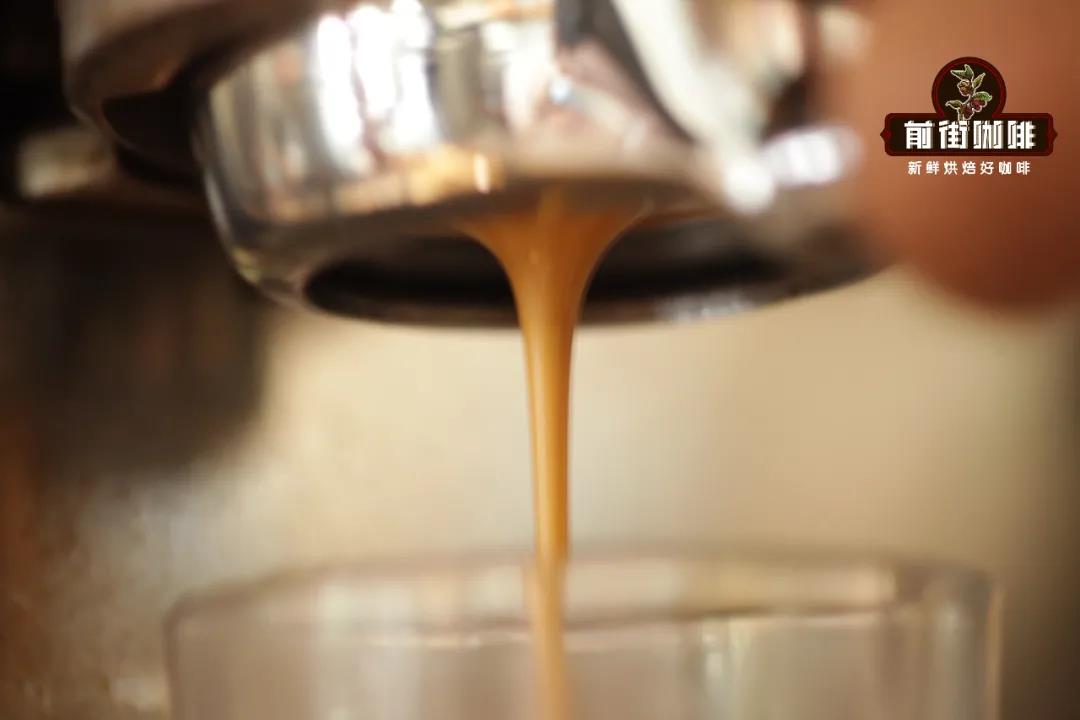
If many seconds pass with no first drop, the puck density is too low. If the first drop lands within two or three seconds of pressing the button, the puck density is too high and channeling is likely.
FrontStreet Coffee Recommendation
Once your dose, ratio, temperature, and time are dialed in, the bean itself becomes the biggest variable. FrontStreet Coffee's Brazil Queen Estate is a forgiving starting point: a low-acid, well-balanced coffee from Mogiana with concentrated nut and cocoa aromas and clear caramel sweetness. It pours smoothly without astringency and works just as well as pour-over, espresso, or moka pot coffee, which makes it easy to test how the same parameters read on different brewers.
If you prefer a heavier, low-acid profile, FrontStreet Coffee's PWN Indonesia Golden Mandheling is roasted dark and brewed slowly: thick and lingering in the mouth, with herbal and dark chocolate aromas and a faint earthy note. For something in the opposite direction, FrontStreet Coffee's Jamaica Blue Mountain No. 1 sits precisely in the middle—neither the sharp fruit acidity of some African coffees nor the heavy bitterness of a dark roast—showing cream, caramel, chocolate, nuts, honey, and a light fruit accent, with a soft, rounded entry and a clean, long finish.
Important Notice :
FrontStreet Coffee is a long-established specialty coffee roaster in Guangzhou China, selling freshly roasted beans from its own farm in Yunnan as well as dozens of carefully selected single-origin beans from around the world for both pour-over and espresso. The products deliver consistently excellent quality and great value, with shipping within 24 hours. Guangzhou's FrontStreet Coffee shop is recommended by many coffee lovers, and the beans are now available online at the Tmall 。
FrontStreet Coffee has moved to a new address:
FrontStreet Coffee Address: 315,Donghua East Road,GuangZhou
Tel:020 38364473
 Scan and follow the En Gafei WeChat official account. Please indicate that the reprint comes from "En Gafei".