What is Espresso? The Three Main Types of Espresso Coffee: Ristretto, Normale, Lungo
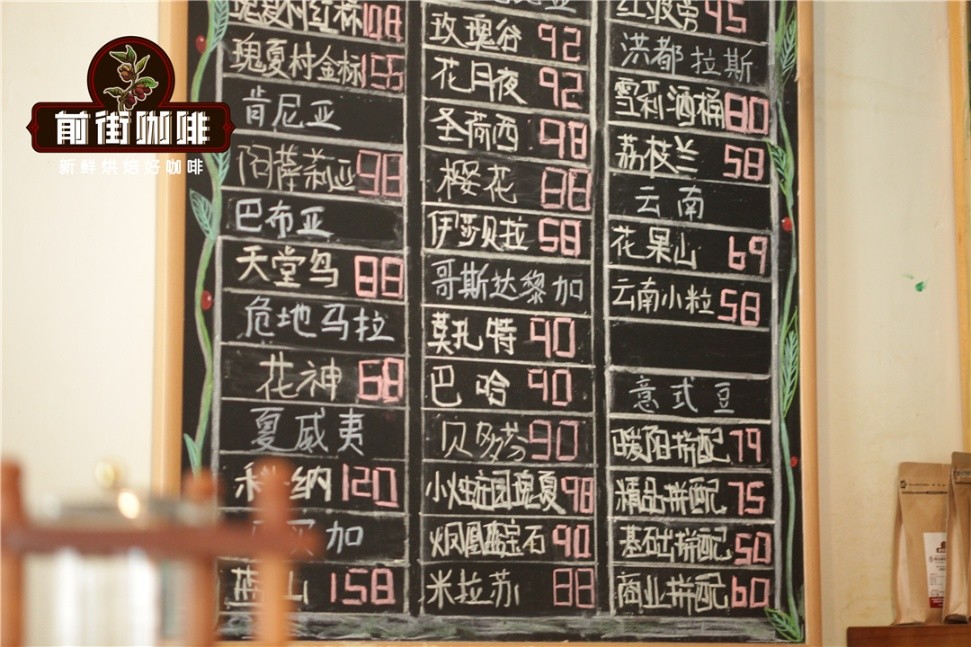
When people hear the word espresso, most think first of a strong, bitter, heavy-bodied black coffee and the most stimulating drink on the menu. For baristas, dialing in espresso extraction is the single most important task of the day, because every popular espresso-based drink depends on that small, concentrated shot. Today, FrontStreet Coffee explains what espresso is and how its main types differ.
What is Espresso?
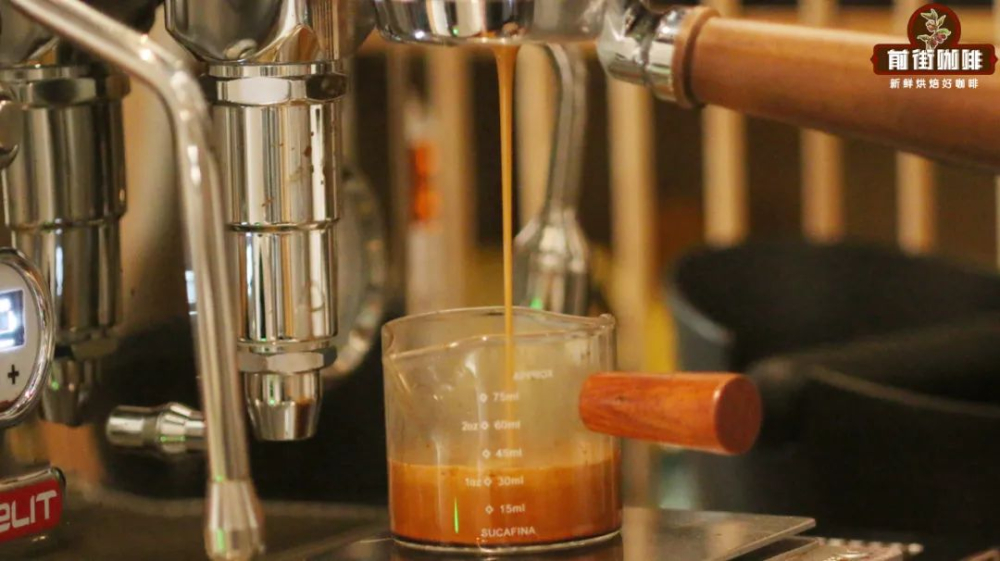
Espresso is coffee extracted in a short time on a semi-automatic or fully automatic machine, at high temperature and high pressure, after the beans have been finely ground and dosed appropriately. By definition, a single shot must meet several conditions: sufficient pressure, proper water temperature, an appropriate dose, a fine grind, and a short extraction time.
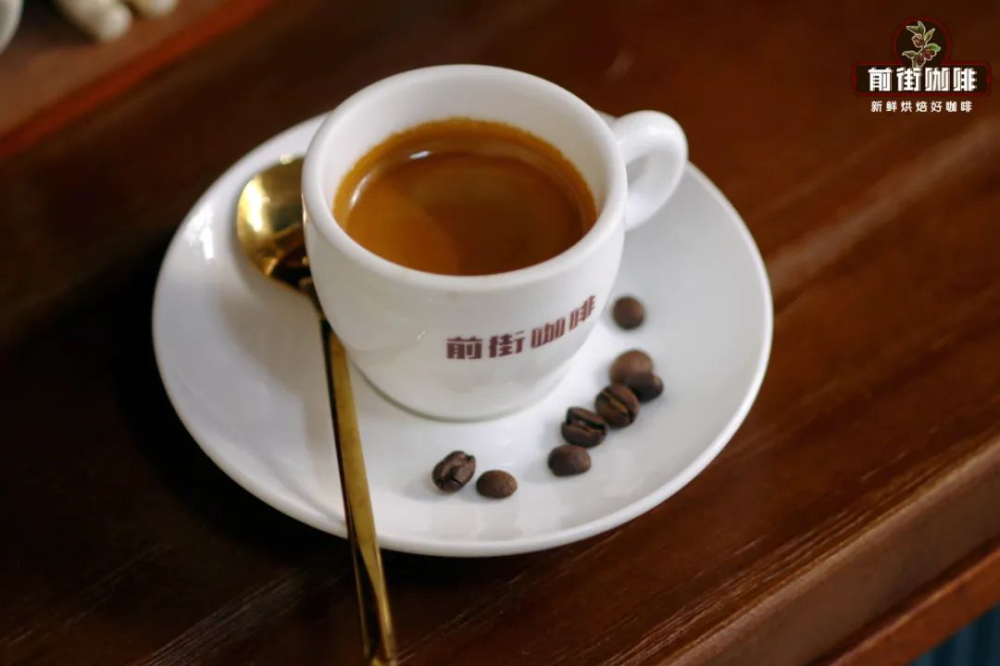
What sets espresso apart from other brewing methods, such as pour-over and cold brew, is the golden-yellow, dense foam on its surface, known as crema. Freshly roasted beans are full of gas, and during extraction they are soaked in hot water under high pressure. The gas is forced out of the cell walls through thermal expansion, while the hot-water-extracted coffee also contains oil-based substances that let the liquid emulsify and encapsulate the released gas, creating a dense foam. Crema is made up of vegetable oils, proteins, sugars, and aromatic compounds, which is why a freshly pulled espresso has such an overwhelming aroma.
Types of Espresso
According to the Golden Cup theory proposed by the Specialty Coffee Association of Europe, after water contacts coffee grounds, about 30% of the soluble substances are released, while the remaining 70% of large-molecule lignin structures cannot dissolve. Of that 30%, only two-thirds are flavor-optimal molecules, so several key parameters must be adjusted to hold the extraction rate at around 20%. Based on extraction method, espresso falls into three types: Ristretto (short extraction), Normale (normal), and Lungo (long extraction), all of them espresso liquids pulled quickly on an espresso machine.
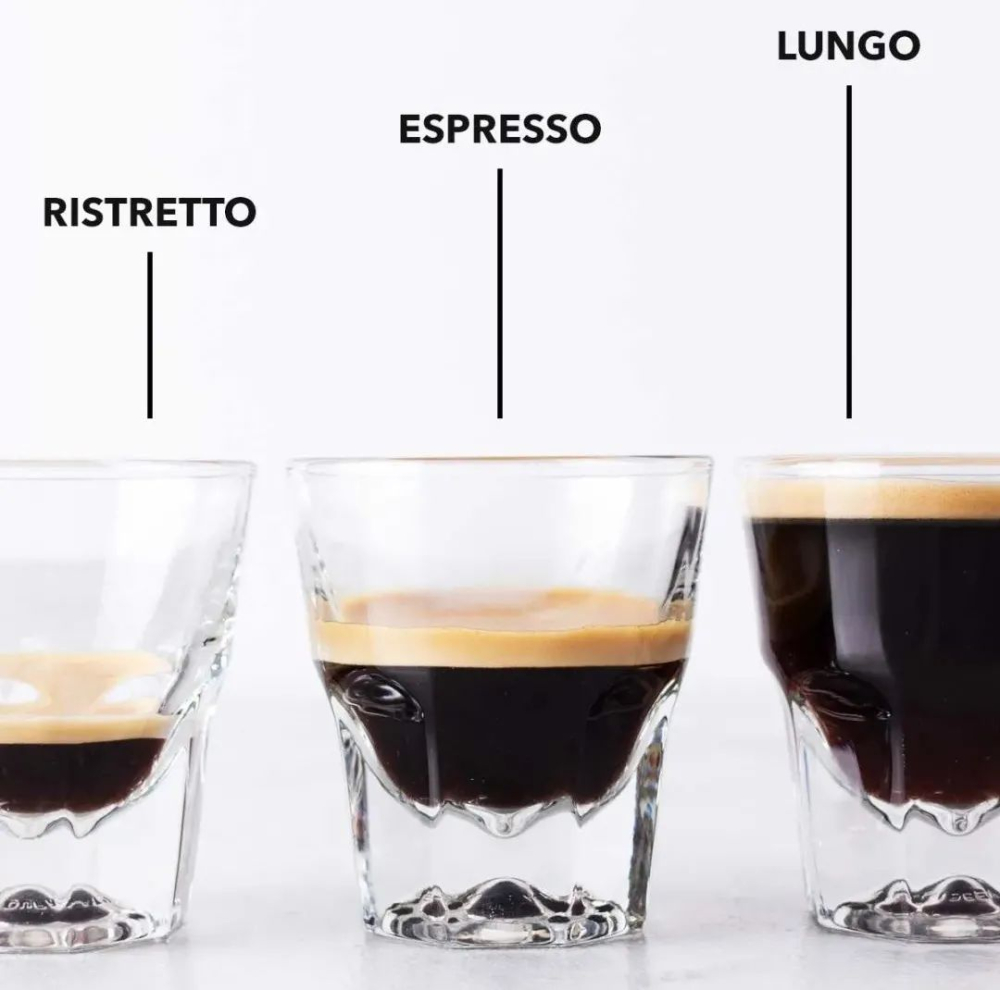
Ristretto usually refers to Italian-style concentrated espresso, also known as refined concentrated espresso. Compared with ordinary espresso it is more niche, and the Flat White you often see is built on a Ristretto base. "Ristretto" means "restricted" in Italian, which we can understand as restricting the amount of coffee extracted: only the front-middle portion of the shot is taken, which raises the coffee's concentration.

For example, FrontStreet Coffee's standard espresso plan extracts 40g of liquid from 20g of grounds, a grounds-to-liquid ratio of 1:2, in 30 seconds. For a Ristretto, only 70% of that is pulled, so 20g of grounds yields 28g of liquid, and the time is correspondingly shorter. The grind can also be adjusted finer to slow the flow and concentrate the liquid further. Every coffee shop makes its own adjustments according to the beans it uses and the flavor profile the barista wants to present.
Normale is the most common and popular type of espresso. It is essentially conventional espresso, and most establishments today primarily serve Normale without making much of it. According to Golden Cup standards, Normale's extraction rate falls between 18% and 22%, with a concentration range of 8% to 12%.

Lungo is made with double the amount of water compared with a normal serving. "Lungo" means "long" or "extended" in Italian, so it is also called lengthened espresso: the extraction time is extended, which reduces the coffee's concentration and makes it taste smoother.
After repeated adjustments and tastings, FrontStreet Coffee's final plan is to control the Lungo grounds-to-liquid ratio at 1:5. That is, using 20g of grounds and extending the extraction time to 42 seconds to pull 100g of liquid.

What to Pay Attention to When Extracting Espresso
The golden crema floating on top of the liquid is the result of carbon dioxide and other gases from fresh coffee beans being distributed through the water under high pressure. Beans stored too long, more than 2 months, cannot deliver a perfectly crema-topped espresso, so FrontStreet Coffee recommends using freshly roasted beans and letting them degas properly. All beans shipped by FrontStreet Coffee are confirmed to be freshly roasted within 5 days, so they are still relatively fresh when they reach you. Coffee beans need a degassing period after roasting. Since most espresso beans are medium-dark roasts, such as the Sunflower Warm Blend used at FrontStreet Coffee's shop, they need 7-10 days to release carbon dioxide. Using properly degassed beans to make espresso gives not only a fuller aroma but also more stable extraction.

There are thousands of parameter settings for pulling a delicious cup of espresso, but FrontStreet Coffee believes the focus should be on a few key factors: coffee dose, grind size, temperature, extraction time, and liquid weight. If an espresso tastes thin, for instance, we increase the extraction rate by raising the dose, grinding finer, or raising the water temperature. If it tastes too bitter, we reduce the extraction rate by lowering the dose, grinding coarser, or lowering the water temperature. Whichever adjustment is used, the ultimate goal is an espresso with a full aroma.
FrontStreet Coffee Recommendation
Cold brew magnifies floral and fruit character while muting woody and roasted flavors, so light-to-medium roasts show their best side in the cold-brew jar. FrontStreet Coffee's Strawberry Candy Geisha blend pairs a classic Panama Geisha with a Costa Rican honey process: one brings delicate rose and orange, the other a grape, dried-blueberry, and strawberry-gummy sweetness, together creating rich layers. Cold-brewed, it is sweet-tart and lively, and given a little time to settle it takes on a wine-like fruit character.
For a floral iced coffee, FrontStreet Coffee's Sun-Dried Huakui is a natural choice. Grown in Ethiopia, coffee's birthplace, and processed as a natural, the beans absorb abundant sweet compounds from the fruit and skin. Cold-brewed, Huakui shows magnolia, cream strawberry, dried mango, guava, and black tea notes.
For a cold brew packed with juice, FrontStreet Coffee's Kenya Little Tomato is the first pick: cherry tomato, pear, black plum, and smoked plum create a bright sweet-and-sour profile that shines under cold extraction, low in bitterness and full in acidity, especially refreshing over ice. It comes from Kenya's Sica region and is built on the carefully bred SL28 and SL34 varieties, given a local K72 double-washed process and a light-to-medium roast to bring out a complex fruit character.
Cold brew generally uses more grounds than pour-over, so rather than expensive high-grade beans it makes sense to start with an affordable, tasty daily bean, or to blend for both flavor and value. Many drinkers love the passion fruit, grape, apricot, and dried-fruit sweetness of FrontStreet Coffee's Colombia Sidra; to keep costs down, blend it 1:2 with FrontStreet Coffee's Costa Rica Tarrazu and you get both the Sidra's floral-fruit character and the Tarrazu's crisp citrus acidity in the same glass.
The Yirgacheffe is one of the most representative African coffees, and its rich floral and fruit notes win over a large following. The washed Yirgacheffe Gedingding in particular brings a clean, bright sweet-and-sour cup at a friendly everyday price, and it is versatile enough for pour-over, siphon, French press, and cold brew alike. As one of the most representative washed Yirgacheffe lots, FrontStreet Coffee's Gedingding is also excellent for cold brew, producing sweet berry layers and a honeyed finish.
Important Notice :
FrontStreet Coffee is a long-established specialty coffee roaster in Guangzhou China, selling freshly roasted beans from its own farm in Yunnan as well as dozens of carefully selected single-origin beans from around the world for both pour-over and espresso. The products deliver consistently excellent quality and great value, with shipping within 24 hours. Guangzhou's FrontStreet Coffee shop is recommended by many coffee lovers, and the beans are now available online at the Tmall 。
FrontStreet Coffee has moved to a new address:
FrontStreet Coffee Address: 315,Donghua East Road,GuangZhou
Tel:020 38364473
 Scan and follow the En Gafei WeChat official account. Please indicate that the reprint comes from "En Gafei".