Types of Coffee Defect Beans and Their Formation Causes - How to Select Defective Coffee Beans and Differences Between Good and Bad Beans
Have you ever wondered why coffee beans go bad? What defects appear in raw coffee beans, and why do they form? Today, FrontStreet Coffee will walk you through the types of defective beans and the reasons behind them.
Coffee processing typically begins on the same day as harvesting to prevent unnecessary fermentation that could alter the chemical properties of the beans. Coffee seeds are also usually graded and sorted by size, color and shape to reduce defects and ensure uniform roasting (Batista and Chalfoun, 2014; Franca et al., 2005b; Illy and Viani, 2005). The main metabolic categories found in raw coffee beans have been identified as amino acids, carbohydrates, organic acids, fatty acids, chlorogenic acids (CGA) and volatile organic compounds (Farah, 2012). Several metabolites accumulated in raw beans contribute to flavor and aroma after roasting. The main categories of defective coffee beans fall into three broad groups: physical deformities (such as peaberries, withered seeds and shells), seed damage (from processing or insect damage), and beans with color abnormalities (such as entirely black, partially black or bleached seeds).
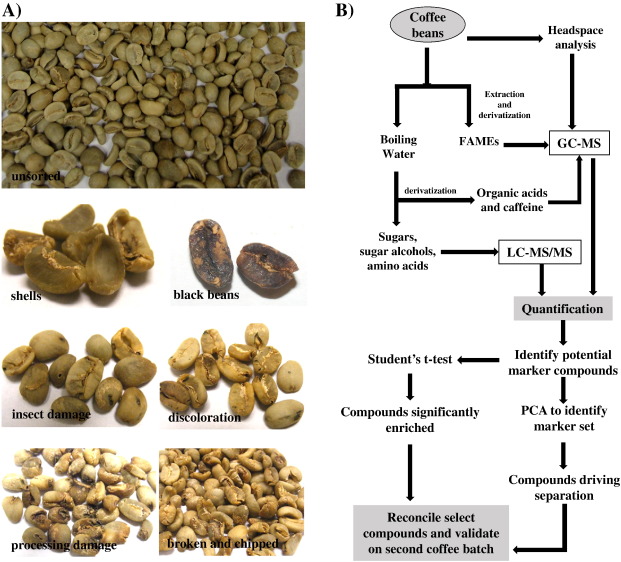
The Five Major Defective Beans That Most Affect Coffee Taste and Aroma
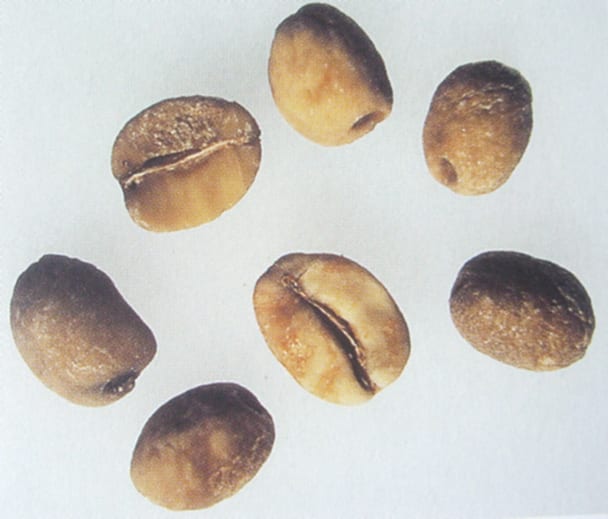
Over-fermented Beans
These have a pungent, astringent taste, a sour odor and bitterness.
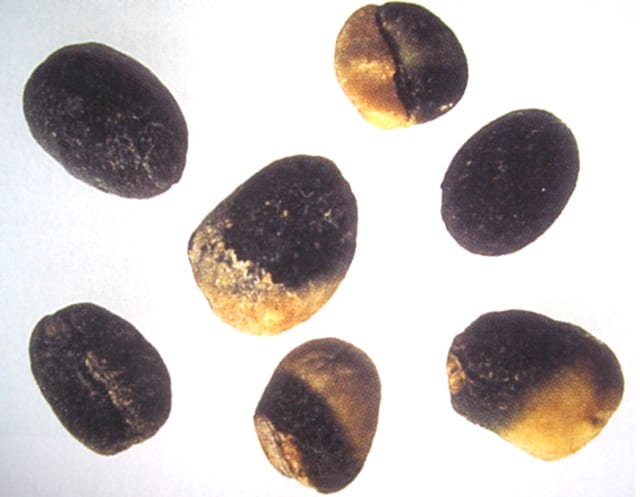
Black Beans
This group includes black beans and partially black beans, which leave an earthy, astringent aftertaste. They occur due to fungal attack and produce very defective flavors in the cup. In coffee grading, full black beans serve as the basis for scoring all other defects.
Insect-Damaged Beans
These carry a burnt odor and a rotten, fermented taste.
Moldy Beans
These have a musty odor and putrid bitterness, and are usually the result of storage damage.
Floating Beans
Formerly called floaters: low-density coffee beans that lack the weight to sink and so float to the surface of the water.
FrontStreet Coffee Recommendation
Spotting and avoiding defective beans is much easier once you know what a clean, well-sorted medium roast tastes like. FrontStreet Coffee's Brazil Queen's Farm is a good reference point - a Yellow Bourbon from Brazil roasted medium, with a bright, clean sweetness and aromas of creamy peanut, chocolate, toast and sugarcane, brewing well as a pour-over or in a moka pot. If you prefer something sweeter and fruitier, FrontStreet Coffee's Strawberry Candy, a medium-roasted Geisha-style blend, brings a rounded orange-blossom honey sweetness and works in cold brew, pour-over or espresso.
For a balanced, gentle everyday cup, FrontStreet Coffee's 2013 Sun-dried Yunnan Typica is roasted medium to soften its character, offering nut, brown sugar, black tea and dried apricot notes at a very good price. And for the classic, FrontStreet Coffee's Jamaica Blue Mountain No.1 - a Typica roasted medium - weaves acidity, bitterness, sweetness and aroma into a famously elegant, chocolate-and-caramel balance.
Important Notice :
FrontStreet Coffee is a long-established specialty coffee roaster in Guangzhou China, selling freshly roasted beans from its own farm in Yunnan as well as dozens of carefully selected single-origin beans from around the world for both pour-over and espresso. The products deliver consistently excellent quality and great value, with shipping within 24 hours. Guangzhou's FrontStreet Coffee shop is recommended by many coffee lovers, and the beans are now available online at the Tmall 。
FrontStreet Coffee has moved to a new address:
FrontStreet Coffee Address: 315,Donghua East Road,GuangZhou
Tel:020 38364473
 Scan and follow the En Gafei WeChat official account. Please indicate that the reprint comes from "En Gafei".