What Is Coffee Bean Aroma? How to Describe Coffee Aroma and Its Relationship with Flavor and Acidity
Understanding Coffee Aroma: The Essence of Flavor
At its most basic level, aroma is the taste of coffee. It is the source of many flavor attributes (sweet, salty, bitter, sour, and umami) that the tongue cannot perceive on its own. Thanks to advances in testing equipment, more than 800 aromatic compounds have been identified in coffee, and new ones are being discovered regularly.
In coffee terminology, aroma is sometimes called fragrance or bouquet, and it is distinguished from coffee's scent: aroma refers to the odor produced by the vapors and gases (volatile organic compounds) released when coffee beans ferment during processing, released again through grinding and inhaled through the nose, where they make contact with the nasal membranes.
Because aroma travels through the air, fresh coffee smells far stronger than stale coffee (which is also why it tastes better!). Generally, as the roast level deepens, more compounds in the coffee change and become detectable, so the aroma grows richer. Depending on roast level, it can range from light and fruity all the way to smoky. Most coffees carry a faint caramel, almost nutty aroma.
Stale coffee, by contrast, smells musty and like cardboard.
Aroma as a Primary Coffee Quality
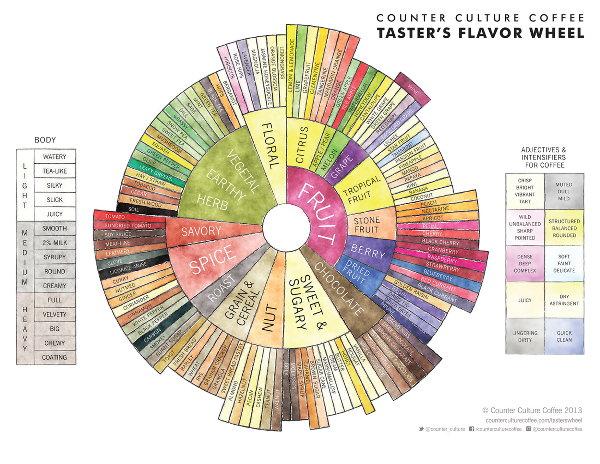
Aroma is one of the primary qualities of coffee, alongside body, acidity, sweetness, bitterness, and aftertaste, and it is one of the main categories professional cuppers use to judge coffee quality.
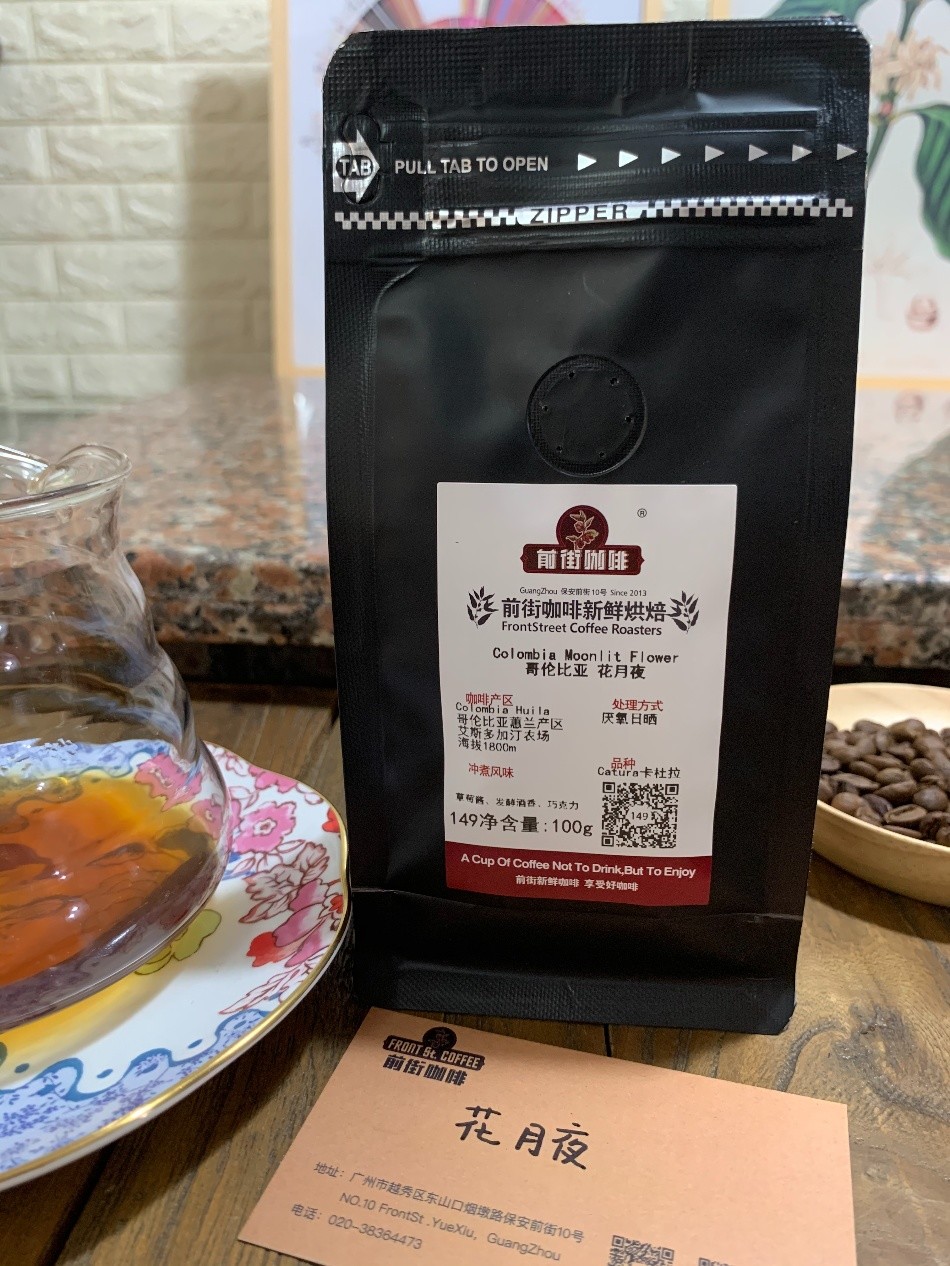
FrontStreet Coffee offers a coffee from Colombia's Rose Valley, processed by anaerobic enzyme washing, that presents rose florals overall with fermented wine-like notes. The flavors lean toward peach, cranberry, and liquid-centered chocolate. The taste is absolutely superb!
Describing Coffee Aroma
Aroma can be described as complex, smoky, nutty, herbal, fruity, and so on. Many excellent coffees reveal subtle floral notes, often most pronounced when the crust is broken during cupping.
Yemen Mocha, for instance, is renowned for its fresh floral aromas.
Premium Kona coffee and the finest Colombian coffees are similarly famous for their florals, and both the freshness and the roast level of the coffee are key to preserving and enhancing those notes.
The Relationship Between Aroma, Flavor, and Acidity
Aroma is also tied to flavor and acidity. If the coffee tastes rich, the aroma will reflect that richness; if the coffee is acidic, it will smell acidic too.
Some of coffee's subtler flavor characteristics, such as intense, fleeting notes, show up most clearly in the aroma. And because human senses work synergistically, aroma also influences the perceived flavor profile, sometimes quite subtly.
Volatile Components and Their Impact on Aroma
Coffee's aroma, which can range from herbal to fruity, is produced by its volatile components (vapors and gases) released from the brewed coffee and inhaled through the nose, where they contact the olfactory membranes. It is also detected as you swallow, when aromatic compounds flow upward internally.
FrontStreet Coffee Recommendation
Colombian coffee is remarkably versatile: it works in espresso blends and as a pour-over single origin, and it spans fruity-acidic profiles, full-bodied cups, and fragrance-forward styles. Whatever you are after, there is a Colombian for you.
FrontStreet Colombia Huila (Washed): Huila, in the southern stretch of Colombia's central cordillera, is the country's most famous specialty coffee region: rolling hill country ringed by mountains, planted above 1500 meters, where Colombia's most important rivers converge, bringing abundant water and humidity. To get to know Colombia, start with FrontStreet's washed Huila. Roasted medium-dark, it foregrounds dark chocolate and nutty sweetness with moderate crema and a full body. It suits pour-over and French press, and it extracts beautifully in a moka pot or espresso machine, making americanos and lattes with ease.
FrontStreet Colombia La Línea Estate Sidra (Anaerobic Natural): Colombian coffee was traditionally washed, but innovative processing has taken off in recent years. Anaerobic fermentation, sometimes called carbonic maceration, is a novel taste experience: simply put, it is fermentation in a low- or zero-oxygen environment, usually in a pressurized stainless steel tank where temperature, time, pH, and other variables are controlled. The most famous variants are anaerobic natural and anaerobic washed. FrontStreet's Sidra is anaerobic natural, and the oxygen-free fermentation converts into rich tropical fruit aromatics. Roasted medium-light, it delivers complex, intense flavors of passion fruit, grape, apricot, and dried fruit as pour-over, cold brew, drip bags, or moka pot coffee.
FrontStreet Specialty Espresso Blend: If you have a home espresso machine or a moka pot, baristas strongly recommend the FrontStreet Specialty Blend, developed for café use. It combines the creamy nuttiness of Brazilian coffee with the dark chocolate sweetness and bitterness of Colombian, pulling a fine golden crema. It pairs beautifully with milk for a rich, silky latte, is very forgiving for beginners, and works as the base for americanos, cappuccinos, mochas, and other espresso standards.
Important Notice :
FrontStreet Coffee is a long-established specialty coffee roaster in Guangzhou China, selling freshly roasted beans from its own farm in Yunnan as well as dozens of carefully selected single-origin beans from around the world for both pour-over and espresso. The products deliver consistently excellent quality and great value, with shipping within 24 hours. Guangzhou's FrontStreet Coffee shop is recommended by many coffee lovers, and the beans are now available online at the Tmall 。
FrontStreet Coffee has moved to a new address:
FrontStreet Coffee Address: 315,Donghua East Road,GuangZhou
Tel:020 38364473
 Scan and follow the En Gafei WeChat official account. Please indicate that the reprint comes from "En Gafei".