Brazilian Coffee History: Origin Regions, Altitude Environment, and Flavor Profile
The Story of Brazilian Coffee
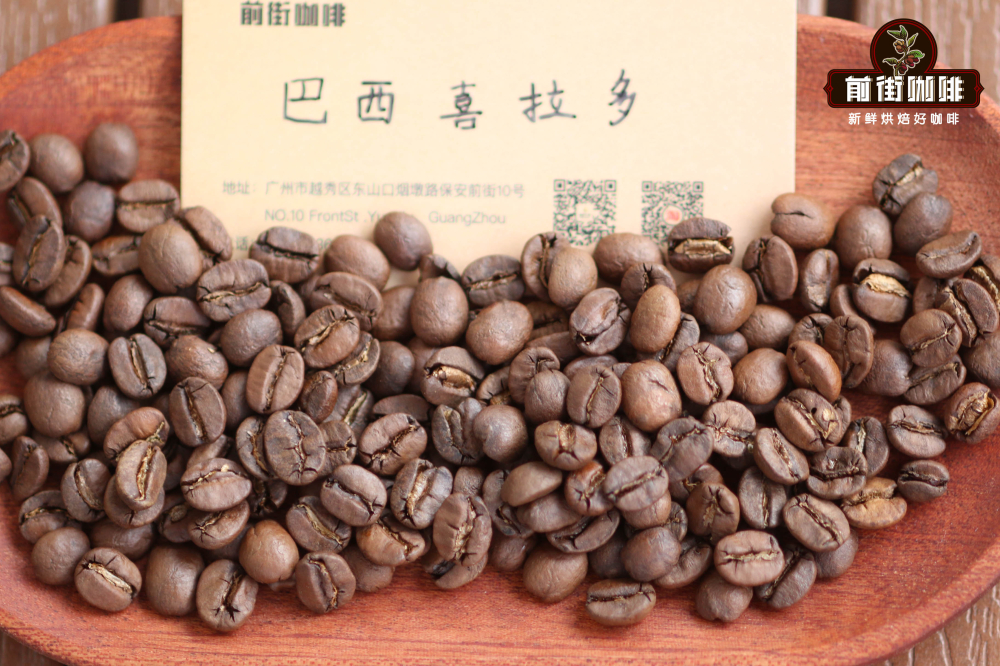
With its enormous production, Brazilian coffee has ranked first in coffee exports for over a century. Most specialty coffee shops offer at least one Brazilian single origin or an espresso blend containing Brazilian coffee, which shows just how much influence Brazil has on the industry. In this article, FrontStreet Coffee shares what it knows about Brazilian coffee.
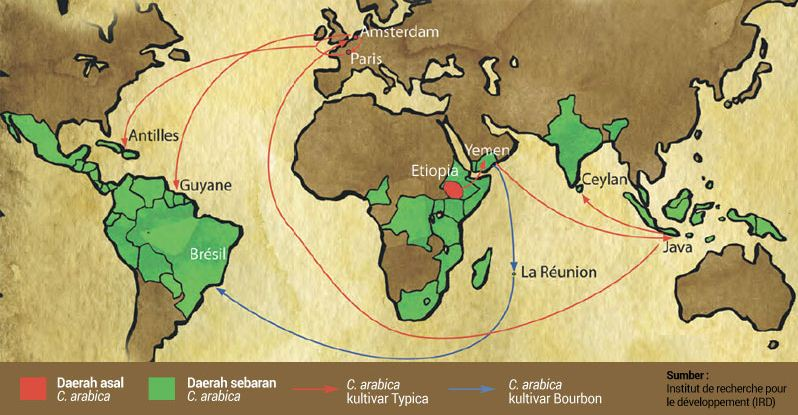
The earliest recorded coffee cultivation in Brazil dates to the eighteenth century, when Brazil belonged to Portugal. A Portuguese captain from Brazil, Francisco de Melo Palheta, won the favour of the governor's wife in Cayenne, the capital of French Guiana, and brought coffee seeds from there to Brazil. Coffee quickly adapted to Brazil's terroir and spread from the north to the southeastern state of São Paulo, where it began to be widely cultivated. By 1845, Brazilian coffee accounted for 45% of the world's coffee and had become São Paulo's main source of income.
Brazilian Coffee Bean Growing Regions
According to data from the Brazilian Coffee Association, coffee is produced in more than 14 states, with 7 states accounting for nearly 90% of the total. The western region primarily grows Robusta, while higher-quality Arabica is concentrated in the southeast. Here FrontStreet Coffee focuses on two representative regions: Minas Gerais, Brazil's largest coffee-producing area, and São Paulo, its earliest coffee-growing area.
Minas Gerais state's annual production accounts for nearly half the country's total, including four major producing regions: Cerrado, Sul de Minas, Chapada de Minas, and Matas de Minas. The Cerrado region, named after the Cerrado savanna, refers specifically to the Cerrado area of western Minas Gerais when it comes to coffee. Its flat terrain and concentrated harvest season are ideal for large-scale managed harvesting, and many exporters have established farms here, most covering over 10 hectares. The other three regions, with their undulating terrain and steep hills, rely mainly on smallholder manual production.

São Paulo state contains the well-known Brazilian coffee region Mogiana. Its name comes from the Mogiana Railroad Company, which established the "coffee railway" in 1883—a development that brought better transport and further expanded coffee production in the region. Mogiana sits at an altitude of 900-1,100 meters, with an average annual temperature of about 20°C and hilly terrain that gives coffee good sweetness and balance. Because of the terrain, estate production relies mainly on manual harvesting. The Queen's Estate coffee on FrontStreet Coffee's menu comes from Mogiana.
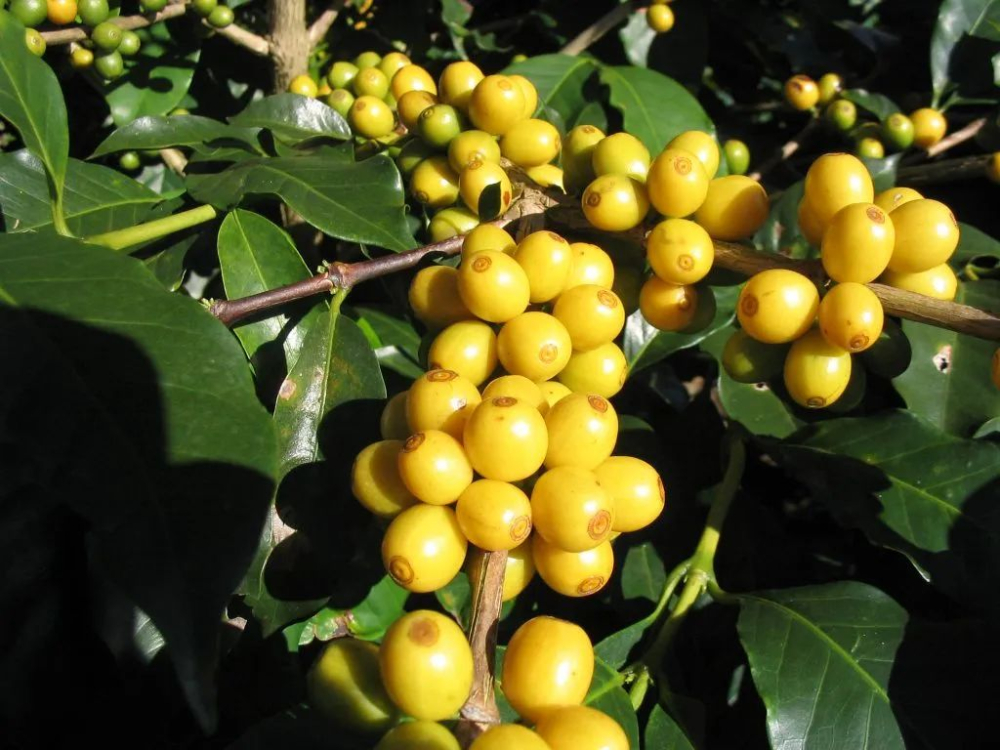
Queen's Estate (Fazenda Rainha) is one of Brazil's top specialty estates. A winner in the first Brazil Cup of Excellence (COE) competition, its quality is exceptional, and over the years it has won numerous awards—all thanks to the coffee it produces. FrontStreet Coffee's Brazilian Queen's Estate is selected from the Yellow Bourbon variety. Yellow Bourbon is a variant of Bourbon cultivated in Brazil whose fruit appears yellow because of recessive genes. Yellow Bourbon beans are naturally sweet, clean, and well-balanced, with tropical fruit aromas.
Brazilian Coffee Green Bean Processing
Located in the tropics, Brazil's harvest season coincides with the dry season, so cherries can be dehydrated and dried directly in the sun. Traditional natural processing, however, was fairly crude, with cherries spread straight onto muddy ground after picking, which left the coffee with earthy flavours. To improve quality, Brazil developed the semi-washed (semi-dried) method after 1990, also known as Pulped Natural.
Processing steps: after picking, cherries are first sorted to remove leaves, stones, and other impurities, then poured into water tanks where underripe cherries are removed by flotation. Machines remove the peel, pulp, and part of the mucilage layer, followed by an hour of washing. Because soaking and fermentation are short, the mucilage is not completely washed away, and the parchment coffee with some mucilage remaining is spread on drying patios.

The pulped natural method not only saves water but also reduces labour costs. Compared with traditional natural drying, it takes less time, so it is widely used in Brazil. FrontStreet Coffee's Brazilian Cerrado daily coffee uses pulped natural processing with multi-stage sorting, which greatly improves cleanliness. FrontStreet Coffee's other Queen's Estate coffee uses refined small-batch natural processing. Large-scale production can over-ferment when turning is infrequent, creating unwanted fermented flavours; Queen's Estate dries its entire green bean crop on African raised beds, which avoids earthy and fermented flavours and lifts the sweetness beyond traditional pulped natural processing.
Processed Brazilian green beans are graded by three standards—defects, size, and cupping—which makes Brazil's system more complex than most producing countries'. The grade information is marked on jute bags in the format "Country + Defect Grade + Cupping Profile + Size + Cupping Flavor Grade + Origin."
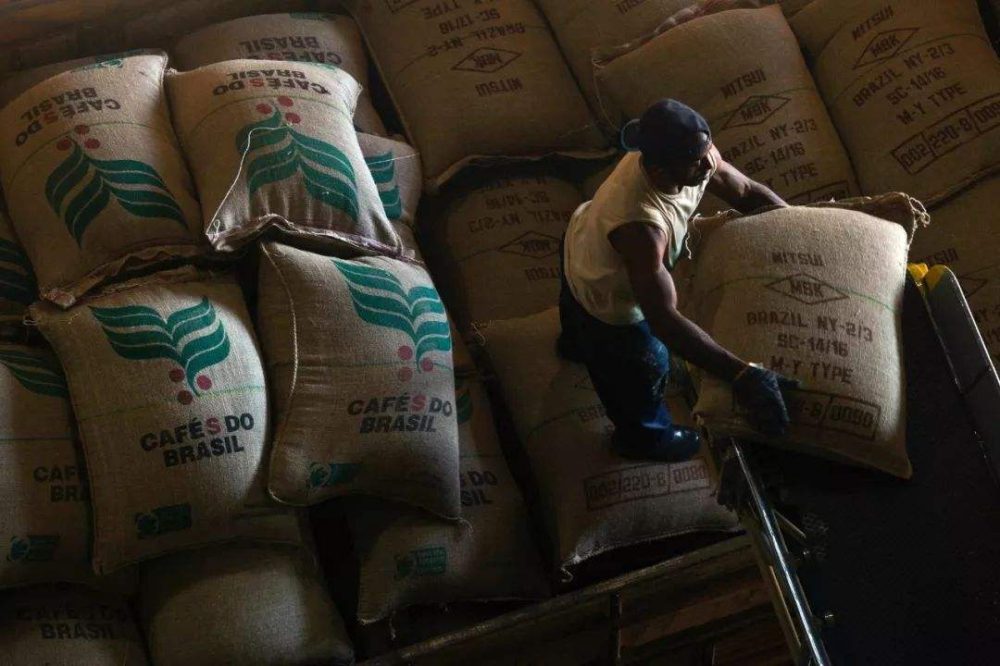
For example, the bag of Brazilian Cerrado green coffee beans FrontStreet Coffee purchased is marked "Brazil NY.2 SC – 17/18 FC Cerrado," which means it comes from Brazil's Cerrado region, with a screen size of 17-18, SC standing for Strictly Soft (a very smooth cup profile), FC standing for Fine Cup (excellent cupping quality), and a defect grade of NY.2. Since NY.1 means no defective beans at all and such selected lots cannot be supplied stably, Brazil set NY.2 as the highest grade in its defect classification.
Brazilian Coffee Flavor Characteristics
Classic Brazilian coffee has basic flavours of nuts, cocoa, chocolate, and toast. FrontStreet Coffee's two Brazilian coffees are therefore both medium-dark roasted to highlight their rich, low-acidity character.
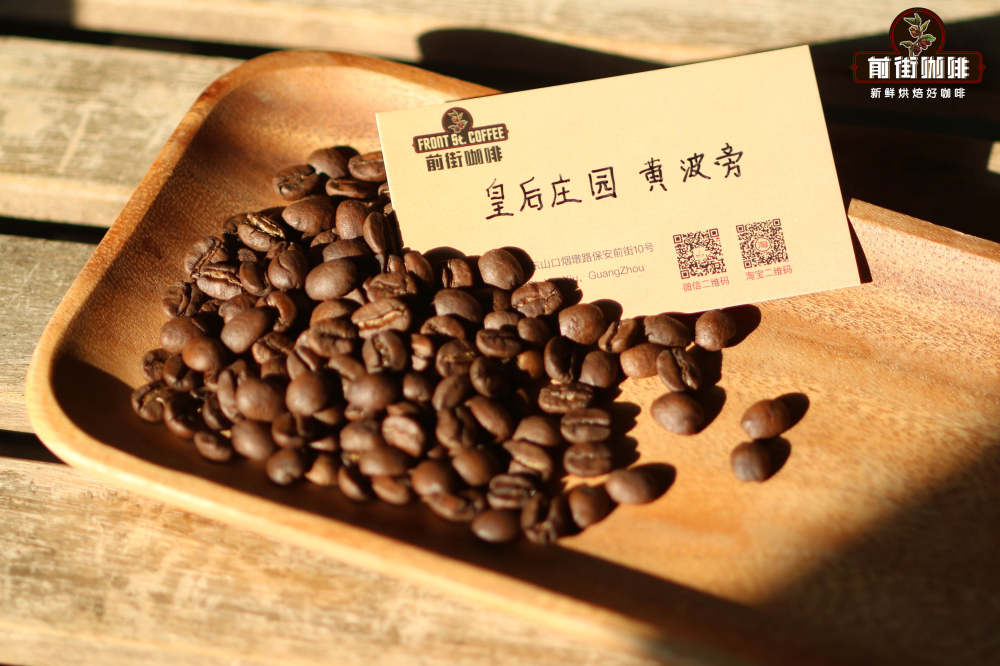
Some enthusiasts notice that coffee tastes different at home than in the shop. FrontStreet Coffee includes a QR code about brewing on each coffee package, which can be scanned to view information, so everyone can refer to the parameters above and adjust. Below, using Brazilian Queen's Estate as an example, we explain FrontStreet Coffee's barista's brewing approach.
FrontStreet Coffee's Queen's Estate uses a medium-dark roast. Medium-dark roasting significantly changes the bean's internal structure, making it more porous, so the ground coffee absorbs water more strongly. If brewing parameters are not adjusted properly, the coffee easily becomes over-extracted and bitter. To achieve enough aroma without over-extraction, it is necessary to reduce the extraction rate. FrontStreet Coffee uses lower water temperature and a coarser grind to reduce the release of bitter large molecules.
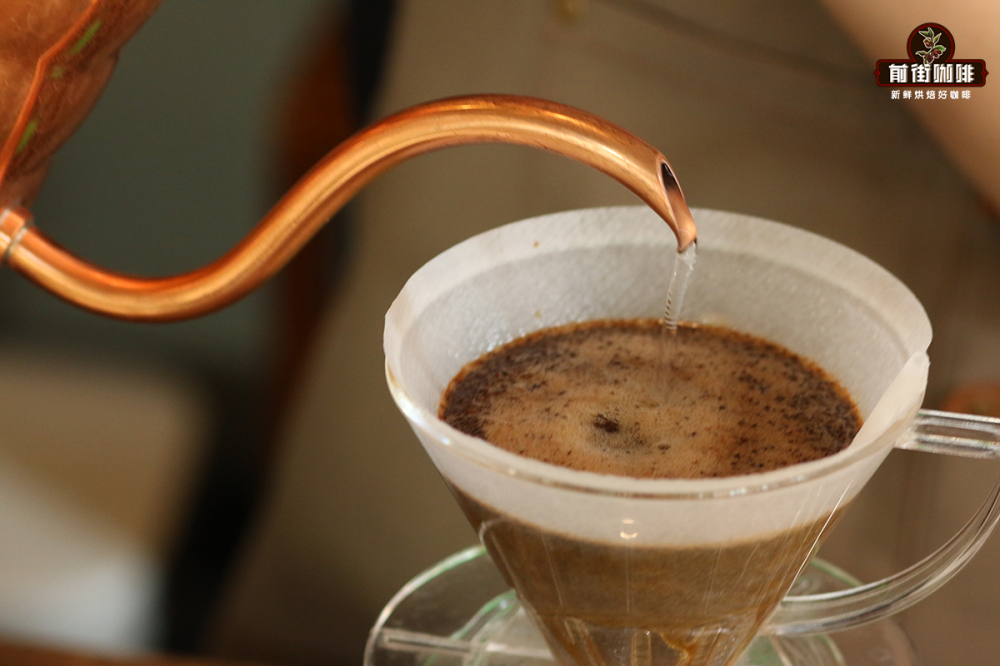
FrontStreet Coffee's barista consistently uses the KONO dripper to extract coffee beans that express richness. The KONO dripper's only exhaust area is the one-quarter rib section. When the water level rises above the ribs, the water volume in the dripper keeps increasing, creating pressure through the weight of the water. Because the outlet is relatively small, it can prolong contact between coffee particles and water, letting the flow extract soluble substances more effectively and enhancing the coffee's rich, full-bodied taste.
Pour-over Parameters
87-88°C water temperature, medium grind (70% pass-through rate on China standard #20 sieve), coffee grounds 15g, coffee-to-water ratio 1:15, three-stage pour.
Wet the coffee bed with twice the amount of coffee grounds in water, forming a dome for a 30-second bloom. Then, using a small stream, pour in a circular motion from inside to outside until reaching 125g for the first segment. Wait until the coffee bed drops to half the height of the dripper, then continue with the same fine stream for the third pour to 225g. Remove the dripper once all the coffee has filtered through, which takes about 2 minutes. Finally, swirl the coffee in the server and enjoy.

The pour-over Brazilian Queen's Estate is overall rich and full-bodied with a clean taste. The flavours change with temperature, offering multiple layers. It has nut and caramel aromas, with chocolate, nut, and caramel notes, and a very pleasant sugarcane sweetness with high balance.
FrontStreet Coffee Recommendation
Brazil's story is ultimately a story about flavour, and FrontStreet Coffee's Brazilian lineup shows why the country underpins so many cups. For an easy introduction to the Brazilian profile, the Cerrado Red Bourbon is a classic single origin from the well-known Cerrado region. Made from the common South American Red Bourbon, medium roasted, it shows cream, peanut, toasted bread, caramel, and hazelnut, with a rounded body, low acidity, and a light bitterness, and it works as pour-over, in a moka pot, as an espresso SOE, in a siphon, or in a French press.
For something higher up the scale, FrontStreet Coffee's Queen's Estate comes from Mogiana near South Minas, where fertile red volcanic soil helps the fruit absorb enough nutrients to develop full aroma. Its rare Yellow Bourbon—a genetic mutation of Red Bourbon with a cleaner fruit character—brings a sugarcane sweetness other regions cannot match, alongside fruit and chocolate notes, and it shines as pour-over as well as in a moka pot or home espresso machine.
Brazil's low-acid, balanced profile and friendly price also make it the backbone of FrontStreet Coffee's espresso recipes: the Classic Blend with its rich crema, the nutty Premium Blend, the balanced Black Cocoa Blend, and FrontStreet Coffee's Commercial Blend for cafés all contain Brazilian coffee, which adds chocolate and cream aroma, a mellow sweet-sour-bitter balance, and greater extraction stability. However you brew it, remember that darker beans absorb water more readily—a slightly coarser grind and a lower water temperature around 87-88°C, as in the KONO pour-over above, keep the cup sweet rather than bitter.
Important Notice :
FrontStreet Coffee is a long-established specialty coffee roaster in Guangzhou China, selling freshly roasted beans from its own farm in Yunnan as well as dozens of carefully selected single-origin beans from around the world for both pour-over and espresso. The products deliver consistently excellent quality and great value, with shipping within 24 hours. Guangzhou's FrontStreet Coffee shop is recommended by many coffee lovers, and the beans are now available online at the Tmall 。
FrontStreet Coffee has moved to a new address:
FrontStreet Coffee Address: 315,Donghua East Road,GuangZhou
Tel:020 38364473
 Scan and follow the En Gafei WeChat official account. Please indicate that the reprint comes from "En Gafei".