Geisha Village Different Washed Natural Honey Processing Methods | Geisha Village Red Label Gold Label Coffee Beans Flavor Taste Characteristics
What kind of coffee can offer rich layers that blend floral notes and fruit flavors so completely?
First, let's look at the introduction to this coffee bean:
Batch GVA.RSV.1a: Oma Gesha 1931
Description: This fermented honey coffee batch was produced in collaboration with friends from the Santuario Project in Colombia, using the mossto anaerobic fermentation method. The pulped coffee beans were fermented in the fresh juice of pressed coffee beans, which contains pulp and skin enzymes. After fermentation, the beans were dried in the shade on African raised beds for 25 days.
Weight: 132.28 pounds
Score: 92.67
Cupping Notes: Exceptional aromatic qualities featuring coffee flowers, jasmine and rose. Multi-layered sweetness of brown sugar, pineapple and cantaloupe. Flavors of peach, nectarine and hibiscus. Silky mouthfeel and a lingering floral aftertaste.
Harvest Date: 12/24/2020
Variety: Gesha 1931
By now the answer should be obvious: Gesha. Geisha is cultivated in many regions around the world and has become the new king of specialty coffee. Among the growing regions, Latin American countries such as Panama, Guatemala and Colombia produce the higher-quality, more expensive lots. The popular Panamanian Geisha was in fact introduced from southwestern Ethiopia to Kenya in 1931, then passed through Tanzania and Costa Rica before being transplanted to Panama in the 1960s.
What Different Processing Methods Does Gesha Village Have?
Let's take a look together.
Washed
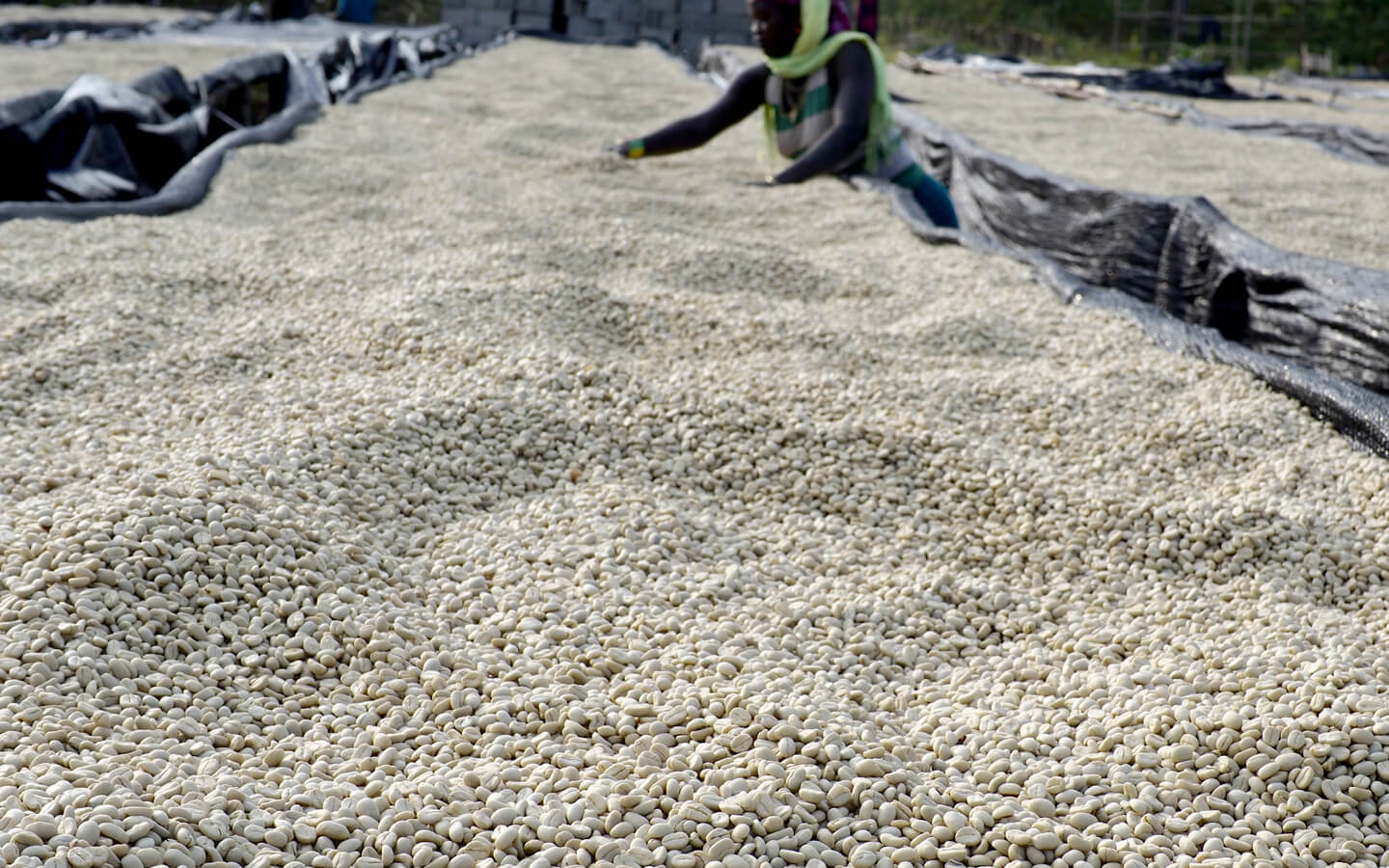
This process uses mechanical demucilagers to remove the mucilage from the coffee cherries. The coffee then undergoes full wet fermentation, soaking for 12 to 36 hours, followed by channel washing. It is then dried in the shade for two to three days until it reaches 30% moisture content, then sun-dried on African raised beds down to 11% moisture content. Total drying time across the whole process runs 12 to 19 days.
Natural
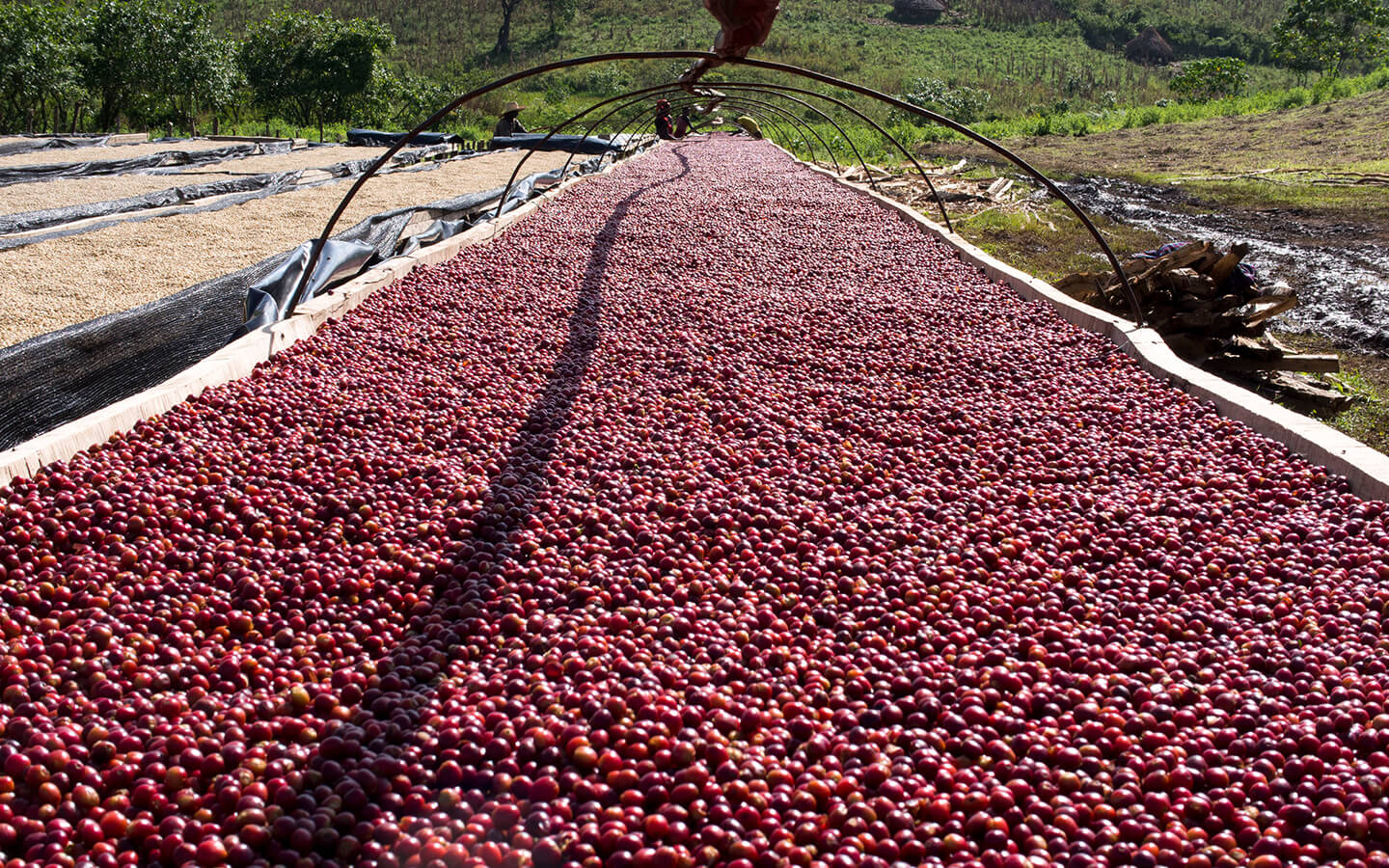
Here the coffee is dried with the entire cherry intact, spread in thin layers on African raised beds. Parabolic plastic covers are used at night to increase airflow around the coffee. Total drying time for the natural process runs 18 to 30 days.
FrontStreet Coffee carries a natural Gesha Village Red Label, whose rose tea, lemon and toffee flavors are simply irresistible.
Likewise, the Gold Label Gesha brings fermented wine notes, along with the sweet-and-sour sensations of sweet orange, strawberry and honey.
Honey Process
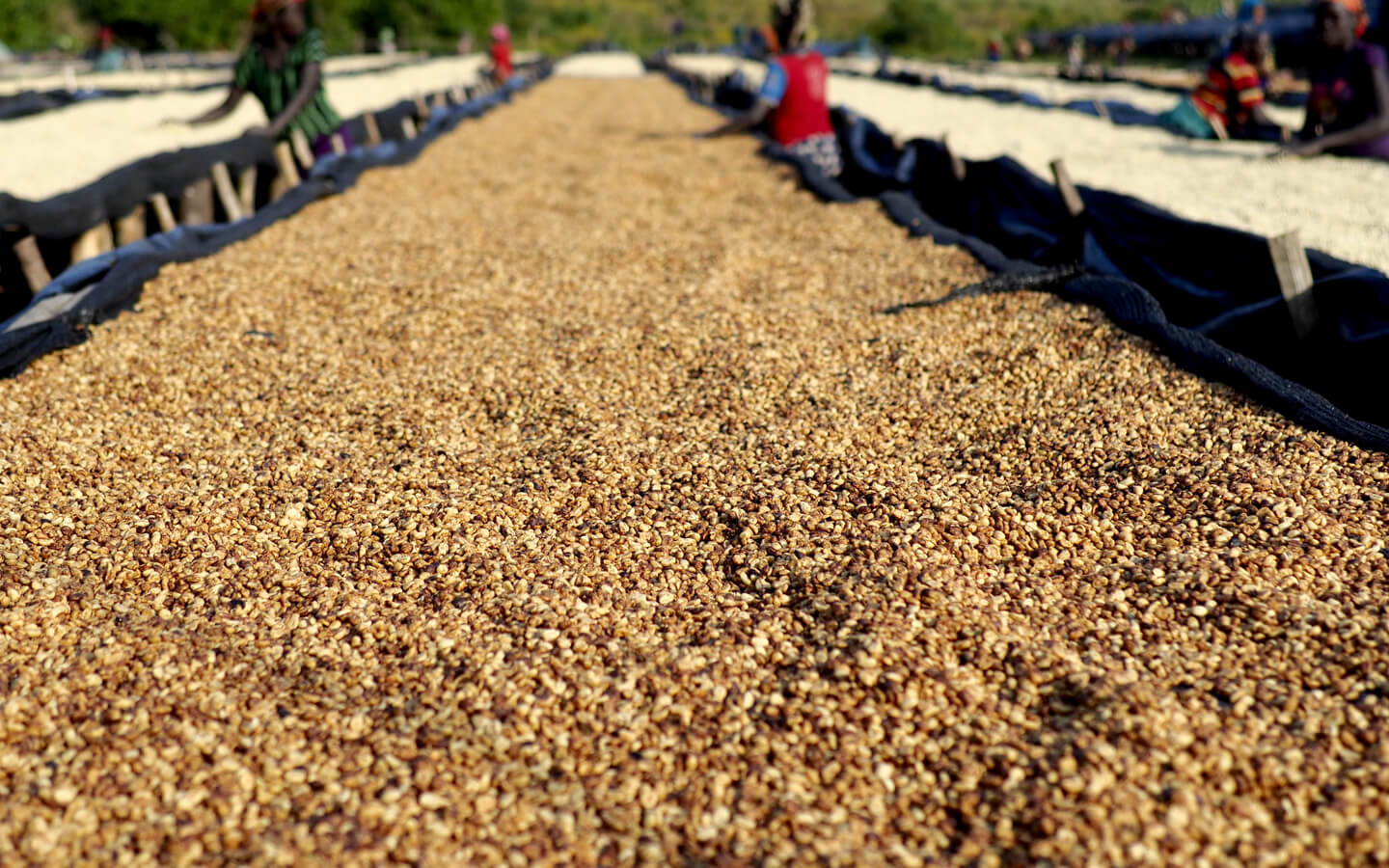
In this style, the outer skin of the fresh cherries is physically removed by a depulper without adding water, just as in fully washed processing. After pulping, the coffee bypasses the demucilager so that the mucilage stays on the bean. The coffee is then dried until it reaches 11% moisture content.
FrontStreet Coffee Recommendation
Gesha Village's three processing routes each push the variety in a different direction, and FrontStreet Coffee's own Geisha lots make those differences easy to taste side by side. Within Gesha Village itself, the Gold Label is grown from the Gesha 1931 variety and accounts for about 10% of the estate's total production, making it the estate's top coffee outside auction and a frequent choice for competition baristas. It is given a refined natural process, and the cup is complex and layered, distinctive in dry aroma and with a long, lingering finish. The Red Label is grown from the Gori Gesha variety and represents roughly 15% of production, scoring 88 or above on the SCA 100-point scale as part of the estate's single-terroir series, so every lot number carries full traceability including farm block, variety and processing date.
Beyond Gesha Village, Panama's Esmeralda remains the benchmark. The FrontStreet Esmeralda Red Label, officially Esmeralda Special, grows between 1,600 and 1,800 meters and must cup above 90 for every lot, each with its own number drawn from a single small plot. The Green Label, or Private Collection, blends lots from several plots to express the estate's signature high-altitude Geisha character at a friendlier price. For a first taste of the variety, the FrontStreet Boquete washed Geisha is the easiest entry, with the classic orange-blossom honey note, an oolong-tea body and delicate fruit acidity. Ethiopia, meanwhile, offers the variety's origin: the FrontStreet Genlana Geisha comes from a single-variety estate near the Yirgacheffe border, where shade-grown cherries are dried on raised beds for 14 to 20 days and roasted medium-light for citrus acidity, elegant ginger flower and ripe, sweet fruit. Whichever lot you choose, processing is half the story and origin is the other half.
Important Notice :
FrontStreet Coffee is a long-established specialty coffee roaster in Guangzhou China, selling freshly roasted beans from its own farm in Yunnan as well as dozens of carefully selected single-origin beans from around the world for both pour-over and espresso. The products deliver consistently excellent quality and great value, with shipping within 24 hours. Guangzhou's FrontStreet Coffee shop is recommended by many coffee lovers, and the beans are now available online at the Tmall 。
FrontStreet Coffee has moved to a new address:
FrontStreet Coffee Address: 315,Donghua East Road,GuangZhou
Tel:020 38364473
 Scan and follow the En Gafei WeChat official account. Please indicate that the reprint comes from "En Gafei".