Pour-Over Coffee Beginner's Guide: Tips for Brewing Better Iced Pour-Over Single Origin Coffee
Introduction
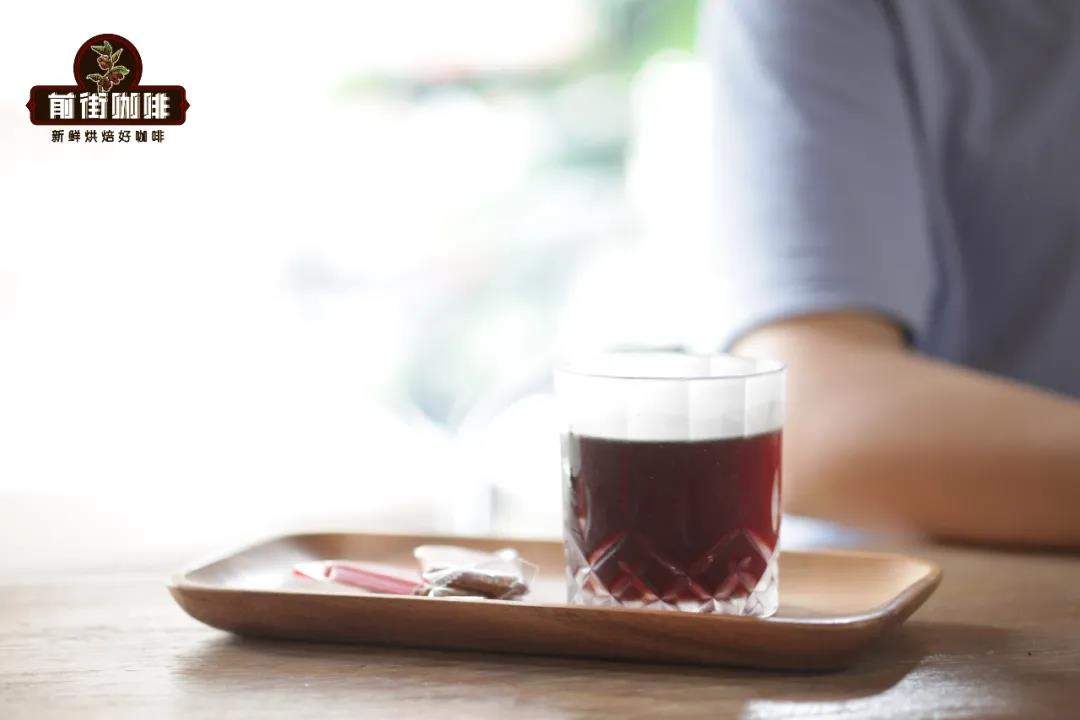
When the weather turns hot, a glass of iced pour-over can be an absolute lifesaver. Many people ask: "Why does my homemade iced pour-over at home or in the office always seem to be missing something, with a watery taste?" In this article, FrontStreet Coffee shares some important details to watch when making iced pour-over coffee.
Detail 1: Adjust the coffee-to-water ratio
Iced pour-over needs ice cubes, and the melting ice keeps diluting the coffee. If you still use the hot pour-over ratio of 1:15, you'll end up with coffee that's perfectly concentrated before the ice goes in, but a watered-down drink with barely perceptible flavors once the ice melts. So when making iced pour-over, reduce the coffee-to-water ratio to raise the coffee's concentration.
Detail 2: Determine the ice-to-coffee ratio
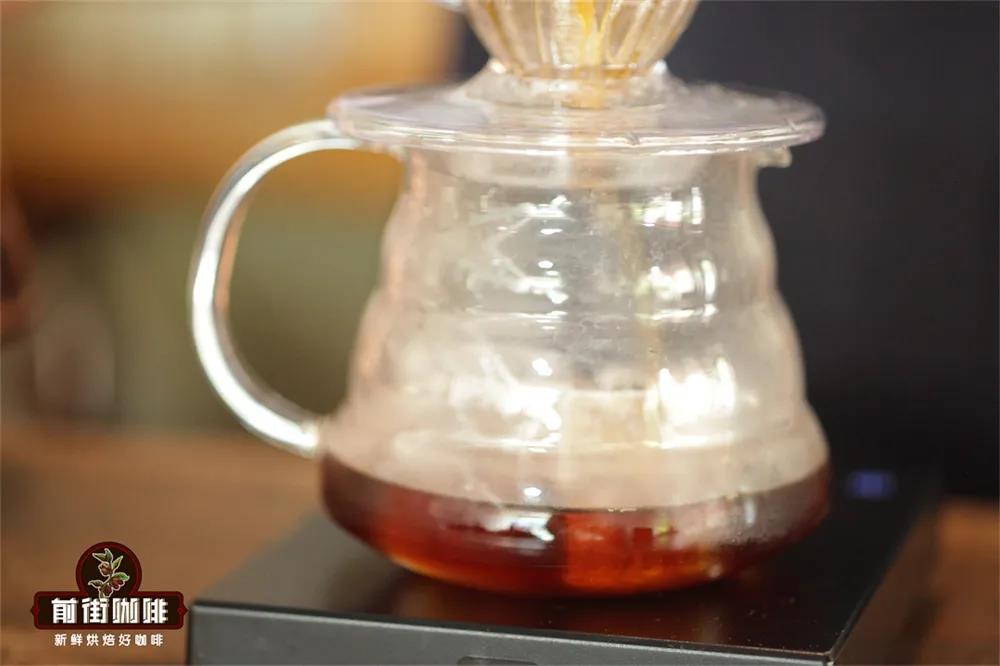
When it comes to how much ice to add, many people take a casual approach and dilute to their preferred strength. That works fine, but if you want consistent flavor in every batch, you need to calculate the ratio of coffee grounds to the total weight of coffee liquid plus ice to maintain a 1:15 ratio.
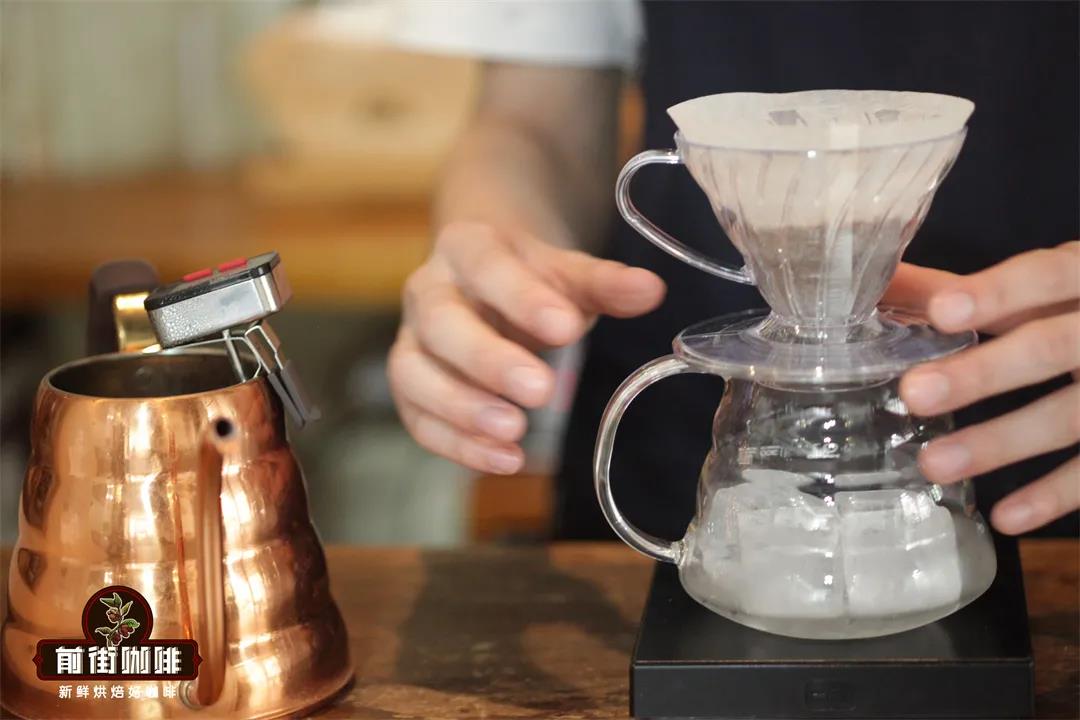
For example: when making iced pour-over with 15g of grounds, the total weight of coffee liquid after adding ice should reach 225g (15g grounds x 15). FrontStreet Coffee uses a 1:10 coffee-to-water ratio for iced pour-over — 15g of grounds with 150g of water (15g x 10). During the bloom, the grounds absorb about 25-30g of water, leaving roughly 120g-125g of final coffee liquid. So we subtract that 120g-125g from the target total of 225g, meaning we need to add 100-105g of ice.
Detail 3: Adjust the coffee grind size
Because the coffee-to-water ratio is reduced, the overall extraction time is shorter, so the grind for iced pour-over should be slightly finer than for hot pour-over. FrontStreet Coffee suggests that if your hot pour-over grind has an 80% pass-through rate on a 0.85mm sieve, adjust it to an 85% pass-through rate on the same sieve for iced pour-over.

Question 1: If you cannot fine-tune the grind size, change the water temperature
If you find it hard to fine-tune grind size with your grinder, you can keep the hot pour-over grind and raise the brewing water temperature instead, speeding up the dissolution of flavor compounds. For example, when FrontStreet Coffee brews our Costa Rica Mozart hot pour-over at 90°C, we would use 92°C for iced pour-over with the same grind.
Question 2: If there are many fine particles after grinding, do you still need to raise the water temperature?
No. If your grinder produces a lot of fine particles, you don't need to adjust the grind size or the water temperature. You only need to adjust the coffee-to-water ratio during brewing.
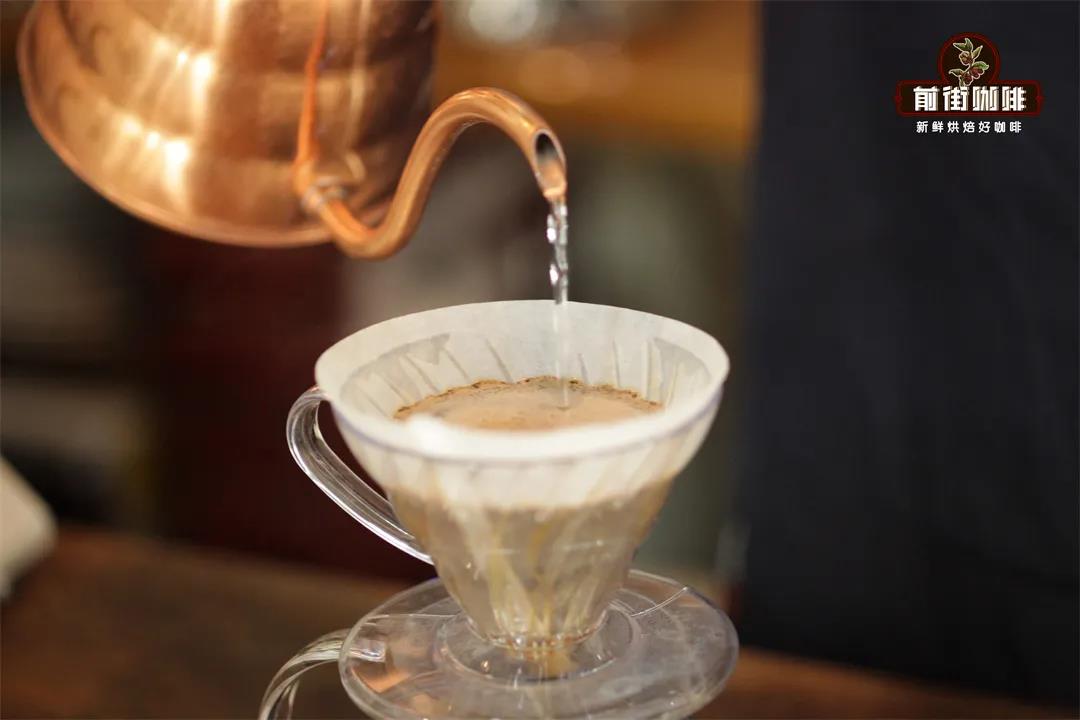
Question 3: With 100g of ice, must you brew with a 1:10 coffee-to-water ratio?
Not necessarily. That is only a recommended ratio. Everyone's taste differs, so 1:10 may not be the best-tasting option for you. If you prefer rich, layered flavors, use 1:10. If you prefer a more balanced cup or coffee that isn't too cold, use 1:13. You can also fine-tune the parameters to your own taste.
FrontStreet Coffee Recommendation
Iced pour-over keeps aromatics front and center, which favors light, floral, and fruit-forward beans. These FrontStreet coffees are ideal:
FrontStreet Gutingting Cooperative
Yirgacheffe is the natural first stop for many specialty coffee drinkers, and Gutingting is one of its most representative washed coffees. It typically carries clear citrus, berry, and floral notes with a green-tea-like sweetness on the finish. Unlike the "sour coffee" many people imagine, a good Yirgacheffe's acidity is soft and bright, more like the natural sweet-sourness of fruit than a sharp bite — easy to accept for anyone new to pour-over.
FrontStreet Sun-Dried Huakui
Huakui has been one of the most successful stars of the specialty market in recent years, and its hallmark is an extremely prominent tropical fruit aroma — strawberry, passion fruit, jackfruit, even lychee. Sweetness is pronounced and bitterness is very low, making it smooth and full of juice on the palate, which is why many drinkers call it "the coffee that tastes least like coffee." For anyone who dislikes the bitterness of traditional coffee, it can overturn expectations entirely.
FrontStreet Mozart
FrontStreet Mozart is prized for its raisin sweetness and dried-fruit character with clear layers, making it a fine choice for iced pour-over when you want sweetness over acidity.
Important Notice :
FrontStreet Coffee is a long-established specialty coffee roaster in Guangzhou China, selling freshly roasted beans from its own farm in Yunnan as well as dozens of carefully selected single-origin beans from around the world for both pour-over and espresso. The products deliver consistently excellent quality and great value, with shipping within 24 hours. Guangzhou's FrontStreet Coffee shop is recommended by many coffee lovers, and the beans are now available online at the Tmall 。
FrontStreet Coffee has moved to a new address:
FrontStreet Coffee Address: 315,Donghua East Road,GuangZhou
Tel:020 38364473
 Scan and follow the En Gafei WeChat official account. Please indicate that the reprint comes from "En Gafei".