An Introduction to the Six Major Coffee Cultivation Models in Ethiopia and the Flavor Profile of Arsi Natural Coffee Beans
Today, roughly 25% of Ethiopia's population depends directly or indirectly on coffee production for a living. Most farmers use traditional methods: coffee trees are tended by hand, organic fertilizers are used, and harmful pesticides and herbicides are avoided. As a result, most coffee grown in Ethiopia is organic.
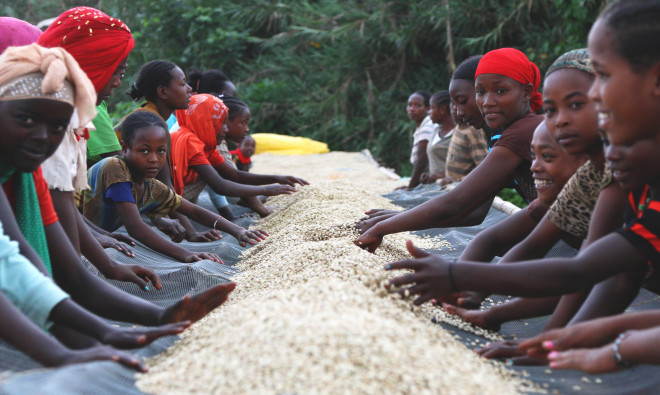
Cultivation Systems in Ethiopia
Ethiopia's cultivation patterns are complex, ranging from wild coffee growing in primary forests to the opposite extreme of full-sun exposure. Its cultivation systems are among the most diverse in the world. Typically, two major cultivation environments are distinguished by the degree of shade: the first is forest environments with shade trees (full or partial shade), and the second is coffee grown directly under full sun (as in the Harar region). Out of these two environments come six cultivation patterns.
1. Forest-Shade Coffee
This splits into forest-grown and partially shaded. The former is full shade, with sites chosen deliberately for artificially planted or traditional wild coffee trees. Wild coffee trees usually receive no human care, growing naturally in mountain forests while nearby residents harvest the ripe fruit to supplement their household income. When planting near forest environments, the shade trees around the coffee are usually fruit trees of economic value that households can sell or use. In partially shaded environments with fewer surrounding trees, people plant more coffee trees and also clear the surrounding weeds and carry out basic management to raise yields.
2. Full Sun Coffee
No forest or shade trees surround the coffee trees. Sun coffee is typically grown in small quantities in gardens, located in high-altitude regions between 1,700 and 2,000 meters, with the Harar region especially prominent.
3. Garden-Grown Coffee
As the name suggests, this coffee is planted near homes, typically with only about a hundred trees per household, often mixed with other harvestable crops. The harvested crops and coffee fruit can be used by the household or sold at market to supplement income, and it exists in both partially shaded and full-sun conditions.
4. Agroforestry Systems
Most plots are a quarter hectare, using local traditional tree species or fruit trees as shade and cultivated in shaded or partially shaded ways. Those who adopt this method are mostly professional coffee farmers, with Sidamo and Yirgacheffe especially renowned.
5. Coffee Farms/Plots
Privately (or corporately) owned exclusive estates or production blocks approved by the government with direct sales permits, typically covering more than 10 hectares.
6. Large Plantations
Cultivation areas typically exceeding 50 hectares.
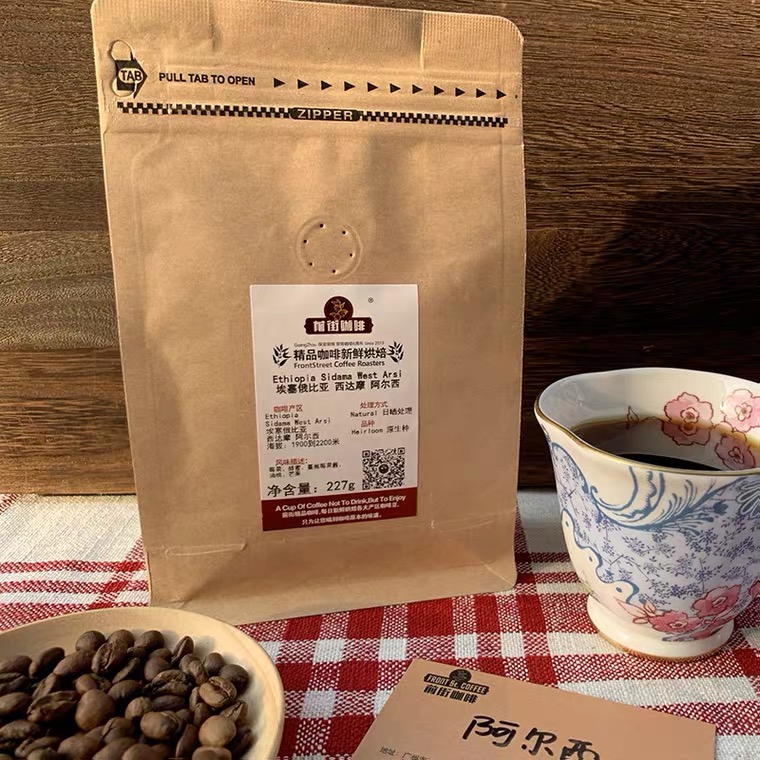
West Arsi Coffee from FrontStreet Coffee
FrontStreet Coffee's Arsi coffee uses smallholder cultivation patterns, with average farms that are not large — approximately 2-3 hectares. Although coffee-growing techniques are still developing, the West Arsi region's cultivation technology is advancing faster than in other producing regions. The farmers don't need to hire temporary or full-time workers; instead they select the coffee with the help of family members.
West Arsi lies between the famous Yirgacheffe growing area and the Hararghe region, in the eastern part of Sidamo, at altitudes of 1,900-2,200 meters. The high altitude, combined with fertile soil and green, traditional, organic cultivation, produces coffee with tropical fruit flavors and excellent sweetness.
FrontStreet Coffee's Arsi is medium-light roasted and natural-processed, showing flavors of berries, honey and nectarine with rich, layered character.
FrontStreet Coffee Recommendation
Ethiopia's growing systems — from forest-shade and garden coffee to full-sun plots — help explain the remarkable range of flavors the country produces, and this natural-processed Arsi lots shares its fruit-forward, honeyed character with several beans in FrontStreet's line. FrontStreet Natural Huakui comes from Hambella in Guji, Sidamo, and is traditionally sun-dried and medium-light roasted, delivering light fermented wine, florals, citrus and mango with honeyed sweetness and cocoa, a full body and a long finish. FrontStreet Natural Red Cherry from Yirgacheffe is sun-dried and shows peach, cocoa, honey and lemon in a sweet, clean cup. For a washed contrast, FrontStreet Washed Yirgacheffe offers clear jasmine and bright citrus acidity with a light, elegant, tea-like body, and FrontStreet Gudingding Cooperative brings citrus and lemon with elegant white flowers and a bright, delicate profile.
Important Notice :
FrontStreet Coffee is a long-established specialty coffee roaster in Guangzhou China, selling freshly roasted beans from its own farm in Yunnan as well as dozens of carefully selected single-origin beans from around the world for both pour-over and espresso. The products deliver consistently excellent quality and great value, with shipping within 24 hours. Guangzhou's FrontStreet Coffee shop is recommended by many coffee lovers, and the beans are now available online at the Tmall 。
FrontStreet Coffee has moved to a new address:
FrontStreet Coffee Address: 315,Donghua East Road,GuangZhou
Tel:020 38364473
 Scan and follow the En Gafei WeChat official account. Please indicate that the reprint comes from "En Gafei".