The Impact of the Ethiopia Commodity Exchange on the Coffee Market & Flavor Profile of Buku Coffee Beans
In Ethiopia, coffee is the country's primary source of foreign exchange - the main export commodity earning valuable foreign currency for the nation. Yet coffee also has a vibrant domestic market.
Coffee prices show significant interannual variations between seasons. These changes are the combined effect of cyclical trends reflecting domestic supply and global coffee demand and supply conditions. Differences also appear between varieties and grades: some, like Yirgacheffe and Sidamo, command considerable premiums in the international market.
With such large production, how can the market be well managed and understood? As a country that has long enjoyed coffee prestige and international standing, Ethiopia's coffee industry is supported by the ECX (Ethiopian Commodity Exchange). The ECX was established by the Ethiopian government in 2008 to democratize market trading rights for farmers growing commodities such as beans, corn, coffee, and wheat.
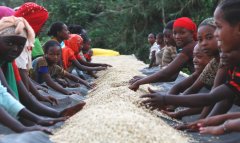
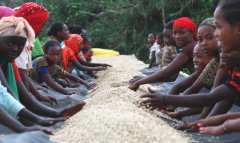
After 2008, crops produced in Ethiopia - wheat, corn, sesame, and coffee - were fully integrated into the ECX trading system, replacing the existing auction and export methods. The approach works like this: coffee farmers or cooperatives deliver coffee to ECX centralized warehouses, where beans of the same grade from the same producing region are mixed together and then auctioned directly. You will not know which specific farms, cooperatives, or producing regions the beans came from. In terms of production and quality, this practice has no impact, and it makes coffee quality easier to distinguish by price [you get what you pay for]. What is affected is that intermediate traders can no longer freely track and capture outsized profits [low price, high quality], and things become clearer for consumers. Because trading outside the ECX system is heavily taxed, currently about 90% or more of coffee is processed through this system. For buyers who love specialty coffee, however, the ECX is not good news. For that reason, starting in 2010 Ethiopia launched the DST (Direct Specialty Trade) system, which holds irregular Ethiopian auctions where only specialty coffees exceeding 80 points under SCAA cupping standards can be traded with foreign green-bean buyers under their own farm or cooperative names.
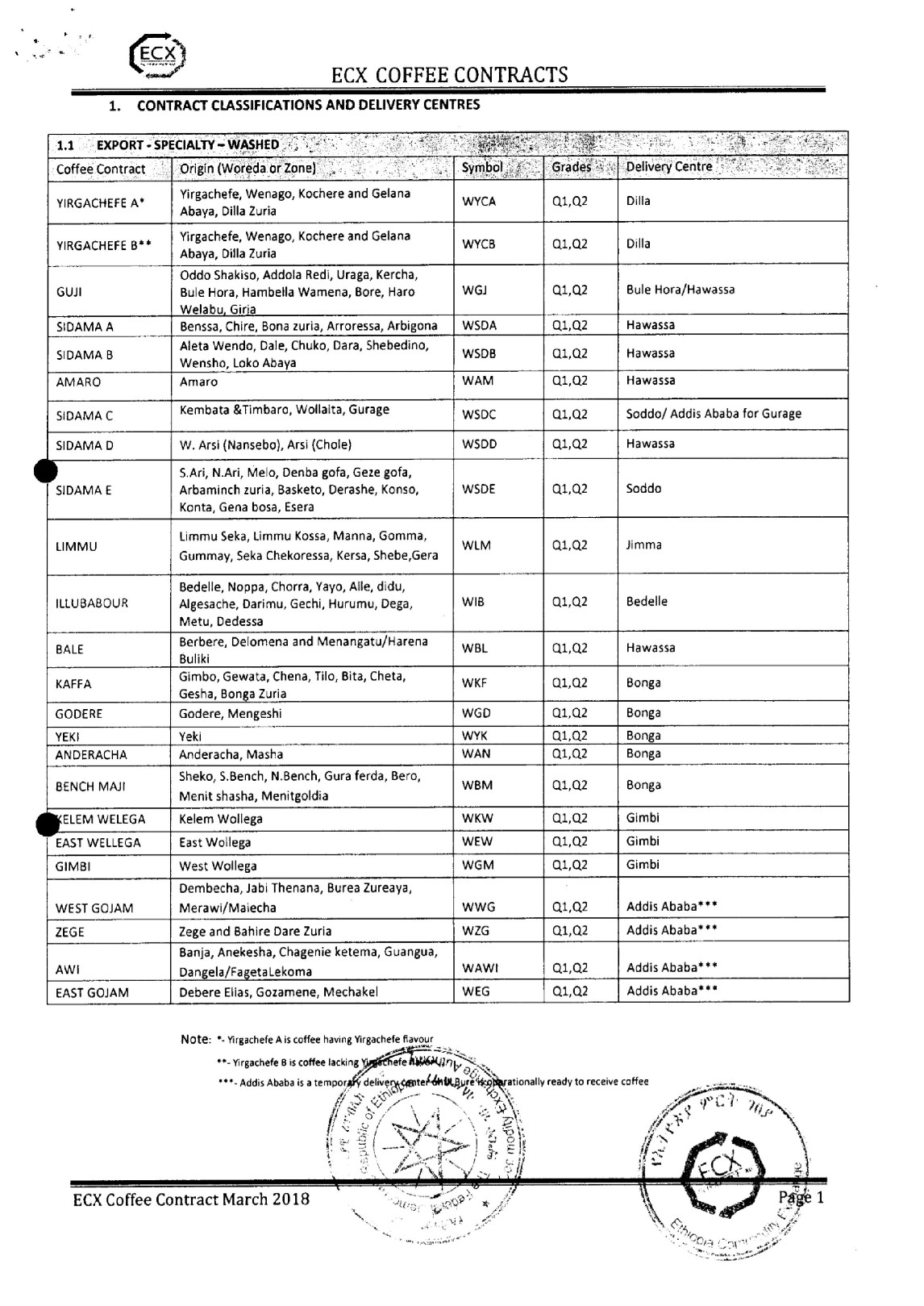
Below is an ECX contract for everyone to see. From this table you can clearly read the coffee's variety, origin, processing method, green grade, and other information. Transparent trading makes it easy to understand coffee trading situations.
Introduction to Ethiopian Flower Queen Coffee
FrontStreet Coffee would like to introduce Ethiopia's Flower Queen coffee here. Let us explain it briefly.
The Sidama producing region is located in southern Ethiopia.
The coffee-growing areas sit around the East African Rift Valley, and Sidamo's coffee flavors are extremely diverse.
Different soil compositions, regional microclimates, and countless native coffee varieties create significant differences and characteristics from one town and region to the next.
The sun-dried coffee beans produced by "Buku Abel" in the Hambella region won the natural-category championship among Ethiopian producing regions in 2017, and that year the bean was named Flower Queen (Huakui). Hambella is located in Ethiopia's GUJI coffee region, which currently has nearly 20 processing plants. Among all the estates and processing plants, the Goro mountain spring processing plant - at an altitude of 2,280 meters - only begins sun-drying once the red cherries' sugar content reaches above 21.
Differences Between Small Bean Flower Queen and Flower Queen X.0
Among all these estates and processing stations, strictly speaking, only sun-dried beans from the "Buku Abel" processing plant can be called "Flower Queen coffee beans." This is why Flower Queen 2.0 and Flower Queen 3.0 appeared in 2018 and 2019, 4.0 was named in 2020, and Flower Queen 5.0 in 2021. Simply put, the sourcing area expanded, and the lot of that year took the name Flower Queen X.0.
Differences Between 2017 Flower Queen Coffee Beans and Later Harvest Seasons
Since the original Flower Queen was folded into Flower Queen 2.0 and Flower Queen 3.0, can the original still be found? In 2018 and 2019, the processing plant still had beans from the small producing areas, and FrontStreet Coffee discovered that the flavor of these two harvests was very close to the original Flower Queen. The aftertaste was not as good as the original 2017 lot, but surprisingly, we could sometimes still identify Small Bean Flower Queen batches among these two lots of green beans - identical to the original small-bean green beans. Among the 2017 Flower Queen beans were some particularly small-bean varieties, which are the main source of Flower Queen's aroma. Flower Queen containing these old small-bean varieties is therefore also called Small Bean Flower Queen. Starting in 2020, the processing plant processed Small Bean Flower Queen independently again, selling it alongside that year's Flower Queen X.0.
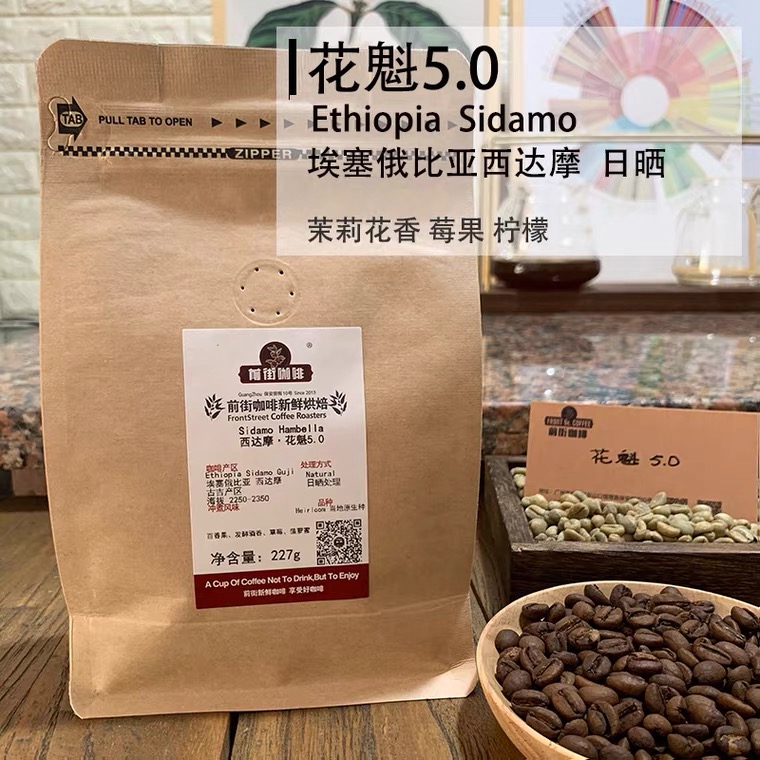
FrontStreet Coffee's Flower Queen, roasted medium-light, presents overall flavors of lemon, jasmine, and berry aromas.
FrontStreet Coffee Recommendation
Ethiopia is a world-famous specialty coffee origin and the birthplace of coffee itself, home to countless native varieties - a treasure land that keeps coffee lovers coming back. If the Flower Queen story has piqued your interest, FrontStreet's washed Yirgacheffe is the classic entry point: white jasmine florals, bright citrus and lemon acidity, and a tea-like finish, at a friendly price that has made it many people's first specialty bean. Yirgacheffe is a small town in southern Ethiopia's Sidamo province at 1,700-2,100 meters, with coffee planted above 1,800 meters - one of the highest coffee regions on earth - and its name became a byword for Ethiopian specialty coffee after the Ethiopian Commodity Exchange formally separated it from Sidamo in 2010.
Few people realize the town contains many smaller sub-regions - even single villages - some home to cooperatives with decades of experience whose coffees reach an even higher level. The best representative is FrontStreet's washed Idido (Guodingding) Cooperative lot from the Worka area at Yirgacheffe's southeastern tip. Originally part of the Worka Cooperative under the YCFCU union, it became an independent cooperative in 2012 with roughly 300 member farmers as buyers worldwide pursued traceability. Because the pulp is removed before drying, the coffee shows its inherent aromas with exceptional clarity: citrus and lemon tones with an elegant white-floral lift, bright and delicate overall.
And for the natural expression that made Flower Queen famous, FrontStreet's Huakui (Flower Champion) natural is the one to try. Exceptional growing conditions - very high altitude, fertile soil, and hand-selected ripe cherries - give it a naturally delicate fragrance, and Sidamo's signature natural processing sets off its graceful aromatics beautifully. Roasted medium-light, it shows a faint fermented note, florals, citrus, and mango - a rich, complex cup with honeyed sweetness, a cocoa undertone touched with spice, a thick body, and a long-lasting finish.
Important Notice :
FrontStreet Coffee is a long-established specialty coffee roaster in Guangzhou China, selling freshly roasted beans from its own farm in Yunnan as well as dozens of carefully selected single-origin beans from around the world for both pour-over and espresso. The products deliver consistently excellent quality and great value, with shipping within 24 hours. Guangzhou's FrontStreet Coffee shop is recommended by many coffee lovers, and the beans are now available online at the Tmall 。
FrontStreet Coffee has moved to a new address:
FrontStreet Coffee Address: 315,Donghua East Road,GuangZhou
Tel:020 38364473
 Scan and follow the En Gafei WeChat official account. Please indicate that the reprint comes from "En Gafei".