Ethiopian Three-Tour Coffee Cultural Ceremony: How to Brew COE22 and TOH Coffee Beans and Their Flavor Descriptions
The Cultural Significance of Ethiopian Coffee
Beyond its rich biological origins, coffee holds a significant place in Ethiopian culture. The coffee ceremony is an integral part of Ethiopian life, dating back centuries. Every morning, the woman of the household roasts fresh coffee beans and spices on a clay stove (the wacheff). The freshly roasted beans are finely ground, carefully brewed, and set in a traditional clay pot (the Jebena) to boil on the stove. The brewed coffee is poured into each person's cup in three rounds. The renowned coffee scholar Hsu Paolin, in his African Coffee Guide, describes this ceremony as Ethiopia's unique three-round coffee etiquette. The coffee is always served in three rounds: the first is called "Abol," the second "Tona," and the third "Baraka." After brewing, two spoonfuls of sugar are added to each cup, usually accompanied by various traditional local pastries. Guests are expected to stay through all three rounds, since leaving early would be impolite. Drinking coffee serves as a ritual for building friendships and discussing important matters among neighborhoods and villages.
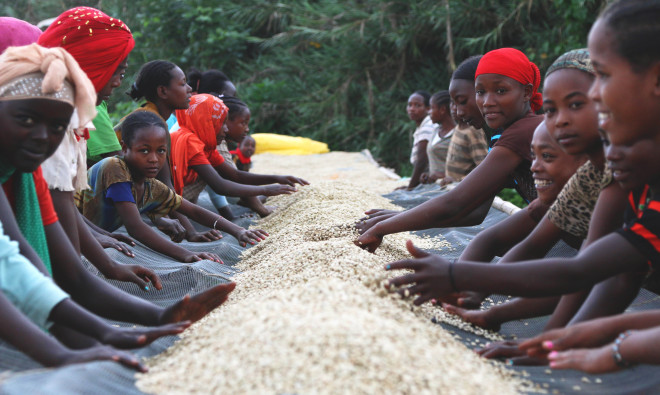
Ethiopia's Coffee Growing Regions
Ethiopia's geography is exceptionally well suited to coffee. Coffee is grown mainly in the southern highlands at elevations between 1,100 and 2,300 meters. The main producing regions include Harar, Limu, Djimma, Sidamo, Kaffa, Yergacheffe, and Wellega. The soil in these areas is well-drained, slightly acidic, red in color, and loose in texture. Ethiopian coffee is harvested once a year. From March to April, beautiful white coffee flowers bloom on the branches, after which the fruit begins to grow. From September to December, the red cherries ripen and are ready for picking. From November to December, the new season's coffee begins to be exported to international markets.
Using FrontStreet Coffee's COE22 and TOH as examples, let's briefly introduce the flavor characteristics of Ethiopian coffee.
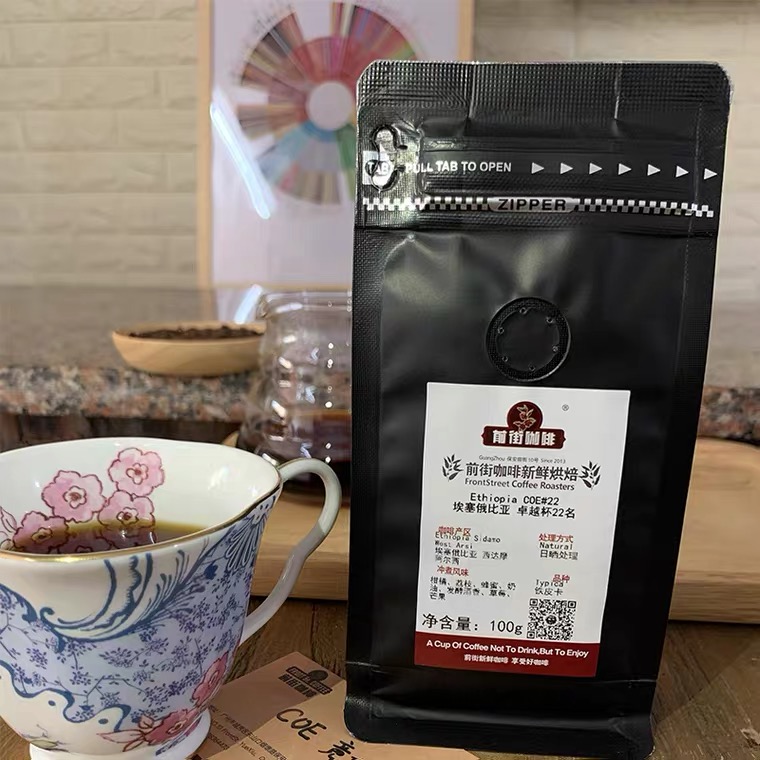
Cup of Excellence (COE) Ethiopian Coffee
First, let's look at lot 22 from Ethiopia's inaugural COE competition in 2020. FrontStreet Coffee believes that taking part in origin auctions is another way to support the development of coffee-producing regions: it rewards quality and thereby encourages more farmers to participate actively. According to official information, this coffee is a Typica variety scoring 87.64 points. It comes from the Arsi region of Ethiopia, grown at an altitude of 2,050 meters. The processing method is natural (dry-processed), which demands high labor costs because the coffee must be turned evenly every 30-60 minutes to avoid over-fermentation. With a medium-light roast, the flavor profile presents citrus, lychee, honey, cream, fermented wine notes, strawberry, and mango.
Taste of Harvest (TOH) Competition
So what kind of flavor experience does the washed TOH bring us? First, we need to understand what TOH is.
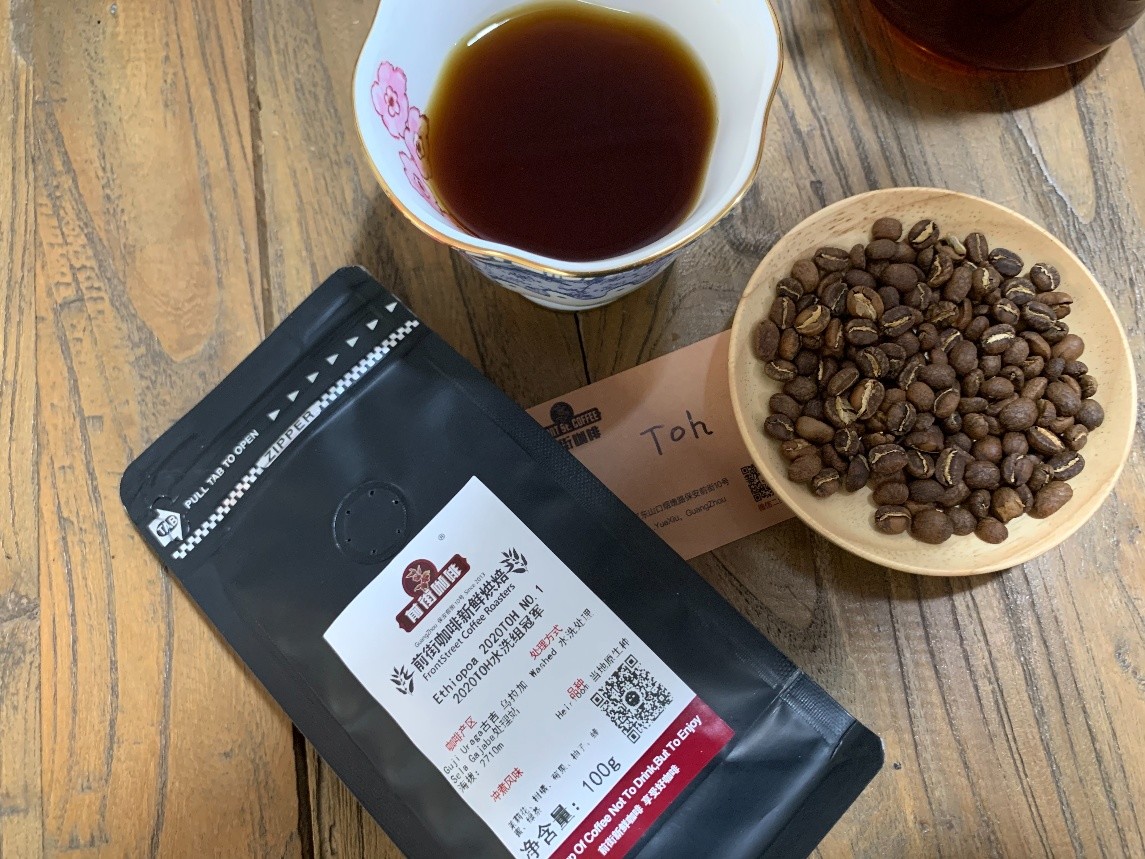
The TOH green bean competition is the most important green bean competition held annually for African coffee-growing countries. Its full name is the "East Africa Taste of Harvest Competition" (TOH), and it is similar to the Cup of Excellence (COE) of Central and South America. Since its establishment, the TOH competition has become an arena for discovering the best coffees from 12 African producing countries, including Kenya, Ethiopia, Uganda, and Congo.
The TOH process runs as follows: in the preliminary round, batches scoring below 80 points in cupping are eliminated, gradually selecting high-quality green beans from various regions to enter the national-level competition. Then domestic and international judges cup and score together using standards from the Specialty Coffee Association of America (SCAA), and the highest scorer becomes the national champion of the year.
Washed Processing Method
The TOH champion beans FrontStreet Coffee acquired this time come from the washed category. Every stage of processing must undergo strict, careful control and screening. Hand-picking fully ripe, fresh cherries as the raw material is the first step in ensuring coffee quality. Before processing, you can see the beautiful, mature red cherries looking especially tempting in the sunlight. After careful selection, the cherries enter the washed processing stage. The selected cherries go into a depulper to remove skin and pulp; the beans with remaining pulp and mucilage are placed in water to ferment for about 18-36 hours; after fermentation, the beans with parchment are moved into flowing water channels to wash away pulp and mucilage; after washing, the beans are dried in the sun or with drying machines until moisture content reaches about 12%; finally, the parchment is removed from the green beans.
Through cupping, FrontStreet Coffee believes the washed method highlights the brightness of the acidity in beans from the Uraga region, with an overall profile leaning toward the floral notes and citrus acidity characteristic of the Yergacheffe region. With a medium-light roast, this coffee presents jasmine, lemon, berries, pomelo, honey, and green tea.
FrontStreet Coffee Recommendation
The Ethiopian cup is famous for its floral and citrus character, and FrontStreet Coffee's lineup follows that thread across processing methods. For a classic washed expression, FrontStreet Coffee's washed Yirgacheffe is the go-to entry point, with clear jasmine and bright citrus acidity; Yirgacheffe is a town in southern Ethiopia long known for its misty, cool, humid climate, where thousands of coffee trees flourish and produce the region's signature blend of florals and fruit acidity, light and elegant with a tea-like body, like a clean, refreshing lemon tea.
To taste the natural-process side of Ethiopia, FrontStreet Coffee's Natural Red Cherry is built on fully ripe, all-red cherries dried in the sun for about two weeks until the sugars and essence of the fruit soak into the bean, then sorted by density and color and hand-picked once more; the cup is clean and lifted, with peach, cocoa, honey, and lemon notes. For the traditional village-station model, FrontStreet Coffee's Gidding Cooperative comes from the Woka area at the southeastern edge of Yirgacheffe, where pulp is removed before drying so the coffee's own aromas come through more clearly, showing citrus and lemon with elegant white florals. And Huakui, from Hambella in Guji, Sidamo, is sun-dried on raised beds for 21 days and roasted light-medium for fermented wine, florals, citrus, and mango, with honey sweetness, cocoa, a hint of spice, and a thick, lasting finish.
Important Notice :
FrontStreet Coffee is a long-established specialty coffee roaster in Guangzhou China, selling freshly roasted beans from its own farm in Yunnan as well as dozens of carefully selected single-origin beans from around the world for both pour-over and espresso. The products deliver consistently excellent quality and great value, with shipping within 24 hours. Guangzhou's FrontStreet Coffee shop is recommended by many coffee lovers, and the beans are now available online at the Tmall 。
FrontStreet Coffee has moved to a new address:
FrontStreet Coffee Address: 315,Donghua East Road,GuangZhou
Tel:020 38364473
 Scan and follow the En Gafei WeChat official account. Please indicate that the reprint comes from "En Gafei".