Introduction to Brazilian Coffee Bean Regions, Processing Methods and Grading - Flavor Characteristics of Rainha Estate Yellow Bourbon
An Introduction to Brazilian Coffee
Brazilian coffee beans do not leave a strong impression on many drinkers, yet Brazil is in fact central to espresso blending.
Brazil is the world's largest coffee producer and the most comprehensive production base, with the widest range of coffees anywhere. Its flavour profile is lightly fragrant with a touch of bitterness and a sweet, smooth body. Brazil is not only the largest producing country but also the second-largest coffee consumer. Today, FrontStreet Coffee offers a brief introduction to Brazilian coffee.
The History of Brazilian Coffee Cultivation
Start with how coffee reached Brazil. Brazilian coffee varieties were introduced from French Guiana in the 1720s. Francisco de Mello Palheta, a Portuguese captain serving in Brazil, won over the governor's wife in Cayenne, then the capital of French Guiana, and succeeded in bringing coffee seeds into Brazil. Coffee adapted quickly, spreading from the north to the southeastern state of Sao Paulo and the southern state of Parana. Those regions sit at slightly higher latitudes, where winter frosts caused heavy losses for growers. During the 1970s and 1980s, farmers developed the warmer northern reaches of Sao Paulo state, including Minas and Bahia, where winters are mild and frost-free. Minas has since become one of Brazil's main specialty coffee regions.
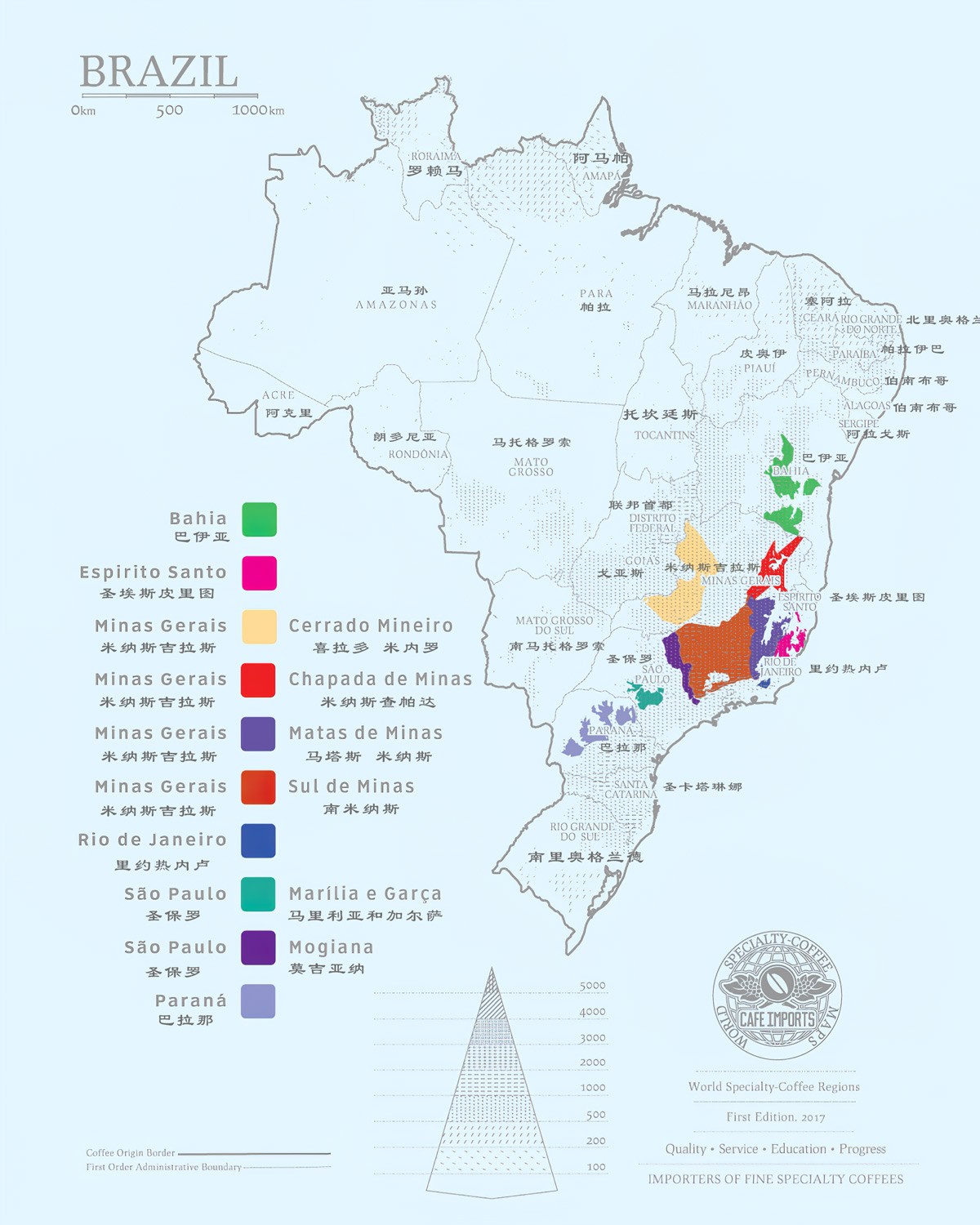
Brazil's Coffee-Producing Regions
Brazil has 26 states in total, 17 of which cultivate coffee. Seven states account for more than 98% of national production:
- Sao Paulo (Mogiana, Centro-Oeste)
- Parana (Norte Pioneiro do Parana)
- Bahia (Planalto da Bahia, Cerrado da Bahia, Atlantico Baiano)
- Espirito Santo (Montanhas do Espirito Santo, Conilon Capixaba)
- Minas Gerais (Sul de Minas, Cerrado Mineiro, Chapada de Minas, Matas de Minas)
- Rondonia
- Rio de Janeiro
Fazenda Rainha: A Premium Brazilian Coffee
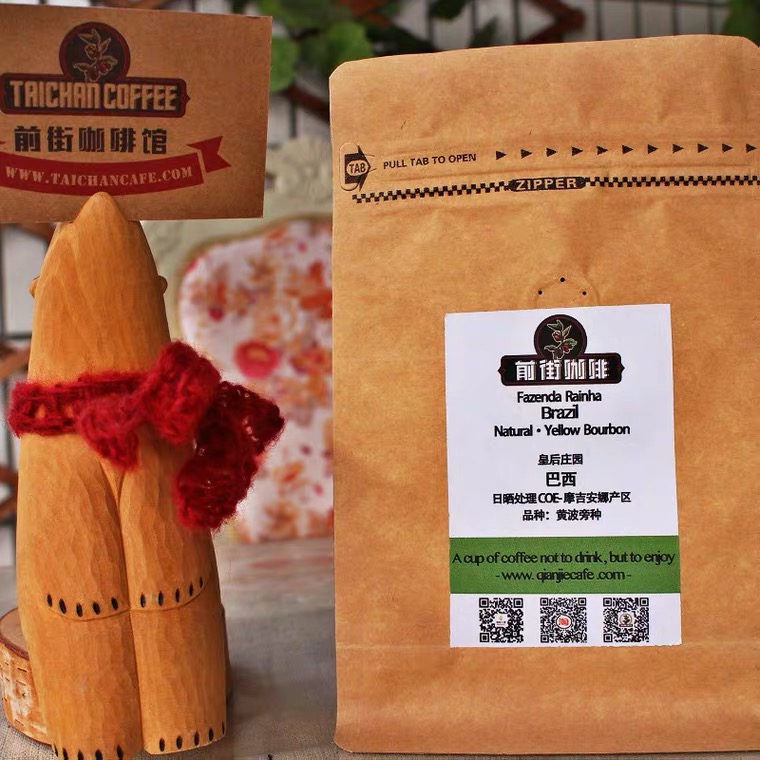
FrontStreet Coffee offers a Brazilian coffee from Fazenda Rainha (Queen Farm), part of the renowned Carvalho Dias family holdings. The family owns four major estates in the Alta Mogiana region of Sao Paulo state, north of Sao Paulo city. Since the first Brazil Cup of Excellence in 1999 they have won awards every year, taking more than 12 in seven years. In 2004 they secured the championship along with 9th and 11th places in the same competition. The estate grows 200 acres of Yellow Bourbon coffee trees.
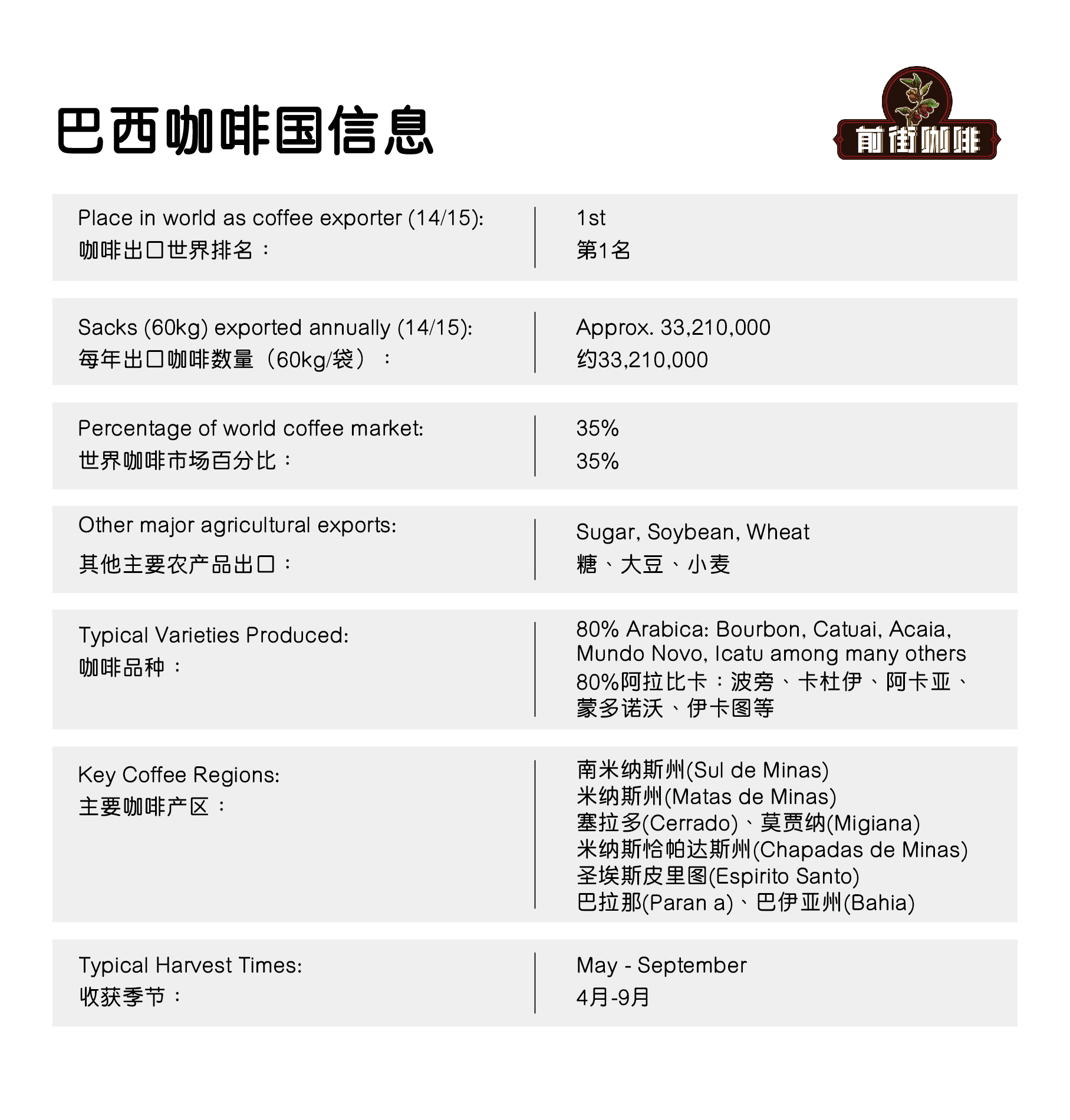
Below is the specific information on Brazilian coffee estates compiled by FrontStreet Coffee:
Flavor Profile of FrontStreet Coffee's Brazilian Selection
FrontStreet Coffee's Yellow Bourbon opens with a dry fragrance of roasted hazelnut and cinnamon. The wet aroma brings out tropical fruit notes, supported by excellent cream and sugar characteristics.
Processing Methods
Brazilian coffee commonly undergoes four processing methods: natural (dry), pulped natural, semi-washed and washed. The washed method arrived relatively late in Brazil and has not yet won wide market recognition.
Characteristics of Brazilian Coffee Beans
Brazilian beans are large with an intense aroma, moderate bitterness and good-quality acidity. The overall cup is smooth and low in acidity, revealing layer upon layer of complexity on closer tasting.
Brazilian coffee balances lower acidity against its sweet-bitter profile, producing an exceptionally smooth mouthfeel with a faint grassy fragrance. Its light aroma and slight bitterness deliver a sweet, smooth experience with a refreshing aftertaste.
Coffee Quality Classification
Flavor Grade Classification (High to Low):
Strictly Soft, Soft, Softish, Hardish, Rioy (iodine taste)
Defect Rate Classification:
Grading is by the number of defective beans: in every 300g of green beans, 6 defective beans qualifies as NY.2. Only beans with no defects can be NY.1, but completely defect-free beans are rare and cannot be supplied consistently, so the best green coffee generally available from Brazil is NY.2.
Cupping Quality Classification (High to Low):
Fine Cup, Fine, Good Cup, Fair Cup, Poor Cup, Bad Cup. FC (Fine Cup) and GC (Good Cup) are the most common.
Bean Size Classification:
The largest screen size for Brazilian coffee is 19, but supply is limited, which makes screen sizes 17 and 18 the top grades in practice.
FrontStreet Coffee Recommendation
For a first taste of the region, FrontStreet Coffee's Brazil Cerrado Red Bourbon is a classic single-origin Brazilian lot. Cerrado is a well-known district prized for high-quality beans, and this one is the common Red Bourbon of South America. Roasted to a medium level it shows rich cream, peanut, toast, caramel and hazelnut aromas, a round, gentle body with no acidity and a light bitter edge. It works as pour-over, moka pot, espresso SOE, siphon or French press.
FrontStreet Coffee's Brazil Queen Farm comes from Mogiana, close to Sul de Minas, where fertile red volcanic soil lets the cherries take up abundant nutrients and develop a fuller aroma. The local operations are split between farms that keep traditional methods and others that have adopted modern, standardised management, and quality has improved markedly as a result. The variety here is the rare Yellow Bourbon, a natural mutation of Red Bourbon with a cleaner fruit character; brewed by pour-over, moka pot or home espresso machine it delivers the sugarcane sweetness no other region quite matches, alongside fruit and chocolate notes.
Brazilian coffee's low acidity, balanced body and modest price also make it the backbone of espresso blends. FrontStreet Coffee's espresso range - the rich-crema Classic Blend, the nut-forward Signature Blend, the balanced Black Cocoa Blend recommended by many baristas and FrontStreet Coffee's Commercial Blend built for cafes - all include Brazilian beans, which contribute chocolate and cream aromas plus a gentle sweet-bitter balance that helps keep extraction stable.
Important Notice :
FrontStreet Coffee is a long-established specialty coffee roaster in Guangzhou China, selling freshly roasted beans from its own farm in Yunnan as well as dozens of carefully selected single-origin beans from around the world for both pour-over and espresso. The products deliver consistently excellent quality and great value, with shipping within 24 hours. Guangzhou's FrontStreet Coffee shop is recommended by many coffee lovers, and the beans are now available online at the Tmall 。
FrontStreet Coffee has moved to a new address:
FrontStreet Coffee Address: 315,Donghua East Road,GuangZhou
Tel:020 38364473
 Scan and follow the En Gafei WeChat official account. Please indicate that the reprint comes from "En Gafei".