Costa Rica Tarrazú Musician Series Coffee Beans Flavor Profile and Origin Information - Finca Pequeña Vela
Costa Rican Coffee
Costa Rican coffee has long been prized for its consistency: smooth, balanced, and classically proportioned, weaving acidity, sweetness, and bitterness into one of the most recognizable profiles in the Americas. The country's coffee industry got an early start, coffee arrived in Costa Rica from Cuba in 1729, and by 1820 the first exports were shipped to Colombia and Chile. In 1832 the government passed a remarkable law: "He who cultivates coffee shall own the land." Farmers who planted coffee on vacant, unclaimed land could claim it outright. The policy drew masses of people into coffee cultivation and cemented the estate-based structure that still defines the industry today, most Costa Rican coffee comes from private farms.
In 1854, with the help of Captain William Lyon of the British merchant ship "Monarch," an import-export firm shipped one hundred pounds of coffee to London. It was an instant success, and British nobility hailed it as Costa Rica's "Golden Beans." From then on coffee became the country's principal cash crop, transforming its formerly modest standing as a Spanish colony.
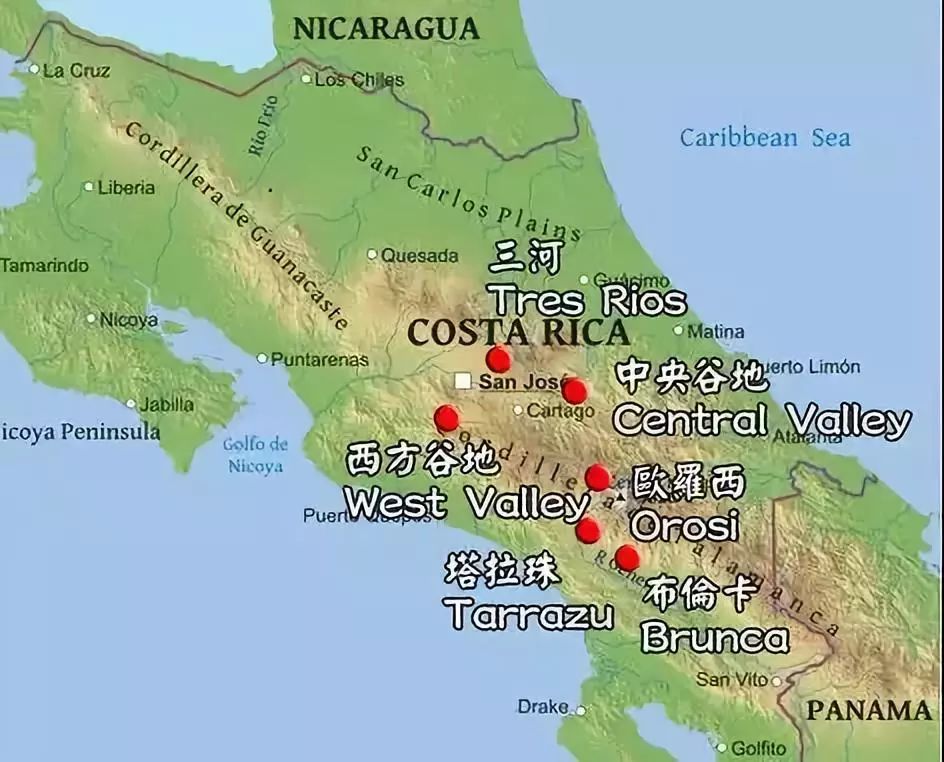
Different regions produce different flavors, so exploring Costa Rica's diversity means getting to know its growing regions.
The country has eight coffee regions: West Valley, Central Valley, Tarrazu, Tres Rios, Orosi, Brunca, Turrialba, and Guanacaste.
Coffee Growing Regions and Altitudes
- Tarrazu: growing altitude 1,300-2,000m
- Tres Rios: growing altitude 1,400-1,800m
- West Valley: growing altitude 1,200-1,650m
- Central Valley: growing altitude 1,200-1,600m
- Orosi: growing altitude 900-1,200m
- Brunca: growing altitude 800-1,200m
- Turrialba: growing altitude 600-900m
Tarrazu is one of the world's great coffee regions, and its strict quality control at every level makes it among the most respected origins anywhere.
Tarrazu Region Spotlight
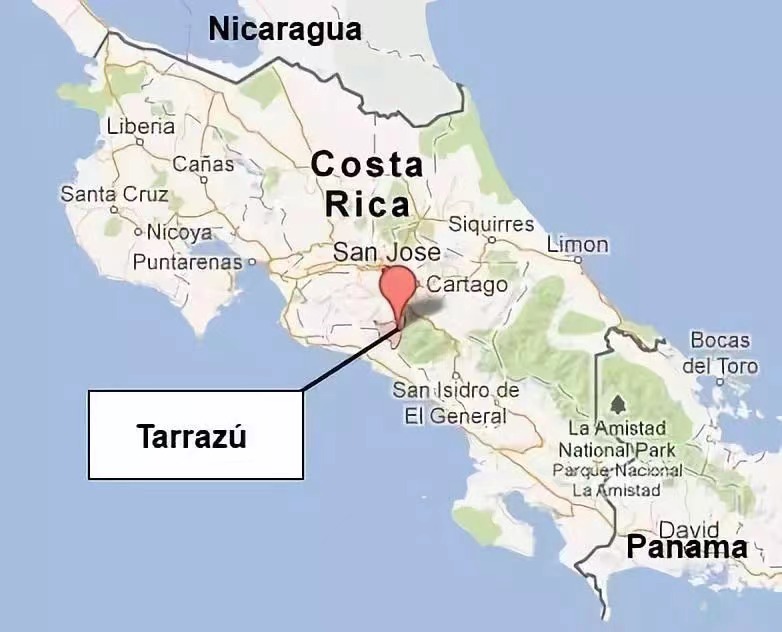
Altitude: 1,200-1,700 meters. Harvest season: December to March. Smooth mouthfeel with bright acidity.
Representative coffees: the Costa Rican Musician Series [Bach] [Beethoven] [Mozart] [Chopin]
Costa Rica Canet Estate Mozart
- Region: Tarrazu
- Varieties: Caturra, Catuai
- Altitude: 1,950m
- Processing: Raisin Honey
- Flavor: Osmanthus, berries, fermented wine notes, raisins
Costa Rica Canet Estate Musician Series Beethoven
- Region: Tarrazu
- Estate: Finca Canet
- Variety: Yellow Catuai
- Altitude: 1,900m
- Grade: Strictly Hard Bean (SHB)
- Processing: Washed
- Flavor: Citrus, black tea, caramel
Understanding Costa Rican Coffee Bean Names
The naming convention runs: Country + Region + Grade Name + Processing Method.
Costa Rica Canet Musician Series Bach
- Country: Costa Rica
- Region: Tarrazu
- Altitude: 1,950m
- Processing: Raisin Honey
- Grade: Strictly Hard Bean (SHB)
- Variety: Caturra
- Flavor: Tropical fruits, nuts, cream, fermented notes
Beyond the Musician Series, FrontStreet Coffee also carries coffees from other regions, for instance, the Blueberry from the Boulder Estate in Costa Rica's southern Brunca region, made with anaerobic honey processing. The soil there is a mix of red clay and limestone, producing dense, high-sweetness beans with blueberry gummy and fermented aromas.
Costa Rica's La Candelilla Estate (Tarrazu) is also well known. A Cup of Excellence (CoE) award-winning farm, it grows Geisha as a relatively young variety on the estate, but thanks to distinct terroir and microclimates the lots express different, yet equally refined, flavors: rich acidity with a long finish, plus clear notes of almond, plum, citrus, sweet florals, and berries. "La Candelilla" means "little candle," a nod to the fireflies that light up the nearby streams on summer nights.
FrontStreet Coffee Recommendation
Colombia, Costa Rica's neighbor to the north, shows just how wide a single origin's range can be: Colombian coffee works everywhere from espresso blends to single-origin pour-overs, spanning fruit-acid-forward styles, full-bodied styles, and aromatics-led styles, something for every taste.
The Huilan (Huila) department in the southern stretch of Colombia's Central Cordillera is the country's most famous specialty region: hill country ringed by mountains, planted above 1,500 meters, where Colombia's most important rivers converge and bring abundant water and moisture. To get a feel for the origin, try the FrontStreet washed Huilan: roasted medium-dark to bring out black chocolate, sweet nuttiness, moderate crema, and a full body. It suits pour-over and French press, and handles moka pot and espresso beautifully, Americanos and lattes included.
For something more experimental, the FrontStreet Colombia Sidra (Xijaw) from the Boundary Line Estate (Finca Frontera) uses anaerobic natural processing, a fermentation method performed in a low- or zero-oxygen environment, typically in a pressure-rated stainless tank where temperature, time, and pH are all controlled. (Anaerobic fermentation is sometimes called carbonic maceration; the best-known variants are anaerobic natural and anaerobic washed.) The oxygen-free fermentation converts into rich tropical-fruit aromatics, and at a medium-light roast, pour-over, cold brew, drip bag, or moka pot, you will taste passion fruit, grape, apricot, and dried fruit in layered abundance.
And if you brew at home with an espresso machine or moka pot, baristas strongly recommend the FrontStreet premium espresso blend: a café-oriented blend combining Brazilian creamy nuttiness with Colombia's dark chocolate sweetness and bitterness. It extracts with a fine, golden crema and pairs superbly with milk in a latte, thick yet smooth, very beginner-friendly, and it works just as well as the base for Americano, cappuccino, or mocha.
Important Notice :
FrontStreet Coffee is a long-established specialty coffee roaster in Guangzhou China, selling freshly roasted beans from its own farm in Yunnan as well as dozens of carefully selected single-origin beans from around the world for both pour-over and espresso. The products deliver consistently excellent quality and great value, with shipping within 24 hours. Guangzhou's FrontStreet Coffee shop is recommended by many coffee lovers, and the beans are now available online at the Tmall 。
FrontStreet Coffee has moved to a new address:
FrontStreet Coffee Address: 315,Donghua East Road,GuangZhou
Tel:020 38364473
 Scan and follow the En Gafei WeChat official account. Please indicate that the reprint comes from "En Gafei".