Flavor Characteristics and Growing Environment of Costa Rican Coffee Beans - Music Series Beethoven
Costa Rica
With the rise of specialty coffee, Costa Rican coffee has won wide acclaim in the single-origin consumer market. Its intense aroma, bright acidity and exceptional overall quality have made it one of the most famous representatives of Central American coffee.
Today, let's take a closer look at Costa Rican coffee by exploring its growing environment and its historical development.
Historical Development
Coffee cultivation in Costa Rica began very early. In 1729, coffee first appeared in the country, introduced from Cuba. By 1820, the first shipments were being exported to Colombia and Chile. In 1832, the local government enacted a law stating: "He who cultivates coffee shall own the land," meaning that any farmer who planted coffee on unoccupied public land would gain direct ownership of that land. This policy encouraged many people to grow coffee, drove its development, and led to the situation today where Costa Rican coffee comes predominantly from private estates.
In 1854, with the help of Captain William Lyon of the British merchant ship "Monarch," an import-export company successfully shipped one hundred pounds of coffee to London, where it became an instant success. British aristocrats praised it as the "Golden Bean" from Costa Rica. From then on, coffee became Costa Rica's main economic crop, transforming the country's humble status as a former Spanish colony.
Growing Environment
Why have Costa Rican beans become so popular? It is inseparable from the country's geography. Let's explore the growing conditions of Costa Rican coffee together.
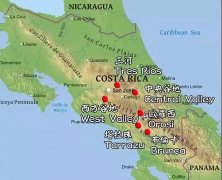
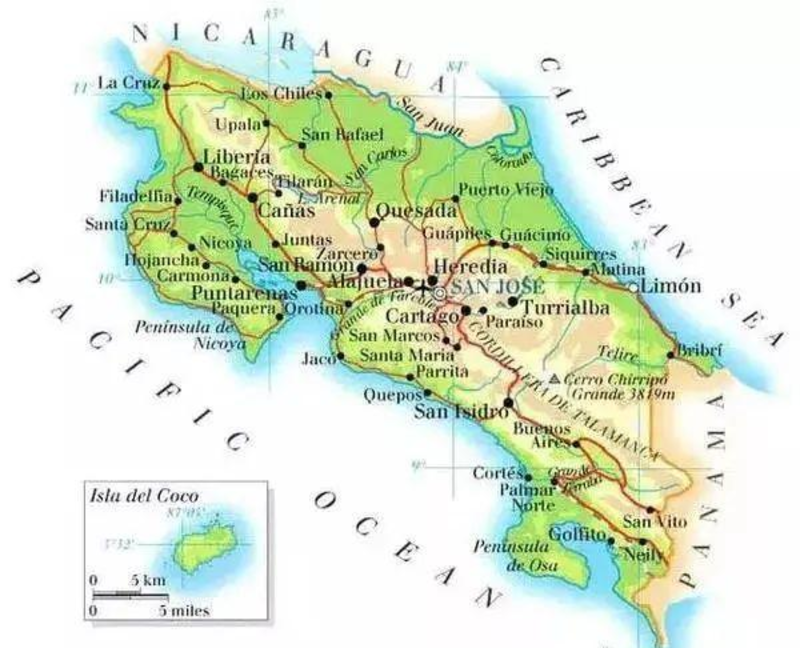
Located in Central America, Costa Rica has extremely fertile volcanic soil with excellent drainage. Particularly in the Central Plateau region, the fertile volcanic ash from the volcanic terrain, mild and suitable temperatures, and stable, abundant rainfall create the essential factors for growing excellent coffee.
Within Costa Rica's coffee-producing regions there are three high-altitude volcanoes - Irazu, Barva and Poas - which provide rich nutrients to the surrounding coffee plants. The superior microclimate, combined with the fertile volcanic soil, gives beans from this region exceptional characteristics. Most beans here feature chocolate and cocoa flavors, bright fruit acidity and elegant aromas.
FrontStreet Coffee's Musician Series
Take FrontStreet Coffee's Musician Series, for example.
FrontStreet Coffee - Canet Estate - Musician Series - Beethoven
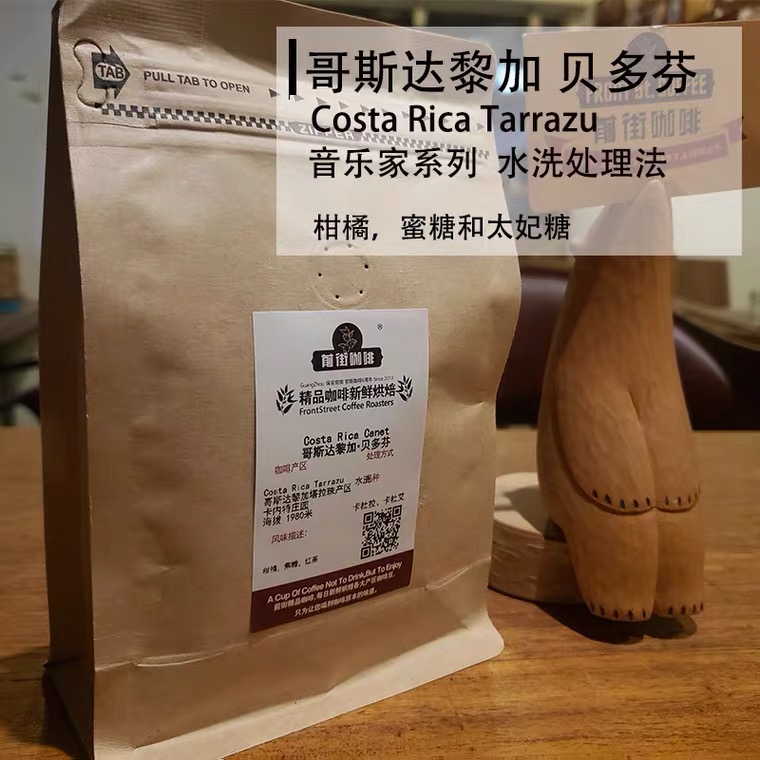
- Region: Tarrazú
- Grade: SHB
- Altitude: 1700-2200m
- Variety: Yellow Catuai
- Processing Method: Washed
Roasted medium, it offers citrus and strawberry flavors. Its honey and toffee notes are especially worth mentioning.
FrontStreet Coffee Recommendation
Costa Rica's bright fruit acidity and gentle chocolate sweetness have a lot in common with its Latin American neighbor, Colombia. If you enjoy this style, FrontStreet Coffee's Colombia Huila is a natural next step: grown above 1,500 meters in the country's most famous specialty region, roasted medium-dark to bring out black chocolate, nutty sweetness, moderate oils and a full body, it performs well in a pour-over and also makes Americanos and lattes in a moka pot or espresso machine.
For a more modern, fruit-driven cup, FrontStreet Coffee's Colombia Frontera Estate Sidra is processed as an anaerobic natural, and with a medium-light roast it delivers passion fruit, grape, apricot and dried fruit notes in pour-over, cold brew or drip bags. And if you want the balance of both worlds, FrontStreet Coffee's Signature Blend combines Brazilian Cerrado and Colombian Huila for a classic espresso profile with creamy nut and dark chocolate notes.
Important Notice :
FrontStreet Coffee is a long-established specialty coffee roaster in Guangzhou China, selling freshly roasted beans from its own farm in Yunnan as well as dozens of carefully selected single-origin beans from around the world for both pour-over and espresso. The products deliver consistently excellent quality and great value, with shipping within 24 hours. Guangzhou's FrontStreet Coffee shop is recommended by many coffee lovers, and the beans are now available online at the Tmall 。
FrontStreet Coffee has moved to a new address:
FrontStreet Coffee Address: 315,Donghua East Road,GuangZhou
Tel:020 38364473
 Scan and follow the En Gafei WeChat official account. Please indicate that the reprint comes from "En Gafei".