Colombian Coffee Bean Region: El Paraiso Estate Cherry Flavor Profile Characteristics
Colombia has magnificent mountains and rivers, a rich topography, numerous volcanoes, fertile soil and abundant rainfall — an excellent place to grow coffee.

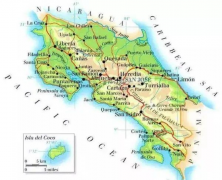
Central Region: Main Commercial Coffee Area
The central region is Colombia's major commercial coffee producing area, commonly known as the "MAM" region.
The first M stands for Medellín, capital of Antioquia department; A stands for Armenia, capital of Quindío department; and the final M stands for Manizales, capital of Caldas department. These three central cities are distribution hubs for bulk, affordable coffee and together represent Colombia's largest producing zone.
Central-Southern Region: Premium Coffee Production
The central-southern region has numerous volcanoes and is Colombia's high-value specialty coffee area, covering Tolima, Meta, Valle del Cauca, Cauca, Huila and Nariño.
Colombia spans both hemispheres, with coffee cultivated mainly between 2 and 8 degrees north latitude. Rainy seasons differ from south to north, which produces two harvests: the main season runs from October to February of the following year, and the secondary harvest runs from April to September.
Harvest Seasons by Region
Because geography and climate differ from north to south, harvest seasons in the north and south are opposite. The central region has primary and secondary harvests depending on whether it leans south or north. The winter harvest runs from September to December and includes the following regions:
Magdalena - Common varieties
Santander
Antioquia - Common varieties
North of Santander
Boyacá
Meta
The central-northern regions also have primary and secondary harvests. The main season is winter, September to December, with the secondary season in summer from April to May:
Caldas
Risaralda
Cundinamarca - Some areas emerging in the market
Quindío - Some areas emerging in the market
Tolima - Some areas, very rare varieties
The central-southern regions have primary and secondary harvests too. The main season is summer, March to June, with the secondary season in winter from October to November:
Valle - Some areas
Quindío - Some areas
Cundinamarca - Some areas
Tolima - Some areas
The summer harvest season from March to June includes:
Valle - Some areas
Cauca
Cundinamarca - Some areas
Huila
Nariño
FrontStreet Coffee offers five coffees from Colombia, three of them from Huila: Colombian Flower Moon Night, Colombian Huila and Colombian Decaf. The other two are Sakura from Cauca and Rose Valley from Santander.
FrontStreet Coffee uses a medium roast for the Sakura from El Paraíso Estate. The bean features spice, tea and floral notes with a gentle fruit acidity.

FrontStreet Coffee Recommendation
FrontStreet Colombia Huila is the reference point for the country. Huila Province, in the southern part of Colombia's Central Mountain Range, is the best-known specialty coffee region in the country: hills ringed by mountains, planted above 1500 meters, with the nation's most important rivers converging there and bringing rich water and humidity. If you want to understand the Colombian origin, start here. The lot is washed and medium-dark roasted, which brings out the sweetness of dark chocolate and nuts, a moderate amount of oil and a full body. It suits pour-over and French press, and also extracts well in a moka pot or espresso machine, whether you are building an americano or a latte.
FrontStreet Colombia Sidra from El Paraiso Estate shows how far Colombian processing has travelled. Colombian coffee was traditionally washed, but recent years have brought a wave of innovative methods, and anaerobic fermentation is the most talked about. It goes by several names, including carbonic maceration, but simply describes fermentation in a low-oxygen or oxygen-free environment — typically a pressure-resistant stainless steel tank in which temperature, time and pH can be controlled. Anaerobic natural and anaerobic washed are the best-known versions, and FrontStreet's Sidra uses anaerobic natural processing: after fermentation without oxygen, the bean converts into richer tropical fruit aromas. Medium-light roasted and brewed as pour-over, cold brew, drip bag or moka pot, it delivers complex, concentrated notes of passion fruit, grape, apricot and dried fruit.
FrontStreet Premium Espresso Blend is the practical pick for anyone with a home espresso machine or a moka pot, and baristas recommend it strongly. Built for café use, it combines the creamy nut aroma of Brazilian coffee with the dark chocolate bittersweetness of Colombian coffee, and it extracts a fine golden crema. With milk it makes a rich, smooth latte that is very friendly to beginners, and it works as the base for americanos, cappuccinos and mochas.
Important Notice :
FrontStreet Coffee is a long-established specialty coffee roaster in Guangzhou China, selling freshly roasted beans from its own farm in Yunnan as well as dozens of carefully selected single-origin beans from around the world for both pour-over and espresso. The products deliver consistently excellent quality and great value, with shipping within 24 hours. Guangzhou's FrontStreet Coffee shop is recommended by many coffee lovers, and the beans are now available online at the Tmall 。
FrontStreet Coffee has moved to a new address:
FrontStreet Coffee Address: 315,Donghua East Road,GuangZhou
Tel:020 38364473
 Scan and follow the En Gafei WeChat official account. Please indicate that the reprint comes from "En Gafei".