Flavor Profile and Taste Description of Colombian Coffee Beans, Their Development History, Cultivation Requirements, and Green Bean Grades
The Development History of Colombian Coffee
As everyone knows, Colombian coffee is remarkably versatile—it works in blends and as a single origin alike, and it suits French press brewing beautifully, where its rich body really shows. It meets the demands of the general public almost perfectly. Curious how such versatile beans developed? Today, let's trace the story of Colombian coffee together.
Colombian Coffee Growing Regions
Colombia's best production areas lie in the central region, which sees two rainy seasons each year: April-May and September-December. The central mountain range is made of volcanic ash soil with relatively high acidity, producing coffee with rich fruit acidity and intense aroma. The three most renowned growing regions here—Medellin, Armenia, and Manizales—are collectively known as "MAM."
Some soils in the central region are sedimentary, and the coffee they produce has a heavier body with slightly lower acidity. The southern region is mostly volcanic ash soil as well, with the highest growing altitude and its main harvest in the first half of the year. "Narino coffee" is considered the premium lot from this region.
Characteristics of Colombian Coffee
The general characteristics of Colombian coffee are full, uniform beans with a rich, substantial aroma. Some lots lean fruity, others chocolatey, depending on where exactly they were grown. Flavor-wise, it shows pronounced acidity, a soft and smooth texture, and a delicious cup. The Supremo grade is considered the highest quality.
Colombian Green Bean Grading Standards
Excelso is currently the most widely used export standard adopted by the FNC (Colombian Coffee Growers Federation) and the benchmark grade for Colombian green bean exports.
So how are Colombian green beans classified?
Broadly speaking, three main categories circulate in the market today:
Excelso UGQ 12*60 (1.5%): UGQ stands for Usual Good Quality. Green beans are above 14 screen size, with 1.5% of beans between 12-14 screen size allowed—but all must be above 12 screen size, and over 50% must be larger than 15 screen size.
Excelso EP 12*60 (10%): EP stands for European Preparation. Green beans are above 15 screen size, with 10% of beans smaller than 15 screen size allowed, but all must be above 14 screen size.
Excelso Supremo 12*60 (5%): Green beans are above 17 screen size, with 5% of beans smaller than 17 screen size allowed, but all must be above 14 screen size.
In addition, Colombia also has Extra for beans above 16 screen size, Premium for beans above 18 screen size (larger than Supremo), and Minama for green beans almost entirely uniform at 15 screen size, among others.
FrontStreet Coffee's Colombian Coffee Selections
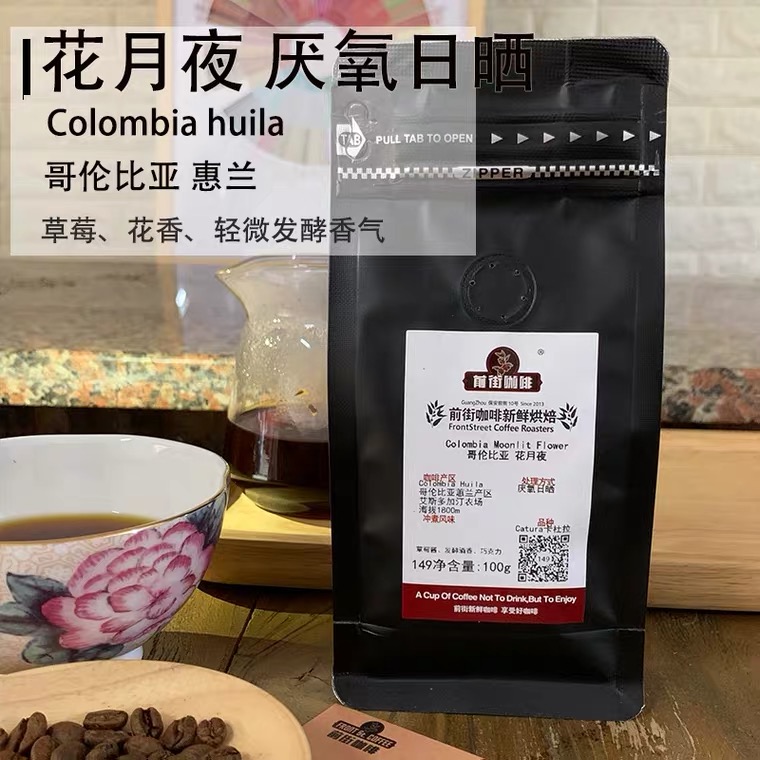
Colombian Huayu Ye
Region: Huila
Estate: Elsvi Togarding
Altitude: 1800 meters
Processing Method: anaerobic natural
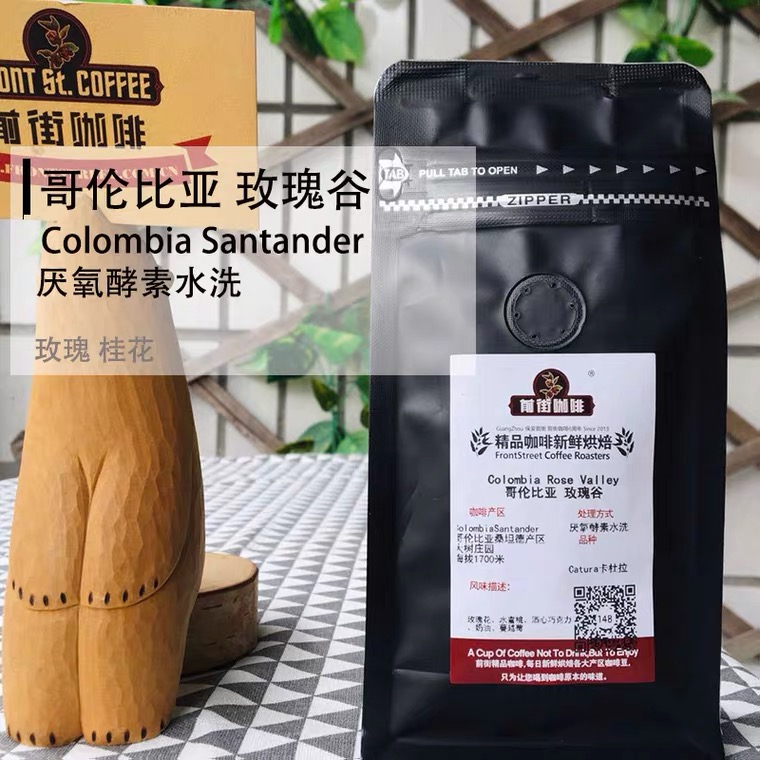
Colombian Rose Valley
Region: Santander
Estate: Dashu
Processing Method: double anaerobic enzyme washed
Both come from Colombia, but from different growing regions. Rose Valley comes from Dashu Estate in the Santander region, while Huayu Ye comes from the Astor Gartin Farm in Huila. Rose Valley tastes more like fruit juice, with grape and strawberry notes laced with florals; Huayu Ye is more balanced, its floral and strawberry character complemented by hints of dark cocoa, cream, and fermentation.
FrontStreet Coffee Recommendation
Colombia offers something for every brewer, and FrontStreet's Colombian lineup proves it. FrontStreet Washed Huila comes from the country's most famous specialty region—a mountain-sheltered zone planted above 1500 meters—roasted medium-dark to bring out black chocolate and nutty sweetness with moderate body, at home in a pour-over, French press, moka pot, or espresso machine. FrontStreet Boundary Estate Sidra, an anaerobic natural, transforms into passion fruit, grape, apricot, and dried-fruit aromas with a juice-like texture—wonderful as a pour-over or cold brew. And for home espresso, FrontStreet Premium Blend pairs Brazil's cream-and-nut character with Colombia's dark chocolate bittersweetness for a thick golden crema and a latte that is rich yet smooth—very beginner-friendly.
Important Notice :
FrontStreet Coffee is a long-established specialty coffee roaster in Guangzhou China, selling freshly roasted beans from its own farm in Yunnan as well as dozens of carefully selected single-origin beans from around the world for both pour-over and espresso. The products deliver consistently excellent quality and great value, with shipping within 24 hours. Guangzhou's FrontStreet Coffee shop is recommended by many coffee lovers, and the beans are now available online at the Tmall 。
FrontStreet Coffee has moved to a new address:
FrontStreet Coffee Address: 315,Donghua East Road,GuangZhou
Tel:020 38364473
 Scan and follow the En Gafei WeChat official account. Please indicate that the reprint comes from "En Gafei".