What Are the Coffee Varieties? The Difference Between Arabica and Robusta, and Liberian Coffee
Coffee Varieties
Specialty coffee has gradually moved from a niche market into the mainstream, drawing in a growing crowd of enthusiasts. The world of coffee varieties is complicated, and many beginners feel overwhelmed when faced with the intricate array of species. FrontStreet Coffee offers a simple introduction. In plant taxonomy, coffee belongs to the Coffea genus of the Rubiaceae family, which includes at least one hundred different coffee species.
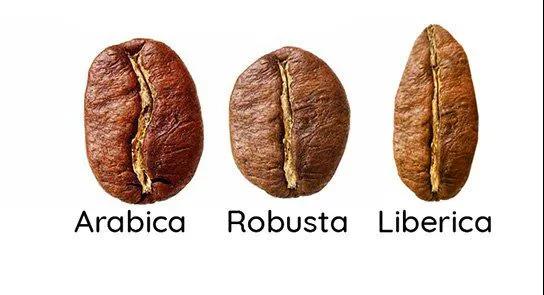
The well-known Arabica variety, with its elegant flavor, is the cornerstone of specialty coffee. Arabica beans are known for rich, delicate flavors, aromatic fragrance, higher acidity and a smooth texture, and they rarely turn bitter. Alongside Arabica are Robusta and Liberica: Robusta has a coarser flavor profile, while Liberica is rarely cultivated commercially because its output is so small. Arabica accounts for approximately 70% of global coffee production, while Robusta makes up about 30%. Arabica is typically grown above 800 meters and has strict growing requirements, with weak resistance to pests and disease. Robusta grows below 800 meters and shows strong adaptability and robust resistance to pests and disease. Robusta beans contain approximately twice as much caffeine as Arabica.
Arabica Varieties
Among Arabica varieties, Bourbon and Typica stand out. Typica is the variety most closely related to the original Arabica species. Bourbon, alongside Typica, is an ancient and superior variety that arose as a mutation of Typica.
Genetic Mutation Varieties
Among the many coffee varieties, some are genetic mutations:
Kenya SL28, SL34 (Bourbon lineage)
These were selected and cultivated from Bourbon lineage by French and British missionaries and researchers in Kenya in the early 20th century, and they carry a mixed heritage of French Mission, Mocha and Yemen Typica. High sweetness, refined balance, prominent citrus and plum flavors, intense, rich fruit acidity, a full body and beautiful balance — these are the distinctive flavor traits of Kenya SL28.
Geisha
Geisha is cultivated in many regions worldwide and has become the new king of specialty coffee, with especially high quality and prices in Latin American countries such as Panama, Guatemala and Colombia. The increasingly popular Panama Geisha actually made a quiet journey in 1931 from Geisha Mountain in southwestern Ethiopia to Kenya, then through Tanzania and Costa Rica, before finally being transplanted to Panama in the 1960s. After half a century it suddenly rose to fame, defeating established champions like Bourbon, Caturra, Catuai and Typica.
Yellow Bourbon
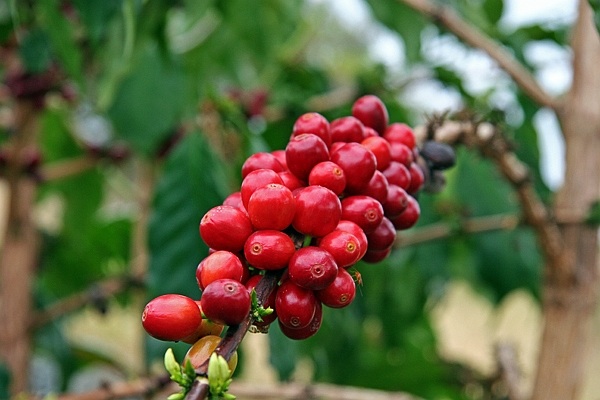
A Bourbon variety with yellow skin, discovered in São Paulo state, Brazil. While typical coffee cherries turn red when ripe, Yellow Bourbon stays orange-yellow when mature, hence its name.
Caturra
Caturra is a natural mutation of the Bourbon variety. It was discovered between 1915 and 1918 on a plantation in Minas Gerais, Brazil. A group of Bourbon plants there underwent a genetic mutation that made the plants grow smaller (a kind of dwarfism). This new variety, expressed through a different biological form, was called "Caturra" by locals, from the Guaraní word meaning "small." It is sometimes also called "Nanico."
Pacas
A Bourbon variety discovered in El Salvador. In 1935 the Salvadoran coffee farmer Pacas selected high-yield San Ramón Bourbon, and the variety was brought onto the farm for cultivation. It was identified as a genetic mutation in 1956.
Villa Sarchi
A Bourbon variety first discovered in Costa Rica in the 1960s.
Maragogipe (Elephant Bean)
At least three times larger than ordinary Arabica beans, it is the largest in the world, hence its name.
Arabica Intracross Varieties
Mundo Novo
A natural hybrid of Bourbon and Sumatra Typica — both Arabica varieties — first discovered in Brazil.
Catuai
An Arabica hybrid variety, a cross between Mundo Novo and Caturra.
Pacamara
A hybrid of Maragogipe (a Typica mutation) and Pacas (a Bourbon mutation).
Kent
A Typica hybrid discovered in India, known for high yield and strong disease resistance.
Arabica and Robusta Hybrids
Timor, Catimor, Icatu and Ruiru 11
FrontStreet Coffee Recommendation
The three original coffee species — Arabica, Robusta and Liberica — each lead somewhere different, and FrontStreet's lineup focuses on the finest Arabica. Two Ethiopian representatives cover the two main processing styles: the natural-process FrontStreet Huakui, whose local heirloom variety shows a delicate floral profile with standout fruit — creamy strawberry, mango, jackfruit, citrus and blueberry under Sidamo's ripe tropical character — and the washed FrontStreet Yirgacheffe Gudingding, an Ethiopia G1 with elegant white flowers, citrus, orange and green-tea notes. To taste the Typica that anchors Arabica, FrontStreet Jamaica Blue Mountain No. 1 is remarkably balanced, gentle and smooth, with soft, full, pure aroma. For the Bourbon family, the FrontStreet Panama Emerald Estate Red-Label Geisha expresses layered floral, citrus, peach and complex fruit acidity with a creamy body and an oolong-tea finish, while the FrontStreet Brazil Queen Estate — the earliest-discovered Yellow Bourbon, a Bourbon mutation — brings cream, peanut, toasted bread and sugarcane aromas, rich and gently sweet, and suits hand pour, moka pot and espresso alike.
Important Notice :
FrontStreet Coffee is a long-established specialty coffee roaster in Guangzhou China, selling freshly roasted beans from its own farm in Yunnan as well as dozens of carefully selected single-origin beans from around the world for both pour-over and espresso. The products deliver consistently excellent quality and great value, with shipping within 24 hours. Guangzhou's FrontStreet Coffee shop is recommended by many coffee lovers, and the beans are now available online at the Tmall 。
FrontStreet Coffee has moved to a new address:
FrontStreet Coffee Address: 315,Donghua East Road,GuangZhou
Tel:020 38364473
 Scan and follow the En Gafei WeChat official account. Please indicate that the reprint comes from "En Gafei".