Honduras Coffee Production & Regional Flavors: Which Region Does Sweet Orange Coffee Belong To?
Have You Tried Honduran Coffee?
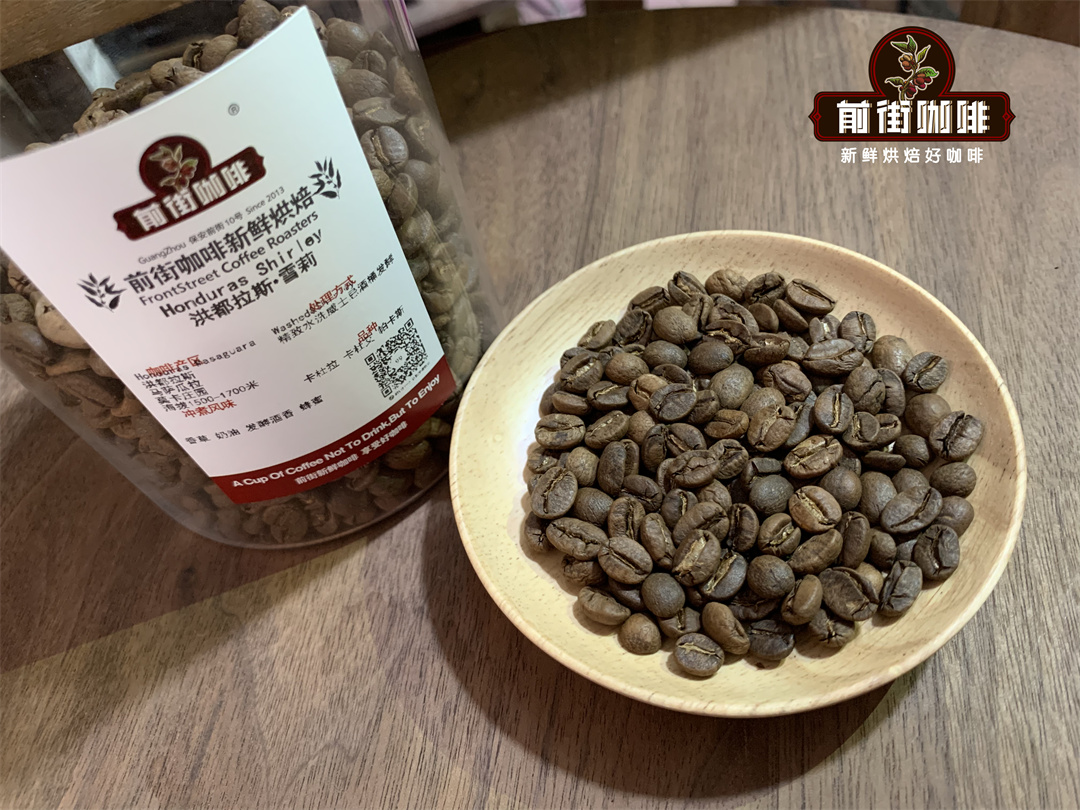
Have you ever tried coffee from Honduras? This Central American country takes up quite a bit of space on FrontStreet's bean list. The Honduras Sherry, aged in whiskey barrels, is already a familiar name to many FrontStreet regulars, and Lychee Lan and Sweet Orange are Honduran beans as well. And flavor isn't the only thing Honduras has going for it: since 2011, its annual production has surpassed Guatemala's, making it the largest coffee producer in Central America and a fixture in the global top ten.
Where Does Honduran Coffee Mainly Go?
The bulk of Honduras's coffee is exported to Europe, where it is extremely popular. Germany is the largest buyer, importing close to 40 million kilograms of Honduran coffee every year. Although some volume also goes to the United States and Japan, sales there are modest compared with Europe.
How Honduran Coffee Developed
Honduran coffee did not get off to a smooth start. Compared with neighbors like Costa Rica, Guatemala, and Nicaragua, its coffee industry developed quite late.
The main bottleneck was infrastructure: Honduras lacked the roads needed to move coffee from the growing regions to the ports, which held the industry back for years. Things changed after 1970, when the government created an official coffee body, the Instituto Hondureño del Cafe (IHCAFE), dedicated to improving quality. And since coffee trees can be cultivated virtually anywhere in the country, production finally overtook both Costa Rica and Guatemala in 2011.
Honduras does face serious challenges today, however — leaf rust disease and global warming chief among them.
Honduran Growing Regions and Their Flavors
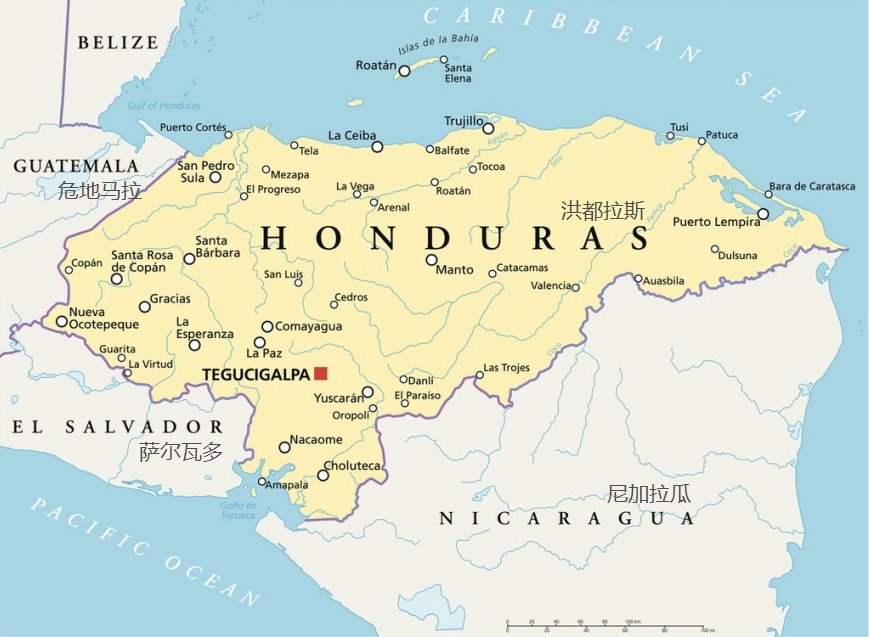
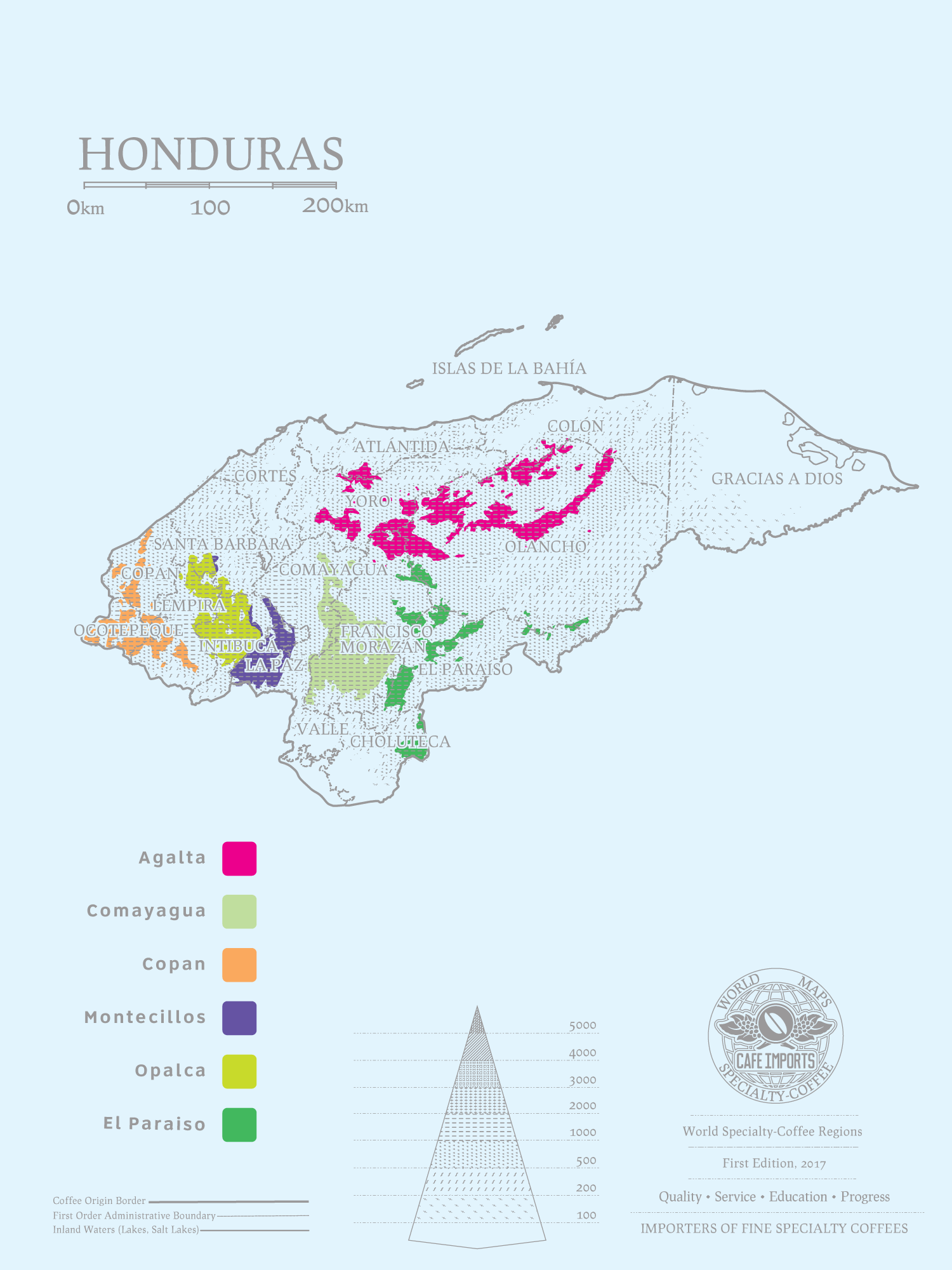
Honduras has six main coffee regions, concentrated in the west and south: Copan, Opalaca, Montecillos, Comayagua, Agalta Tropical, and El Paraiso. Three of them stand out as the principal producing areas:
1. Montecillos: home to the highest-altitude estates in Honduras, producing coffees with bright, complex flavors that are rich in fruit and sweetness, with citrus notes.
2. Copan: beans here show chocolate flavors, a full mouthfeel, and high sweetness.
3. Agalta Tropical: coffees with balanced honeyed sweetness and acidity, plus chocolate notes.
As a general rule, Honduran coffee offers substantial body and sweetness along with fruity notes, and it can also carry nutty and toffee aromas — a genuinely complex cup.
How Honduran Coffee Is Graded
Honduran coffee is graded by both altitude and defect count. The defect-based grades follow the American and European standards, which we won't go into here. The altitude grades are:
1. Strictly High Grown (SHG): grown above 1,200 meters.
2. High Grown (HG): grown above 1,000 meters.
3. Central Standard (CS): grown above 600 meters.
A bean's listing will usually show both the altitude grade and the defect grade together to indicate its quality. Beyond this system, Honduras has recently launched a specialty coffee competition: Best of Honduras Late Harvest.
Best of Honduras Late Harvest is organized by Sasa Sestic, the 2015 WBC World Barista Champion, and his green coffee team Project Origin; the second edition was held in 2018.
The competition exists to encourage farmers to produce high-quality coffee. It also addresses a quirk of Honduran geography: because altitude varies widely, roughly 1,200 to 1,700 meters, cherries in high-lying areas like Santa Barbara ripen late. Most of Honduras's harvest runs from January to April, but these high-altitude smallholders may not finish picking until June or July — by which point the annual Cup of Excellence is out of reach. Best of Honduras gives these late-harvest farmers another stage on which to present their coffee to the specialty market, and it lets international buyers deal with farmers directly.
Aside from a small share of the auction proceeds paid to the Honduran coffee institute IHCAFE (Instituto Hondureño del Café) to fund local transport infrastructure, research, and development, the smallholders keep essentially the entire auction price. Compared with selling to local exporters at market rates, the difference is enormous — a direct and meaningful boost to farmers' incomes.
FrontStreet believes Honduran coffee has outstanding potential. Competitions like this let more farmers earn better money, which in turn motivates them to produce higher-quality specialty coffee — a genuinely positive cycle.
FrontStreet Coffee Recommendation
If sweetness is what draws you to coffee, FrontStreet's Costa Rica Black Honey is an excellent place to start. Costa Rica is famous for honey processing: the cherries are floated to remove defective fruit, then de-pulped so that the mucilage — the sticky, sugar-rich layer clinging to the beans — is retained for sun drying. Black honey keeps the most mucilage intact and ferments the deepest of all the honey styles, giving it the highest sweetness, and it sits closest to a natural in character. The extra steps make it slightly pricier, but the cup is worth it.
Another sweet favorite is FrontStreet's Brazil Queen Estate coffee. When judging a coffee's quality, lingering sweetness — that pleasant sweetness that returns after the swallow — is a great indicator, and Queen Estate delivers it in spades. Roasted medium, it opens with an aroma like roasted peanuts and dark chocolate; as the bitterness fades, a gentle sweetness lingers on the palate for a long while. Brewed as a pour-over it shows the character of the region and variety, while through a moka pot or espresso machine it produces fine crema and a thick, syrupy body that makes a notably rich, sweet Americano or latte.
For those who prefer fruit-forward sweetness without bitterness, FrontStreet's Divide Line Estate Sidra is worth seeking out. Its sweetness is complex and layered — think grape, apricot, and passion fruit wrapped in a candy-like sweetness, with a winey finish. A medium-light roast brings out chocolate and a light spice sweetness over that fruity character, and it makes a refreshing iced Americano that drinks almost like grape juice.
Finally, FrontStreet's Strawberry Candy Geisha Blend pairs Costa Rica's honey-processed sweetness with Ethiopia's bright citrus acidity and florals, yielding notes of rose, strawberry gummy, and dried blueberry. It shines as a pour-over or cold brew, and extracted as espresso it delivers thick crema and a dense, strawberry-jam sweetness with none of the harshness — comfortable as either an Americano or a latte.
Important Notice :
FrontStreet Coffee is a long-established specialty coffee roaster in Guangzhou China, selling freshly roasted beans from its own farm in Yunnan as well as dozens of carefully selected single-origin beans from around the world for both pour-over and espresso. The products deliver consistently excellent quality and great value, with shipping within 24 hours. Guangzhou's FrontStreet Coffee shop is recommended by many coffee lovers, and the beans are now available online at the Tmall 。
FrontStreet Coffee has moved to a new address:
FrontStreet Coffee Address: 315,Donghua East Road,GuangZhou
Tel:020 38364473
 Scan and follow the En Gafei WeChat official account. Please indicate that the reprint comes from "En Gafei".