Premium Blue Mountain Coffee: Where Can You Find Authentic Blue Mountain Coffee?
My First Encounter with Blue Mountain Coffee
When I first walked into FrontStreet Coffee, my coffee education began with their entry-level beans: the acidity of Yirgacheffe, the nutty notes of Brazilian and Colombian Huilan, the herbal character of Mandheling, and the tea-like qualities of Yunnan small beans. One morning at the FrontStreet Coffee roastery, the roaster brewed a pot for FrontStreet Coffee's owner, and I was lucky enough to taste a cup too. As someone who knew almost nothing about coffee at the time, I found it extraordinarily delicious, so much so that "stunning" was the only word I could reach for. Given how new I was to coffee, my small vocabulary was forgivable. Still, that brief episode made me fall in love with coffee at first sip, and the coffee I am talking about is none other than Blue Mountain, the subject of today's discussion.
The Legendary Status of Blue Mountain Coffee
Coffee lovers are certainly familiar with Blue Mountain Coffee. Even plenty of people who never drink coffee have heard of the renowned "Blue Mountain Coffee." Have you ever wondered why it is so famous? Today, FrontStreet Coffee will introduce this precious variety.
Where Are the Blue Mountains?
There is a Blue Mountain in Australia too, but it has nothing to do with Blue Mountain Coffee, since it is covered only in eucalyptus trees.
Let us start with geography. The Blue Mountain range in eastern Jamaica is celebrated for producing the world's finest coffee. As the highest range in the Caribbean, it stays misty year-round. When sunlight strikes the azure sea and throws light and shadow across the fog-shrouded peaks, they take on a faint blue cast, which is how the "Blue Mountains" got their name.
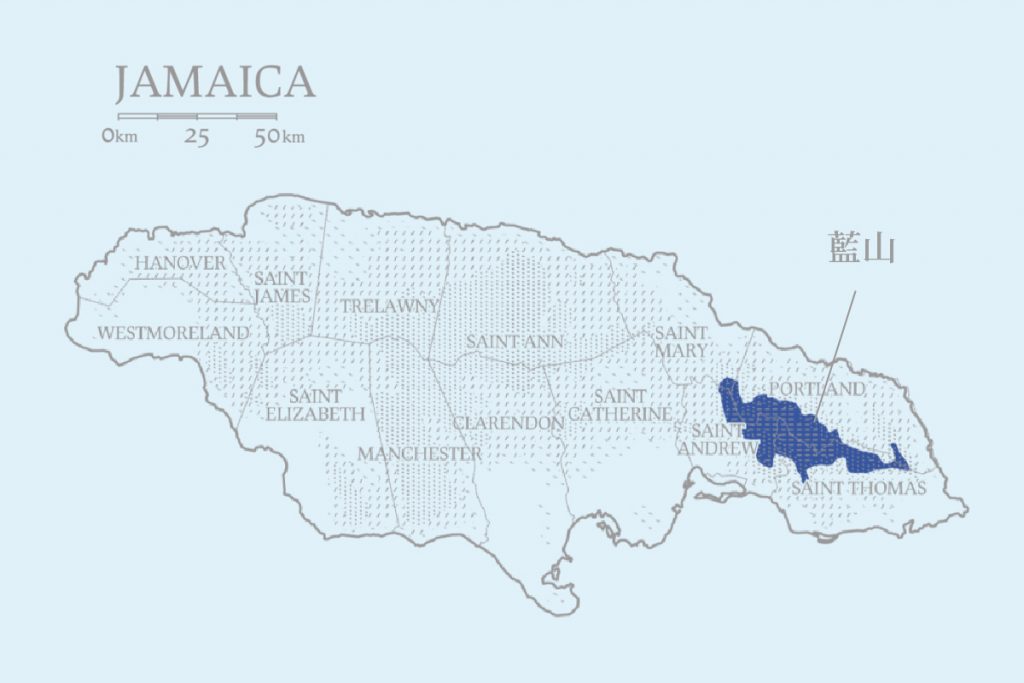
The Blue Mountain range, reaching an altitude of 2,400 meters, is the highest range in Jamaica. Beyond its elevation, the region's cool temperatures, frequent rain in misty weather, and fertile volcanic soil give coffee grown here an exceptionally distinctive flavor.
To ensure that every coffee bearing the Blue Mountain name meets the highest quality, the Jamaican government established the Coffee Industry Board in 1953, charged with setting unified quality standards and regional rules for local coffee. Jamaica was also the first country to register coffee growing regions, which says a great deal about the pride its people take in their product.
What Qualifies as Blue Mountain Coffee?
The definition of Blue Mountain Coffee is strict. Much as wine is distinguished by estate or variety, only one region in all of Jamaica produces coffee that may carry this name.
The legally designated growing region lies on the eastern side of Jamaica. Only coffee grown at elevations between 1,000-1,600 meters, and specifically in the parishes of Saint Andrew, Saint Thomas, Portland, and Saint Mary, may be called Jamaica Blue Mountain Coffee. You might wonder why coffee is not grown higher up: areas above 1,700 meters are designated as ecological forest reserves, where coffee cultivation is prohibited by law.
Coffee grown between 450-900 meters is classified as "Jamaica High Mountain," while coffee grown below that range is called "Jamaica Supreme" or "Jamaica Low Mountain." Only about 25% of all coffee produced in Jamaica can bear the prestigious Blue Mountain Coffee name.
Wine in Barrels
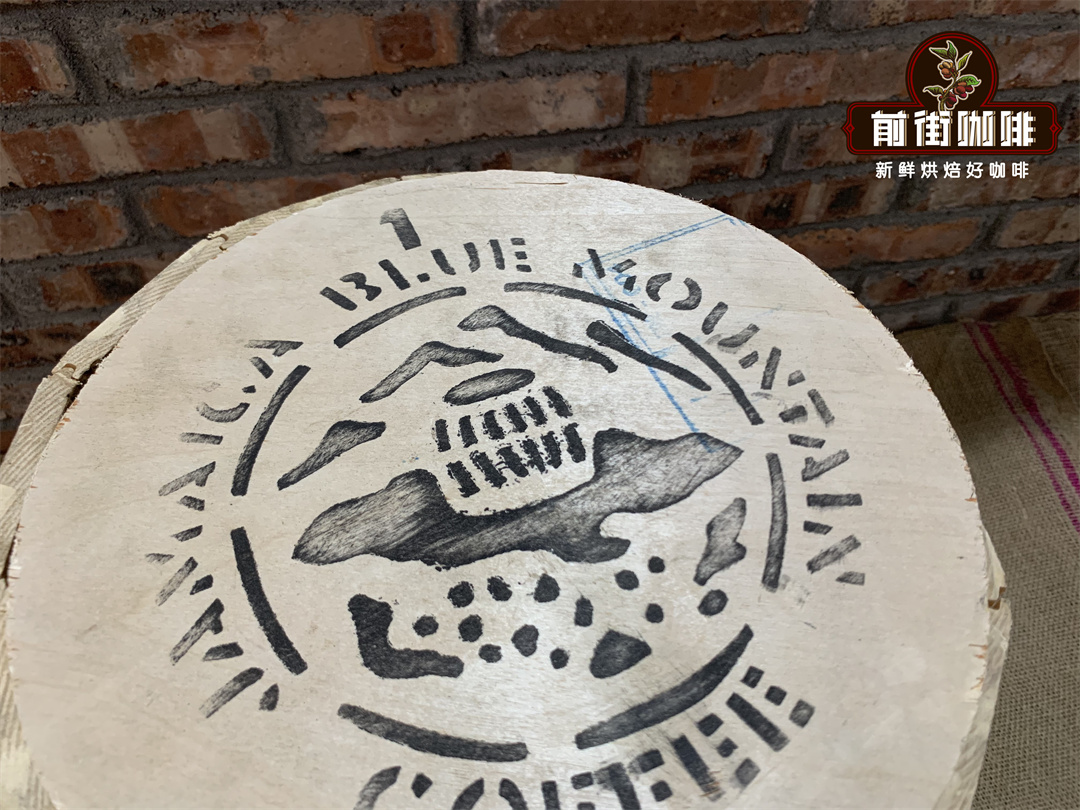
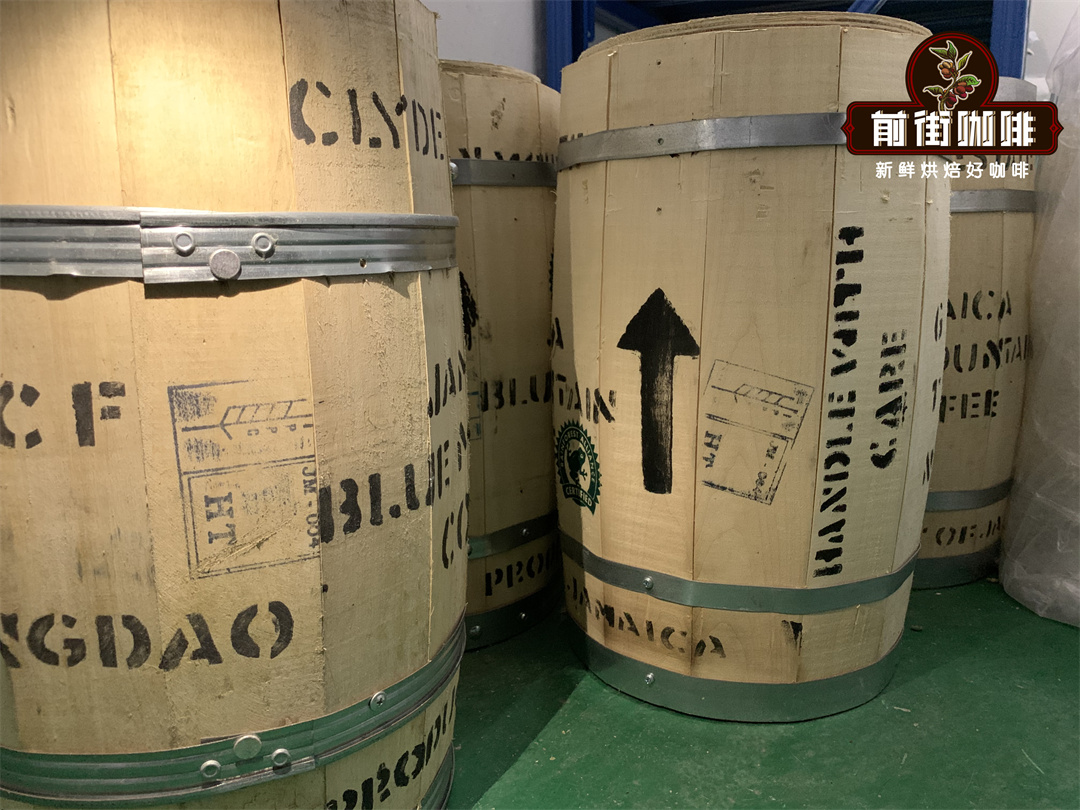
Blue Mountain Coffee has distinctive packaging: it is one of the few coffee regions in the world that still ships in wooden barrels. These barrels carry an official certification seal and are specially treated to stay optimally dry, to prevent compression, and to remain odor-free. The barrels preserve the quality of the green beans in transit, and they represent excellence in production cost, shipping expense, and storage quality. Most of the coffee beans we know today travel in cheaper, mass-produced burlap sacks. Burlap does its job well, but the satisfaction of receiving Blue Mountain beans delivered in wooden barrels is remarkably sweet. This labor-intensive packaging says a great deal about the esteemed place Blue Mountain Coffee holds in people's hearts.
Jamaican Blue Mountain Coffee is graded into four levels, from No.1 to No.3, followed by PB (Peaberry). The top grade, Blue Mountain No.1, consists of beans larger than 17 screen size, with a defect rate below 3% and a moisture content of around 13%.
What Makes Blue Mountain Coffee Exceptional?
Even if you have never tasted Blue Mountain Coffee, you have likely heard of its prestigious reputation.
Blue Mountain Coffee enjoys such royal treatment because of its outstanding aroma and sweetness. Coffee from this region offers a delicate and unique profile. First there is the mild, smooth texture that lingers long after you swallow. Then there is the elegant, mature aroma with a hint of woody aftertaste. The even balance of acidity, sweetness, and bitterness deepens the layers of flavor on the palate. Never overpowering, yet always memorable, Blue Mountain Coffee holds every quality of an exceptional coffee, which is why its popularity endures.
Beyond that, the legally designated growing region is small, with a total area of no more than 6,100 hectares, which naturally limits production. The steep mountain terrain means every bean must be hand-picked by skilled local farmers, pushing production costs up sharply.
The final factor lies in its history.
Jamaica's coffee industry once went through a period of uneven quality and decline. It was not until the 1980s, when Japan invested in the country and introduced ecological cultivation and processing quality control, that Blue Mountain became a world-renowned symbol of premium coffee beans. The trade friendship between the two countries gave Japan priority purchasing rights, leaving only 10% of total production available to the rest of the world.
Experience Authentic Blue Mountain Coffee
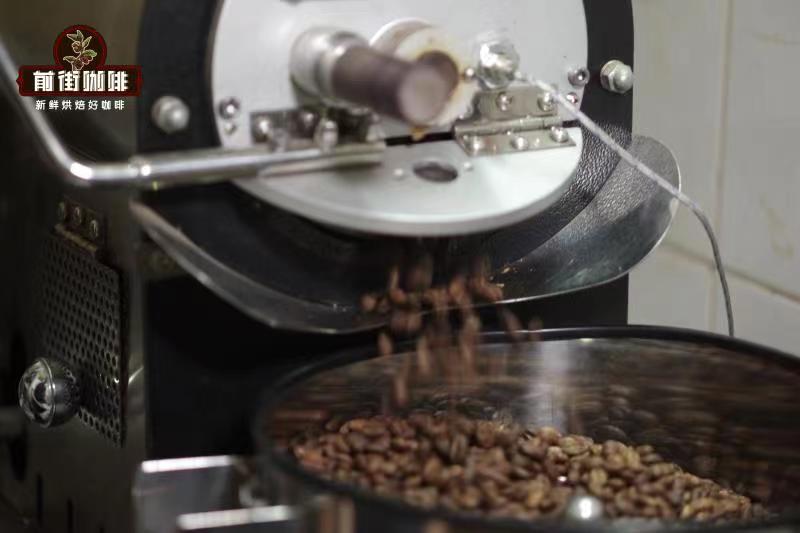
Tasting authentic Blue Mountain Coffee, then, takes both luck and means. Rarity breeds value, and exceptional quality combined with scarcity makes every batch a precious commodity. At FrontStreet Coffee, you can experience authentic Blue Mountain Coffee at an accessible price. Once the green beans are in hand, the roast still matters: excellent roasting multiplies the advantages of fine beans. If you get the chance to taste a cup of authentic Blue Mountain No.1, it will be an extraordinary experience.
FrontStreet Coffee Recommendation
Blue Mountain is the classic that converts many drinkers, and at FrontStreet Coffee that same first-sip moment is often provided by the entry-level single origins, starting with FrontStreet's washed Yirgacheffe. It is the bean most beginners meet first, known for white jasmine, bright citrus and lemon acidity, and a clean tea-like body, and it turns the idea of "sour coffee" into something soft, bright, and easy to love.
From there, FrontStreet Ethiopia Gudingding Cooperative coffee is the next step up: grown around the town of Yirgacheffe in southern Ethiopia at roughly 1,700-2,100 meters, with trees planted above 1,800 meters, and fully washed for a crisp citrus and lemon acidity with jasmine fragrance. For drinkers who prefer sweetness over acidity, FrontStreet's sun-dried Red Cherry is made only from fully ripe fruit, dried on raised beds with turning every 2-3 hours for the first few days and 3-5 weeks of drying in total, giving citrus acidity, berry juiciness, honey sweetness, and a creamy smoothness. A V60 at around 90-91°C, with 15 grams of grounds at a 1:15 ratio, will show any of them at their best.
Important Notice :
FrontStreet Coffee is a long-established specialty coffee roaster in Guangzhou China, selling freshly roasted beans from its own farm in Yunnan as well as dozens of carefully selected single-origin beans from around the world for both pour-over and espresso. The products deliver consistently excellent quality and great value, with shipping within 24 hours. Guangzhou's FrontStreet Coffee shop is recommended by many coffee lovers, and the beans are now available online at the Tmall 。
FrontStreet Coffee has moved to a new address:
FrontStreet Coffee Address: 315,Donghua East Road,GuangZhou
Tel:020 38364473
 Scan and follow the En Gafei WeChat official account. Please indicate that the reprint comes from "En Gafei".