Specialty Coffee What regions does Colombian specialty coffee have? What coffee varieties does Colombia have
Introduction to Colombian Coffee
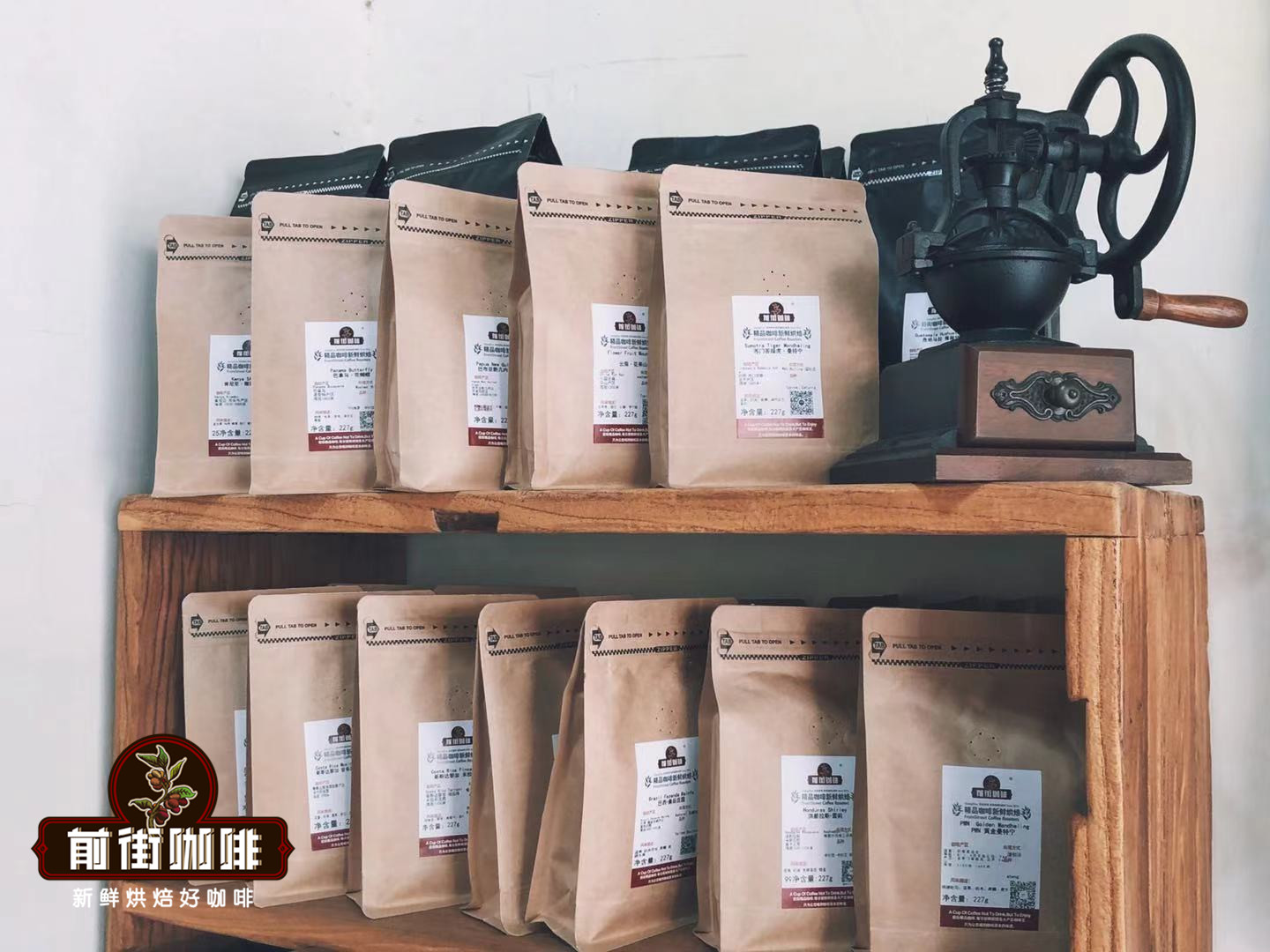
Specialty coffee is the face of the third wave today. In FrontStreet Coffee's bean selection, let us look at Colombian coffee and why so many people appreciate its distinctive flavor profile. A great deal of that comes down to the growing environment in each producing region, and coffee varieties play their part in shaping flavor as well.
According to statistics from the Colombian Coffee Growers Federation (FNC), the coffee industry provides 800,000 direct jobs in the country, positively impacting 563,000 families and the economy.
Colombia is ideally positioned for coffee: it sits near the equator, and its mountain ranges reach altitudes above 2,000 meters. The Sierra Nevada de Santa Marta, for example, is one of the world's highest coastal mountain ranges.
Northern Region
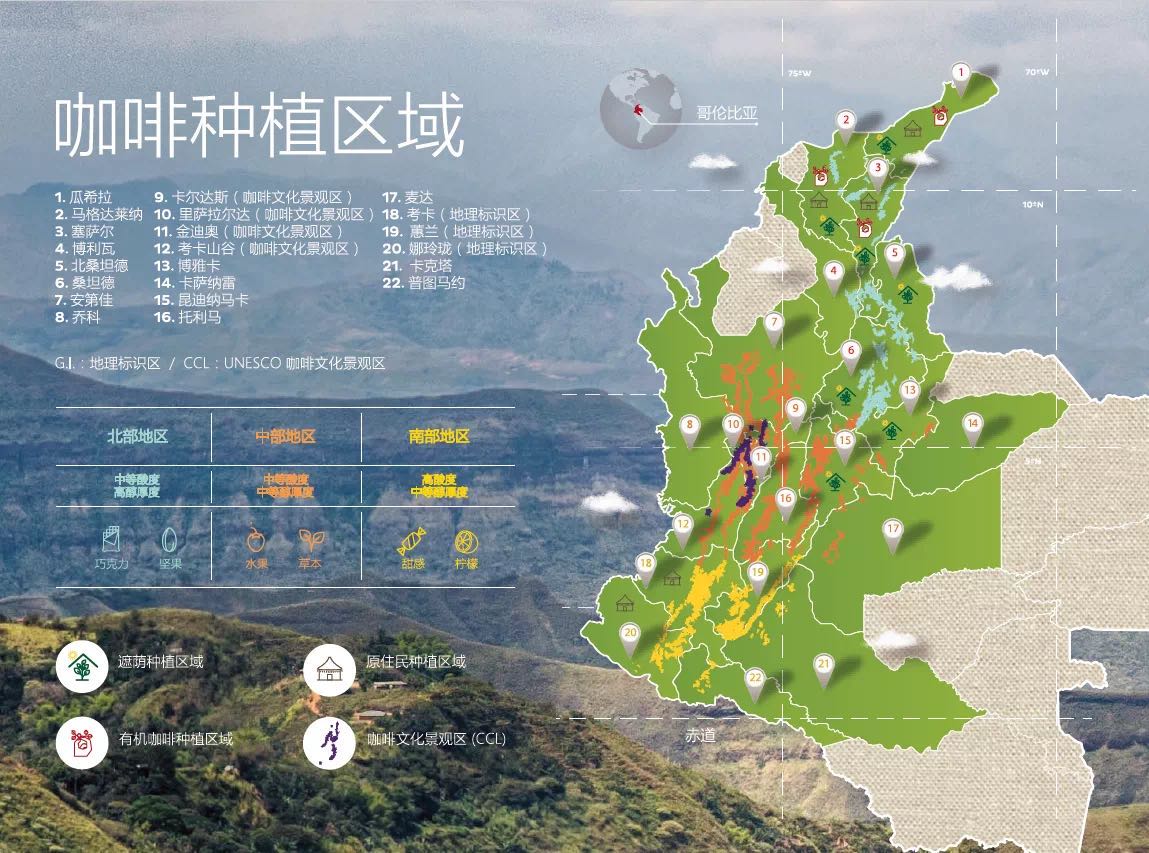
In northern Colombia, coffee is produced in Santander, Norte de Santander, La Guajira, Magdalena and Cesar. According to Juan Carlos, 62,500 producers cultivate coffee across 129,500 hectares.
The region has only one dry season a year, from December to March, and one rainy season, from April to November. Coffee flowers in March, just before the rainy season arrives, and is harvested in October and November.
According to the National Federation of Coffee Growers of Colombia, coffee in the northern region grows at latitudes beyond 9°, with conditions similar to Central America: low latitude and high temperatures. In the Sierra Nevada de Santa Marta and in the Santander and Norte de Santander areas, however, crops are more exposed to sun, so producers lean toward shade-grown cultivation. The National Federation of Coffee Growers of Colombia reports that coffee from these areas has lower acidity.
North-Central and South-Central Regions
In the north-central and south-central regions of Colombia, producing areas include southern Antioquia, Boyaca, Caldas, Choco, Risaralda, Quindio, northern Valle del Cauca, Cundinamarca and northern Tolima.
Antioquia is Colombia's second-largest coffee-producing region and Tolima is the third-largest; both are among the country's most renowned. According to Juan Carlos, 263,000 producers cultivate coffee across 492,000 hectares here.
These areas have two dry seasons and two rainy seasons each year: dry from December to February and June to September, rainy from March to May and September to November, which produces two harvests a year.
In the north-central region there is a main harvest from October to December, after the second rainy season ends, and a smaller one in May and June following the first rainy season.
The south-central region harvests on a similar schedule, from May to June and October to November, but without a main and secondary season, since production volume is the same across both periods.
Southern Region
Colombia's southern region lies close to the equator, where coffee grows in higher mountain areas. This is a high-quality growing zone, and its coffee is known for higher acidity and a distinctive cup profile.
In the southern region, 211,000 producers cultivate coffee across 282,000 hectares, which makes the average estate here far smaller than in other parts of the country.
As in the north, this area has only one wet season and one dry season. The dry season runs from June to September and is followed by flowering. The rainy season begins in October and may last until May, but harvest usually starts in April and continues through June.
That stands in sharp contrast to the north, where coffee is harvested in autumn and the harvest period extends into December. In central Colombia, roasters can supply Colombian coffee to customers for most of the year.
Eastern Region
Colombia's eastern region has far smaller-scale coffee cultivation, covering only areas such as Arauca, Casanare, Meta and Caqueta. Here 5,500 producers cultivate coffee across 10,500 hectares.
The region previously suffered from armed conflict, and support for coffee production has now become a priority. The National Federation of Coffee Growers of Colombia is investing to help the region grow varieties better suited to its environment and to help farmers expand their holdings.
The climate here is similar to the north's, but with more rainfall and humidity.
Coffee Varieties
Beyond the varieties common to the Americas, such as Caturra, Bourbon, Typica and Pacamara, Colombia also has three disease-resistant varieties of its own: Castillo, Tabi and the Colombia variety, named after the country. There are also rare and precious types such as Gesha, small-bean Mocca, Rume Sudan, Eugenioides, Laurina (Bourbon Pointu) and Maraguesa, a natural hybrid of Maragogipe and Gesha.
FrontStreet Coffee Recommendation
To taste the classic Colombian profile country by country, start with the FrontStreet Colombia Huila. The Huila department is one of the country's most famous specialty regions, and this washed, medium-dark roasted coffee highlights black chocolate and nutty sweetness with moderate body, working equally well in a pour-over, a French press, a Moka pot or an espresso machine.
For a modern, fermentation-driven take on Colombia, the FrontStreet Colombia Finca La Divisa Sidra uses an anaerobic natural process that turns out layered tropical fruit, with passion fruit, grape and apricot coming through in a pour-over, a cold brew, a drip bag or a Moka pot.
And if you brew espresso at home, the FrontStreet Specialty Blend was made with cafes in mind: Brazilian creamy-nut sweetness meets Colombian dark chocolate bittersweetness, giving a fine golden crema that pairs beautifully with milk in a latte and works as the base for an Americano, cappuccino or mocha.
Important Notice :
FrontStreet Coffee is a long-established specialty coffee roaster in Guangzhou China, selling freshly roasted beans from its own farm in Yunnan as well as dozens of carefully selected single-origin beans from around the world for both pour-over and espresso. The products deliver consistently excellent quality and great value, with shipping within 24 hours. Guangzhou's FrontStreet Coffee shop is recommended by many coffee lovers, and the beans are now available online at the Tmall 。
FrontStreet Coffee has moved to a new address:
FrontStreet Coffee Address: 315,Donghua East Road,GuangZhou
Tel:020 38364473
 Scan and follow the En Gafei WeChat official account. Please indicate that the reprint comes from "En Gafei".