What is Pour-Over Coffee: How to Brew Delicious Coffee with Illustrated Step-by-Step Guide
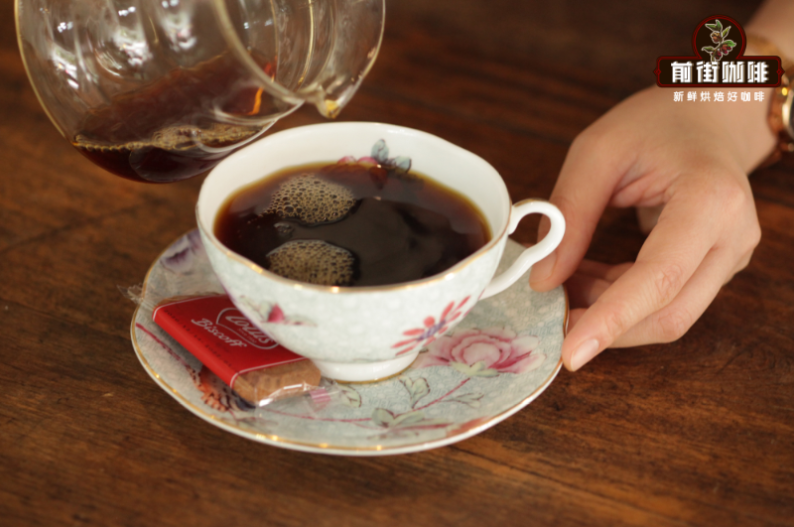
If you love coffee, pour-over is a skill worth learning. Whether you brew everyday beans or specialty lots, the pour-over is not only one of the most popular extraction methods but also a mainstream approach that stays with you throughout your coffee journey. As coffee culture has grown richer in China, pour-over has become a familiar part of daily life. Here, FrontStreet Coffee walks you through how to make a delicious cup at home.

What does pour-over mean in coffee?
Pour-over coffee, also called drip coffee, was invented in 1908 by the German housewife Melitta Bentz. To spread this new extraction method, Mrs. Melitta founded the Melitta company the same year and began selling a range of coffee equipment. In pour-over brewing, hot water dissolves soluble compounds from the coffee grounds, and the resulting liquid passes through filter paper or a metal screen and drips into a vessel below, giving you a clean cup of black coffee.
If you are new to pour-over, FrontStreet Coffee advises against obsessing over grind size, technique or water temperature at the start. Pay attention to a handful of principles and details, and you will find it surprisingly easy to brew a good cup at home.

Tools needed before making a cup of pour-over coffee:
A digital scale with a timer, a 0.85mm standard sieve, a thermometer, a coffee grinder, a pour-over kettle, a dripper and filter paper.
Prepare hot water:
Heat the water, generally keeping it between 85°C and 95°C. For your first attempt, you can simply use 90°C. If the cup tastes too bitter, lower the temperature; if it tastes too sour, raise it.

Weigh coffee beans:
How much coffee you use depends on the size of the cup you want. For a single serving, 15 grams is generally enough. Then choose a coffee-to-water ratio to control the strength of the finished brew. FrontStreet Coffee recommends a 1:15 ratio, so 15 grams of grounds takes 225 grams of hot water. Fine-tune from there: if the cup is too weak, tighten to 1:14; if it is too strong and bitter, loosen to 1:16.

Grind coffee beans:
The coarseness of your pour-over grounds is set by your grinder, and good pour-over demands a good grinder. Common models include the Timemore hand grinder, the Comandante hand grinder, the Little Flying Eagle and Little Fuji electric grinders, the Baratza Encore and the Huijia grinder, among others. FrontStreet Coffee uses the EK43s electric grinder.

Three-stage pour-over technique explanation:
FrontStreet Coffee usually brews with a three-stage technique, keeping the whole pour to about two minutes. The three stages are the bloom, the second pour and the third pour. This approach makes it easy to draw out the front, middle and back-end flavours of the coffee while keeping the cup layered and complex.
FrontStreet Coffee believes the beans themselves decide whether a pour-over tastes good. As the star of the cup, they must be fresh, ground fresh and used immediately, which is why FrontStreet Coffee insists on roasting fresh. Because freshly roasted beans have absorbed a great deal of gas through the high-temperature roasting process, mostly carbon dioxide, they swell on contact with hot water and form what brewers call a "bloom". This first meeting between grounds and water is what baristas refer to as blooming.

First pour: Blooming
For the bloom, FrontStreet Coffee uses 30 seconds, as most brewers do. When the surface of the bed stops expanding and begins to look wrinkled, the degassing is complete and you can move on to the main pours. For properly rested beans roasted within the past month, FrontStreet Coffee always blooms for 30 seconds.

Second pour
Start the second pour the moment the bloom ends, that is, when the scale reads 30 seconds. Pour a further 95 grams with a straight, steady stream, circling slowly from the centre outward to lift the whole coffee bed. Keep the stream vertical and even. When you finish, the scale should read 125 grams and the timer about 55 seconds.

Third pour
When the liquid level has dropped by about half, switch to a gentle stream and pour the final 100 grams in small circles until the scale reads 225 grams. Be careful not to pour too fast, or you will wash out the bed and cause under-extraction. After the pour, let the coffee drip through slowly, which usually takes about two minutes, then remove the dripper. Finally, remember to swirl the coffee in the server so the aroma is evenly distributed before you taste it.

One more note from FrontStreet Coffee: the amount poured at each stage of the three-stage method is not fixed. Practise with FrontStreet Coffee's plan first, and once you have some experience, adjust according to the beans and your own taste. FrontStreet Coffee believes there are a thousand ways to brew a delicious cup. Keep learning and refining, and a perfect pour-over becomes completely effortless.

FrontStreet Coffee Recommendation
The V60 is the dripper FrontStreet Coffee reaches for most often, and it suits floral, fruit-forward beans especially well. For a first pour-over, try the FrontStreet Yirgacheffe Gudingding, which shows citrus, berry and jasmine with a green-tea sweetness, or the FrontStreet Ethiopia Huakui, whose tropical fruit aromas of strawberry, passion fruit, jackfruit and lychee make it remarkably sweet and low in bitterness. Both are brewed on a V60 at 90-91°C with 15 grams of coffee and a 1:15 ratio.
If you want to spend a little more, the FrontStreet Panama Emerald Estate Red Label Geisha is a genuine showpiece, with elegant jasmine, citrus, bergamot and black-tea notes and a clean, long finish. For a brighter, more complex cup, the FrontStreet Kenya Cherry Tomato is a washed Kenyan from the Nyeri region, grown between 1,550 and 1,750 metres from SL28 and SL34, and given a 72-hour double washed fermentation. It cups with cherry-tomato and umeboshi-like acidity, pear and black plum, a clean finish and a light green-tea note.
Because the V60's 60-degree cone and single large hole give the brewer direct control over flow, it happily handles lighter roasts as well as medium-dark beans. FrontStreet Coffee suggests starting with 15 grams of coffee, a 1:15 ratio and water between 85°C and 95°C, then adjusting grind and temperature to taste. The same dripper will also flatter the medium-dark FrontStreet PWN Golden Mandheling and the balanced FrontStreet Brazil Queen Estate, so a single setup can carry you across a wide range of origins.
Important Notice :
FrontStreet Coffee is a long-established specialty coffee roaster in Guangzhou China, selling freshly roasted beans from its own farm in Yunnan as well as dozens of carefully selected single-origin beans from around the world for both pour-over and espresso. The products deliver consistently excellent quality and great value, with shipping within 24 hours. Guangzhou's FrontStreet Coffee shop is recommended by many coffee lovers, and the beans are now available online at the Tmall 。
FrontStreet Coffee has moved to a new address:
FrontStreet Coffee Address: 315,Donghua East Road,GuangZhou
Tel:020 38364473
 Scan and follow the En Gafei WeChat official account. Please indicate that the reprint comes from "En Gafei".