Costa Rica Mega Rock Estate Anaerobic Dark Honey Process Coffee Beans Brewing Water Temperature Grind Size and Ratio
FrontStreet Coffee · Costa Rica Giant Stone Estate Blueberry Coffee Beans
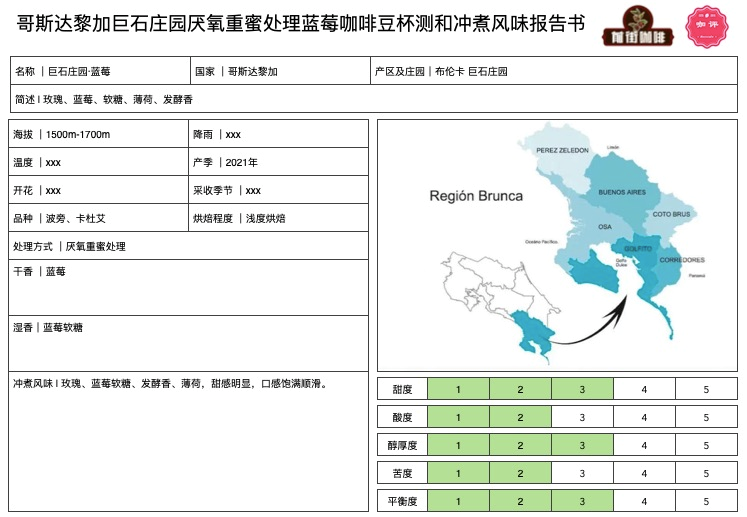
Origin: Brunca, Costa Rica
Estate: Giant Stone Estate
Altitude: 1500-1700m
Processing: Anaerobic Honey Process
Varieties: Bourbon, Catuai
Grade: SHB
Introduction
After introducing coffee beans from Cuba in 1729, Costa Rica became the first country in Central America to grow coffee and the first to cultivate it for commercial value. Costa Rica is blessed with rich volcanic soil, and combined with the influence of Pacific currents and monsoons, this creates unique microclimates throughout the country.
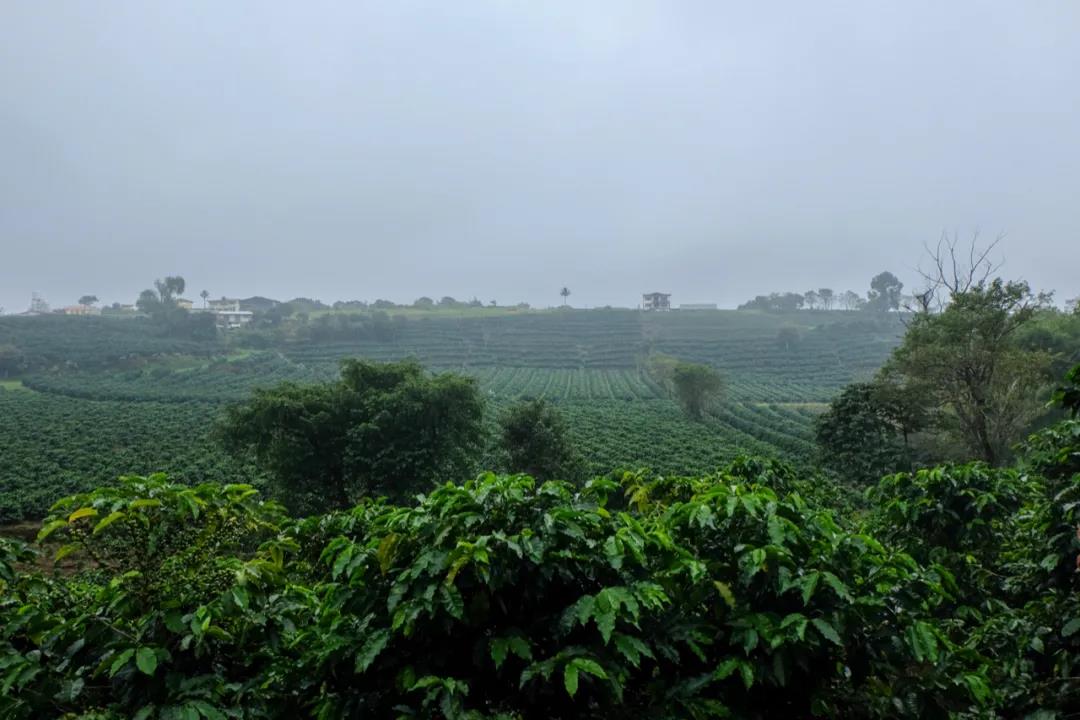
The specialty coffee growing regions in Costa Rica lie above 1400m altitude, with abundant rainfall, a suitable day-night temperature difference, and mildly acidic volcanic soil, providing excellent conditions for coffee cultivation.
Brunca Region
The Brunca region is located in southern Costa Rica, composed of states such as Coto Brus, Buenos Aires, and Pérez Zeledón. The region's coffee production accounts for 20% of Costa Rica's total coffee output and it is one of the country's six socio-economic regions.
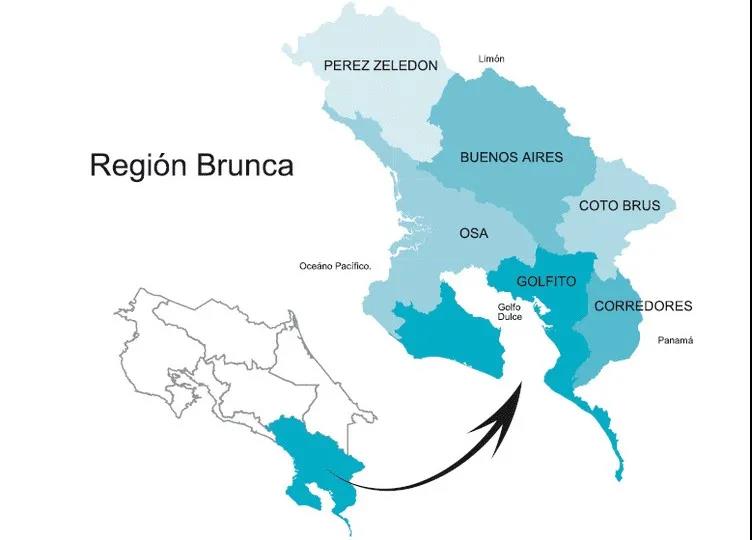
The region's altitude ranges from 800m to 1700m, with an average temperature of 22°C. It is home to 4,200 coffee growing areas, including farms and estates, and the famous Giant Stone Estate is located in this area.
Giant Stone Estate
Giant Stone Estate is located in the Brunca region of southern Costa Rica at an altitude of 1400-1700m. The estate was named after the mysterious stone spheres carved by indigenous people between 200 BCE and 1500 CE that were discovered near the property. The soil where coffee is grown on the estate is a mixture of red mud and lime mud, which gives the beans not only high density but also superior sweetness.
Coffee Varieties
Bourbon is a natural mutation of Typica. After the coffee cherries mature they take on a wine-red color, and the beans are relatively round in shape. Bourbon grown at high altitudes typically offers excellent aroma and bright acidity, with flavors reminiscent of red wine.
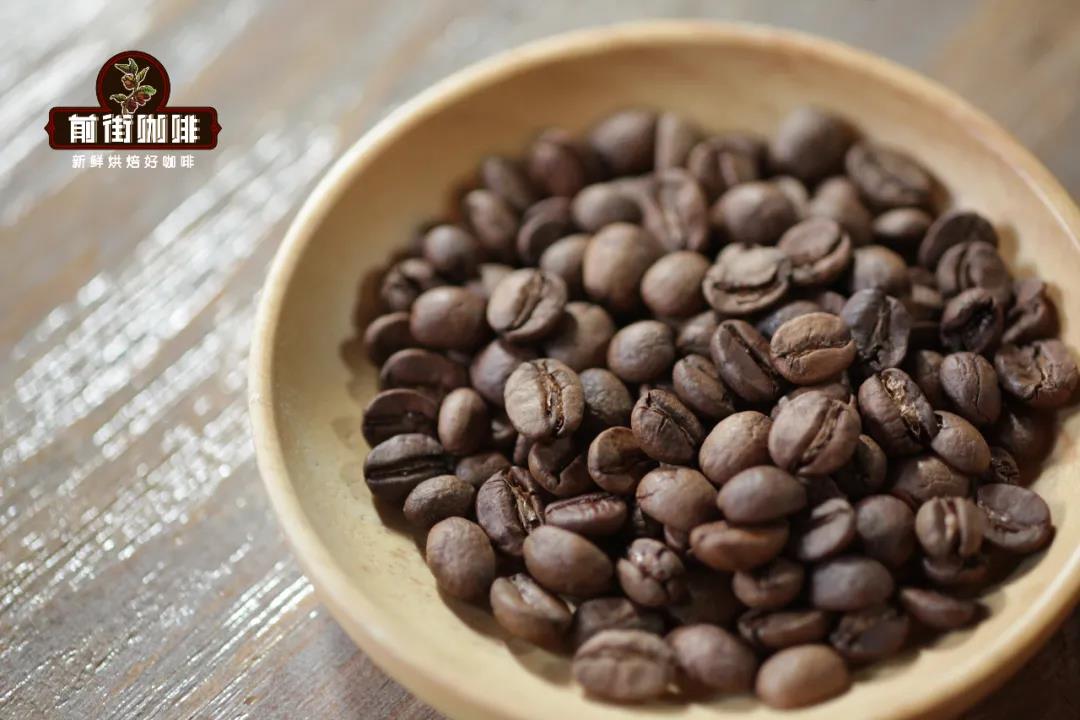
Catuai is a variety artificially hybridized from Caturra and Mundo Novo. From Caturra it inherits a compact plant size that needs no shade, making it easy to grow and convenient to harvest. It also resists natural disasters better than Mundo Novo and has excellent acidity in the cup.
Anaerobic Honey Process
The anaerobic honey process begins by selecting fully ripe coffee cherries, then removing the skin while preserving the pulp and mucilage. The cherries are placed in sealed barrels, carbon dioxide is introduced, and the room temperature is held between 10-15°C for anaerobic low-temperature fermentation. Once the anaerobic fermentation ends, the process moves on to the second, honey-processing stage.
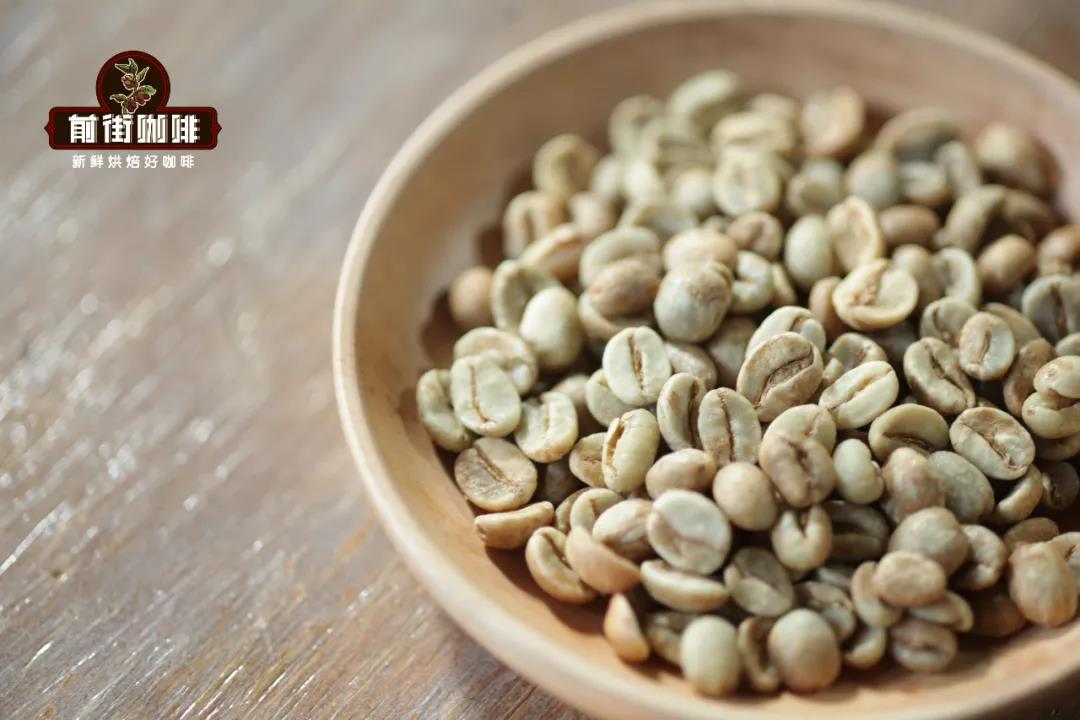
The beans, still carrying pulp and mucilage, undergo anaerobic fermentation and are then placed on mesh drying beds to dry. The temperature during drying must not exceed 40°C. After 8 hours of drying, the cherries are placed in a greenhouse to rest for 12 hours. This cycle is repeated for 20-25 days. When the green beans' moisture content reaches 15%, they are packed in inner bags with outer cloth bags and left to rest in a cool, ventilated place for one month, until the moisture content drops to 11%.
FrontStreet Coffee Roasting Records

FrontStreet Coffee Cupping Report
FrontStreet Coffee Brewing Recommendations
Dripper: V60#01
Water Temperature: 90°C
Coffee Dose: 15g
Coffee-to-Water Ratio: 1:15
Grind Size: Medium-fine grind (75% pass-through rate on Chinese standard #20 sieve)

FrontStreet Coffee Brewing Method: Three-stage extraction. Bloom with 30g of water for 30 seconds. With a small stream, pour in circles to 125g for the first split. When the water level drops to just before exposing the coffee bed, continue pouring to 225g and stop. When the water level drops to just before exposing the coffee bed again, remove the dripper. (Timing starts from the bloom.) Total extraction time is 1'54".
FrontStreet Coffee Recommendation
Costa Rica is where honey processing was refined, and alongside the anaerobic style, the traditional black honey process is well worth tasting. FrontStreet's Costa Rica Blackberry uses a distinctive black honey method in which almost none of the mucilage is removed, the drying runs longer and lasts at least 2 weeks, and coverings are used to keep the sun from drying the beans too fast so the sugars convert fully, with the cherries turned at intervals to prevent uneven heating and over-fermentation. Roasted medium-light, it gives off a rich floral aroma when ground and tastes of grapes, berries, and ripe blackberry.
Beyond ordinary honey processing, some estates have developed an innovative raisin honey method, a variation that goes past the traditional yellow, red, and black styles. FrontStreet's Costa Rica Mozart is the one to try. In this method the cherries are pre-dried on raised beds for at least three days before the skin and pulp are removed and the honey steps continue, and it keeps 100% of the mucilage, which raises the difficulty above even black honey and demands strict control of timing. The result is a richer, hotter fruit sweetness, and whether you brew it as a pour-over, a cold brew, or a moka pot, you can taste osmanthus, pineapple, and raisin.
For a blend that pairs Geisha with Costa Rican honey processing, FrontStreet's Strawberry Candy combines Panama Geisha, which supplies the classic orange-blossom honey charm, with Costa Rican coffee processed with the raisin honey method, keeping 100% of the mucilage under a zero-water approach. On the day of harvest the cherries go into a large water tank so that fully mature fruit sinks while underdeveloped or overripe fruit floats and is skimmed off; the sorted cherries are dried on raised beds for at least three days, then the skin is removed and, with the mucilage retained, drying continues with constant turning for evenness. The cup carries Geisha's floral tea quality along with grape and raisin notes, soft fruit acidity, an almond finish, and a clear sweetness.
Important Notice :
FrontStreet Coffee is a long-established specialty coffee roaster in Guangzhou China, selling freshly roasted beans from its own farm in Yunnan as well as dozens of carefully selected single-origin beans from around the world for both pour-over and espresso. The products deliver consistently excellent quality and great value, with shipping within 24 hours. Guangzhou's FrontStreet Coffee shop is recommended by many coffee lovers, and the beans are now available online at the Tmall 。
FrontStreet Coffee has moved to a new address:
FrontStreet Coffee Address: 315,Donghua East Road,GuangZhou
Tel:020 38364473
 Scan and follow the En Gafei WeChat official account. Please indicate that the reprint comes from "En Gafei".