Why Bubbles Appear in Pour-Over Coffee: Is the Blooming Step Important?
Professional coffee knowledge exchange. For more coffee bean information, please follow Coffee Workshop (WeChat official account: cafe_style).
Introduction
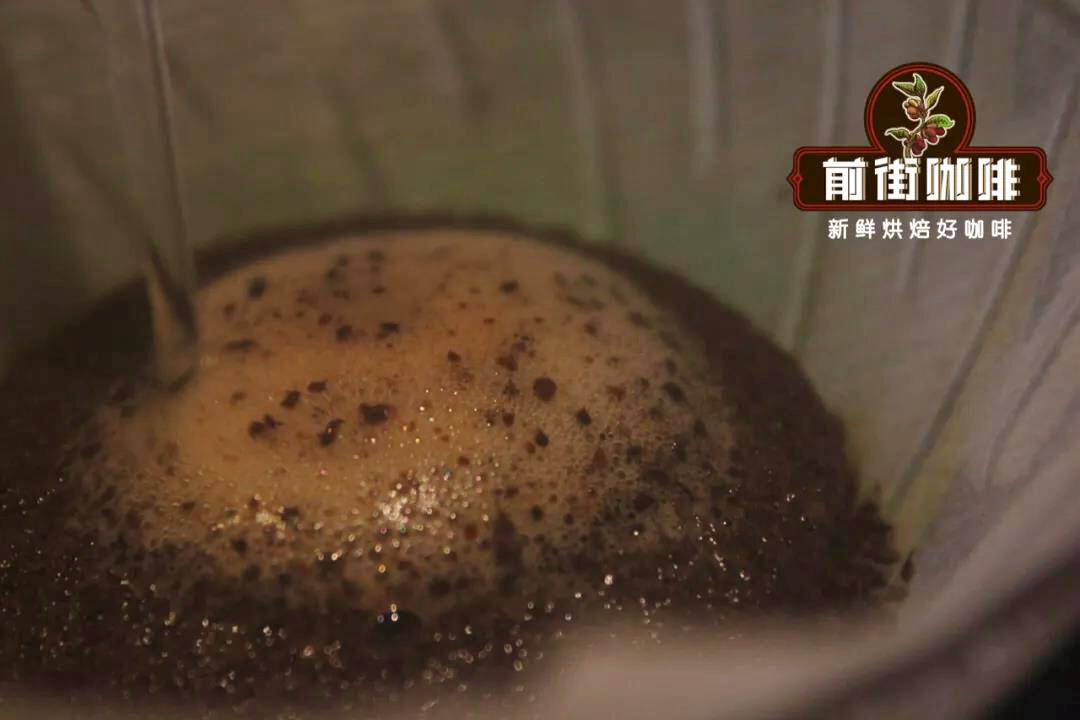
Watch hot water meet a bed of ground coffee and within seconds the slurry swells into a domed, hamburger-shaped mound. That soft rise is the bloom, and it is one of the most satisfying sights in brewing. But what is the bloom actually doing, and does the amount of water you use change the way the cup tastes? At FrontStreet Coffee, we ran a set of experiments to find out.
Is the Bloom Just About Releasing Carbon Dioxide?
Freshly roasted beans keep venting carbon dioxide for several weeks. Grinding accelerates that release dramatically: the moment water hits the grounds, trapped gas escapes as a swarm of bubbles and the bed of coffee expands. That expansion is more than cosmetic, because the escaping gas lifts and separates the particles, exposing a far larger surface area to the water.
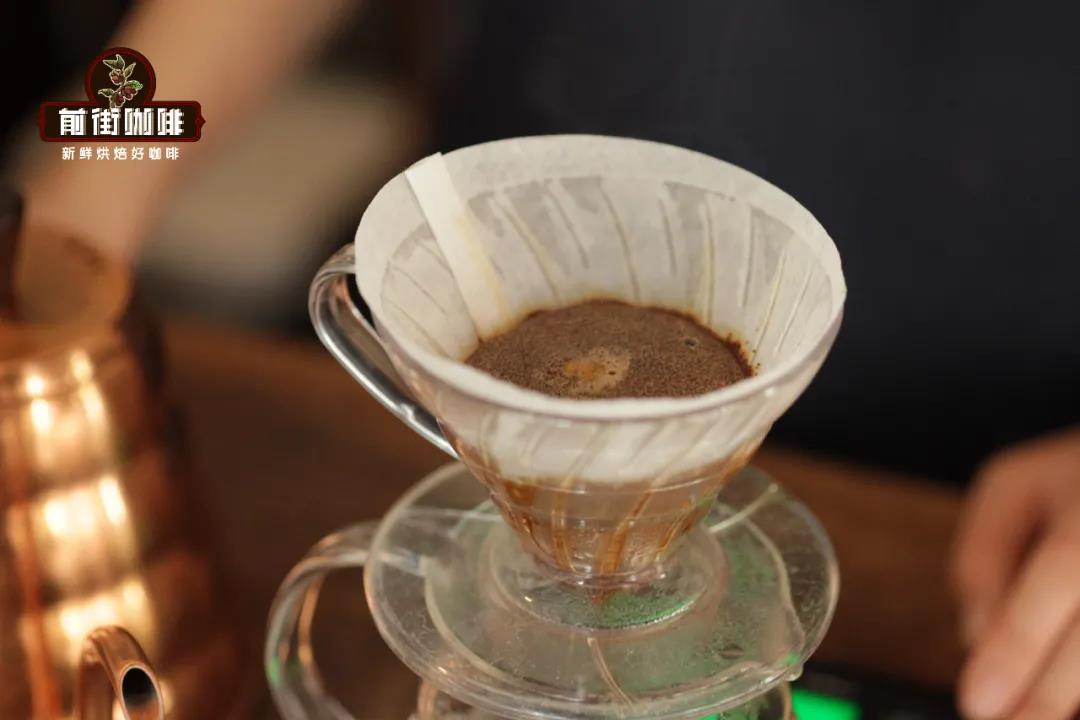
Skip the bloom and that foam becomes a problem. The bubbles clog the gaps between particles, rerouting the flow of water and pushing the brew toward uneven extraction. Carbon dioxide also physically blocks water from reaching the compounds that carry flavor. If the gas is never driven off, its release during the main pour interferes with the aromatic compounds and oils that should be dissolving into the cup.
Does Bloom Water Volume Change the Extraction?
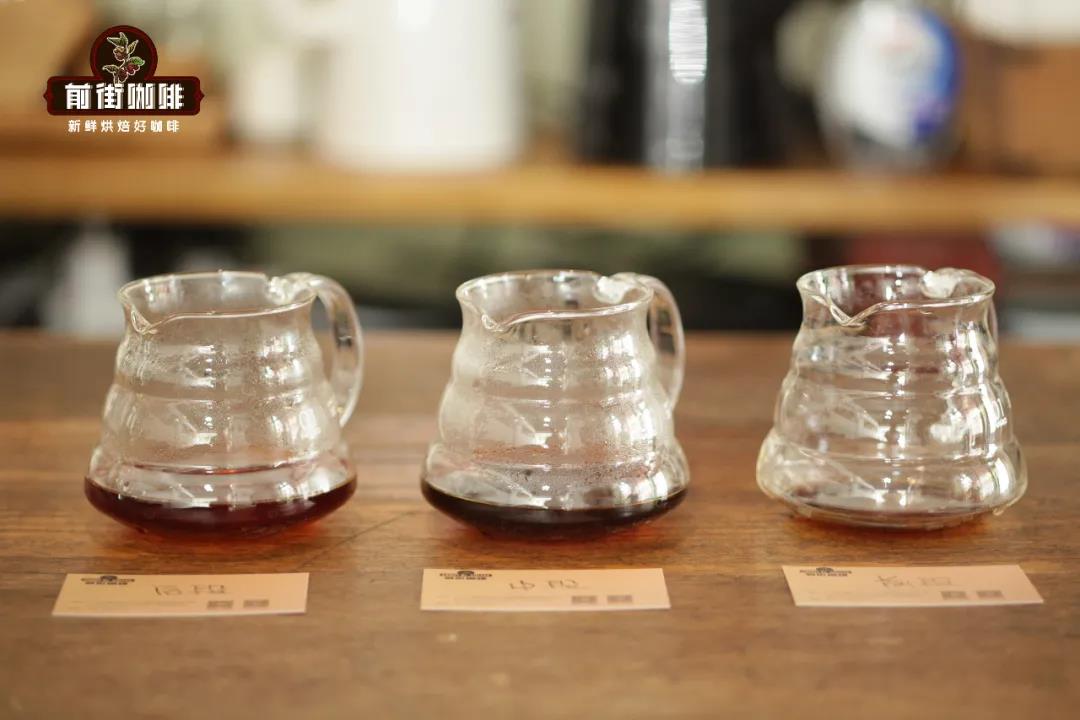
Because the bloom both vents gas and begins extracting flavor, the volume of water used matters. To keep technique out of the equation, FrontStreet Coffee used a Clever Dripper, whose full-immersion method minimizes variation. We compared three bloom volumes against the same dose of coffee: an equal weight of water, twice the weight, and four times the weight, each for 30 seconds with the valve open. After the bloom we closed the valve, topped up to 225g, steeped for 2 minutes 30 seconds, then opened the valve again so the steeped liquid blended evenly with the bloom extract.
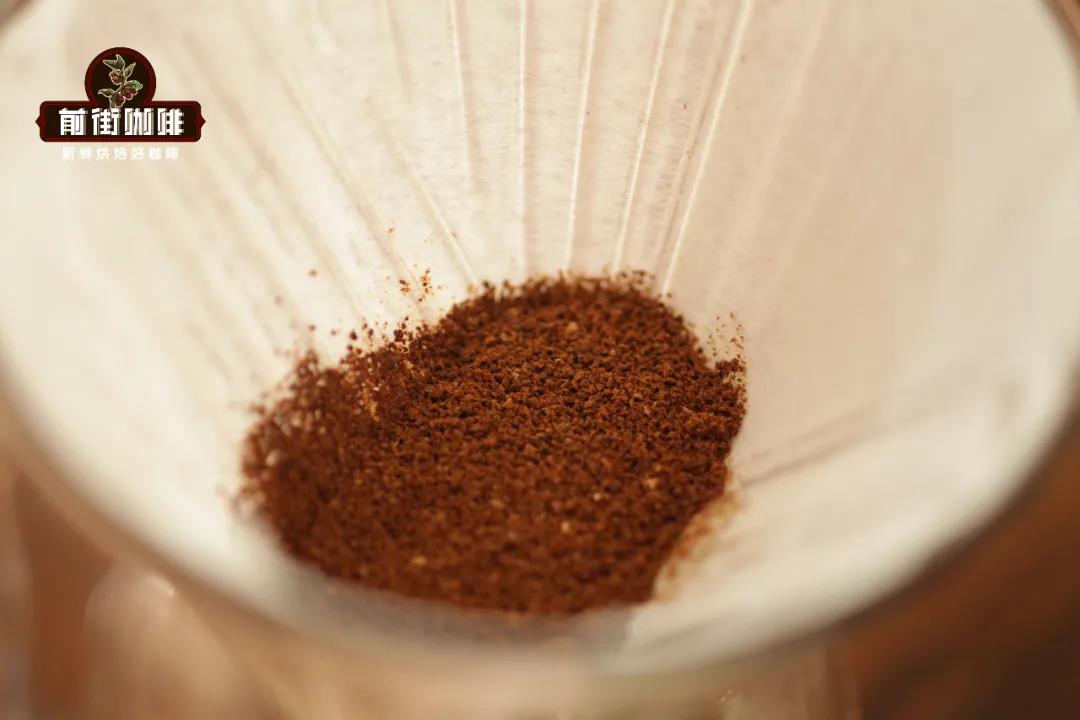
The test used Costa Rica Musician Series Mozart beans. Brewing parameters: 15g of ground coffee, a 1:15 coffee-to-water ratio, a grind of 0.85mm with a 75% pass-through rate on the sieve, and 90°C water. (A reminder: preheat your equipment first.)
Group A: 15g of Bloom Water, 30 Seconds
In the cup: fermented aroma, grape acidity, thin and muddled overall, weak aroma, poor clarity, and a woody note once it cooled.
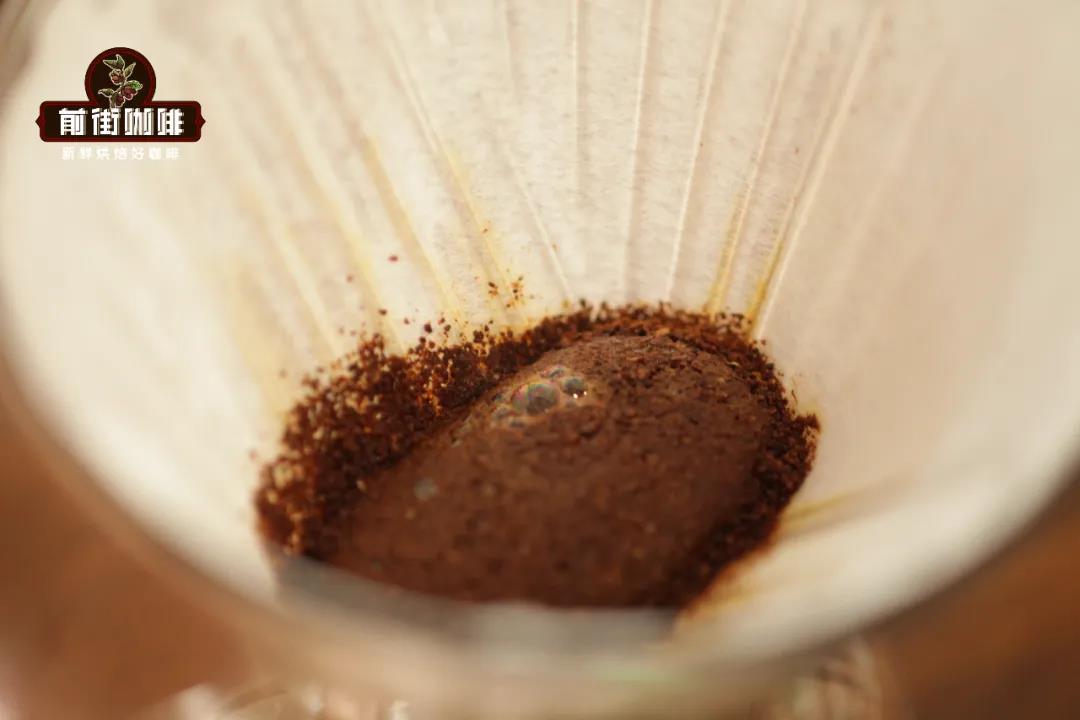
Group B: 30g of Bloom Water, 30 Seconds
In the cup: raisin-like fermentation, berry sweet-tart, orange-blossom aroma, a pineapple-like sweet-and-sour finish, a strong nose, a smooth mouthfeel, and balance throughout.
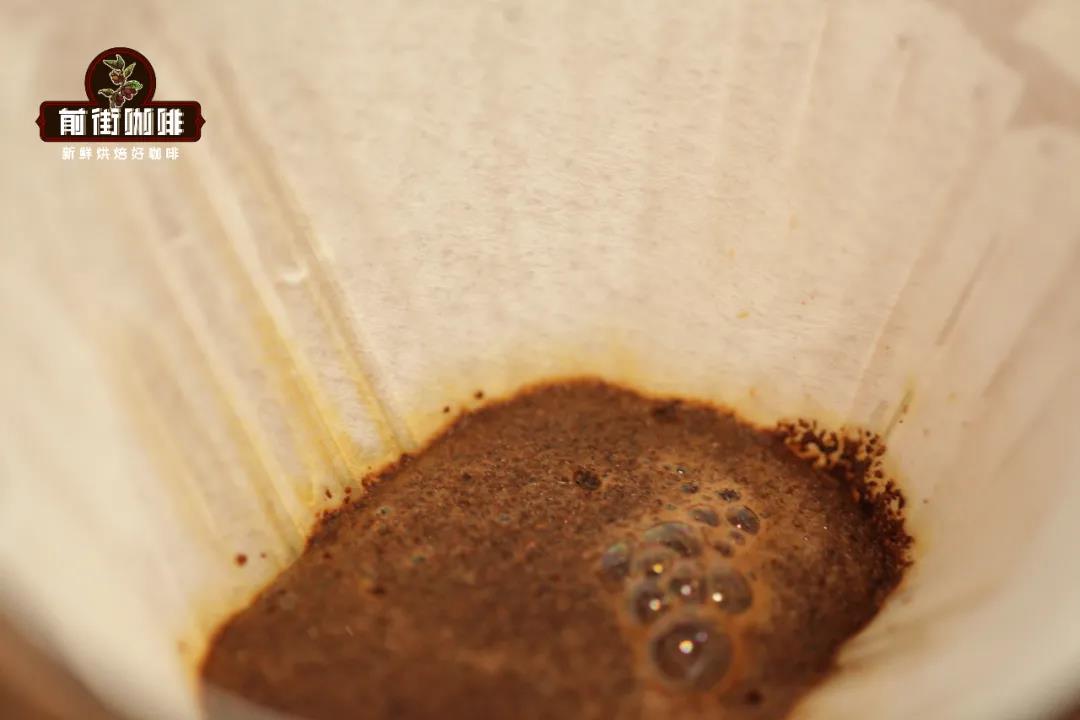
Group C: 60g of Bloom Water, 30 Seconds
In the cup: a faint fermented note and grape acidity, insufficient aroma, average clarity, and flat flavor.
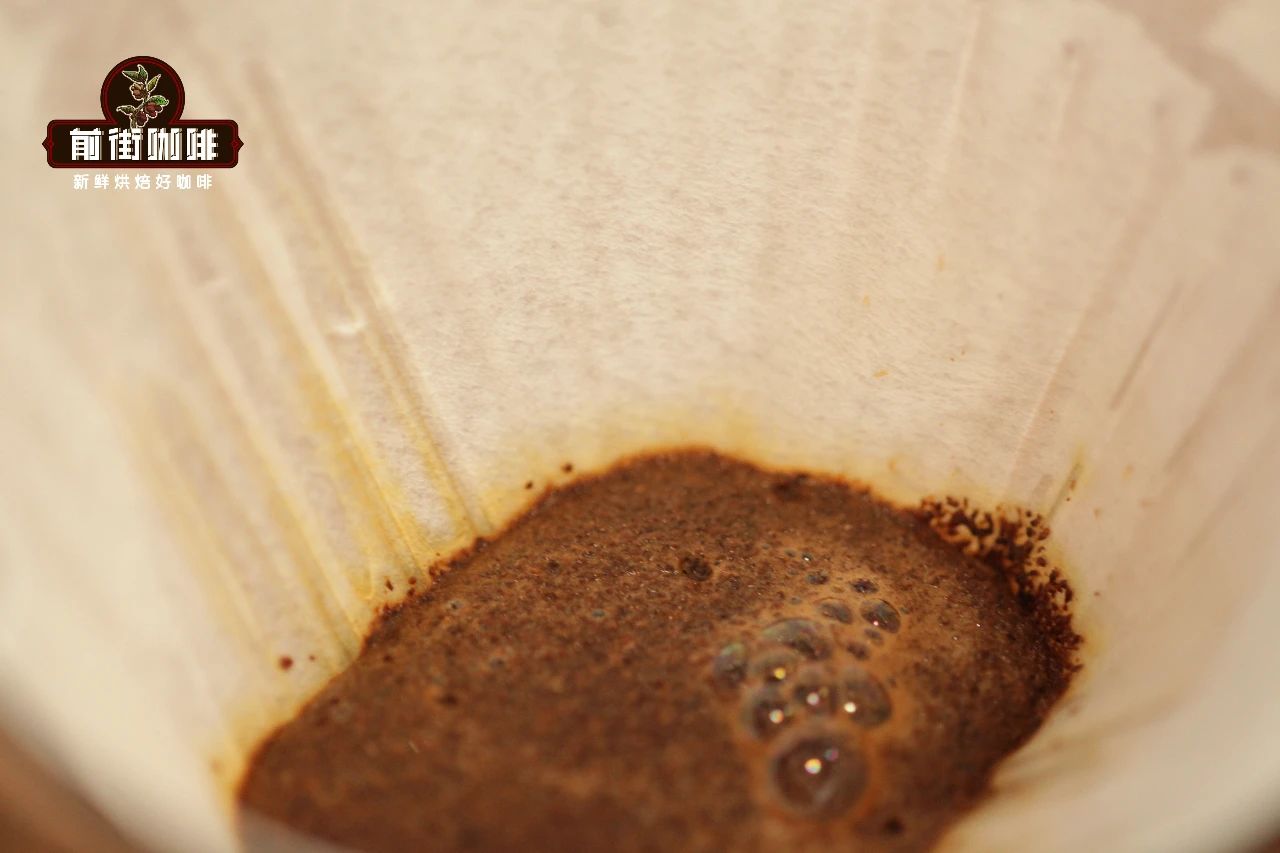
Comparing the three, FrontStreet Coffee found that Group A simply did not use enough water. The grounds never wet evenly: some particles were degassing and extracting while others stayed dry and could not release their gas at all, which left the cup cloudy, under-flavored, and woody. Group C went too far the other way. The extra water collapsed the coffee bed, and most of it ran straight through without extracting anything, diluting the entire brew and leaving it tasting thin.
Summary
The experiment points to a simple rule: bloom with about twice the weight of the coffee. Some readers may still wonder, "If I overshoot 30g a little when blooming 15g, does it matter?"
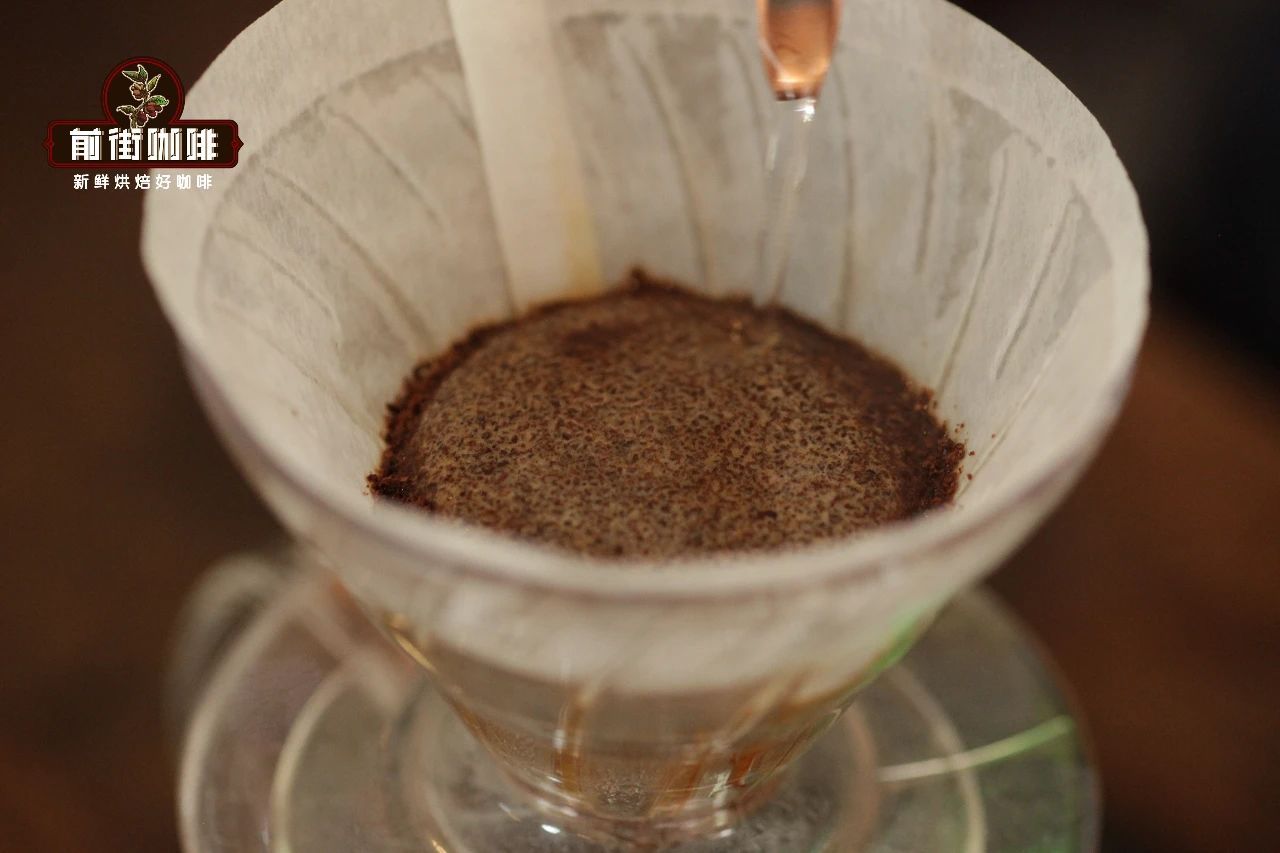
Generally, no, as long as the water wets the grounds evenly and does not drip through in any real volume. Absorption varies with roast level, freshness, and variety, so the exact figure shifts from bean to bean. The overshoot should still be small, though: for 15g of coffee, somewhere between 30g and 40g of bloom water is perfectly fine.
For more specialty coffee beans, please add FrontStreet Coffee on private WeChat (FrontStreet Coffee), WeChat ID: kaixinguoguo0925
FrontStreet Coffee Recommendation
A good bloom starts with the right bean, and the coffees that show it off best are the aromatic, fruit-forward ones. FrontStreet Coffee's pour-over lineup is built around exactly these: the Ethiopia Yirgacheffe Gedingding, a washed coffee with citrus, berry, and floral notes and a green-tea finish; the Ethiopia Huakui, prized for its tropical strawberry, passion fruit, and jackfruit aromatics; and the Panama Emerald Estate Red Label Geisha, whose jasmine, citrus, bergamot, and black-tea layers are the benchmark for a delicate, clarity-driven cup.
The V60 is the dripper FrontStreet Coffee reaches for most often with beans like these. Its conical 60° body and single large hole send the water down to the center before it drops, which lengthens contact and lets fragrance and acidity come through; flow rate depends almost entirely on the brewer's control. FrontStreet Coffee favors the resin version of the Hario V60 over ceramic, glass, copper, or steel, because resin insulates better against heat loss and holds the tightest manufacturing tolerances.
If you like a sweeter, denser cup, try the FrontStreet Sweet Strawberry Geisha blend or the Costa Rica Mozart. The Sweet Strawberry Geisha pairs a Costa Rican honey-process coffee with a washed Panama Geisha for orange-blossom, grape, and dried-blueberry notes, while the Mozart — a raisin honey-process bean — brews into osmanthus, pineapple, and raisin. With either one, bloom with roughly twice the weight of your grounds and pour a slow, steady spiral so every particle is wetted without the bed collapsing.
Important Notice :
FrontStreet Coffee is a long-established specialty coffee roaster in Guangzhou China, selling freshly roasted beans from its own farm in Yunnan as well as dozens of carefully selected single-origin beans from around the world for both pour-over and espresso. The products deliver consistently excellent quality and great value, with shipping within 24 hours. Guangzhou's FrontStreet Coffee shop is recommended by many coffee lovers, and the beans are now available online at the Tmall 。
FrontStreet Coffee has moved to a new address:
FrontStreet Coffee Address: 315,Donghua East Road,GuangZhou
Tel:020 38364473
 Scan and follow the En Gafei WeChat official account. Please indicate that the reprint comes from "En Gafei".