Ethiopian Coffee·Major Commercial Bean Region: Jimma 06
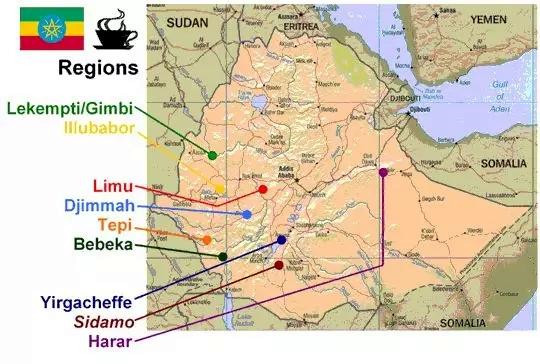
Ethiopian Coffee · Major Commercial Bean Region — Djimah
Altitude: 1350-1850 meters
Coffee System: Forest/Semi-Forest System
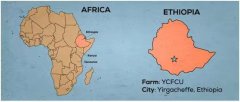
Djimah lies in Ethiopia's southwestern highlands, on the border of Kaffa and Illubabor provinces, at 4400-6000 feet. It is Ethiopia's largest coffee-producing region, accounting for one-third of exports. Although washed premium Djimah lacks the citrus fragrance and florals of Yirgacheffe, its flavor profile is remarkably clean and transparent, closer to Central American specialty coffees. The region has been overshadowed by the rise of other producing areas in recent years, but it is definitely worth exploring.
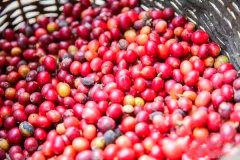
The Kaffa Forest is renowned for its original wild varieties, and Djimah serves as the coffee distribution hub for the region. Farmers habitually cart cherries harvested from the forest down to Djimah, where hundreds upon hundreds of varieties get mixed together and sold as commercial beans — a practice that buries the aromas of many delicious varieties.
Commercial-grade premium Djimah is fairly common in the Taiwan region. With a bit of luck, you can find high-quality, reasonably priced Djimah showing a refreshing lemon-peel aroma comparable to Sidamo. On the whole, Djimah outperforms Brazil's commercial Santos beans in flavor, making it an excellent option for medium- to low-priced blend formulas.
In recent years, however, roughly 10% to 20% of Djimah has been used to patch up flavor deficiencies in blended coffees. As a result its quality has gradually slipped below its original standards, and evaluations among coffee buyers have become polarized.
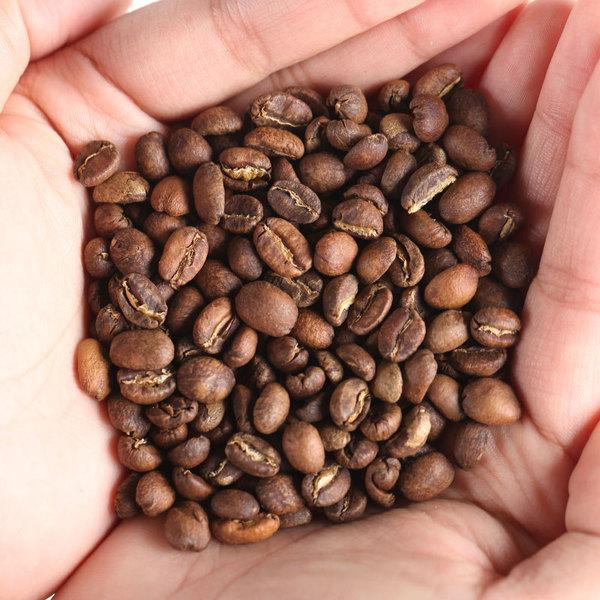
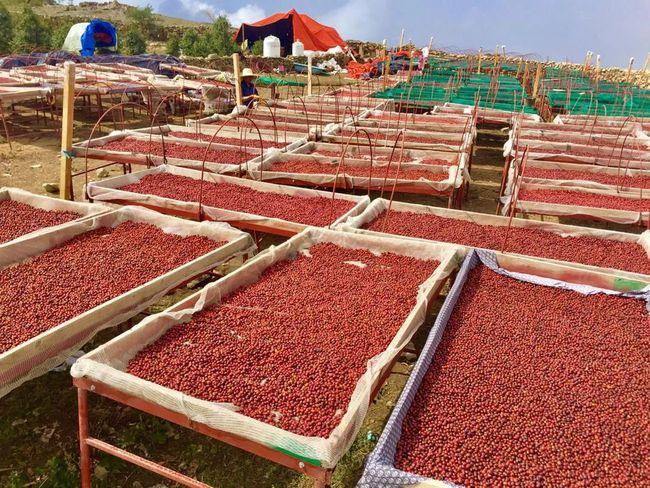
Like Harrar, Djimah follows traditional sun-dried processing, so its flavor carries some fermented complexity too — a touch less refined than Harrar's. The body is medium, with a rugged, earthy character.
This overview was compiled by FrontStreet Coffee. We hope it helps you understand coffee more deeply.
FrontStreet Coffee Recommendation
If Djimah's blending role leaves you curious about what Ethiopian coffee tastes like when it is not mixed into anonymous commercial lots, start with FrontStreet Coffee's Washed Yirgacheffe. Yirgacheffe is a small town in southern Ethiopia's Sidamo province at 1700-2100 meters — among the highest coffee altitudes in the world — and after the Ethiopian Commodities Exchange separated it from Sidamo in 2010, its name became shorthand for the country's most distinctive flavor: white jasmine florals with bright citrus and lemon acidity and a clean, tea-like finish, at a friendly everyday price.
To taste the terroir at village level, try FrontStreet Coffee's washed Guodingding Cooperative lot from the Worka area on Yirgacheffe's southeastern edge. Once part of the Worka cooperative under the YCFCU union, Guodingding became an independent cooperative in 2012 with about 300 member farmers, and its washed coffee shows crisp citrus and lemon tones with elegant white florals — bright, delicate, and unmistakably Yirgacheffe. Brew it on a V60 at 90-91°C: 15g of coffee at a 1:15 ratio, a 30g bloom for 30 seconds, then staged pours to 225g.
Important Notice :
FrontStreet Coffee is a long-established specialty coffee roaster in Guangzhou China, selling freshly roasted beans from its own farm in Yunnan as well as dozens of carefully selected single-origin beans from around the world for both pour-over and espresso. The products deliver consistently excellent quality and great value, with shipping within 24 hours. Guangzhou's FrontStreet Coffee shop is recommended by many coffee lovers, and the beans are now available online at the Tmall 。
FrontStreet Coffee has moved to a new address:
FrontStreet Coffee Address: 315,Donghua East Road,GuangZhou
Tel:020 38364473
 Scan and follow the En Gafei WeChat official account. Please indicate that the reprint comes from "En Gafei".