Pour-Over Coffee Brewing Techniques & Water Pouring Methods: How to Make Delicious Pour-Over Coffee?
Introduction
Pour-over coffee is, at its core, the act of rinsing water through coffee grounds to draw out a delicious cup. How exactly to pour that water is what this guide will cover.
How Should You Pour?
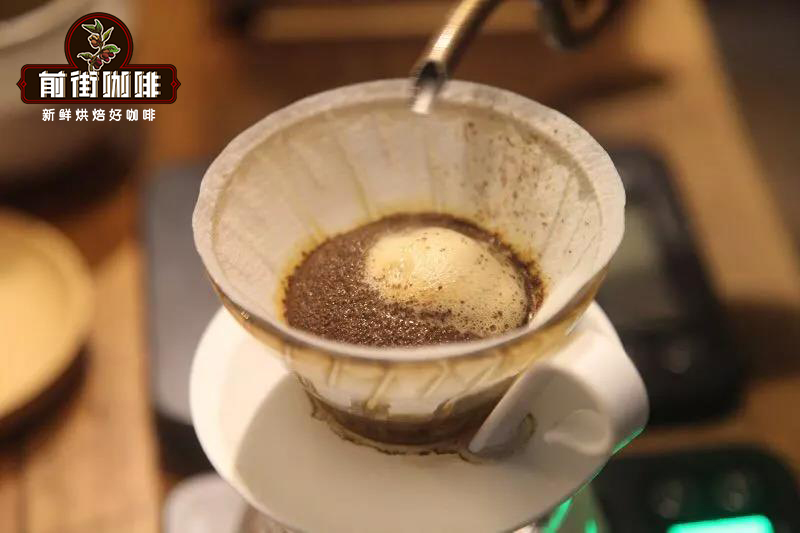
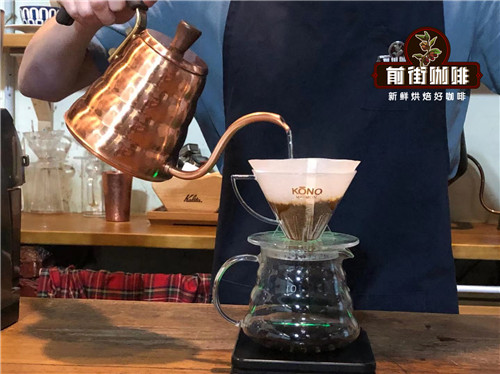
Most baristas pour in circles. The method is closely tied to the design of the dripper. The ubiquitous conical drippers are funnel-shaped—wide at the top, narrow at the bottom—and the purpose of circular pouring is to extract the grounds in the cone evenly while avoiding turbulence. Try it yourself: if you pour into the center with anything other than a perfectly vertical stream, you'll create turbulence that makes even extraction nearly impossible.
Clockwise or Counterclockwise?
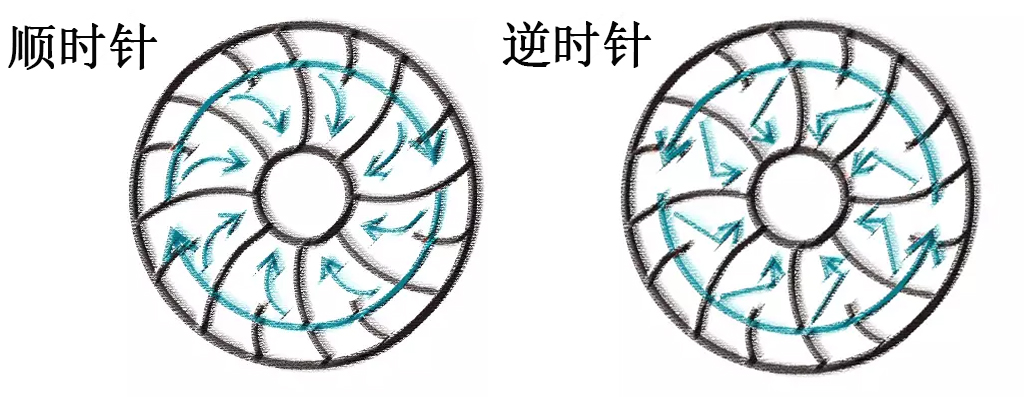
Once newcomers master circular pouring, they often tumble into the next blind spot: direction. In theory, clockwise versus counterclockwise makes little difference. But the V60 is a special case, because its ribs are not symmetrical—they spiral counterclockwise from the bottom upward.
Pour clockwise, and the water follows the path of least resistance along the spiral ribs toward the center of the cone—a shorter route. Pour counterclockwise, and inertia carries the flow against the ribs before it turns to follow them inward—a longer route. Some argue, therefore, that counterclockwise pouring extracts at a higher rate than clockwise. In practice, though, the interplay of all the other parameters means the two directions never produce a qualitative difference in the cup.
Controlling Water Flow Rate
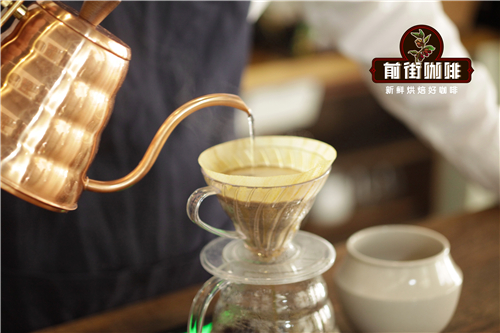
First, a definition. FrontStreet Coffee calls 5g/s a normal flow. Below 5g/s is a small flow; above is a large flow. A large flow has strong rinsing power but brief contact time: a coffee brewed entirely with large pours tastes clean, with prominent aromatics. A small flow rinses weakly but soaks for longer: a coffee brewed entirely with small pours shows complexity and a solid mouthfeel.
Daily brewing usually blends the two. For a mellow coffee, raise the bed with a large flow first, then lean on the soaking effect of a small flow to draw out that mellow character. Or, to express the explosive flavors of a Geisha, brew a complex front portion with a small flow, then use a large flow to agitate the bed and lift the aromatics.
Water Distribution Strategy
The question everyone asks is how to split the water—how many pours, and how much each. Whether you pour once, twice, or three times, the biggest impact is on extraction time. With a fixed total water amount, more segments extract more material from the coffee—potentially richer flavors, but also a greater risk of off-flavors. Fewer segments, the reverse.
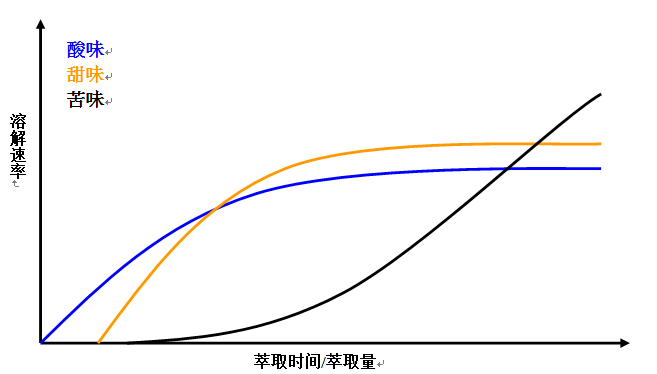
As for how much water each segment deserves, consult the ideal extraction curve. Sweet and acidic compounds dissolve at a rate that slows over time, while bitter compounds keep increasing. So if you weight the front and middle segments with more water, sweet and acidic substances extract more completely and bitterness stays lower. Weight the middle and back segments instead, and bitterness extracts more readily. FrontStreet Coffee has noted in earlier articles that a proper measure of bitterness actually helps express a coffee's complexity and depth of flavor.
FrontStreet Coffee Recommendation
If you're just getting into pour-over and want a dripper that's practical, forgiving, and handsome, the odds are good that any experienced hand will point you to the V60. Its designer, Hario, was founded in Tokyo in 1921 as a respected maker of glassware, originally producing heatproof laboratory glass—the heatproof glass server that so often accompanies pour-over is one of its best-known products. In 2004, Hario redesigned the V60's prototype into the shape we know today, naming it for its distinctive 60-degree cone angle and "V" silhouette; it hit the market a year later.
The conical shape and 60-degree angle force water to travel to the center before dripping into the server, extending the contact between water and grounds so that aromatics and flavor extract fully, while the signature single large outlet leaves the flow entirely to the brewer's control—and that control shows directly in the cup. Before the turn of the millennium, the coffee market revolved around medium-dark roasts and flavors like body, sweetness, and caramelized depth—chocolate, maple, nuts, vanilla—poured through siphons and cloth filters by way of classics such as FrontStreet Coffee Blue Mountain No.1 and PWN Golden Mandheling. The third wave flipped the script: roasting turned lighter, tasters began chasing terroir—Ethiopia's white florals, Kenya's berry acidity—and the V60's fast extraction delivers precisely the layered aromatics and lively acidity that make florals, fruit acids, sweetness, and tea notes shine.
That's why floral-fruity beans are the V60's perfect match: the classic Yirgacheffe character of the FrontStreet Coffee Gedeb (Guodingding) Cooperative, the tropical fruit of the natural Floral Champion (Huakui), the Gesha sweetness of the FrontStreet Coffee Strawberry Sugar blend, and the raisin character of the FrontStreet Coffee Mozart. Drippers now come in ceramic, glass, copper, and stainless steel—each with its own look, weight, and subtle thermal quirks—but the geometry never changes. FrontStreet Coffee favors the resin Hario V60: resin holds heat in, and in standardized mass production it is the easiest material to mold with the smallest dimensional error.
Important Notice :
FrontStreet Coffee is a long-established specialty coffee roaster in Guangzhou China, selling freshly roasted beans from its own farm in Yunnan as well as dozens of carefully selected single-origin beans from around the world for both pour-over and espresso. The products deliver consistently excellent quality and great value, with shipping within 24 hours. Guangzhou's FrontStreet Coffee shop is recommended by many coffee lovers, and the beans are now available online at the Tmall 。
FrontStreet Coffee has moved to a new address:
FrontStreet Coffee Address: 315,Donghua East Road,GuangZhou
Tel:020 38364473
 Scan and follow the En Gafei WeChat official account. Please indicate that the reprint comes from "En Gafei".