Gender Inequality in Ethiopian Coffee Growing Regions: Coffee Harvesting and Bean Processing
U.S. Department of Labor Partners with CARE to Promote Gender Equality in Ethiopia's Coffee Industry
The U.S. Department of Labor has signed a $5 million cooperation agreement with the international non-profit organization CARE, funded by the U.S. Bureau of International Labor Affairs (ILAB) and running for 50 months. The project focuses on gender equality, aiming to improve gender inequality in Ethiopia's coffee industry and reduce the employment of child labor.
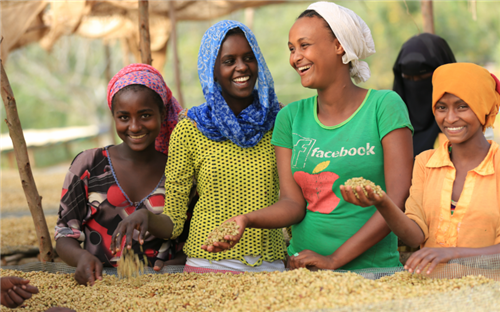
According to ILAB, the project will work with multiple agencies of the Ethiopian government to directly assist 10 towns in the Gedeo and Oromia coffee-producing regions of southern Ethiopia. The initiative aims to transform the community norms, social traditions, and practices that sustain gender inequality in the coffee industry, benefiting 10,300 people.
Gender Inequality in Ethiopian Coffee Regions
According to statistics from the Ethiopian National Statistics Office, compared with Ethiopia's other coffee-producing regions, Gedeo and Oromia show severe labor and income inequality for women - and for child labor. Among more than 10,000 people surveyed, over 7,000 experience such inequality.
Child Labor in Ethiopian Coffee Farms
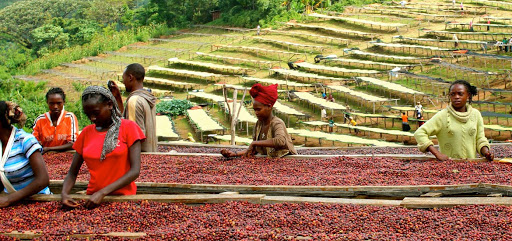
On Ethiopia's smallholder coffee farms, employing child labor has become commonplace. Regional poverty and a lack of educational resources mean children naturally become part of the family's workload. Although children are less productive than adults, the cost of employing them can be very low.
Nearly every coffee-producing country faces serious child-labor problems. While the situation in Ethiopia is far from rosy, it has not reached the level that Verite - an international non-profit focused on auditing, training, and management-system building for corporate social responsibility - has flagged as "maintaining coffee production through forced labor and excessive child labor." ILAB has likewise not identified Ethiopia as a place with excessive child labor in its coffee industry, but this project follows up on numerous reports of discrepancies in child-labor employment records.
Gender Disparities in Labor Statistics
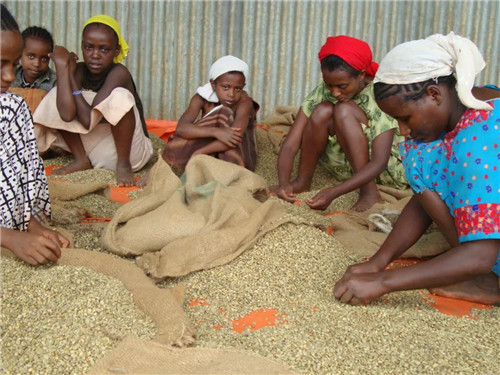
A recent report from the "Increasing Labor Employment in Low-Income Countries" project, funded by the UK Department for International Development (UKAID), pointed out that when Ethiopia's coffee labor force is surveyed and recorded by men, the actual proportion of women and child labor in the workforce can be undercounted by 7%-10%.
FrontStreet Coffee Recommendation
Ethiopia is the birthplace of coffee, home to countless native varieties and a patchwork of smallholder plots - much of it grown under the garden-cultivation model where each farming family delivers its harvest to a village processing station and sells under the station's name. That is why so many remarkable cooperative coffees come from here, such as FrontStreet Coffee's Guodingding, Worka, and Konga cooperatives.
The FrontStreet Ethiopia Yirgacheffe Guodingding Cooperative is a great place to start: located in the Worka area at the southeastern tip of Yirgacheffe, this once-independent collective of about 300 farming families was established in 2012, and because its cherries are pulped before drying, the coffee's own character shines through - citrus, lemon, and elegant white florals in a bright, delicate cup. The FrontStreet Red Cherry natural takes a different route: cherries are sun-dried whole for about two weeks until moisture drops to 12%, with defective beans removed at every stage, yielding peach, cocoa, honey, and lemon notes.
For a deeper natural experience, the FrontStreet Ethiopia Huakui from the Hambella area of Guji dries mature cherries on raised beds for 21 days, turned constantly and hand-sorted every three to five days. Roasted medium-light, it offers pale fermented wine aromas, florals, citrus, and mango with honeyed sweetness, a cocoa-spice undertone, and a thick, persistent finish.
Important Notice :
FrontStreet Coffee is a long-established specialty coffee roaster in Guangzhou China, selling freshly roasted beans from its own farm in Yunnan as well as dozens of carefully selected single-origin beans from around the world for both pour-over and espresso. The products deliver consistently excellent quality and great value, with shipping within 24 hours. Guangzhou's FrontStreet Coffee shop is recommended by many coffee lovers, and the beans are now available online at the Tmall 。
FrontStreet Coffee has moved to a new address:
FrontStreet Coffee Address: 315,Donghua East Road,GuangZhou
Tel:020 38364473
 Scan and follow the En Gafei WeChat official account. Please indicate that the reprint comes from "En Gafei".