Kenya Coffee Production Quality Decline? Government Plans to Revitalize Coffee Growers Through Coffee Futures
Climate Change and Governance Problems Weigh on Kenyan Coffee
The combined effect of climate change and serious governance problems inside Kenya's coffee cooperatives is dragging on the country's coffee industry, and COVID-19 has weakened its export performance further.
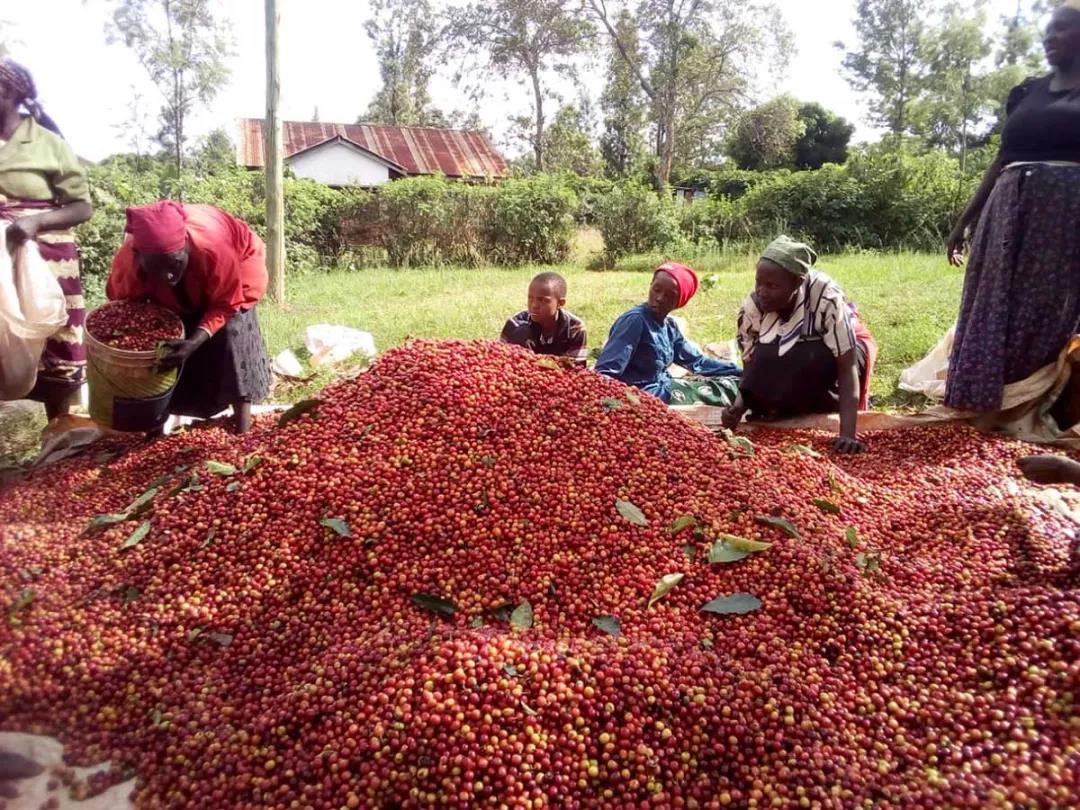
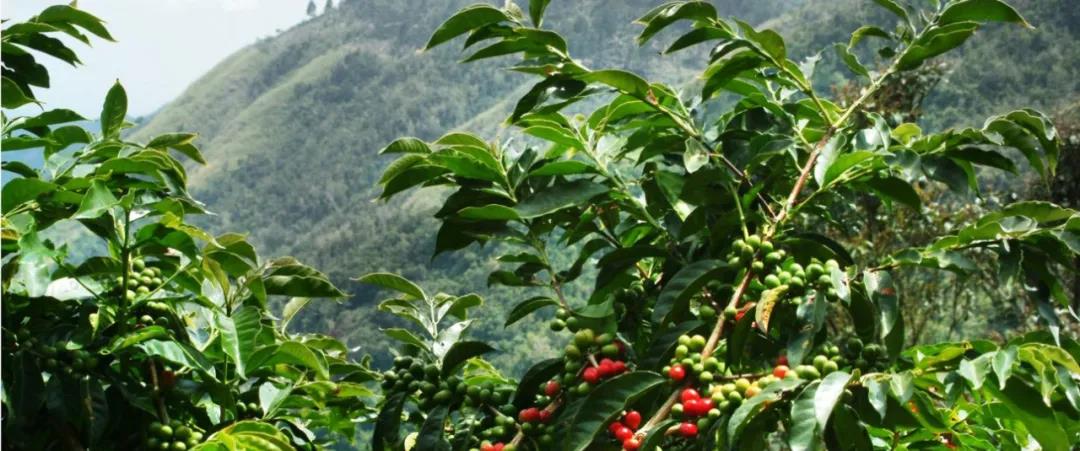
According to data from the United States Department of Agriculture (USDA), intermittent rainfall during the main 2020 harvest season, which runs from September to December, meant that flowering was poor across roughly 178 million coffee trees in Kenya's 29 coffee-growing regions. The estimated yield of 650,000 bags, at 60 kg per bag, is likely to leave production flat. Kenya accounts for nearly 1% of global coffee output, and the USDA expects the country's total coffee exports for the 2020/21 sales year to fall to 620,000 bags of 60 kg each, below the 815,000 bags exported in the previous quarter.
Government Moves to Revive the Industry
To revive domestic coffee cultivation and make sure high-quality production reaches the market as a high-quality commodity, the Kenyan government is pursuing several initiatives, among them securing funding for growers and renovating coffee processing facilities in some of the 29 growing regions. Kenya is providing nearly $11.6 million for a two-year coffee industry reform plan, part of a World Bank-initiated coffee revitalization program. The financing is expected to be secured by the end of 2020 to buy modern equipment for the processing plants, provide funding and install new processing lines so that export markets receive consistent quality.
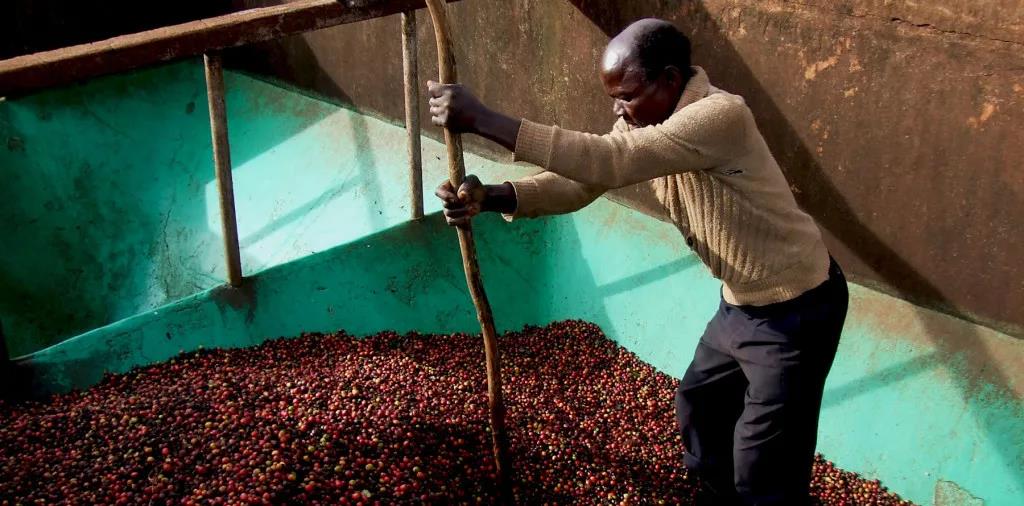
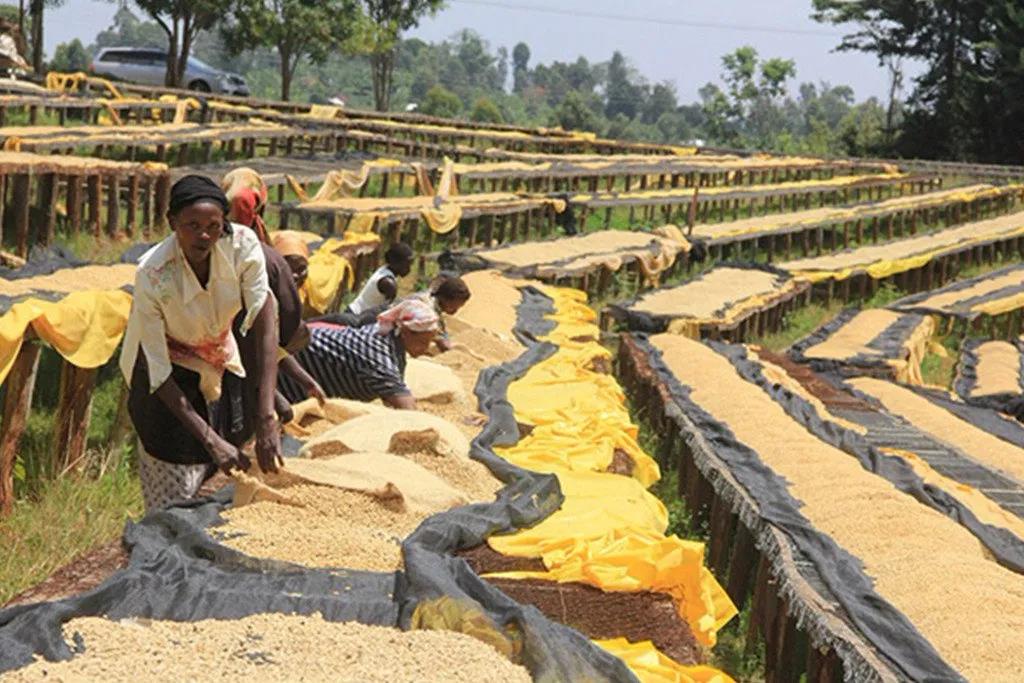
Kenyan Agriculture Minister Peter Munya said: "Once the World Bank provides funding, we will install fermentation tanks, drying beds, automated coffee fruit weight sorters and modern processing lines, thereby improving the efficiency of Kenya's coffee processing plants." The program will be implemented by the Kenya National Agricultural and Rural Inclusive Growth Project and the Kenya Climate Smart Agriculture Project. According to a briefing from Kenya's Ministry of Agriculture, Livestock and Fisheries, the project will involve "increasing coffee production, improving cooperative efficiency, and supporting research, development and technology dissemination."
Phased Rollout and the Coffee Futures Program
In the first phase of the revitalization plan, regions including Kiambu, Machakos, Murang'a, Nyeri, Kirinyaga, Embu, Tharaka Nithi and Meru, which together account for 70% of national production, will implement the program first. Growers there will raise productivity to earn better returns, which gives them an incentive to farm well. Peter Munya also said: "In the second phase, more coffee-growing regions will benefit from the project, which will focus on tangible outcomes for coffee farmers, thereby increasing grower income."
Other coffee-producing regions in Kenya are meanwhile running a coffee futures program, through which a $26 million "Coffee Advance Revolving Fund" has been established to provide working capital to farmers affiliated with the Kenya Growers Cooperative Union. After receiving working capital, farmers are required to supply high-quality coffee to the cooperatives as collateral.
The fund will be financed through parliamentary appropriations, management fees from recovered funds, grants and donations, and it gives smallholders access to capital equivalent to 40% of the current average sales price at the Nairobi Coffee Exchange. The coffee futures program is an improvement on Kenya's 2017/2018 cash delivery pilot, which failed because of low farm yields, large price fluctuations and the lack of a strict mechanism to ensure full recovery of the funds.
Quality Disputes and Market Challenges
According to media reports, local processing plants have been claiming that "the quality of the coffee farmers deliver is poor," a narrative that contributes to stagnant or declining production and also reduces growers' income. Quality inspections of coffee fruit at the plants by agricultural departments confirmed that most of the fruit on site was mainly AA and AB grade, and the departments said education and penalties had been applied to the plant owners. For reference, Kenyan AA grade beans measure 7.2mm, about 18/64 inches, and typically command a higher price than other grades, with AB grade at 6.8mm, or 17/64 inches, next in line.
The Kenya National Bureau of Statistics reported: "Kenya's average coffee revenue in 2019 fell by 31.5%, from 14.8 billion shillings to 10.2 billion shillings, mainly because of a global coffee surplus, especially in Brazil, which pushed average prices down." Kenyan coffee is now sold by approximately 46 distributors through the Nairobi Coffee Exchange or through direct sales channels, although sector reports indicate there is no real competition between the two routes, largely because prices end up much the same whether bought privately or through a distributor.
Production Trends and Growth
Beyond pricing, Kenya's smallholder coffee area increased slightly by 0.5%, from 115.6 million hectares in 2017/18 to 116.2 million hectares in 2019, after the Agriculture and Food Authority (AFA) Coffee Directorate and county governments bought and distributed free seedlings in various regions.
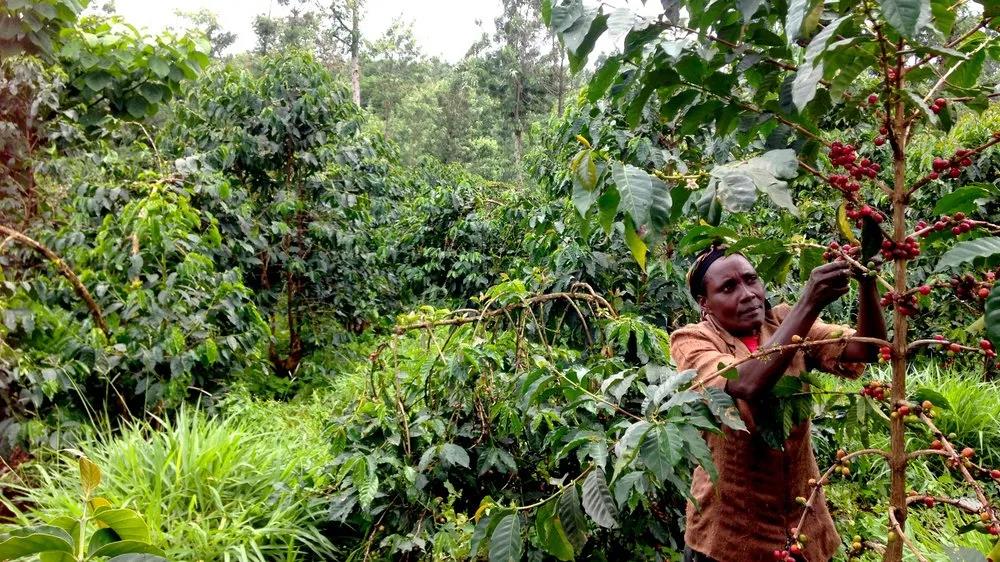
Large producers and estates, meanwhile, reduced their planted area from 26.1 million hectares in 2018/2019 to 25.4 million hectares in 2019, yet coffee production surged more than 28% to reach 14.1 million tons. In 2019, output in growing regions and cooperatives rose by 27.5% and 0.9% respectively, equivalent to 543.2 kg and 347.4 kg per hectare.
In the first half of 2020, the Kenyan government released a report showing that the country's total coffee production had risen from 41.4 million tons in 2017/18 to 45 million tons in 2018/19, a growth rate of 8.7%.
What the Grading System Actually Measures
Kenyan coffee is graded by bean size, and the numbers above explain why AA and AB carry different prices. After milling, the beans pass over a series of screens, and the largest beans are separated out. AA, at 7.2mm or roughly 18/64 inches, sits at the top of the scale, with AB at 6.8mm, or 17/64 inches, just below. In Kenya the market pays a premium for size, on the reasoning that larger beans come from better-developed cherries and tend to survive roasting more evenly. Whether or not the correlation holds in every case, the grading is useful because it is objective and verifiable, and it is why the plants' claim that farmers were delivering poor fruit did not survive inspection: most of the fruit on site was AA and AB, which is exactly what a well-run cooperative is supposed to be producing.
Why Traceability Is Now the Central Issue
The dispute, the revolving fund and the grading system all point in the same direction. Kenyan coffee has one of the most elaborate auction structures in the world, and the value that growers capture depends on whether their coffee can be identified as coming from a specific cooperative, washing station or estate. Both the fund's collateral requirement and the phased reform program are attempts to make that identification reliable, so that quality can be rewarded rather than blended away. It is the same principle that has reshaped specialty coffee everywhere: traceability is what turns a commodity into a product with a name and a price attached.
FrontStreet Coffee Recommendation
Kenya's grading system rewards precisely the qualities that make a coffee worth seeking out: well-developed cherries, careful processing and a cup that can be traced back to a specific place. FrontStreet Coffee's entry-level selection is organized around the same premise, with each coffee labeled by its origin, variety and process so that what you taste can be explained. Ethiopia is the natural place to begin. FrontStreet Coffee Natural Guifei comes from the Guji zone and leads with tropical fruit on a low-bitterness body, while FrontStreet Coffee Gediding Cooperative offers a washed Yirgacheffe profile of jasmine, lemon acidity and berry.
Brazil and Indonesia cover the other side of the spectrum. FrontStreet Coffee Brazil Cerrado is a red bourbon roasted medium for cream, peanut and cocoa with almost no acidity, and FrontStreet Coffee Queen Estate, a yellow bourbon from Mogiana, adds sugarcane sweetness with butter, sunflower seed, macadamia and almond. PWN Golden Mandheling is wet-hulled, the process invented for Indonesia's wet climate in which the parchment is stripped while the bean is still half wet; it is fuller and smoother than most coffees, with herbs and spice, and three rounds of hand sorting plus a machine sort drive the defect rate to a minimum, leaving a cleaner cup with clearer wood and caramel. Costa Rica Blackberry brings honey-processed raisin and blueberry sweetness over osmanthus and rose. Yunnan, finally, offers FrontStreet Coffee 2013 Typica, grown at 1300m on our own estate and roasted medium for hazelnut, apricot, black tea, caramel and ripe plum, alongside the washed Yunnan small-grain daily bean with its traditional nut and chocolate character. Traceable, verifiable, and priced to drink every day.
Important Notice :
FrontStreet Coffee is a long-established specialty coffee roaster in Guangzhou China, selling freshly roasted beans from its own farm in Yunnan as well as dozens of carefully selected single-origin beans from around the world for both pour-over and espresso. The products deliver consistently excellent quality and great value, with shipping within 24 hours. Guangzhou's FrontStreet Coffee shop is recommended by many coffee lovers, and the beans are now available online at the Tmall 。
FrontStreet Coffee has moved to a new address:
FrontStreet Coffee Address: 315,Donghua East Road,GuangZhou
Tel:020 38364473
 Scan and follow the En Gafei WeChat official account. Please indicate that the reprint comes from "En Gafei".