Ice Pupil Dripper Review: Which is Better - Ice Pupil or V60 Dripper? What Coffee Beans Are Suitable for the Ice Pupil Dripper?
Introduction
The dripper has always been the most important vessel for pour-over coffee, and different designs give different experiences, which is why so many distinctive drippers exist. In this piece, let's look at what the Ice Pupil dripper brings to the cup.
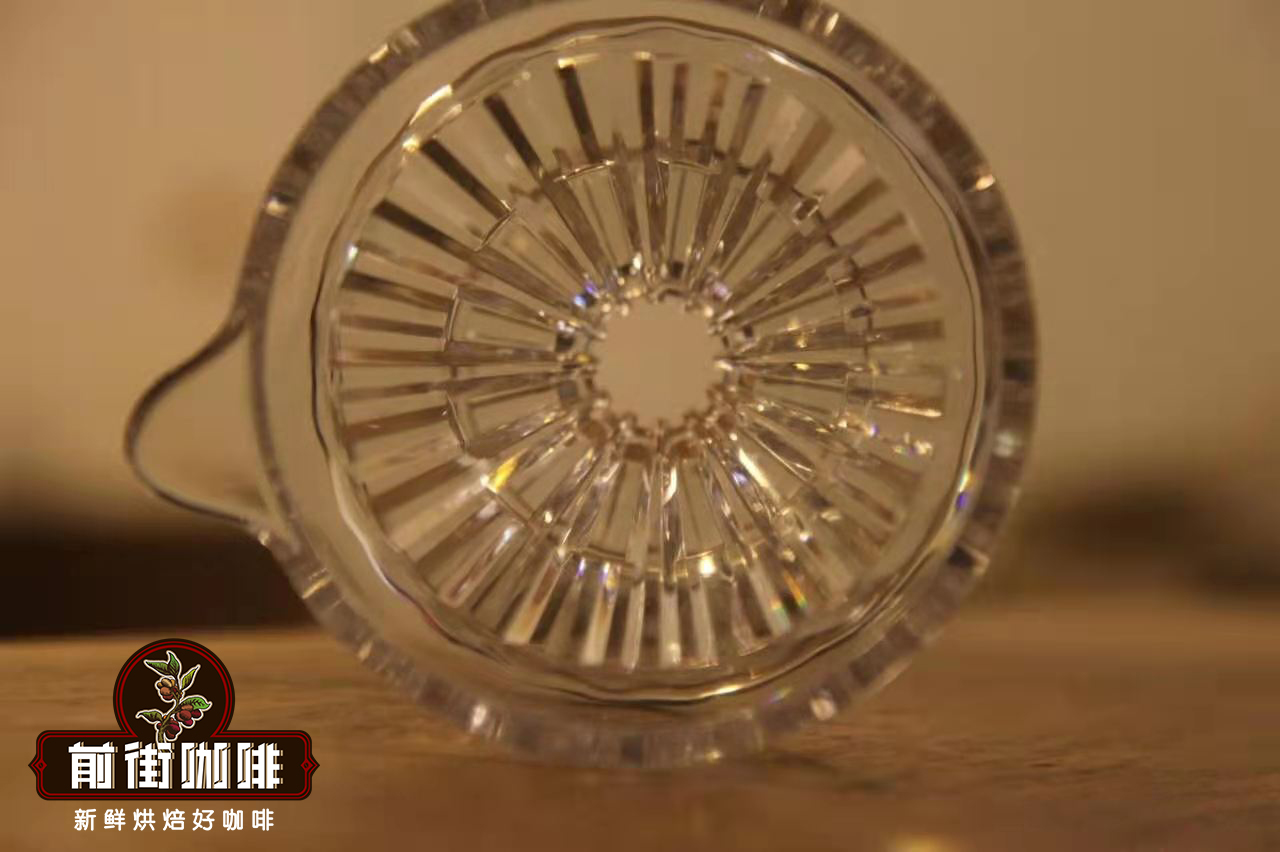
Ice Pupil Dripper
The Ice Pupil and the V60 both belong to the category of conical single-hole drippers, and their structure is composed of three parts. Viewed from the side, the height divides into three equal sections. The top section has no rib structure at all, just a smooth wall similar to the Kono dripper. The middle and lower sections no longer use raised ribs to support the filter paper, relying instead on large concave structures. With the paper in place, the pattern looks like 12 long ribs and 12 short ribs (in fact these "ribs" lie on the same plane as the upper section), running in straight lines downward. The short ribs sit in the middle layer, while the long ribs span the middle and lower layers.

Brewing Test
As before, we invited the industry benchmark for conical drippers, the Hario V60, for comparison. The coffee chosen for the test is the Bach beans from FrontStreet Coffee's Musician Series.
On parameters, FrontStreet Coffee used 15g of coffee grounds, a brew ratio of 1:15, a fine grind with 80% pass-through rate on a 0.85mm sieve, and water at 91°C.

The brewing method followed FrontStreet Coffee's three-stage approach: first, pour 30g of water for a 30-second bloom. Second, pour in concentric circles to 125g and wait until the coffee level drops to the halfway point before starting the third stage, continuing in concentric circles to 225g, then ending extraction once all the coffee liquid has flowed into the lower pot.
Feedback on the two drippers during brewing: in terms of filter paper adhesion, the Ice Pupil holds the paper better than the V60. Because its wall lies on a single plane, with no raised ribs and only concave patterns, the paper clings more easily than it does to the V60, which is a genuine comfort to anyone with perfectionist tendencies.

In terms of water flow rate, the Ice Pupil is faster. During the initial pour, the drainage speeds of the Ice Pupil and V60 were comparable, with the final stage of pouring happening almost simultaneously (1 minute 10 seconds). At the end of extraction, though, the Ice Pupil finished in 1 minute 45 seconds while the V60 took 1 minute 57 seconds.
Flavor Comparison
Ice Pupil: a clear fermented wine aroma, sweet berries and raisins, with a refreshing, smooth texture.
V60: a rich fermented wine aroma, berry-like acidity and raisin sweetness, with a hint of tea in the finish. The aftertaste brings orange fragrance and a subtle sucrose sweetness.

From the two comparisons, the Ice Pupil's advantage lies in highlighting a coffee's sweetness and cleanliness, with a texture that tends to be fuller. The V60 better enriches a coffee's layered complexity, giving a sense of fullness.
Because the upper part of the Ice Pupil seals completely against the filter paper, pouring too much water too quickly, or using water that is too hot and submerging the flow channel, leaves no ventilation space and slows the rate at which the water level drops. That can create an immersion effect similar to the KONO dripper, which avoids under-extraction. At the same time, the grooves in the middle and lower layers guide water down quickly and prevent blockages. As a result, coffee brewed with the Ice Pupil delivers a good mouthfeel.
FrontStreet Coffee Recommendation
Choosing between the Ice Pupil and the V60 comes down to what you want from the cup, and the same is true of choosing beans for a conical dripper. The V60 was designed by Hario, a Tokyo glassmaker founded in 1921 and originally known for heat-resistant scientific glassware; the dripper was redesigned in 2004 around its 60° cone and single large hole, a shape that lets the brewer control the flow and pull out aroma and lively acidity. FrontStreet Coffee favors the resin version for its heat insulation and consistent molding, and any of the beans below will show the difference between the two drippers clearly.
FrontStreet Coffee Yirgacheffe Gedeb Cooperative is the classic Yirgacheffe profile, with citrus, berry and floral notes and a green-tea sweetness, and is easy to like for anyone new to pour-over. FrontStreet Coffee Ethiopia Flower Queen brings heavy tropical fruit, with strawberry, passion fruit and jackfruit aromas and very little bitterness, its juice-like body often described as the least coffee-like coffee. FrontStreet Coffee Strawberry Candy, a blend of Costa Rica honey-processed coffee and Panama Geisha, shows rose, orange, grape and candied strawberry, while FrontStreet Coffee Mozart's raisin honey processing gives clear grape and raisin character. All four are floral, fruit-forward coffees that a conical dripper handles especially well.
For the test recipe above, FrontStreet Coffee used 15g of coffee at a 1:15 ratio, a fine grind with 80% passing a 0.85mm sieve, water at 91°C, and a three-stage pour: 30g for a 30-second bloom, then to 125g, and a final pour to 225g once the bed had drained halfway. If you prefer a fuller texture and more sweetness, the Ice Pupil's tighter seal and faster finish suit that goal; if you want more layered complexity, the V60's slower drawdown brings it out.
Important Notice :
FrontStreet Coffee is a long-established specialty coffee roaster in Guangzhou China, selling freshly roasted beans from its own farm in Yunnan as well as dozens of carefully selected single-origin beans from around the world for both pour-over and espresso. The products deliver consistently excellent quality and great value, with shipping within 24 hours. Guangzhou's FrontStreet Coffee shop is recommended by many coffee lovers, and the beans are now available online at the Tmall 。
FrontStreet Coffee has moved to a new address:
FrontStreet Coffee Address: 315,Donghua East Road,GuangZhou
Tel:020 38364473
 Scan and follow the En Gafei WeChat official account. Please indicate that the reprint comes from "En Gafei".