Chocolate Flavor Single-Origin Coffee Bean Recommendation: How to Brew Honduran Pacas Coffee from San Vicente Processing Plant
Honduras Growing Region Information
NEWS!
According to local Honduran traders, the COVID-19 pandemic is creating serious problems for the country's ongoing coffee harvest, owing to domestic quarantine restrictions and the inability of foreign labor to enter. Based on previous harvest seasons in Honduras, 70,000 workers are needed to bring in the crop.

In Honduras' El Paraíso region the harvest began in mid-December with only 40,000 local workers available. Once every coffee-producing region enters its harvest season, if the labor shortage cannot be resolved in time, Honduras' 2021 coffee production will be severely affected.
Think of black cherries and dark chocolate and you picture a Black Forest cake. What made FrontStreet Coffee's barista imagine exactly that? A closer look explains it all: they were cupping Pacas coffee beans from the San Vicente processing plant in Honduras.
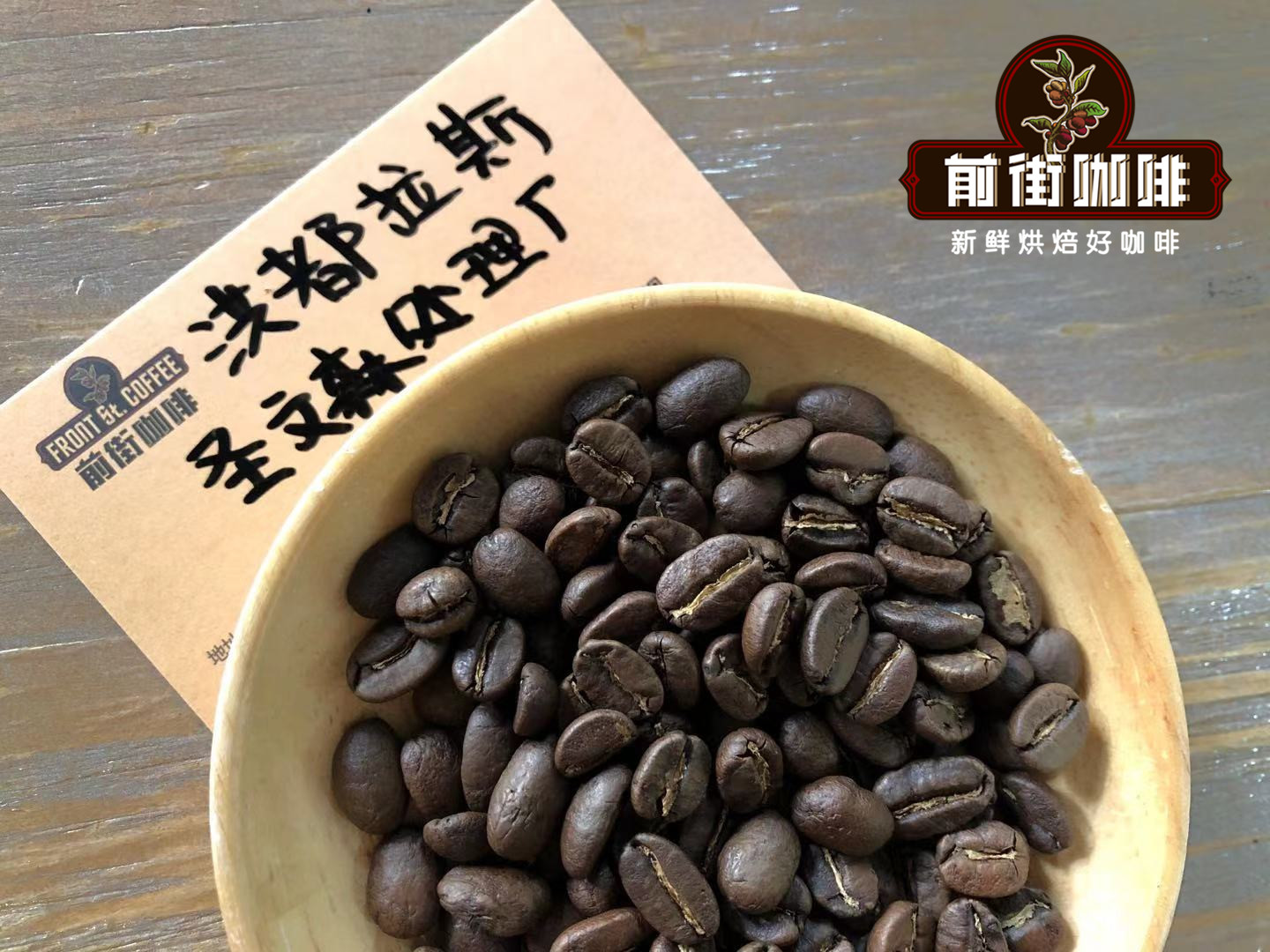
FrontStreet Coffee - Honduras San Vicente Edgardo Tinoco Smallholder Coffee
Region: Honduras, Copán Department
Processing Plant: San Vicente Processing Plant
Processing Method: Washed
Altitude: 1600-1900m
Variety: Pacas
Grade: SHG
The Copán Coffee Region
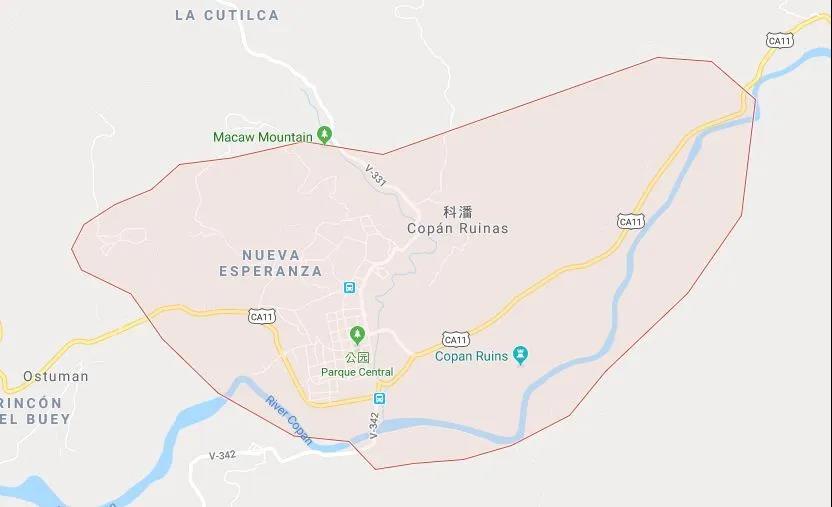
Copán Department sits in western Honduras, among the Copán, Ocotepeque, and Lempira regions, and takes its name from the city of Copán. It borders Guatemala, which again underlines how much the true origin of a coffee matters. Coffee farming is the region's most important socioeconomic engine, and it produces Honduras' finest quality coffee. The harvest runs from November to March each year. Through cupping coffees from Copán, FrontStreet Coffee found that honey and caramel sweetness woven into chocolate notes is a defining trait of beans from this region.
The San Vicente Processing Plant
The San Vicente processing plant is located in the town of Peña Blanca in the Santa Barbara region of western Honduras. Beans produced here have consistently been top performers in Honduras' Cup of Excellence (COE) competitions. This family-run operation is well known locally for helping farmers improve cultivation techniques and modify production equipment through specialized projects. The team works hard to build close relationships with producers and tightly controls the quality of every batch through cupping.
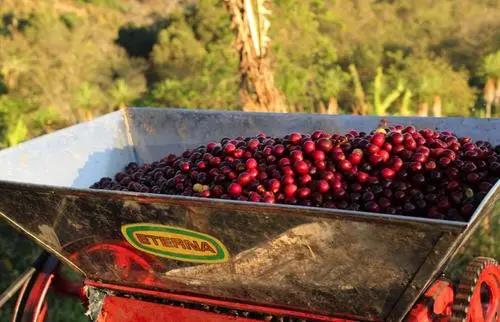
At the same time, the San Vicente plant buys coffee cherries from smallholders in surrounding towns such as El Cielito, Las Flores, and El Cedral. Because the quantities are so small, these lots are hard to separate into individual micro-batches. Even so, coffee from these areas has consistently impressed with high sweetness and fruity notes, so it is gathered together for green bean processing.
The Edgardo Tinoco Smallholders
The Pacas beans FrontStreet Coffee acquired come from the small village of Edgardo Tinoco near the San Vicente processing plant. Farmers in the village work tiny plots, which makes it impossible to separate and process their green beans for individual micro-lot sales. Instead they sell collectively to the San Vicente plant, and the coffee is later sold under the village name.
The Pacas Variety
Pacas is a natural mutation of Bourbon and looks somewhat like Brazil's Catuai. It also carries a single-gene mutation that keeps the trees small (dwarfism), which is its main advantage. A more compact tree can potentially yield more and can be planted closer together, raising total production.
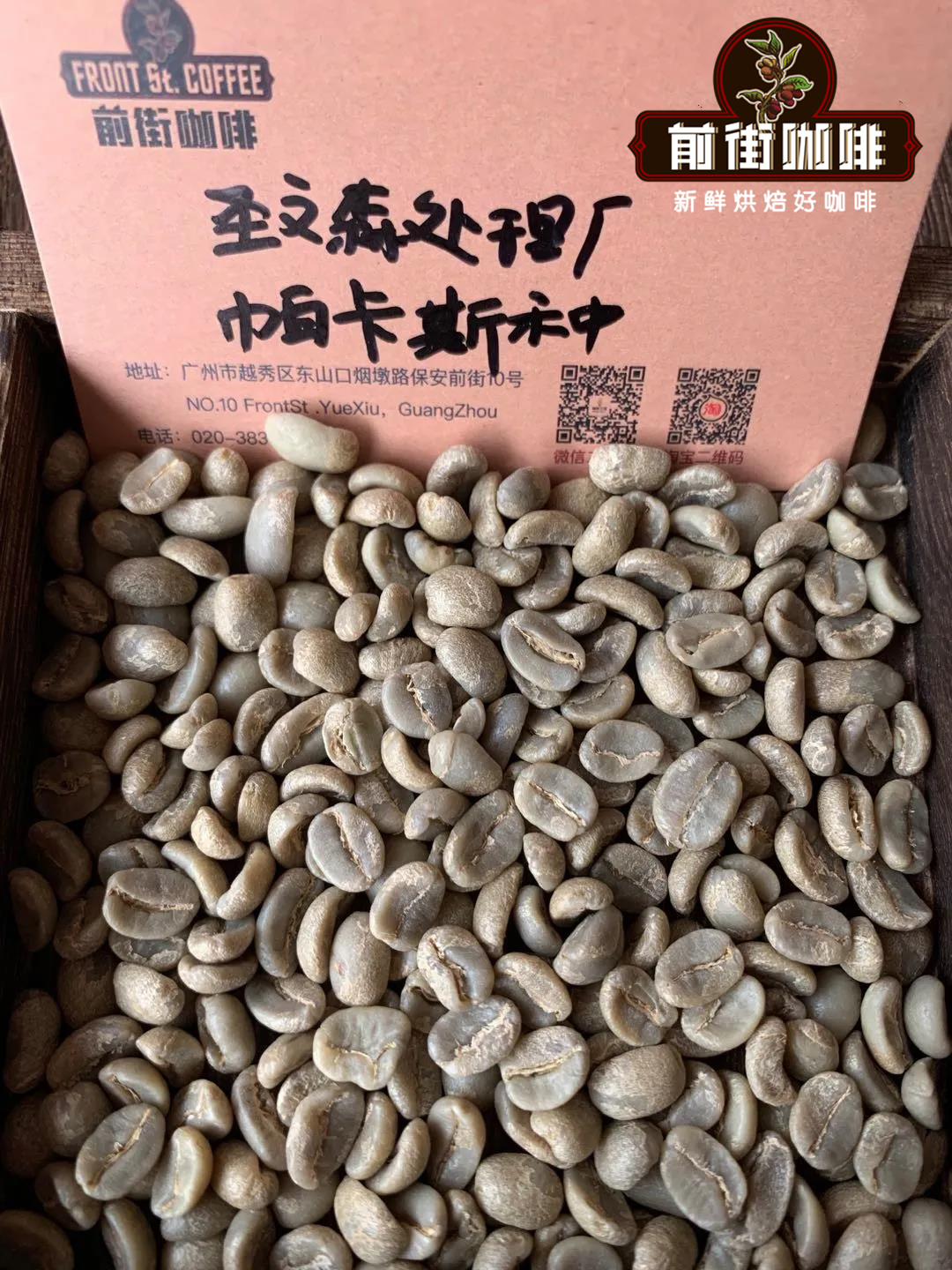
FrontStreet Coffee noticed that Pacas and Catuai look very much alike, sharing the same rounded, elongated shape. Seen from the side, Pacas has a slightly thinner overall profile than Bourbon.
How the Coffee Is Processed
Selected cherries go into a depulper, where the skin and pulp are removed. The green beans, still carrying pulp and mucilage, are moved into wooden tanks for washed fermentation lasting 18 to 24 hours. Once fermentation finishes, the beans are washed in clean, running water, and the pulp and mucilage come away through the friction between beans. After washing, the beans are dried on raised drying beds at the San Vicente plant until moisture drops to about 12%, and finally the parchment is removed.
FrontStreet Coffee Roasting Profile
Charge at a roaster temperature of 175°C, heat 130, damper opened to 3; the turnaround point came at 1'32", and when the roaster temperature reached 99.5°C the heat was left unchanged; at 140°C the damper was adjusted to 4. When the temperature reached 153.6°C the heat was set to 100, the bean surface turned yellow, the grassy smell disappeared completely, and the roast entered the dehydration phase.
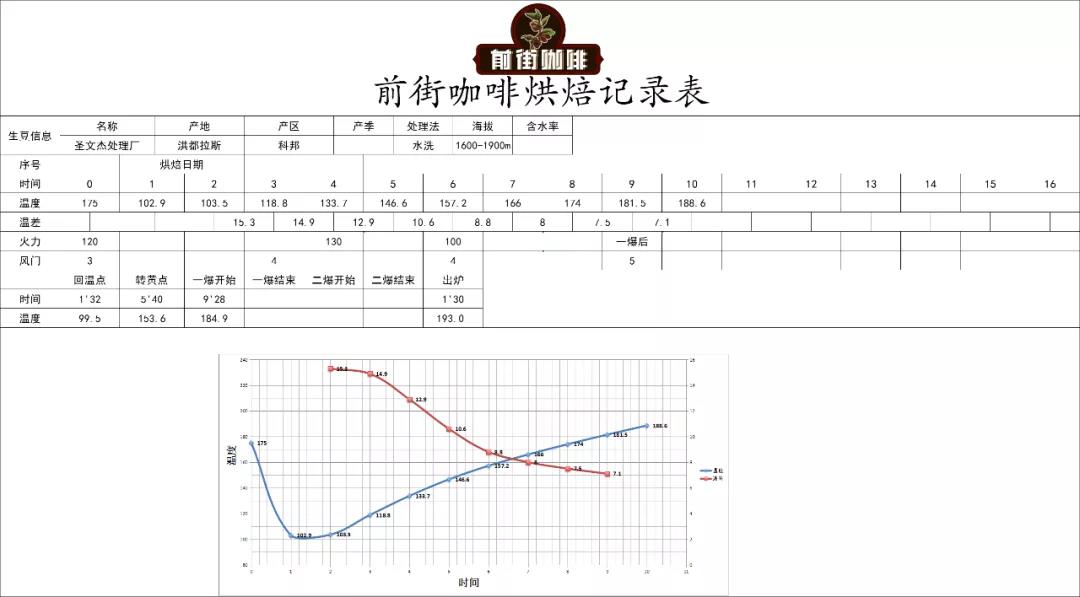
At 8'00", ugly wrinkles and black spots appeared on the bean surface, and the toast aroma clearly shifted toward coffee aroma, which can be defined as the prelude to first crack. From there, listen carefully for the sound of first crack, which began at 9'28". After first crack the batch developed for 1'38", and the beans were dropped at 193°C.
FrontStreet Coffee Cupping Notes
Dry Aroma: Almond, dark chocolate cake
Wet Aroma: Green apple
Flavor: Black cherry, green grape, dark chocolate cake, almond, caramel
FrontStreet Coffee Brewing Experience
Cupping showed FrontStreet Coffee that this coffee is richly layered. To bring out those layers, FrontStreet Coffee brews it in a V60 dripper to lift the complexity and uses 91°C water.
Dose: 15g
Coffee-to-water ratio: 1:15
Grind size: Medium-fine grind (78% retention on #20 sieve)

FrontStreet Coffee's step-by-step extraction method: first, use 30g of water to fully saturate the coffee bed into a "hamburger" shape and bloom for 30 seconds; for the second pour, at the 1-minute mark, add water to 125g, then stop and wait for the water level to drop to two-thirds of the coffee bed before the third pour; for the third pour, at 1'45", add water to 225g and wait for the coffee to finish dripping. Total extraction time is 2'02". When extraction is complete, gently swirl the server to mix the coffee well before tasting.
Brewing Flavor: At high temperature, the entry shows a slight plum astringency, the sweet-and-sour of black cherry, and an almond aroma. As it cools, the cup reveals the sweet-and-sour of black cherry juice, the aroma of dark chocolate cake, the acidity of green grapes, and a caramel-almond aftertaste.
FrontStreet Coffee Recommendation
The washed processing behind this Honduran Pacas is what keeps the cup so clean, and if that style appeals to you, FrontStreet Yirgacheffe Gudingding Cooperative is a fine next step. This smallholder team from Gudingding village applies a traditional washed process that highlights jasmine florals and bright citrus acidity, and a medium-light roast draws out green tea and honey notes. It suits pour-over, cold brew, and espresso alike.
For a livelier, juicier expression of the washed method, try FrontStreet Kenya Cherry Tomato. Kenyan producers are masters of double washing, a repeated washing and soaking routine that pushes fruit character to the limit. Expect flavors of cherry tomato, smoked plum, snow pear, black plum, and yellow sugar, with a sweet-and-sour, juicy mouthfeel that many coffee lovers adore.
Important Notice :
FrontStreet Coffee is a long-established specialty coffee roaster in Guangzhou China, selling freshly roasted beans from its own farm in Yunnan as well as dozens of carefully selected single-origin beans from around the world for both pour-over and espresso. The products deliver consistently excellent quality and great value, with shipping within 24 hours. Guangzhou's FrontStreet Coffee shop is recommended by many coffee lovers, and the beans are now available online at the Tmall 。
FrontStreet Coffee has moved to a new address:
FrontStreet Coffee Address: 315,Donghua East Road,GuangZhou
Tel:020 38364473
 Scan and follow the En Gafei WeChat official account. Please indicate that the reprint comes from "En Gafei".