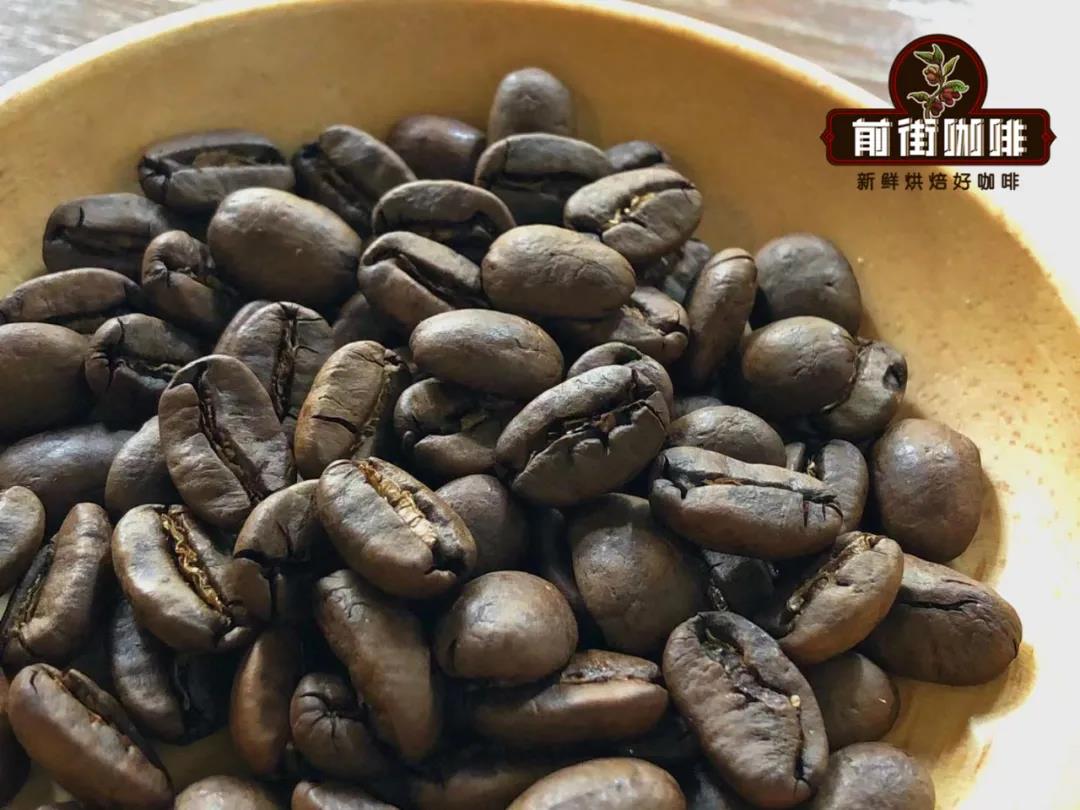
Why Do Coffee Beans Develop Oily Residue? PWN Golden Mandheling Coffee Beans Develop Oil Due to Medium-Dark Roasting
The Gayo Mountain region of Sumatra, Indonesia, recently introduced a triple hand-picked Mandheling coffee bean, also known by merchants as Golden Mandheling. Many friends have asked FrontStreet Coffee how this Golden Mandheling differs from FrontStreet Coffee's own PWN Golden Mandheling. To answer the question, FrontStreet Coffee acquired this Golden Mandheling and ran a series of comparisons against the existing FrontStreet Coffee PWN Golden Mandheling beans.
What is PWN Golden Mandheling?
PWN is the abbreviation for Pwani Coffee Company, a renowned Indonesian green coffee merchant. "Golden Mandheling" was registered as a trademark by PWN early on, making the name exclusive to PWN. The "Gold Top Mandheling" registered by Japanese companies that we see on the market, and the triple-selected Gayo Mountain Mandheling mentioned below, are not truly Golden Mandheling coffee beans, despite having similar flavors.
FrontStreet Coffee PWN Golden Mandheling's Strict Selection Process
FrontStreet Coffee PWN Golden Mandheling coffee beans originate from Lake Tawa in Mount Gayo, northwestern Sumatra. The specification standard for FrontStreet Coffee Golden Mandheling is 18 screen or above, with fewer than 3 defective beans in a 300g green bean sample, placing it in the highest grade, G1. The beans are deep green in color and display uniform flat shapes.
As everyone knows, Indonesian green coffee beans are processed using the wet-hulling method. Because semi-hard, semi-soft moist beans are easily damaged when the parchment and mucilage layers are removed, the beans crack open like goat hooves when injured. These are commonly known as "goat hoof beans." Although goat hoof beans are not defects, PWN believes they don't look appealing, so they are filtered out to give a sense of uniformity.
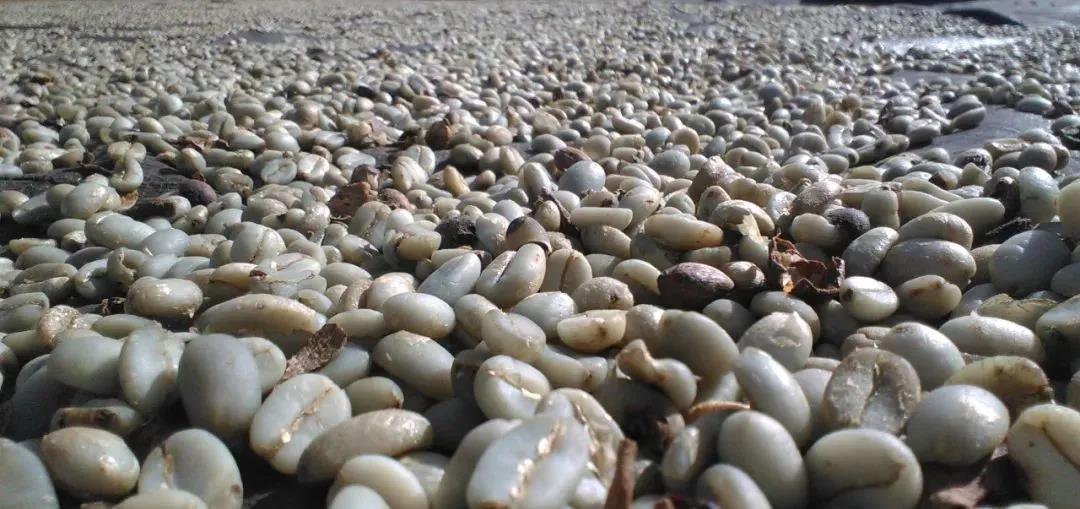
One might think that 18 screen or above, fewer than 3 defective beans in 300g of green coffee, and filtering out goat hoof beans is already very strict, but PWN can go even further. After three rounds of manual selection, the beans are uniformly placed in machines for density and color sorting, finally presenting Mandheling coffee beans with uniform color and consistent bean shape. It is said that when processing the green beans, the Mandheling beans emit a golden luster under sunlight, hence the name Golden Mandheling.
After strict selection, FrontStreet Coffee found that not only is the characteristic earthy impurity of regular Mandheling eliminated, but the cup is clean and transparent while maintaining high body.
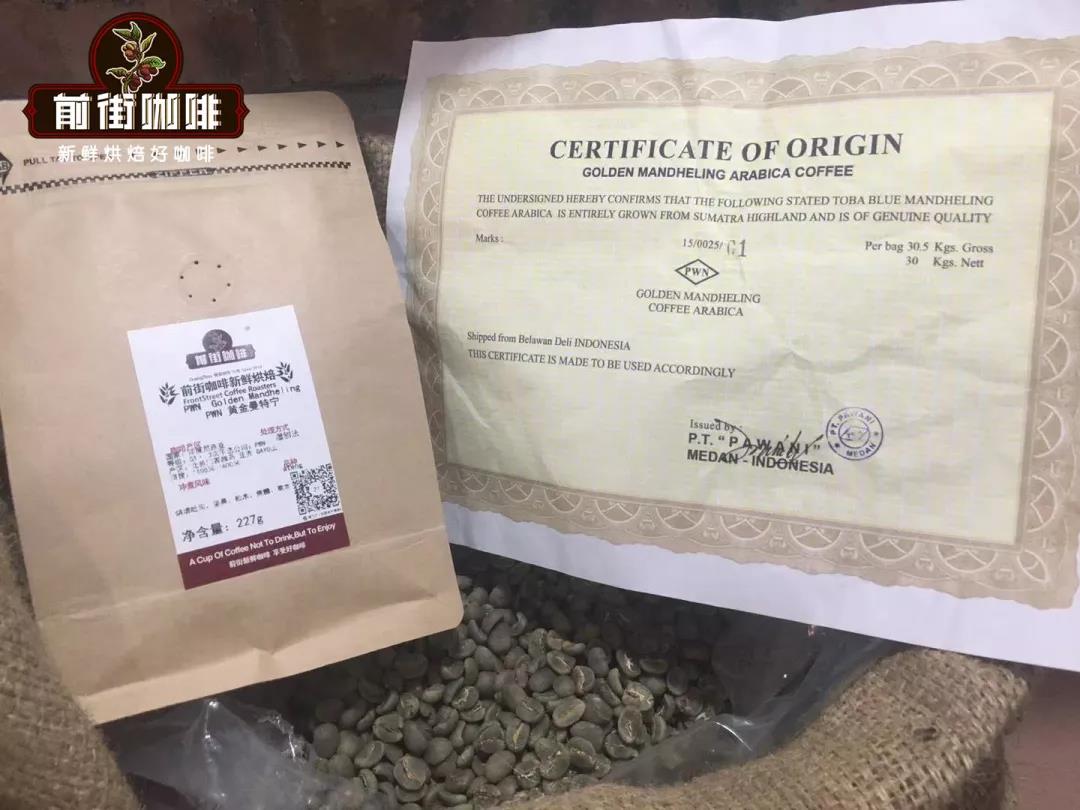
How to Identify Authentic PWN Golden Mandheling?
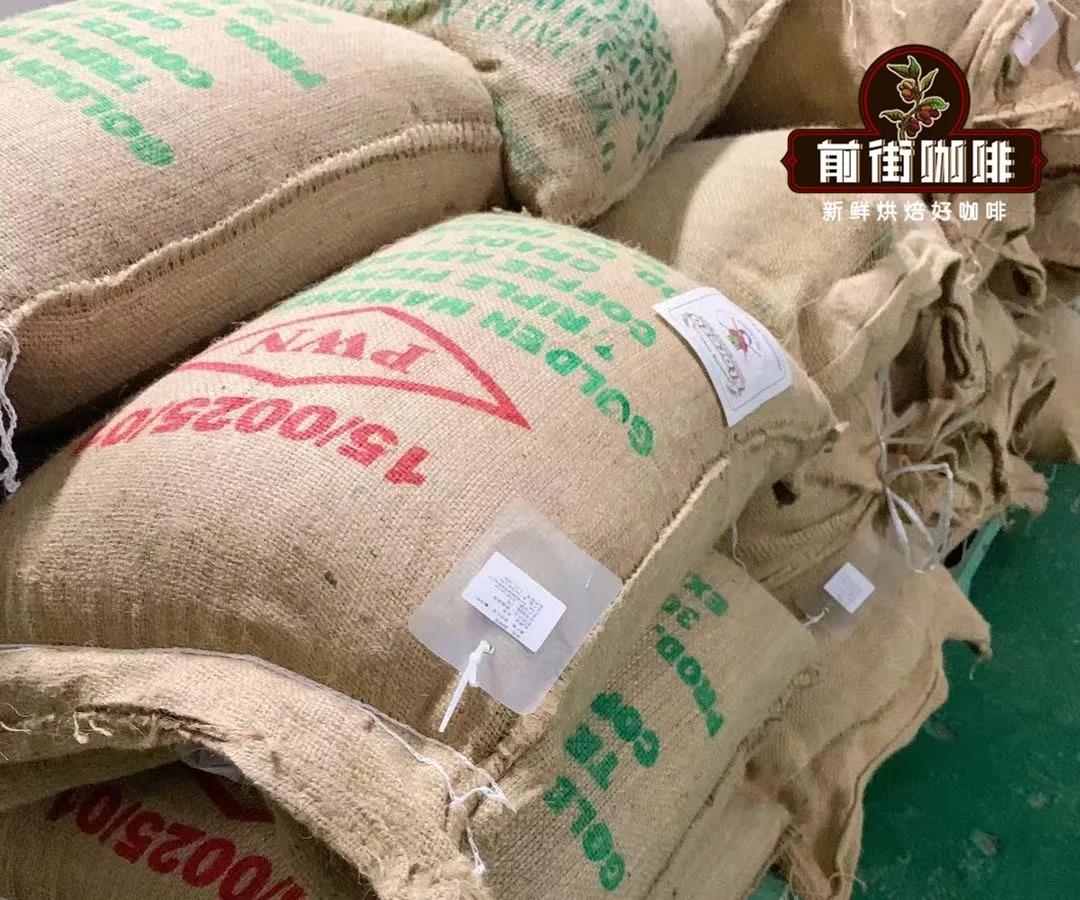
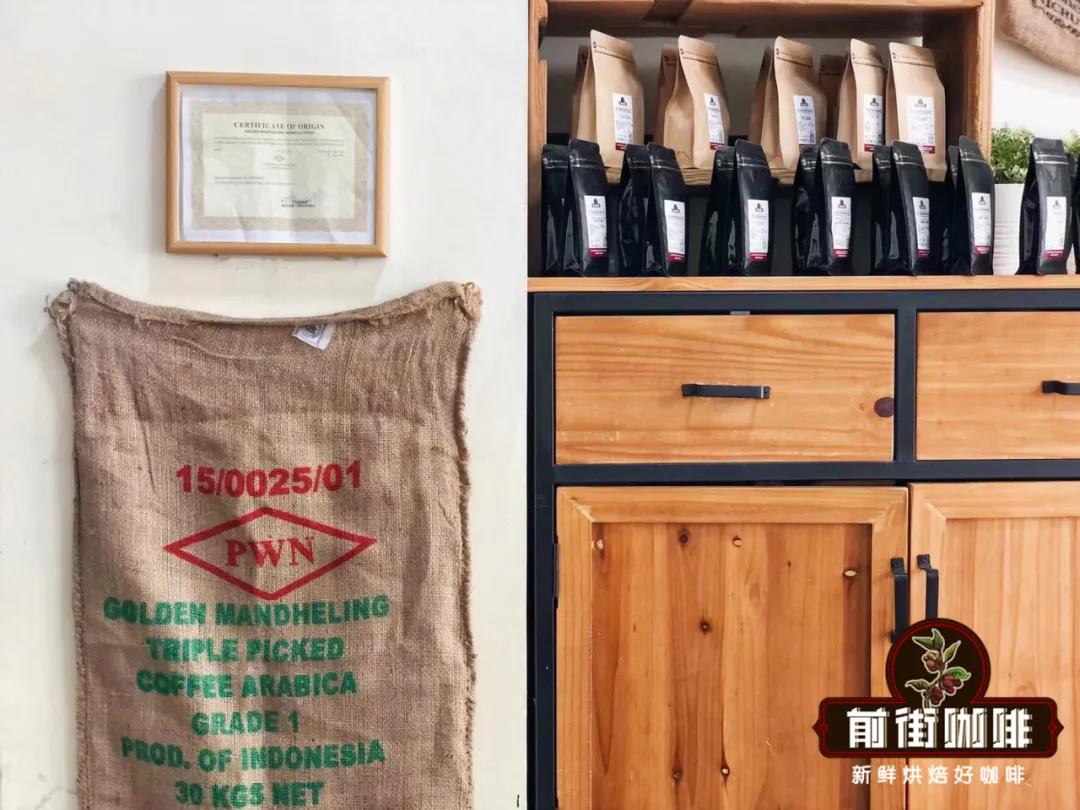
Two key points: the certification provided by PWN and the clear PWN logo on the green bean sacks of PWN Golden Mandheling. If you are unsure whether you have bought authentic PWN Mandheling, don't hesitate to ask the seller for certificates or the coffee sacks.
Why is the Triple Hand-picked Gayo Mandheling Also Called Golden Mandheling?
The triple hand-picked Mandheling that FrontStreet Coffee acquired for comparison comes from the Aceh Gayo Mountain region. Because it has undergone three strict manual selections and achieved the highest G1 grade, it is marketed as Golden Mandheling to attract attention. In fact, through FrontStreet Coffee's cupping comparison, it lacks the cleanliness of FrontStreet Coffee PWN Golden Mandheling, which is also related to the different coffee varieties of the two beans.
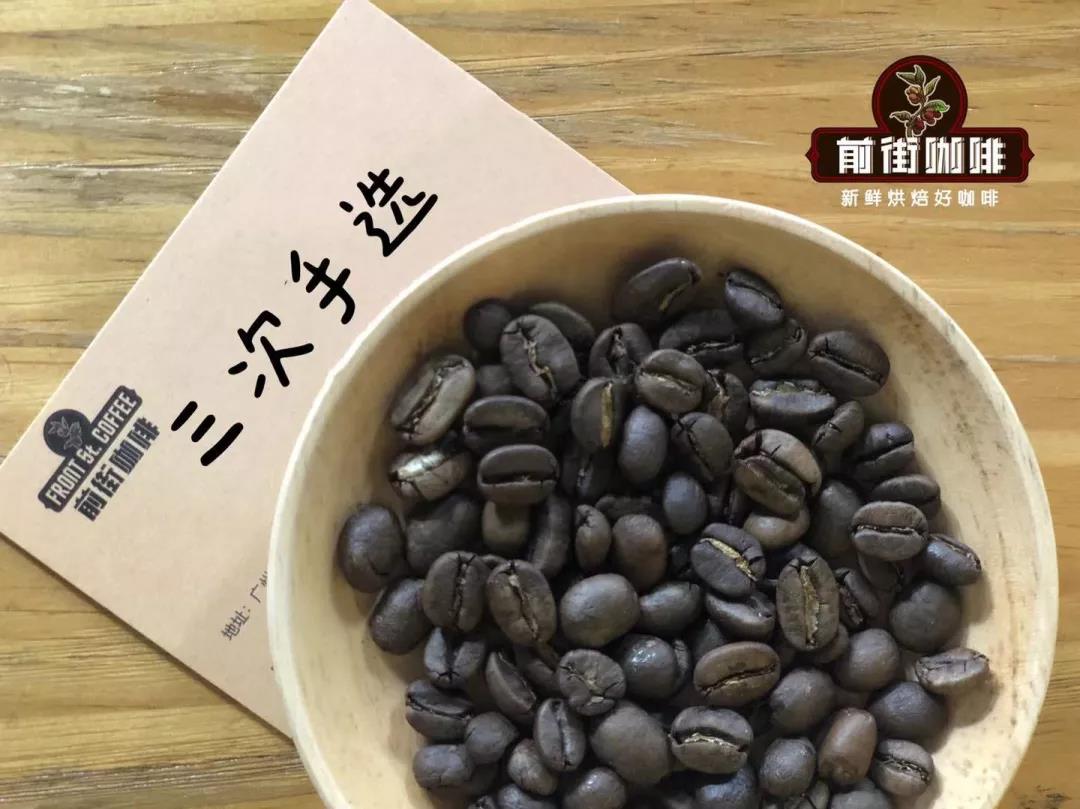
Coffee Varieties of FrontStreet Coffee PWN Golden Mandheling and Triple Hand-picked Mandheling
The triple hand-picked Mandheling uses Indonesia's most common TimTim variety, also known as Timor, a hybrid of Arabica and Robusta. Although its flavor is more refined than Robusta, it retains much of Robusta's rich coffee flavor and naturally lacks cleanliness. FrontStreet Coffee PWN Golden Mandheling, by contrast, uses the Ateng variety, a hybrid of Timor and Arabica, giving it a naturally cleaner flavor than the Timor variety.
How Does FrontStreet Coffee Roast These Two Mandheling Coffee Beans?
FrontStreet Coffee PWN Golden Mandheling roasting record: Yangjia 800N, 480g batch size. Heat to 200°C into the drum, damper set to 3. After 1 minute, adjust heat to 160°C, damper unchanged. Roast to 5'40'', temperature 148°C, bean surface turns yellow, grassy smell completely disappears, dehydration complete. Adjust heat to 140°C, damper to 4. At 9'40", ugly wrinkles and black spots appear on the bean surface, the toast aroma clearly turns to coffee aroma, marking the prelude to first crack. At this point, listen carefully for the sound of first crack. At 9'54'', first crack begins; reduce heat to 60°C, damper set to 5, discharge at 204.5°C.
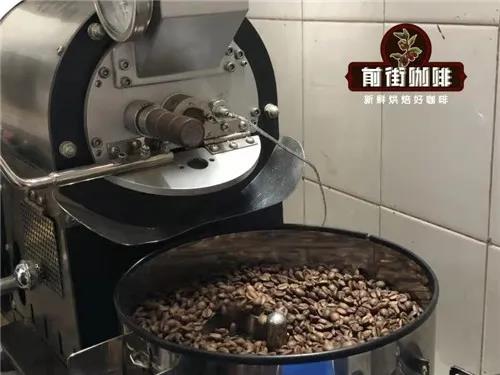
Gayo Mandheling FrontStreet Coffee roasting record: Yangjia 800N, 480g batch size. Heat to 200°C into the drum, damper set to 3. After 1 minute, adjust heat to 160°C, damper unchanged. Roast to 5'18'', temperature 148°C, bean surface turns yellow, grassy smell completely disappears, dehydration complete. Adjust heat to 140°C, damper to 4. At 8'00", ugly wrinkles and black spots appear on the bean surface, the toast aroma clearly turns to coffee aroma, marking the prelude to first crack. At this point, listen carefully for the sound of first crack. At 9'00", first crack begins; reduce heat to 80°C, damper set to 5, discharge at 202°C.
When FrontStreet Coffee roasts these two FrontStreet Coffee Mandheling coffees, medium-dark roasting is used to highlight the rich flavor inherent in Mandheling beans. Medium-dark roasting generally sits close to second crack. Depending on the roaster, first crack occurs at approximately 180°C-205°C, while second crack occurs at 205°C-230°C.
Do Oily Coffee Beans Mean They Are Commercial Coffee Beans?
FrontStreet Coffee recently heard this appraisal of FrontStreet Coffee PWN Golden Mandheling: "This bean has oil on the surface, so it's a commercial coffee bean." Here, "commercial bean" generally refers to coffee that is not of high quality, with lower quality and high defect rates. In terms of price, specialty coffee beans are several times more expensive than commercial beans. Lower-quality beans are often roasted dark to mask their inherently poor flavor. Typically, dark roasted coffee beans have reached a degree close to second crack, or have already passed first crack and reached second crack. The deeper the roast, the more carbon dioxide is produced inside the beans.

Why Do Coffee Beans Become Oily?
Coffee bean oiliness is closely related to carbon dioxide release. Dark roasted beans show a slight oil sheen once roasting is complete, then the surface begins to "oil" around the second to fifth day after roasting. This is because the lipids in the coffee beans, through long roasting time and a high dehydration rate, create a water-oil imbalance, and large amounts of carbon dioxide are then released after roasting, producing the oil phenomenon. So if dark roasted beans show surface oil during storage, this is normal. It also shows that the biggest cause of oiliness is the degree of roasting rather than the quality of the beans. Of course, the amount of oil on coffee beans is still related to the variety. Robusta coffee beans, for example, contain more lipids than Arabica.
FrontStreet Coffee Cupping Comparison
As for the flavor performance of these two coffees, the biggest difference was already mentioned when discussing varieties: cleanliness. FrontStreet Coffee PWN Golden Mandheling provides a thick, sweet aftertaste with low acidity and high cleanliness, while the triple hand-picked Gayo Mountain Mandheling offers high body but insufficient cleanliness, with slightly higher acidity than FrontStreet Coffee PWN Golden Mandheling.

FrontStreet Coffee Brewing Experience
This brewing aims to highlight the rich, clean, and aromatic character of these two FrontStreet Coffee Golden Mandheling coffees, using a KONO Meimon cone dripper. The KONO Meimon cone dripper's rib grooves extend to the bottom of the coffee liquid outlet. Because the ribs are at the bottom, very short, and fit tightly with the filter paper, the flow rate is slower than a V60, making it suitable for brewing coffees that express body. The grind size used is medium-coarse (73% passes through a 0.85mm standard sieve), with 15g of coffee and a coffee-to-water ratio of 1:15, water temperature 89°C.

After wetting the filter paper, pour in the ground coffee and gently level the bed. Use 15 grams of coffee powder. First, pour 30 grams of 89°C hot water for blooming, with a blooming time of 30 seconds. After blooming, pour the second stage to reach a total water volume of 125 grams, using gentle circular pouring to avoid bed collapse. After pouring, let the water filter and extract slowly. When the liquid level drops to one-third, pour the final stage to reach a total water volume of 225 grams. Complete pouring around 1 minute 32 seconds, and finish extraction around 2 minutes, then remove the dripper.

FrontStreet Coffee PWN Golden Mandheling Flavor Description:
Sweet medicinal herbs, cinnamon-like spices, citrus peel notes, rich thick sweetness, creamy walnut chocolate. The fruit acidity is restrained and gentle, with strong melon aroma in the fragrance. As the temperature drops, medicinal herb aroma emerges, with light spices, and the herbal notes lend thickness along with rich sweetness.
Triple Hand-picked Gayo Mandheling Flavor Description:
Spicy herbal notes, gentle acidity, cocoa and nutty aftertaste, obvious sweetness, and high body.
FrontStreet Coffee Recommendation
If you want Mandheling without the muddy, earthy edge, FrontStreet's PWN Golden Mandheling is the pick: wet-hulled, 18 screen or above, and a G1 grade of fewer than 3 defective beans per 300g sample, with three rounds of manual selection for a clean, sweet, full-bodied cup. FrontStreet's Lintong Mandheling, from the Lake Toba region, is the everyday Mandheling, medium-dark roasted for dark chocolate, caramel, and wild herbal notes. For an espresso with extra body and crema, FrontStreet's Classic Blend layers Brazilian creamy-nut character with medium-dark Mandheling, butter, roasted chestnut, and caramel.
Important Notice :
FrontStreet Coffee is a long-established specialty coffee roaster in Guangzhou China, selling freshly roasted beans from its own farm in Yunnan as well as dozens of carefully selected single-origin beans from around the world for both pour-over and espresso. The products deliver consistently excellent quality and great value, with shipping within 24 hours. Guangzhou's FrontStreet Coffee shop is recommended by many coffee lovers, and the beans are now available online at the Tmall 。
FrontStreet Coffee has moved to a new address:
FrontStreet Coffee Address: 315,Donghua East Road,GuangZhou
Tel:020 38364473
 Scan and follow the En Gafei WeChat official account. Please indicate that the reprint comes from "En Gafei".