Honey Process Coffee Beans with Added Honey? Why Are Honey Process Beans Sweet? Understanding the Sweetness in Coffee
Costa Rica Growing Region Information
To date, COVID-19 has not been well controlled in the Americas. Border closures among Central American countries have made labor movement between nations extremely inconvenient, and many countries lack workers during the coffee harvest season. Before the harvest season began in November, Costa Rica signed the "Costa Rica-Nicaragua Bilateral Controlled Worker Temporary Employment Agreement" with the Nicaraguan government to ensure the smooth progress of Costa Rica's coffee harvest from November to March of the following year.
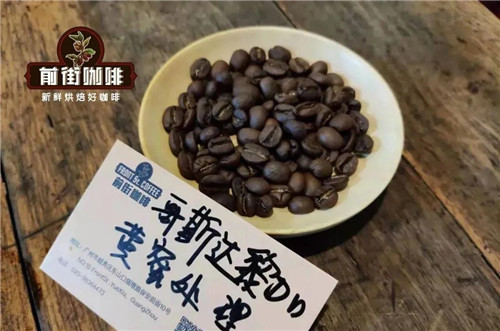
FrontStreet Coffee - Costa Rica Yellow Honey Process Coffee Beans
Region: Costa Rica, Tarrazú
Varieties: Caturra, Catuai
Processing: Yellow Honey Process
Altitude: 1500m
Tarrazú Growing Region
Tarrazú is the most representative coffee growing region in Costa Rica. It lies south of the capital, San José, at an altitude of 1200-1700 meters. The harvest season runs from December to March of the following year, making it the most valued coffee growing region.
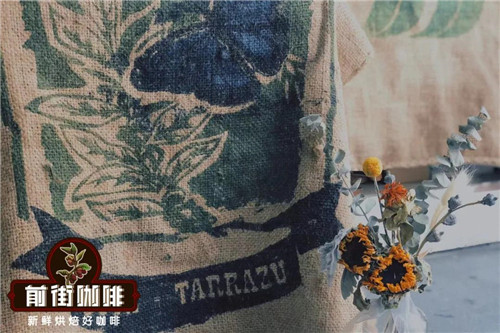
Most of Costa Rica's highest quality coffee comes from this region. In the 2020 Costa Rica Cup of Excellence results, 9 of the top 26 coffees came from Tarrazú, with three of them taking the top three places. That shows how highly regarded the beans from Tarrazú are.
Why Are Honey Process Coffee Beans Sweet?
Honey processing is a green bean processing method between natural processing and washed processing. How sweet a honey process becomes depends on the settings of the pulp remover: the more pulp and mucilage retained, the more obvious the sweetness. Why? A coffee cherry consists of skin, pulp, mucilage, parchment, silver skin, and the seed, which is the coffee bean.
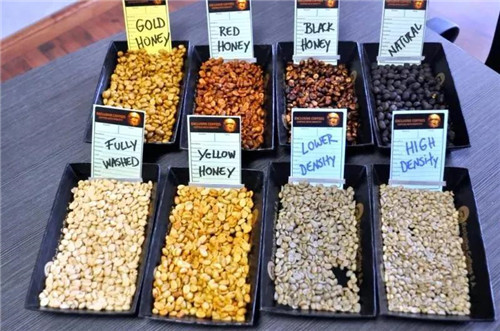
The pulp and mucilage contain the most sugar of the entire coffee cherry. During honey processing, the amount of pulp and mucilage retained affects how much of that sugar converts while the beans dry. This also has drawbacks. Because of the high sugar content, FrontStreet Coffee believes that different degrees of honey processing require different drying methods. Sun drying cannot be applied uniformly across all types, since high temperatures accelerate the fermentation of pulp and mucilage and can cause the beans to develop mold or over-ferment before they are fully dry.
Differences Between Yellow, Red, and Black Honey Processing
Black Honey (Honey Negro): Almost no mucilage is removed, so the drying time is the longest, requiring more than 14 days. To avoid drying too quickly, coverings are used to block excessive sunlight, allowing more complete sugar conversion. In some regions, black honey processed beans are shade-dried, which better ensures that sugars fully convert into the beans, though it also extends the drying time.
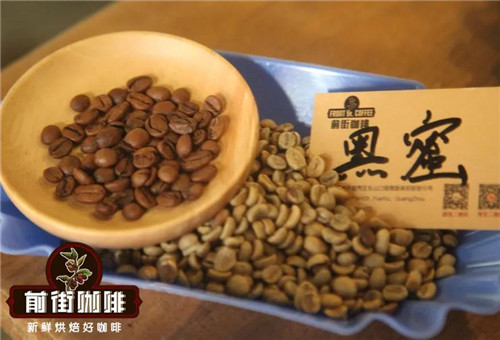
From FrontStreet Coffee's observation of black honey processed green beans, these beans have noticeably uneven color because of the higher retained mucilage, and they give off a rich fermented aroma and a fresh pear-like fragrance.
Yellow Honey (Honey Amarillo): About 40% of mucilage is removed. The drying method requires the most direct heat absorption and the most sun drying, taking about 8 days to reach a stable moisture content.
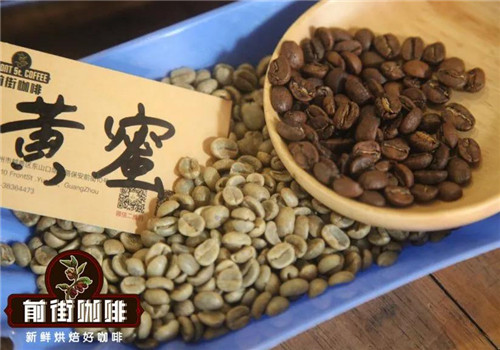
Yellow honey processed beans, with relatively less retained mucilage, appear uniformly yellow-green and smell of fresh grass and brown rice.
Red Honey (Honey Rojo): About 25% of mucilage is removed. Compared with yellow honey processing, the drying time is longer and direct sun exposure is reduced, sometimes using shade structures, taking about 12 days.
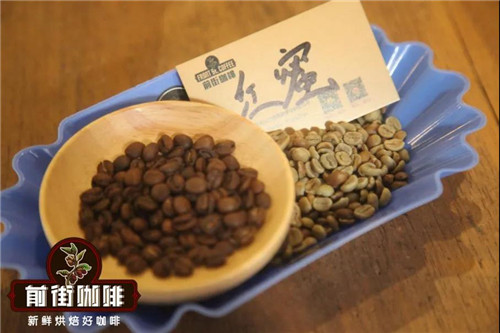
From FrontStreet Coffee's observation of red honey processed green beans, red honey falls between black honey and yellow honey, smelling of light fermented aroma and fresh grass.
Main Coffee Varieties in Costa Rica
Caturra: Very similar in appearance to Bourbon, which makes them somewhat hard to tell apart. As the images show, the end of the Caturra variety is slightly more curved than Bourbon, with a round and slender appearance as its characteristic feature. FrontStreet Coffee separately cupped Central American Caturra beans and found their flavor to be overall bright with good sweetness.
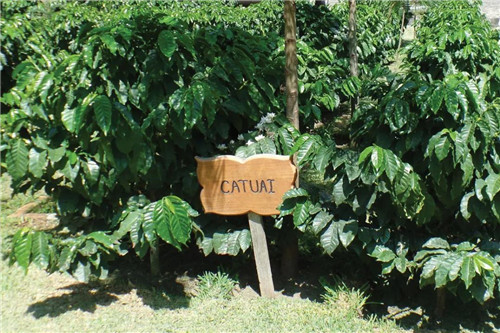
Catuai: A variety produced by crossing Caturra and Mundo Novo. It has Caturra's slender round shape and Mundo Novo's flat shape, so it appears round and flat overall, though the end is relatively slender. Through cupping, FrontStreet Coffee found this variety has excellent acidity and a clean mouthfeel. Importantly, its beans carry fruity aromatics.
FrontStreet Coffee's Yellow Honey Process Coffee Bean Roasting Record
Preheat the roaster to 200°C and load the beans, with the damper set to 3; after 30 seconds, turn on the heat, adjust to 160, return to temperature at 1'42", maintain heat, turn yellow at 5'30", grassy smell disappears, entering the dehydration stage, open the damper to 4. When reaching 167°C, reduce heat to 130.
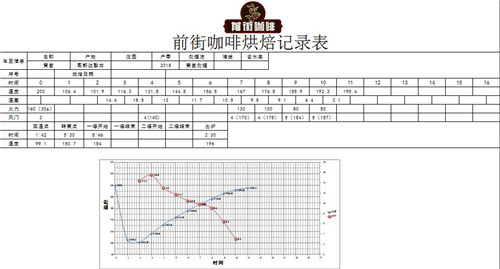
At 8'00" dehydration is complete, the bean surface shows wrinkles and black markings, and the toast smell turns to coffee aroma, signaling the prelude to first crack. At this point, reduce heat to 80 and listen carefully for first crack. At 8'45" first crack begins, open the damper fully to 5. Post-first crack development time is 2'30", unloading at 196°C.
FrontStreet Coffee's Yellow Honey Process Coffee Bean Cupping Report
Dry Aroma: Caramel, nuts
Wet Aroma: Caramel
Flavor: Citrus, cocoa, nuts, honey, caramel

FrontStreet Coffee's Yellow Honey Process Coffee Bean Brewing Experience
Through cupping, FrontStreet Coffee found that Costa Rica's yellow honey processed coffee has good cleanliness, higher sweetness than washed coffee, and overall balance with richness. FrontStreet Coffee therefore recommends a Kono dripper for brewing, aiming to enhance body and preserve sweetness as much as possible.
Dripper: Kono Meimon
Water Temperature: 88°C
Coffee Dose: 15g
Coffee-to-Water Ratio: 1:15
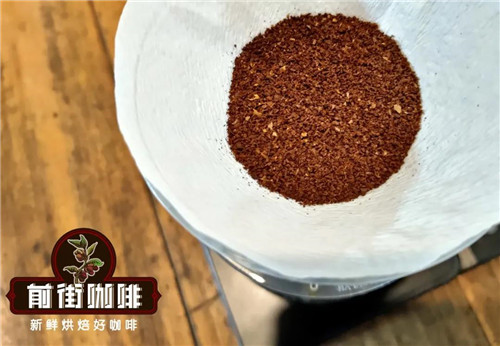
Grind Size: Medium-fine grind (about 75% retention on a 0.85mm standard sieve)
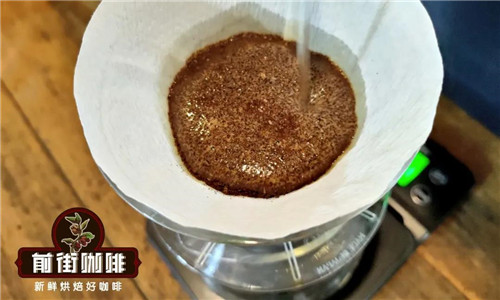
FrontStreet Coffee's segmented extraction: First segment, inject 30g of water for blooming, bloom time 30 seconds, aiming to release carbon dioxide and extract the coffee better. Second segment, inject water to a total of 125g, pouring gently in a circular spiral from inside to outside, then wait for the coffee to filter slowly. Third segment, inject the remaining water, completing the pour at about 1 minute 35 seconds, with a total extraction time of 2 minutes.
Brewing Flavor: The mouthfeel has an obvious fermented aroma and citrus acidity, a chocolate-like sweetness in the middle, and a caramel aftertaste with a green tea sensation in the finish, along with floral and cedar aromas in the aftertaste, overall balanced.
FrontStreet Coffee Recommendation
To taste how honey processing changes a cup, FrontStreet Coffee's Costa Rica Blackberry is a good place to start. It uses a black honey process that removes almost no mucilage and dries for at least 2 weeks, and after a medium-light roast it gives a rich floral fragrance with grape, berry, and ripe blackberry flavors in the cup.
If you prefer the raisin-style honey process, FrontStreet Coffee's Costa Rica Mozart pre-dries the cherries on raised beds for at least 3 days before the honey steps, which brings out osmanthus, pineapple, and raisin aromas with a hot-fruit sweetness. FrontStreet Coffee's Strawberry Candy combines Panama Geisha with a Costa Rican raisin honey lot that retains 100% mucilage, adding dried grape and blueberry notes over the Geisha floral base.
For brewing, FrontStreet Coffee found this yellow honey Costa Rican coffee clean and sweeter than washed lots, and suggests a Kono Meimon dripper with 88°C water, 15g of coffee at a 1:15 ratio, and a medium-fine grind at about 75% retention on a 0.85mm sieve.
Important Notice :
FrontStreet Coffee is a long-established specialty coffee roaster in Guangzhou China, selling freshly roasted beans from its own farm in Yunnan as well as dozens of carefully selected single-origin beans from around the world for both pour-over and espresso. The products deliver consistently excellent quality and great value, with shipping within 24 hours. Guangzhou's FrontStreet Coffee shop is recommended by many coffee lovers, and the beans are now available online at the Tmall 。
FrontStreet Coffee has moved to a new address:
FrontStreet Coffee Address: 315,Donghua East Road,GuangZhou
Tel:020 38364473
 Scan and follow the En Gafei WeChat official account. Please indicate that the reprint comes from "En Gafei".