What Are Microlot Coffee Beans? How Costa Rica Genesis Microlot Coffee Beans Are Selected

Microlots
In FrontStreet Coffee's simple explanation, a "microlot" is coffee selected twice over: taken from an already excellent batch, then culled again for the most outstanding beans. There are many ways to make that cut. A day with especially favorable weather might have its harvest set aside on its own; a farmer with exceptional fertilization practices might have their production processed separately from everyone else's.

Because microlots are the elite of the crop, volumes are small. Even at premium prices, they rarely carry a farm's profitability on their own. One side demands better prices; the other demands better flavor—finding the balance between the two takes time, iteration, and validation.
Finca Genesis
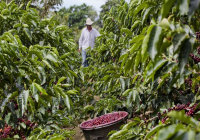
Finca Genesis is one of Costa Rica's earliest microlot mills, located in the Western Valley at an altitude of about 1700 meters, growing mainly Caturra and Catuai. The mill is now run by Oscar Méndez and his wife Olga, who over the years have not only grown and processed coffee for sale but also led their community, sharing experience and knowledge with neighboring farm owners.

The couple buys coffee cherries from farmers across the region and processes them into green coffee at Finca Genesis; farmers can alternatively pay a service fee to have their own cherries processed there. Either way, the coffee carries the Finca Genesis name for recognition. FrontStreet Coffee's microlot natural from Finca Genesis shows rich fruit aroma and excellent cleanliness on the cupping table.
Processing Method
This lot was harvested at 1700 meters. The high-standard Finca Genesis mill used the natural process: only cherries with intact skins were selected and laid out on drying beds. After sun-drying, they were moved indoors to rest and stabilize at a moisture content of about 10%.
Varieties
Caturra & Catuai
Caturra looks very similar to Bourbon, which makes the two somewhat hard to tell apart—the tip of a Caturra bean curves slightly more, with a round, slender form. Cupping Central American Caturra on its own, FrontStreet Coffee found a bright overall profile with good sweetness.

Catuai is a cross of Caturra and Mundo Novo, combining Caturra's slender roundness with Mundo Novo's flatter form—round and flat in body with a relatively slender tip. On the cupping table, FrontStreet Coffee found excellent acidity, a clean texture, and—importantly—fruity aromatics.
FrontStreet Coffee Roasting Record
Preheat the roaster to 200°C, then charge the beans with the damper at 3; after 30 seconds, turn on the heat at power 160. Turning point at 1'31"—hold power. Yellowing at 5'30", grassy aroma gone, entering the drying stage: reduce power to 130, open the damper to 4, then reduce power again to 100 at 168°C.

At 8'00" the drying phase completes, with wrinkles and dark spots appearing on the bean surface; toast aroma shifts into coffee aroma, the prelude to first crack. Reduce power to 80 and listen carefully. First crack begins at 8'30"—open the damper fully to 5. Develop for 2'20" after first crack, then drop the beans at 195°C.
FrontStreet Coffee Cupping Report
Dry aroma: Spice, fermented notes
Wet aroma: Caramel, berries
Flavor: Grapefruit, citrus, berry juice, caramel

FrontStreet Coffee Brewing Guide
Dripper: V60 #01
Water temperature: 90–91°C
Dose: 15g
Ratio: 1:15
Grind size: Medium-fine (80% pass-through on a #20 standard sieve)

FrontStreet Coffee's segmented pour: start with 30g of water to fully wet the grounds into a "hamburger" and bloom for 30 seconds. In the second stage, pour to 125g by 0'57" and wait until the bed drains to two-thirds. In the third stage, pour to 225g by 1'45", for a total brew time of 2'00".
In the cup: grapefruit and citrus acidity, a full berry-juice body, sweet-tart balance, and high sweetness.
FrontStreet Coffee Recommendation
Costa Rica's high altitudes, big day-night temperature swings, and rich volcanic soils produce famous strictly hard beans (SHB) full of elegant aromatics—and the country is best known for its honey processing, in which sticky mucilage is left wrapped around the bean while drying, giving lots their hallmark sweetness and clarity.
If you love that style, try the FrontStreet Blackberry, processed as a black honey, or the FrontStreet Mozart, done as a raisin honey. Both pour raisin and blueberry sweetness with osmanthus and rose florals, and they flatter every method from pour-over and cold brew to Americano and latte—a lovely showcase of what Costa Rican microlots do best.
Important Notice :
FrontStreet Coffee is a long-established specialty coffee roaster in Guangzhou China, selling freshly roasted beans from its own farm in Yunnan as well as dozens of carefully selected single-origin beans from around the world for both pour-over and espresso. The products deliver consistently excellent quality and great value, with shipping within 24 hours. Guangzhou's FrontStreet Coffee shop is recommended by many coffee lovers, and the beans are now available online at the Tmall 。
FrontStreet Coffee has moved to a new address:
FrontStreet Coffee Address: 315,Donghua East Road,GuangZhou
Tel:020 38364473
 Scan and follow the En Gafei WeChat official account. Please indicate that the reprint comes from "En Gafei".