How to Define Single-Origin Coffee Beans: Costa Rica Raisin Honey Process Geisha Blend Brewing Guide

FrontStreet Coffee's Geisha Blend is a Single Origin Coffee!
When FrontStreet Coffee writes about the FrontStreet Panama Butterfly Geisha Blend on its bean list, it notes that single origin coffee means coffee taken from a single producing region. The naming, though, varies widely: some lots are named for the region, others for the variety, the mill or the estate, and some carry elaborate fanciful names, making for a dizzying range of options.
Bear in mind that it is generally impossible for an entire region to grow only one variety, and mills also handle coffee collected from nearby farmers, so green-bean blending is already part of the green coffee trade. It is for the same reason that Ethiopian beans vary in size: Ethiopia has an abundance of varieties, mostly grown and harvested in mixed cultivation. Beans from the same origin and the same estate or cooperative are still defined as single origin coffee.

Finca Mirazu Estate
Finca Mirazu lies in Tarrazu, one of Costa Rica's signature specialty coffee regions. Tarrazu sits in the fertile volcanic belt of Central America, with a humid climate, rich volcanic soil, abundant annual rainfall, high altitude and dense natural forest shade, all of which give coffee a uniquely favorable growing environment. Many estates are established within Tarrazu, yet the microclimates, soils and varietal differences found from one estate to the next show up quite completely in the cup. Those gifts of nature are exactly what drive FrontStreet Coffee to keep seeking out different beans from the same region for comparison.

The estate owner, Esteban Sanches, graduated from the Coffee Department of the University of Costa Rica, so he is professionally trained and, by nature, a scientific experimenter. On one hand the estate plants varieties such as the Ethiopian native ET47 and experiments with different processing methods. On the other, the small-scale wet-processing machines in the estate's mill, from design to assembly, are all handmade by Esteban Sanches himself.
Coffee Bean Varieties
Geisha, ET47, SL28, Maico
Geisha needs little introduction, as most people are already familiar with it. The variety was originally collected from the coffee forests of Ethiopia in the 1930s. In 1953 it was brought to the Tropical Agricultural Research Center (CATIE) in Central America, where it was recorded as T2722. The plant's branches are brittle, however, and farmers did not favor it, so it was never widely planted.
In the 1990s, the Costa Rica Coffee Research Institute distributed many varieties to farmers in the Tarrazu region as research trees for leaf-rust resistance. ET47 was number 47 in the laboratory; because many varieties were introduced at the same time, most were identified by number. Estate owner Esteban Sanchez obtained ET47 and began devoting himself to studying it. The variety is something of a complex synthesis, carrying many excellent flavor traits such as fruit sweetness, a rounded and clean mouthfeel, and elegant, pleasant acidity. As for which varieties make up ET47's ancestry, the Costa Rica Coffee Research Institute has not disclosed the information.
According to historical records, the senior coffee officer of the Scott Laboratory, A.D. Trench, noticed a variety growing in Tanzania's Modi region that appeared tolerant of drought, disease and pests. The seeds were collected and brought back to the Scott Laboratory, where the drought resistance was confirmed. Recent genetic testing has also established that SL28 belongs to the Bourbon genetic group, so SL28 beans look similar to Bourbon varieties in their round, thick shape.
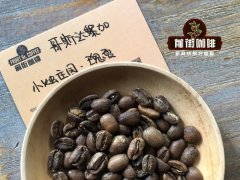
Maico currently has no officially published information. The FrontStreet Mirazu Geisha Blend that FrontStreet Coffee obtained is made up of 50% Geisha beans and 50% a mixture of ET47, SL28 and MAICO. The Geisha contributes jasmine floral aroma, while the other varieties bring richer strawberry and berry flavors, and the raisin honey process lifts the coffee's sweetness.
Coffee Bean Processing Method
Raisin Honey
The raisin honey process retains 100% of the mucilage and uses zero water, which raises the difficulty of honey processing and demands strict control of time. The estate owner first selects the harvested fruit and spreads it on raised beds to dry for at least three days before removing the skin. Interestingly, the pulping machine he designed himself differs from others: it can process two different beans at once. Because his time and energy go into researching machines and coffee, nearby farmers call him Dr. Machine and the natural coffee expert.

After the skin is removed and the mucilage kept, drying begins. Climate is the key to success at this stage. Throughout drying the beans must be turned constantly for evenness, but the turning frequency has to be controlled so the coffee dries slowly enough to ferment without over-fermenting. Through cupping, FrontStreet Coffee found that the raisin honey process, with its 100% retained mucilage and sun-drying, gives the coffee very high sweetness along with a preserved-fruit fermented sweetness.
FrontStreet Coffee Roasting Suggestions
Yangjia 800N, bean input 480 g. Preheat the roaster to 200°C, let it cool to 175°C before charging, set the flame to 120, open the damper to 3, and expect the temperature return point at 1'32" while holding the flame; at 114°C keep the flame unchanged and open the damper to 4.

At 6'15" the beans turn yellow and the grassy smell fades as dehydration begins; at 140°C reduce the flame to 100 and hold the damper at 4. At 9'00" dehydration is complete, the bean surface shows wrinkles and dark patterns, and the toast smell shifts to coffee aroma, the prelude to first crack, so listen closely for it. At 10'25" first crack begins, open the damper fully to 5 and keep the flame unchanged. Development time after first crack is 1'30", with discharge at 193.5°C.
FrontStreet Coffee Cupping Report
FrontStreet Coffee cups within 8-24 hours of roasting, using 200 ml ceramic cupping bowls and standard anti-static metal cupping spoons, with cupping water at 94°C. The grind is controlled so that it passes through a No. 20 standard sieve (0.85 mm) at a rate of 70%-75%. The ratio is 1:18.18, that is 11.1 g of coffee powder plus 200 ml of hot water, so the extracted concentration falls within the golden cup range of 1.15%-1.35%. Grind first to smell the dry aroma, then add water to fill the bowl. Confirm the wet aroma, break the crust after 4 minutes and remove the grounds, then evaluate the flavor.
Dry aroma: Floral
Wet aroma: Dried fruit, berries
Flavor: Raisins, berries, nuts, cream
FrontStreet Coffee Brewing Experience
Filter: Hario V60 01
Dose: 15 g
Ratio: 1:15
Temperature: 90°C
Grind: Medium-fine (Chinese standard No. 20 sieve pass rate 80%)

FrontStreet Coffee brewing method: first wet the filter paper and preheat the dripper and carafe. Use 30 g of water for a 30-second bloom, then a small circular flow to 125 g for segmentation. When the water level drops and is about to expose the coffee bed, continue pouring to 225 g and stop. Wait for the water level to drop and approach the bed once more, then remove the dripper. Timing starts at the bloom, and the extraction time is 2'01".

Brewing flavor: jasmine floral aroma, sweet raisin on entry, strawberry candy sweetness, and a nutty, cream-like mouthfeel.
FrontStreet Coffee Recommendation
A Geisha-led blend like this rewards attention to origin and process, and FrontStreet's Emerald Estate Red Label Geisha is the top of that ladder. The estate is the original discoverer and promoter of Geisha, and the Red Label is harvested from a single plot above 1,700 meters, with a cupping score of 91 and a refined orange-blossom honey character available in hand-selected lots.
For the same floral-and-sweet style at a more accessible price, the FrontStreet Panama Boquete Geisha is an entry-level estate Geisha grown at 1,600 meters on fertile volcanic ash soil, offering jasmine, green tea, honey, citrus and orange with clear, layered acidity.
And if the strawberry and raisin sweetness in this blend is what you are after, the FrontStreet Strawberry Candy is a matching everyday option: Costa Rican honey-processed coffee paired with Panama Geisha for delicate florals, sweet fruit, a soft almond finish, and easy brewing in a pour-over, a cold brew or a Moka pot.
Important Notice :
FrontStreet Coffee is a long-established specialty coffee roaster in Guangzhou China, selling freshly roasted beans from its own farm in Yunnan as well as dozens of carefully selected single-origin beans from around the world for both pour-over and espresso. The products deliver consistently excellent quality and great value, with shipping within 24 hours. Guangzhou's FrontStreet Coffee shop is recommended by many coffee lovers, and the beans are now available online at the Tmall 。
FrontStreet Coffee has moved to a new address:
FrontStreet Coffee Address: 315,Donghua East Road,GuangZhou
Tel:020 38364473
 Scan and follow the En Gafei WeChat official account. Please indicate that the reprint comes from "En Gafei".