Introduction to Panama Boquete Geisha Coffee - Finca Don Benjie Anaerobic Natural Geisha Brewing Flavor
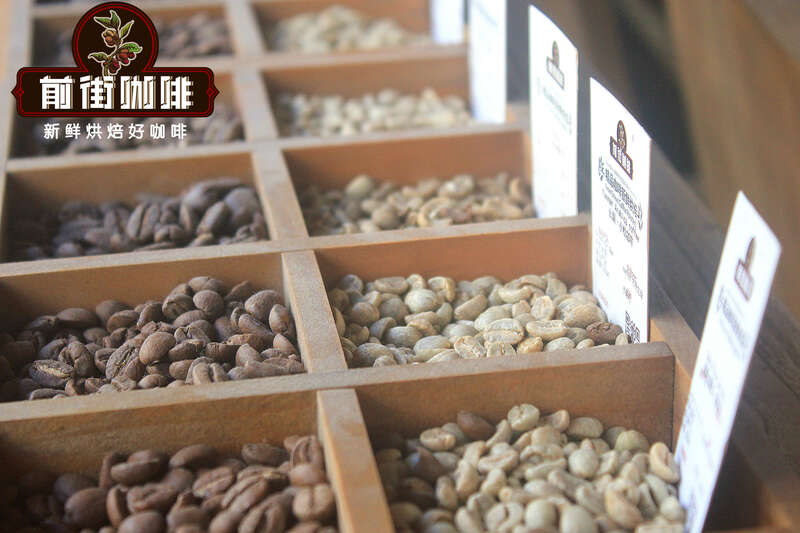
People grow coffee for different reasons — a livelihood, a family tradition passed down through generations, or simply a passion. In this article, FrontStreet Coffee shares the story of an estate in Panama's Boquete region — Café Don Benjie — whose beginnings trace back to a pediatrician.
Boquete, Panama
Boquete is a town in Chiriquí Province, near the border between Panama and Costa Rica and close to the famous Barú Volcano. The scenery is beautiful, the soil rich and fertile, and the climate ideal for producing high-quality coffee. Cool, foggy mountain terrain creates distinctive microclimates; the cool air and frequent fog slow the ripening of coffee cherries, much as high altitude does. When FrontStreet Coffee has cupped coffees from this region, the flavors have ranged from cocoa to fruity notes with a gentle acidity.
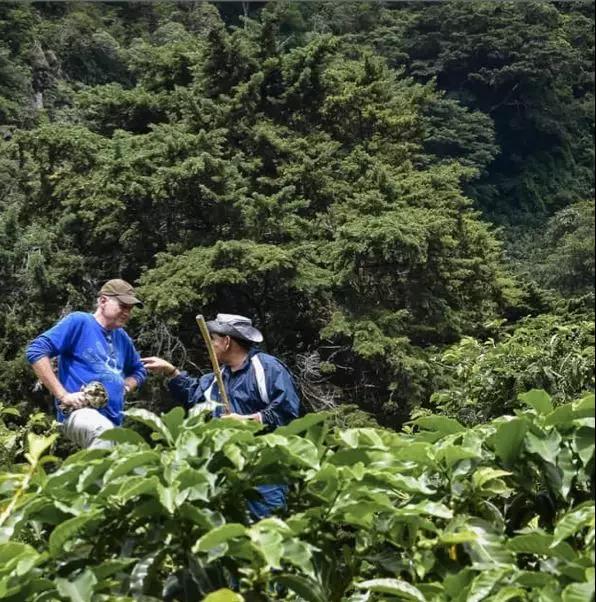
The microclimates of the Boquete highlands are a vital and unique resource for the region's specialty coffee. Cold air currents gather in the central mountains above 1,600m, creating a patchwork of microclimates across Boquete, with temperatures and rainfall exceptionally favorable for plant growth. Coffee trees planted here flourish.
Café Don Benjie Estate
Dr. Renán Esquivel, a renowned Panamanian pediatrician, is a nature lover as well as a physician. In 1980 he purchased the Bajo Mono farm — his first. On it he planted a wide variety of trees, plants, and coffee varieties, many of which survive to this day. The Bajo Mono coffee plantation covers 33 hectares in the Chiriquí highlands, in the canyon north of Boquete town on the slopes of Barú Volcano, at an altitude of 1,400-1,550m.
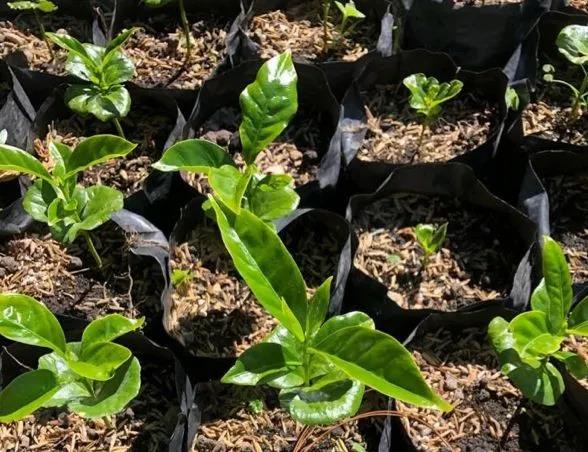
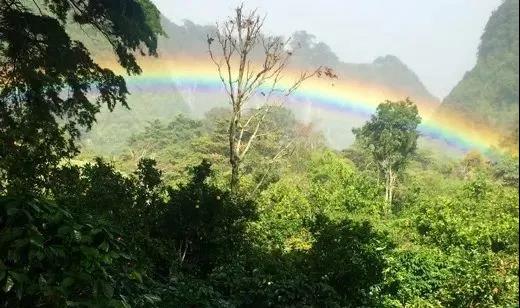
Bajo Mono is one of the best areas for producing high-quality Panamanian coffee. The region has volcanic soil, clear natural springs, and a famous local weather phenomenon known as "Bajareque": when moisture from the Pacific and Atlantic meets, thin mists rise among the mountains as the wind blows, and rainbows often appear. Together these create a unique microclimate that gives the region's coffee trees superb growing conditions.
The farm's current owner, Stefan Arwed Müller, has run Bajo Mono since 2011, dedicated to further improving bean quality while protecting the plantation's ecology. The coffee produced there is sold under the name Café Don Benjie.
FrontStreet Coffee — Panama Café Don Benjie Estate Geisha
Region: Boquete, Panama — Café Don Benjie Estate
Variety: Geisha
Altitude: 1500m
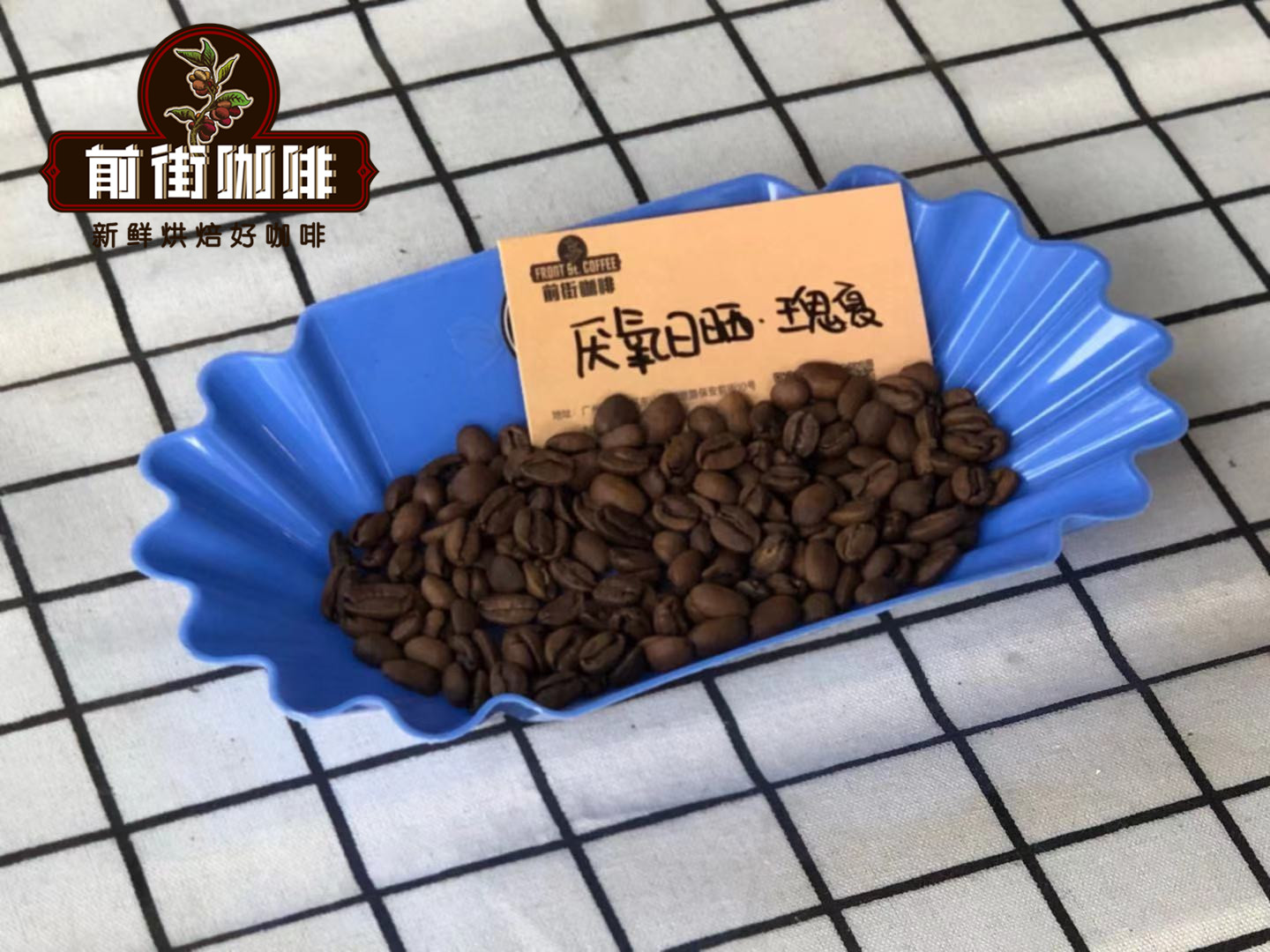
Processing Method: Anaerobic Natural
The Geisha Variety
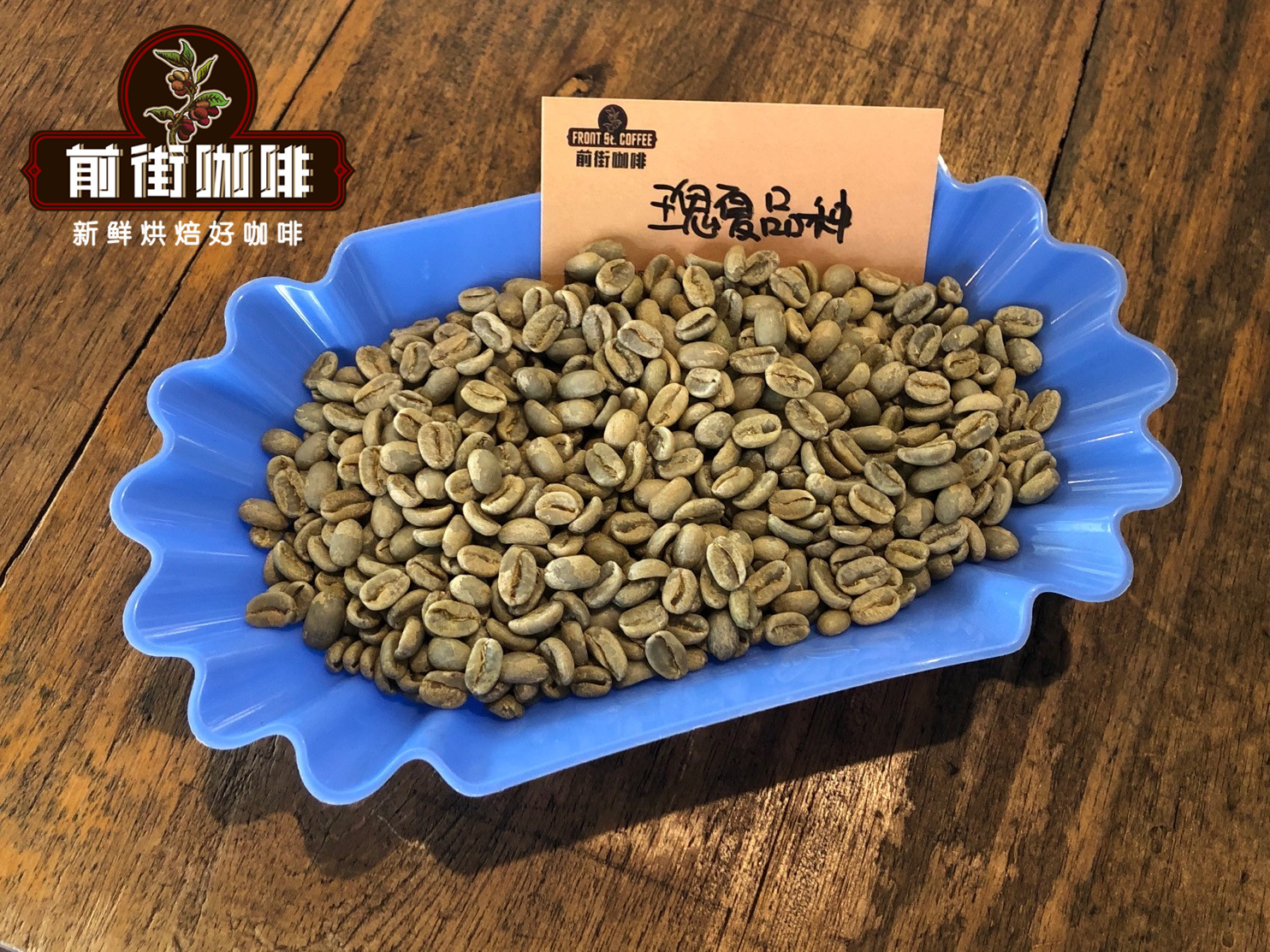
Geisha beans are slender, and their flavor is fresh and delicate. In both respects Geisha resembles Ethiopian coffees far more than typical Central and South American varieties. So when did Geisha reach Panama? It was first collected in the forests near the village of Gesha, Ethiopia, in 1931, then sent to a coffee research institute in Kenya and introduced to Uganda and Tanzania in 1936, to Costa Rica in 1953, and to Panama around 1960. Although Geisha has strong disease resistance, its yields are low, so it was for decades used mainly as breeding stock and nearly forgotten — until 2004, when trees rediscovered in the windbreak of Hacienda La Esmeralda took the coffee world by storm through competitions. Geisha has since spread across Panama and beyond. One caveat: Geisha needs a demanding, high-altitude environment to develop its rich, captivating florals — which is why, when FrontStreet Coffee cupped the Don Benjie Estate Geisha, the floral character was present but not dominant.
Anaerobic Natural Processing
We learned that this estate hand-picks and carefully sorts all of its coffee. Water use on the farm is deliberately limited in the name of environmental sustainability, and in everything they process, the goal is always high cup quality.
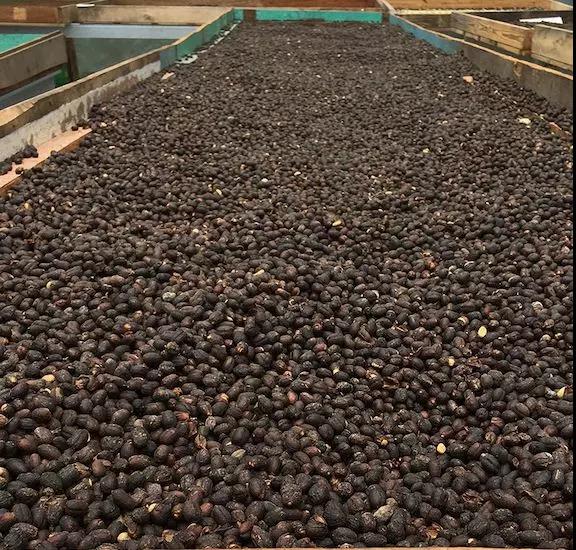
Anaerobic fermentation has become very popular in recent years. The cherries are placed in sealed containers or washing tanks to ferment — often underwater — with different microbial communities driving the process and creating distinctive flavors. Once fermentation is complete, the cherries are taken out to dry in the sun.
FrontStreet Coffee Roasting Record
Preheat the roaster to 160°C, charge the beans, flame power 110, damper at 3. Turning point at 1'26". At 140°C, open the damper to 4. At 168°C, reduce flame power to 80, damper unchanged.
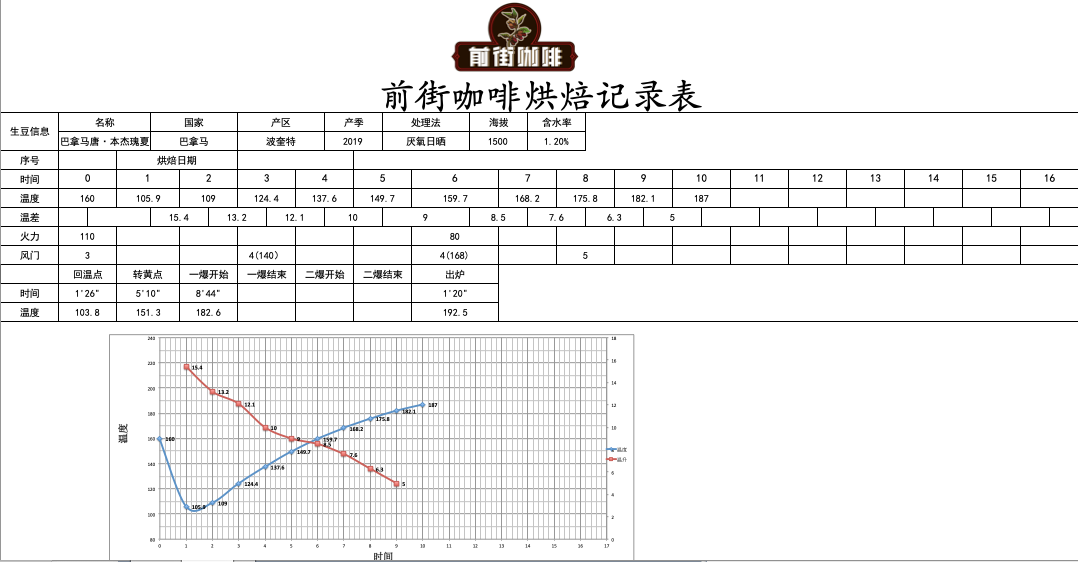
At 7'38", pronounced wrinkles and dark spots appear on the bean surface and the toast smell clearly turns to coffee aroma — the prelude to first crack. Listen carefully for it from here. First crack begins at 8'44"; open the damper to 5 and develop for 1'20" after crack, dropping the batch at 192.5°C.
FrontStreet Coffee Cupping Report
FrontStreet Coffee cups each batch 8 hours after roasting, using 200ml standard cupping bowls, a grind set to a 70-75% pass rate through a #20 standard sieve, and 11g of coffee per bowl. Water TDS is 120ppm at 94°C. First grind and smell the dry fragrance, then fill the bowls with water; confirm the wet aroma, break and skim the crust after 4 minutes, then taste.
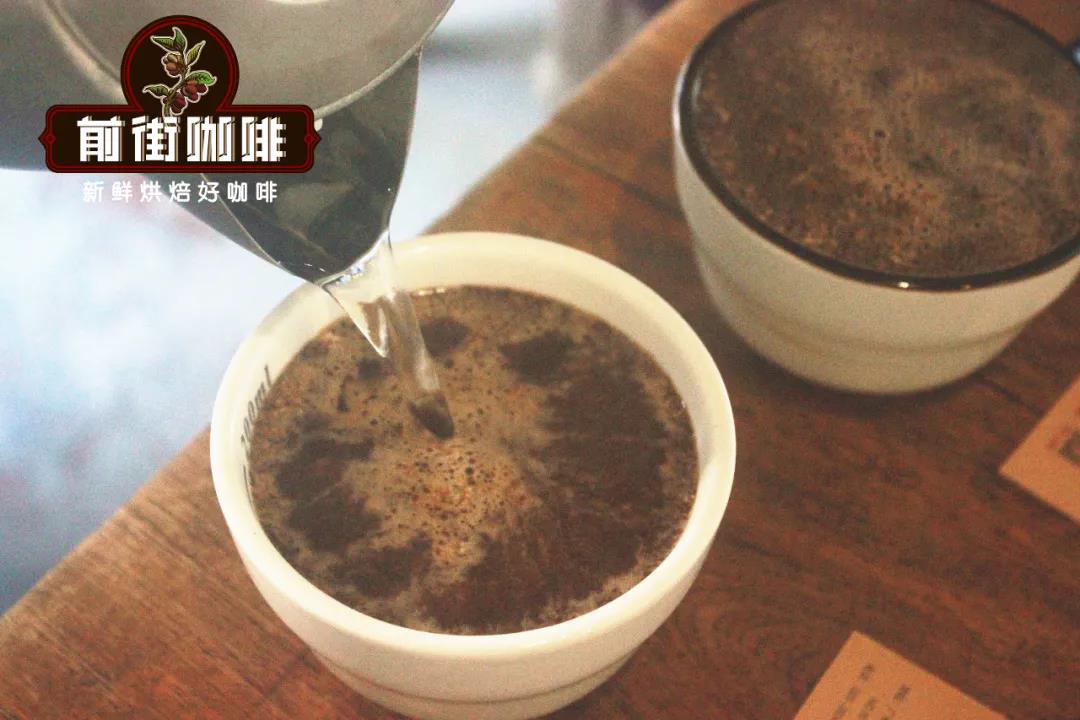
After cupping, FrontStreet Coffee found floral notes, blueberry, plum, peach, and caramel, with bright acidity and a juicy mouthfeel.
FrontStreet Coffee Brewing Experience
Dose: 15g
Grind Size: Medium-fine (78% pass rate through a #20 standard sieve)
Ratio: 1:16
Water Temperature: 91°C
Dripper: V60 #01
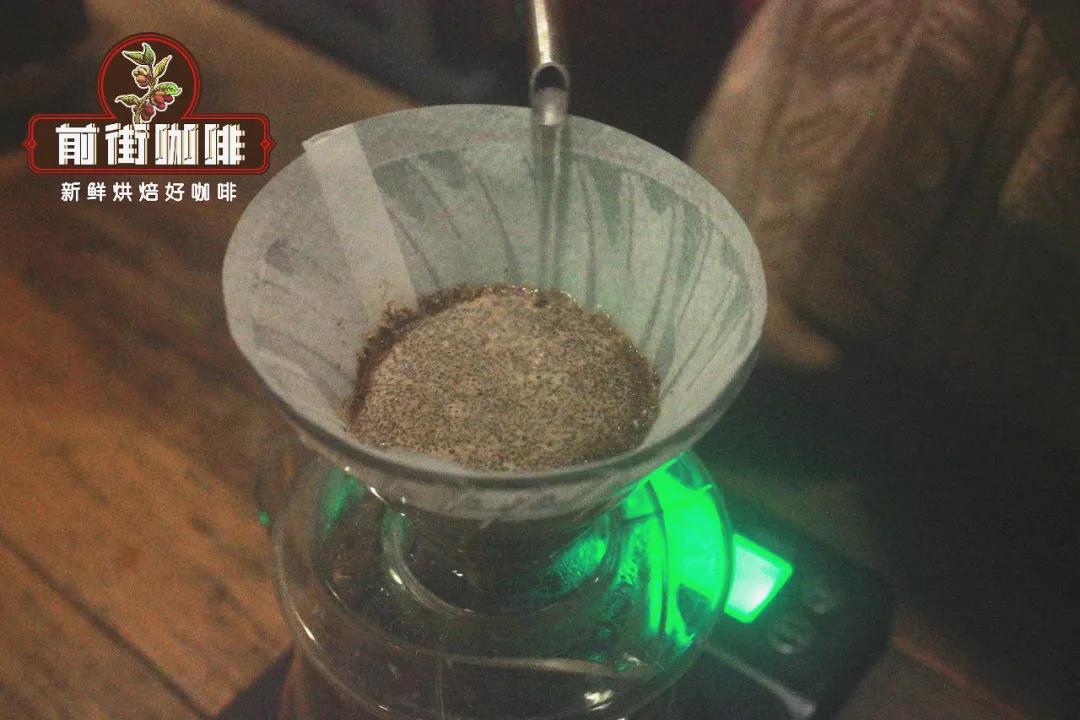
FrontStreet Coffee's staged pour: 1. Pour 30g of water and bloom for 30 seconds. 2. Pour the second stage — 110g in slow circles from the center outward. Geisha rewards patience: it tolerates long extraction and needs time to release its aroma. Wait for the water level to drop to half. 3. When the coffee bed is about to be exposed, pour the final 100g, for a total of 240g. Once the drawdown finishes, remove the dripper. Total brew time: 2:02.
Flavor in the cup: A clear blueberry acidity on entry, a juice-like body, rose florals through the middle, plum acidity, and a caramel sweetness in the aftertaste.
FrontStreet Coffee Recommendation
If the Don Benjie story has you curious about Geisha, FrontStreet Coffee's Panama Boquete Geisha is the perfect entry point — an affordably priced Geisha that captures the classic Panamanian profile: orange-blossom sweetness, oolong-tea body, delicate fruit acidity, and cleanly separated layers of flavor.
For the full experience, FrontStreet also carries Esmeralda Estate Geisha in two tiers: the Red Label "Esmeralda Special," grown at 1,600-1,800m from single plots that must cup above 90 points, and the Green Label "Private Collection," a blend of high-altitude lots showing the estate's signature Geisha character at a friendlier price. Either way, brew it gently — 15g at a coarse, fine-sugar texture, 91°C water, a 1:16 ratio in three stages — to let the florals unfold.
Important Notice :
FrontStreet Coffee is a long-established specialty coffee roaster in Guangzhou China, selling freshly roasted beans from its own farm in Yunnan as well as dozens of carefully selected single-origin beans from around the world for both pour-over and espresso. The products deliver consistently excellent quality and great value, with shipping within 24 hours. Guangzhou's FrontStreet Coffee shop is recommended by many coffee lovers, and the beans are now available online at the Tmall 。
FrontStreet Coffee has moved to a new address:
FrontStreet Coffee Address: 315,Donghua East Road,GuangZhou
Tel:020 38364473
 Scan and follow the En Gafei WeChat official account. Please indicate that the reprint comes from "En Gafei".